The hamstring stretch angle: a screening and monitoring tool for canine fibrotic myopathy
Kate Elizabeth Birdwhistell, Erin Miscioscia, Christina Montalbano, Jennifer Repac

TL;DR
This study introduces a new method to screen for fibrotic myopathy in dogs by measuring hamstring stretch angles, which could help identify the condition early.
Contribution
The study establishes a novel noninvasive screening method for fibrotic myopathy in dogs using hamstring stretch angles with high sensitivity and specificity.
Findings
Unaffected dogs had a mean hamstring stretch angle of 147°, while affected dogs had a mean of 109°.
A cutoff value of 136° was determined for screening with 100% sensitivity and specificity.
The method is quick, inexpensive, and noninvasive for fibrotic myopathy detection.
Abstract
Fibrotic myopathy of the gracilis, semimembranosus, and semitendinosus muscles is an uncommon disease in dogs and has been primarily described in working line German Shepherds. Fibrotic myopathy can dramatically shorten the working life of military working dogs and is thus an economically important disease given the substantial cost of training. The primary objective of this study was to establish reference ranges for hamstring stretch angles from unaffected German Shepherds and unaffected retrievers (Goldens and Labradors). The secondary objective was to compare these unaffected dog hamstring stretch angles to those from German Shepherds affected with fibrotic myopathy. Thirty dogs (20 angles per group) were used to compare a total of 60 hamstring stretch angles. The hamstring stretch angle was defined as the angle of stifle extension while the hip was held in hyperflexion. Twenty…
Genes, proteins, chemicals, diseases, species, mutations and cell lines named across the full text — each resolved to its canonical identifier and authoritative record.
Click any figure to enlarge with its caption.
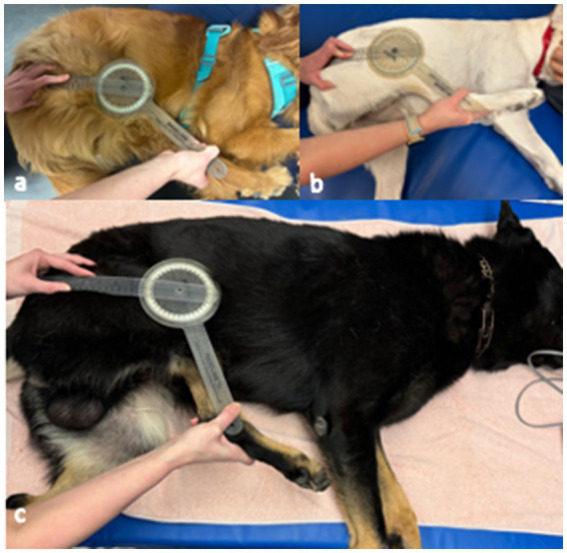 Figure 1
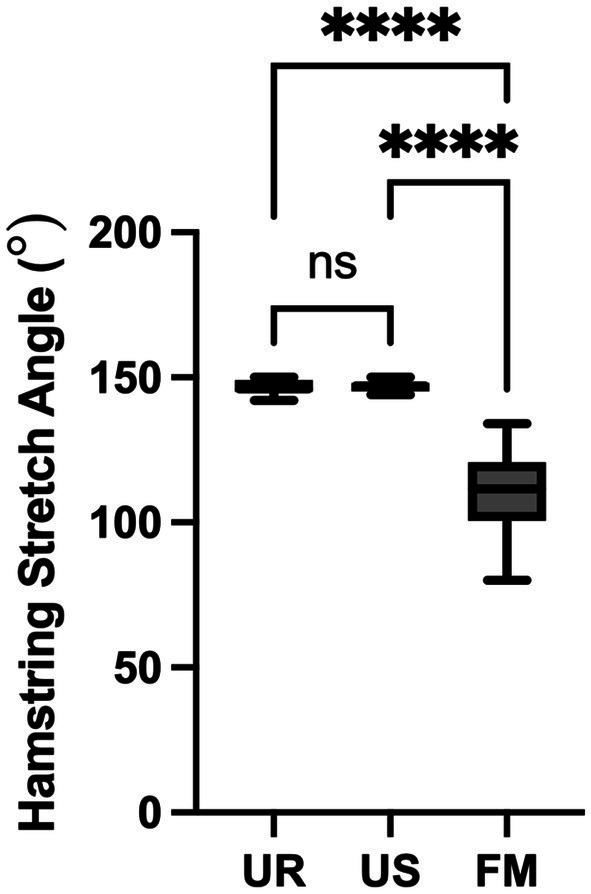 Figure 2
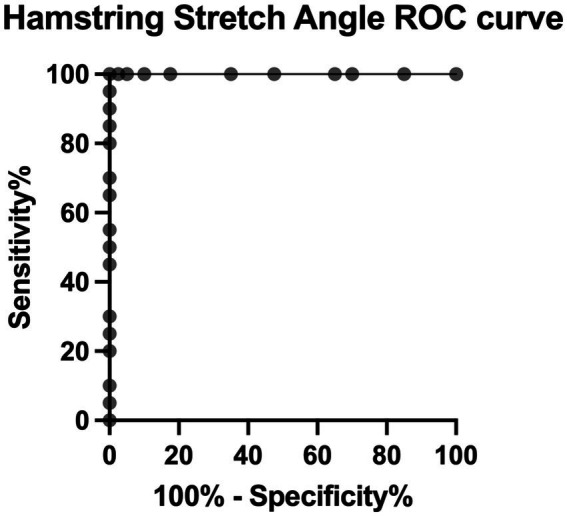 Figure 3
Peer Reviews
No public reviews on file for this paper yet. If you reviewed it on a platform where reviews are public (OpenReview, ICLR, NeurIPS, ICML), you can paste yours below so the community can read it here.
Videos
No videos yet. Explain this paper in a talk, walkthrough, or lecture? Add one.
Taxonomy
TopicsVeterinary Orthopedics and Neurology · Tendon Structure and Treatment · Heterotopic Ossification and Related Conditions