Aggressive and Refractory Attack of AQP4-IgG-Positive Neuromyelitis Optica Spectrum Disorder Treated With Ravulizumab: A Case Report
José M Valdés, Patricia Orellana, Marianella Hernandez, Jorge Barahona, Lorna Galleguillos

TL;DR
A patient with severe AQP4-IgG-positive NMOSD showed clinical stabilization after ravulizumab treatment during a treatment-resistant attack.
Contribution
This case report explores the potential therapeutic effect of ravulizumab in acute, refractory NMOSD attacks.
Findings
Ravulizumab halted neurological deterioration in a patient unresponsive to steroids and plasma exchange.
The patient showed gradual motor recovery and improved functional capacity after treatment.
The report highlights the need for controlled studies on ravulizumab's efficacy in acute NMOSD.
Abstract
Neuromyelitis optica spectrum disorder (NMOSD) is a severe autoimmune astrocytopathy mediated by aquaporin-4-immunoglobulin G (AQP4-IgG) antibodies, leading to complement-mediated neural injury. While ravulizumab, a long-acting C5 inhibitor, is approved for relapse prevention in AQP4-IgG-positive NMOSD, its role in acute attacks remains unestablished. We report a 58-year-old woman with a highly relapsing course of AQP4-IgG-positive NMOSD who developed a fulminant attack with bilateral corticospinal tract involvement, resulting in asymmetrical tetraparesis. Despite high-dose intravenous methylprednisolone and plasma exchange (PLEX), neurological deterioration progressed. Ravulizumab (2,700 mg) was administered emergently following meningococcal prophylaxis. After treatment, neurological decline ceased, allowing gradual motor recovery and rehabilitation. At discharge, the patient showed…
Genes, proteins, chemicals, diseases, species, mutations and cell lines named across the full text — each resolved to its canonical identifier and authoritative record.
Click any figure to enlarge with its caption.
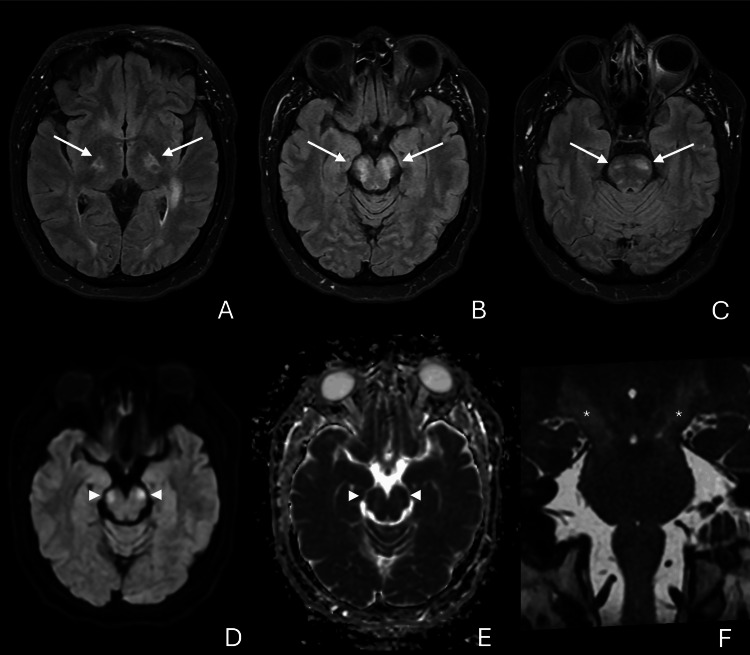 Figure 1
Peer Reviews
No public reviews on file for this paper yet. If you reviewed it on a platform where reviews are public (OpenReview, ICLR, NeurIPS, ICML), you can paste yours below so the community can read it here.
Videos
No videos yet. Explain this paper in a talk, walkthrough, or lecture? Add one.
Taxonomy
TopicsMultiple Sclerosis Research Studies · Peripheral Neuropathies and Disorders · Protein Tyrosine Phosphatases