Elucidation of blink reflex characteristics in Parkinson's disease subtypes through prepulse inhibition
Zhen Zhang, Ling Zhang, Xiaofeng Huang, Xinqing Hao, Tao Li, Yayin Luo, Xiaoxue Yin, Chunli Song, Zhanhua Liang

TL;DR
The study found that Parkinson's disease patients have impaired brainstem reflexes, with more severe issues in those with gait difficulties.
Contribution
The study identifies prepulse inhibition impairment as a potential biomarker for gait dysfunction in Parkinson's disease subtypes.
Findings
PD patients showed impaired prepulse inhibition compared to healthy controls.
The PD-PIGD subtype exhibited more pronounced prepulse inhibition deficits than the PD-TD subtype.
No lateralization effects were observed in prepulse inhibition impairment.
Abstract
This study investigated prepulse inhibition (PPI), a brainstem reflex, in Parkinson's disease (PD) patients. We compared PPI impairment between patients with postural instability and gait difficulty (PD-PIGD) and tremor-dominant (PD-TD) subtypes and explored potential lateralization effects. Fifty PD patients and 35 healthy controls underwent pre-pulse stimulation of the finger followed by stimulation of the supraorbital nerve. Compared to controls, PD patients exhibited impaired PPI across various stimulation intervals, with a more pronounced effect in the PD-PIGD subgroup. Interestingly, no significant differences in PPI were observed between the left and right sides, suggesting a bilateral effect. These findings suggest that abnormal brainstem circuits, potentially involving the pontine nucleus, contribute to PPI dysfunction in PD. Furthermore, the association between impaired PPI…
Genes, proteins, chemicals, diseases, species, mutations and cell lines named across the full text — each resolved to its canonical identifier and authoritative record.
Click any figure to enlarge with its caption.
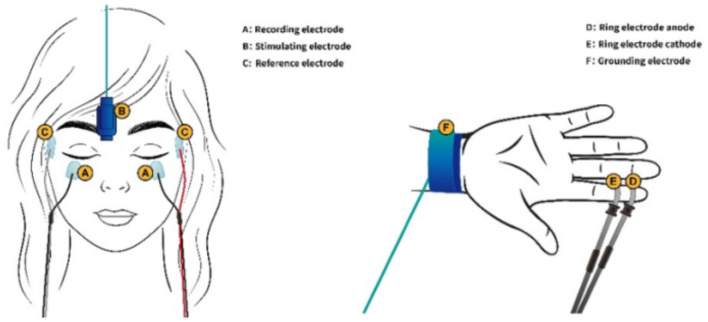 Figure 1
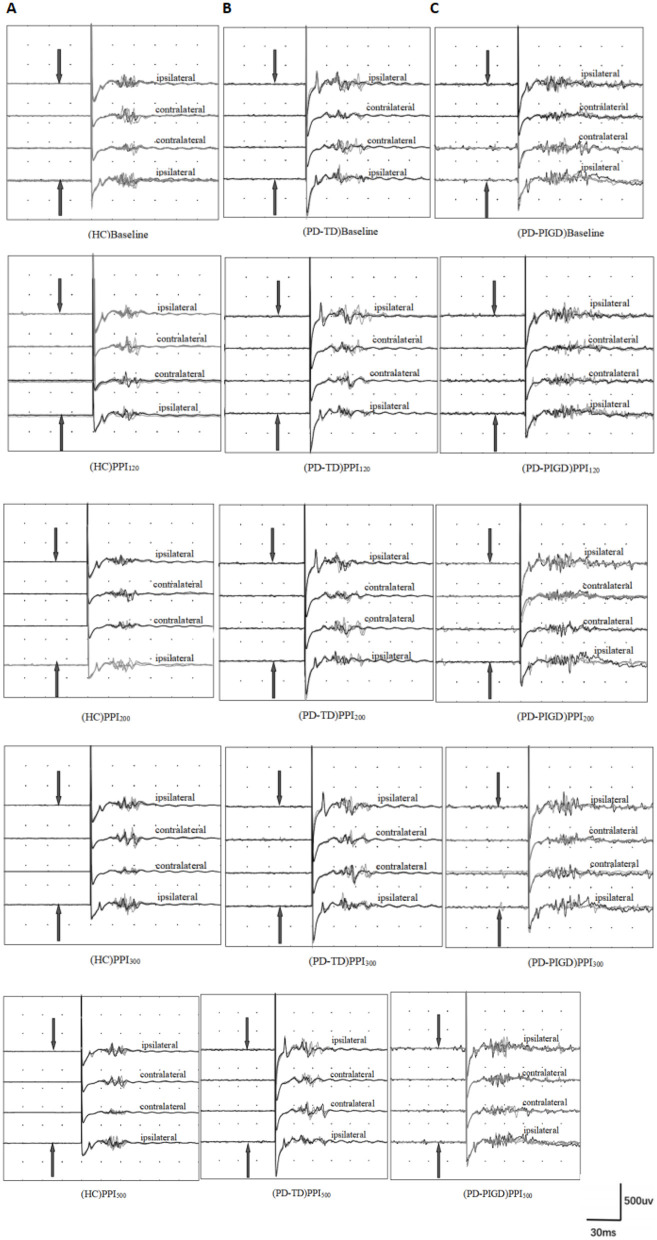 Figure 2
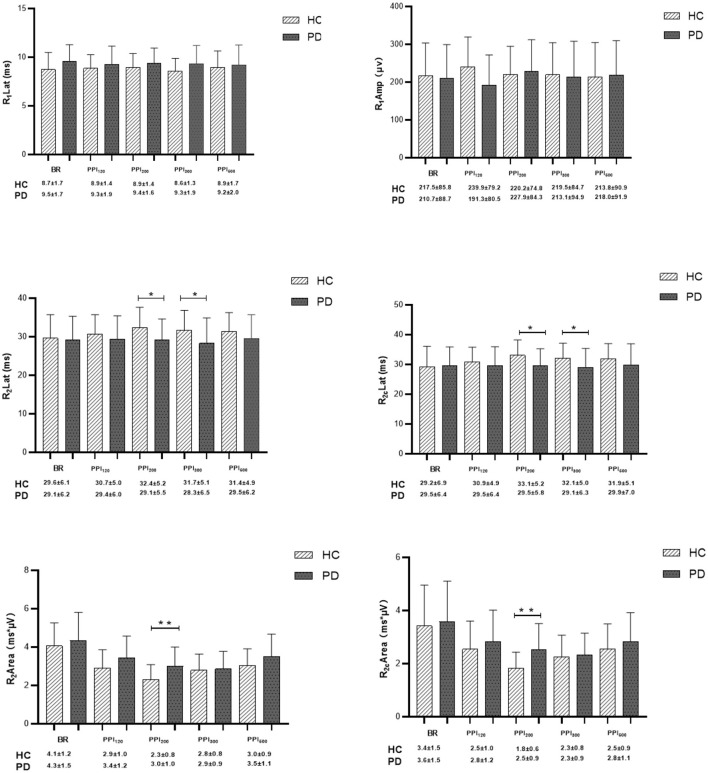 Figure 3
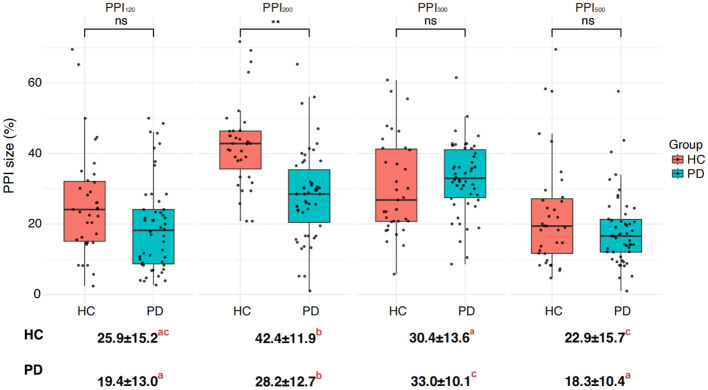 Figure 4
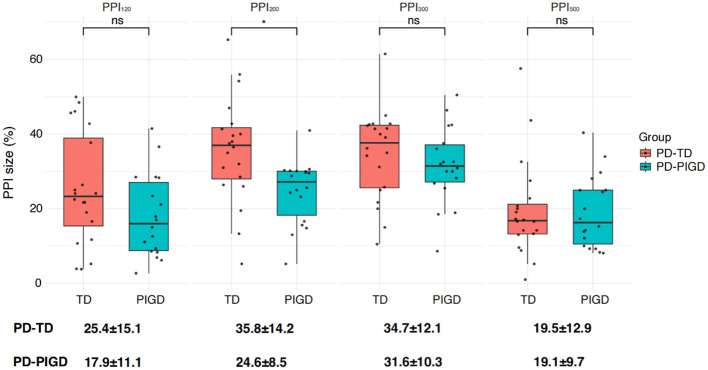 Figure 5
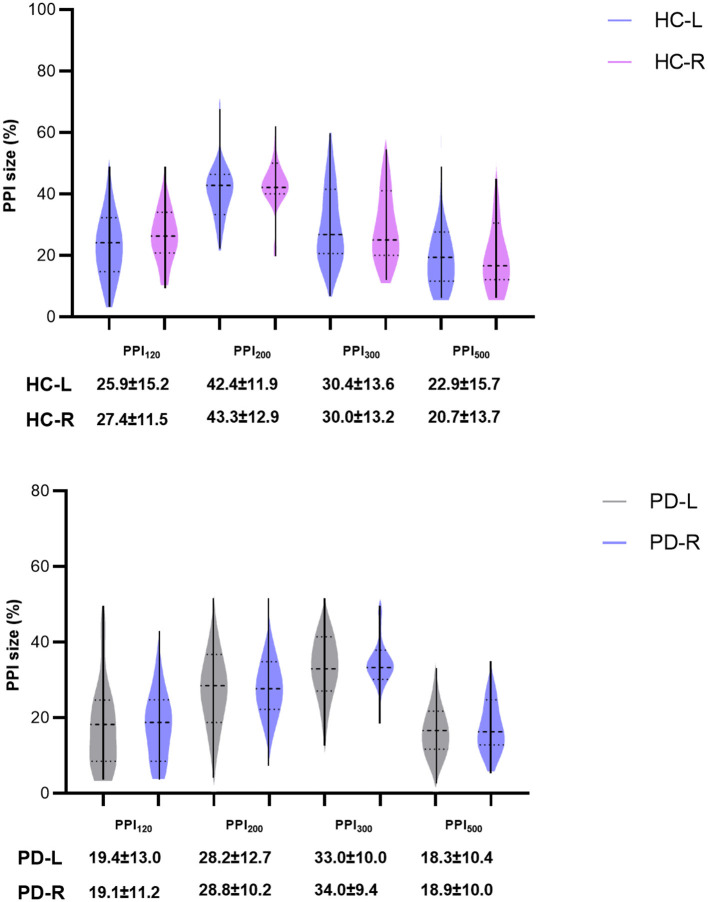 Figure 6
Peer Reviews
No public reviews on file for this paper yet. If you reviewed it on a platform where reviews are public (OpenReview, ICLR, NeurIPS, ICML), you can paste yours below so the community can read it here.
Videos
No videos yet. Explain this paper in a talk, walkthrough, or lecture? Add one.
Taxonomy
TopicsParkinson's Disease Mechanisms and Treatments · Botulinum Toxin and Related Neurological Disorders · Vestibular and auditory disorders