Long-term impacts of captivity on skull morphology and endocranial volume in a marsupial carnivore
Emily L. Scicluna, Marissa L. Parrott, Leila Siciliano-Martina, Margot Michaud, Kylie Robert, Peter T. Green

TL;DR
Captive breeding in a marsupial carnivore leads to skull and brain changes that may affect survival when released into the wild.
Contribution
This study is the first to document morphological and endocranial changes in a marsupial due to long-term captivity.
Findings
Captive dunnarts had brachycephalic skulls with shorter molar lengths and broader zygomatic widths.
Captive individuals had a 3.8% larger endocranial volume compared to wild individuals.
These changes may impact dietary, cognitive, and sensory functions, affecting survival in the wild.
Abstract
A challenge in modern conservation is maintaining ecological roles and natural behaviours of wildlife in an anthropogenic world. Captive breeding has been linked to morphological changes that may impact individual fitness for reintroduction to the wild. Changes in skull morphology and brain size may be linked to functional and behavioural changes, influencing survival outcomes. These issues have been explored in numerous eutherian mammals, but rarely in metatherians. We compared skull morphology and endocranial volume in a carnivorous marsupial, the fat-tailed dunnart (Sminthopsis crassicaudata), between wild-derived and captive individuals maintained in a university laboratory colony over tens of generations. Skulls from captive dunnarts were brachycephalic, with significantly shorter basal and upper molar lengths, broader zygomatic widths and longer palate and toothrow lengths,…
Genes, proteins, chemicals, diseases, species, mutations and cell lines named across the full text — each resolved to its canonical identifier and authoritative record.
Click any figure to enlarge with its caption.
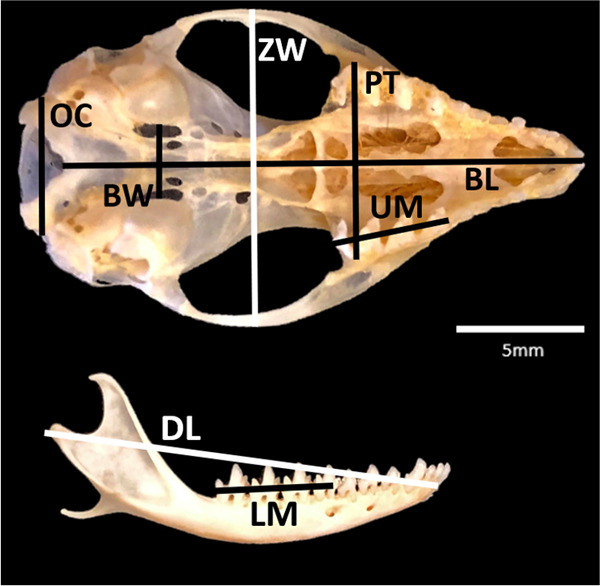 Figure 1
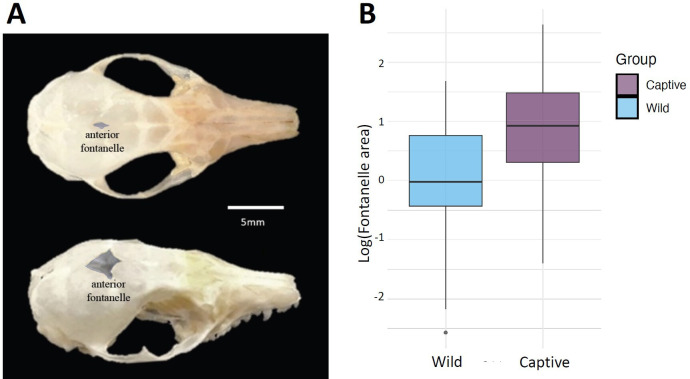 Figure 2
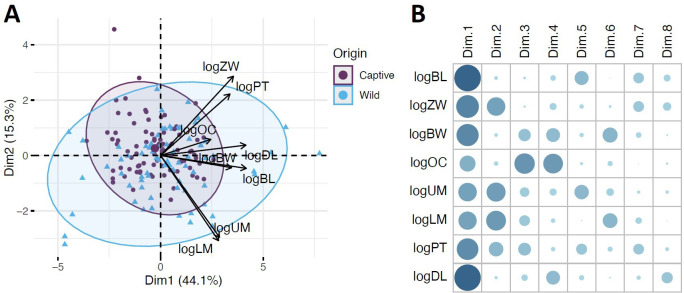 Figure 3
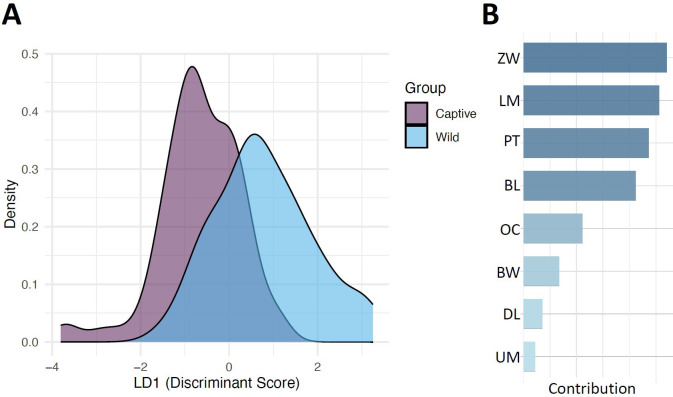 Figure 4
Peer Reviews
No public reviews on file for this paper yet. If you reviewed it on a platform where reviews are public (OpenReview, ICLR, NeurIPS, ICML), you can paste yours below so the community can read it here.
Videos
No videos yet. Explain this paper in a talk, walkthrough, or lecture? Add one.
Taxonomy
TopicsWildlife Ecology and Conservation · Bat Biology and Ecology Studies · Evolution and Paleontology Studies