Sustainability in the laboratory: evaluating the reusability of microtitre plates for PCR and fragment detection
Ane Liv Berthelsen, A. J. Paijmans, Jaume Forcada, Joseph Ivan Hoffman

TL;DR
This study explores reusing lab plastics to reduce waste, finding that while PCR plates increase errors, fragment detection plates can be reused safely.
Contribution
Demonstrates that reusing microtitre plates for fragment detection is feasible without compromising data quality.
Findings
Reusing PCR plates significantly increases genotyping error rates due to residual DNA contamination.
Detection plates can be reused without compromising data quality when cleaned with regular soap.
The approach reduces single-use plastic waste and costs while maintaining research integrity.
Abstract
Single-use plastics (SUPs) are indispensable in laboratory research, but their disposal contributes substantially to environmental pollution. Consequently, reusing common SUP items such as microtitre plates represents a promising strategy for improving laboratory sustainability. However, the key challenge lies in determining whether SUP reuse can be implemented without sacrificing data quality. To investigate this, we conducted a simple experiment to assess the impact of reusing microtitre plates on microsatellite genotyping accuracy. Plates previously used for polymerase chain reaction (PCR) and fragment detection were cleaned, opting for an environmentally friendly approach using regular soap, and then reused. Our results indicate that, while reusing PCR plates significantly increases genotyping error rates due to residual DNA contamination, detection plates can potentially be reused…
Genes, proteins, chemicals, diseases, species, mutations and cell lines named across the full text — each resolved to its canonical identifier and authoritative record.
Click any figure to enlarge with its caption.
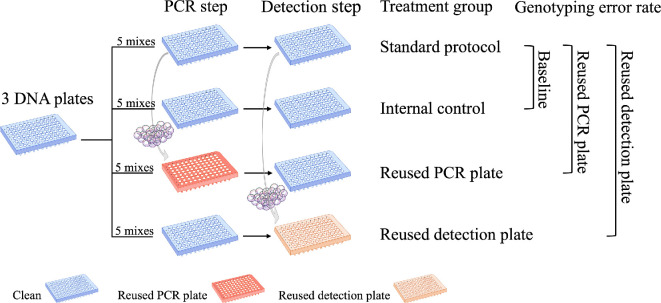 Figure 1
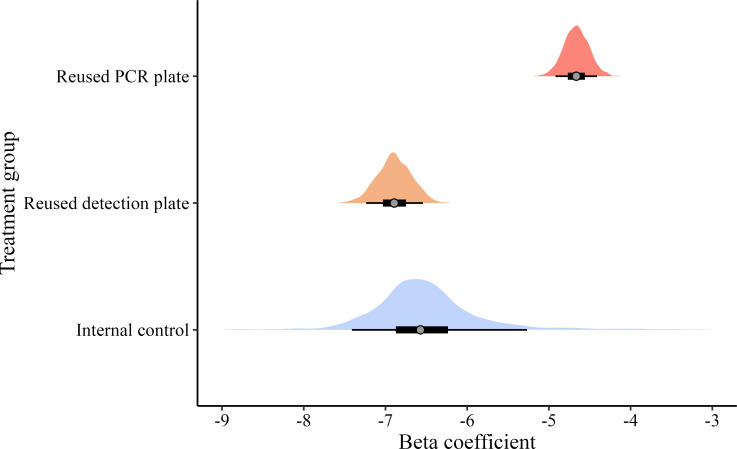 Figure 2
Peer Reviews
No public reviews on file for this paper yet. If you reviewed it on a platform where reviews are public (OpenReview, ICLR, NeurIPS, ICML), you can paste yours below so the community can read it here.
Videos
No videos yet. Explain this paper in a talk, walkthrough, or lecture? Add one.
Taxonomy
TopicsEffects and risks of endocrine disrupting chemicals · Microplastics and Plastic Pollution