“I can't let it stop me”: perspectives on aging from older adults with sickle cell disease
Charity I Oyedeji, Tolu O Oyesanya, Rania Mohamed, Stephanie Padrick, Reena Ravi, Teagan Callaway, John J Strouse

TL;DR
This study explores how older adults with sickle cell disease experience aging and what strategies help them live longer and healthier lives.
Contribution
The study is the largest to date capturing the unique aging experiences of older adults with sickle cell disease.
Findings
Older adults with SCD identified challenges with aging, including internal and external difficulties.
Participants emphasized lifestyle modifications and self-care as key to managing complications and pain.
Factors like faith and self-efficacy were reported to contribute to longevity and quality of life.
Abstract
More individuals with SCD are living beyond initial life expectancy. Despite a growing population of older adults with SCD, little is known about their unique experiences and needs. Understanding the perspectives of older adults with SCD (age ≥ 50 years) could provide insight on the most pressing concerns that healthcare providers should focus on and strategies to promote healthy aging. The purpose of this study was to describe the aging experiences of older adults with SCD. In this qualitative descriptive study, we conducted semi-structured interviews with 19 older adults with SCD who received care at a single comprehensive sickle cell program in the Southeastern United States. Data were analyzed using conventional content analysis. A total of 3 themes were identified. Theme 1 was “challenges with aging” with 2 subthemes: (a) internal challenges and (b) external challenges. Theme 2…
Genes, proteins, chemicals, diseases, species, mutations and cell lines named across the full text — each resolved to its canonical identifier and authoritative record.
Click any figure to enlarge with its caption.
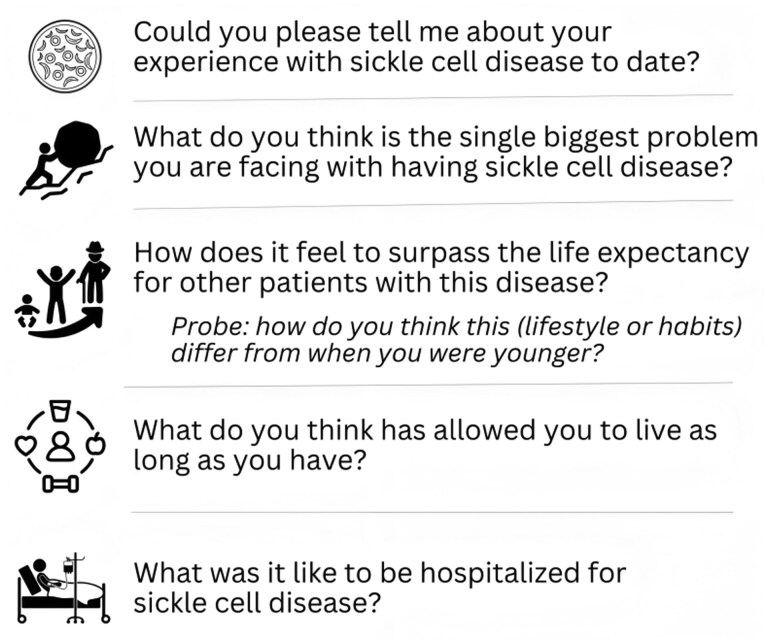 Figure 1
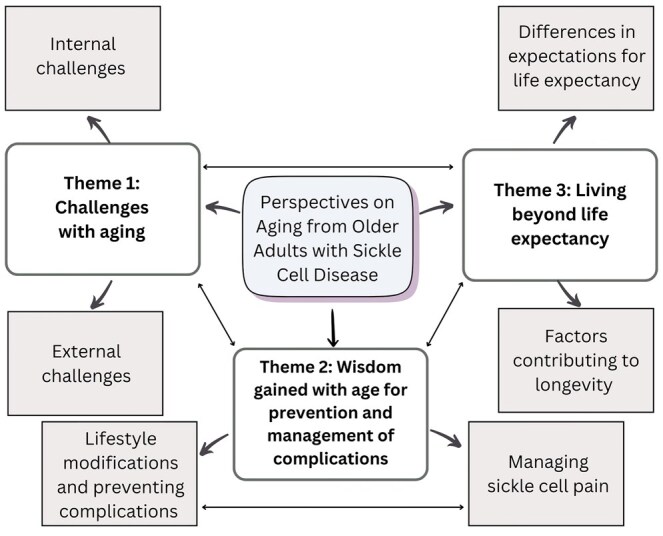 Figure 2
 Figure 3
Peer Reviews
No public reviews on file for this paper yet. If you reviewed it on a platform where reviews are public (OpenReview, ICLR, NeurIPS, ICML), you can paste yours below so the community can read it here.
Videos
No videos yet. Explain this paper in a talk, walkthrough, or lecture? Add one.
Taxonomy
TopicsHemoglobinopathies and Related Disorders