Intranasal insulin enhances resting-state functional connectivity in Type 2 Diabetes
Zongpai Zhang, Vera Novak, Peter Novak, Christos Mantzoros, Long Ngo, Vasileios Lioutas, Weiying Dai

TL;DR
Intranasal insulin improves brain connectivity in people with Type 2 Diabetes, potentially helping with cognitive issues.
Contribution
The study shows that intranasal insulin increases specific resting-state functional connectivity patterns in Type 2 Diabetes patients.
Findings
INI treatment increased mPFC-postcentral rsFC and hippocampal-frontal connectivity in Type 2 Diabetes patients.
Reduced insulin resistance was linked to improved mPFC-basal ganglia connectivity.
Results suggest INI may enhance brain connectivity related to cognition in T2DM.
Abstract
Type 2 diabetes mellitus (T2DM) affects cognition and resting-state functional connectivity (rsFC). Intranasal insulin (INI) has emerged as a potential treatment for T2DM-related cognitive decline. We aimed to evaluate the effect of INI treatment on rsFC with medio-prefrontal (mPFC) and left/right hippocampus (lHPC/rHPC), and their relationship with the cognition, hemoglobin A1c (HbA1c), and homeostatic model assessment of insulin resistance (HOMA-IR) and walking speed. An MRI sub-study of the MemAID trial was conducted, involving a 24-week treatment with either intranasal insulin or placebo. Blood oxygen level-dependent (BOLD) functional MRI (fMRI) images were acquired on eighteen DM subjects at baseline and eleven DM subjects (eight DM-INI patients and three DM-Placebo) at the end-of-treatment. Compared to DM-Placebo treated subjects, DM-INI patients showed increased mPFC-postcentral…
Genes, proteins, chemicals, diseases, species, mutations and cell lines named across the full text — each resolved to its canonical identifier and authoritative record.
Click any figure to enlarge with its caption.
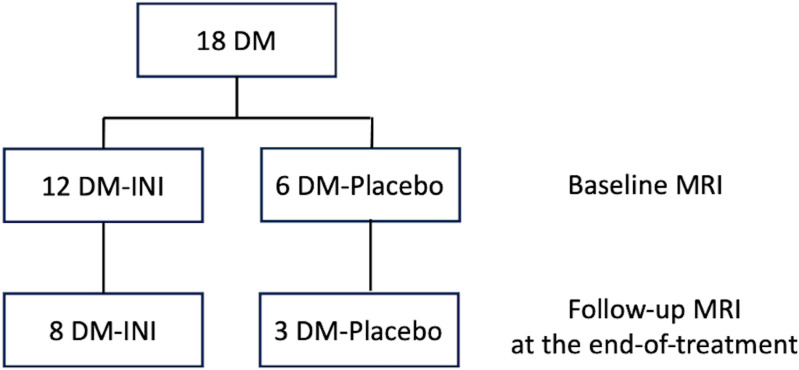 Figure 1
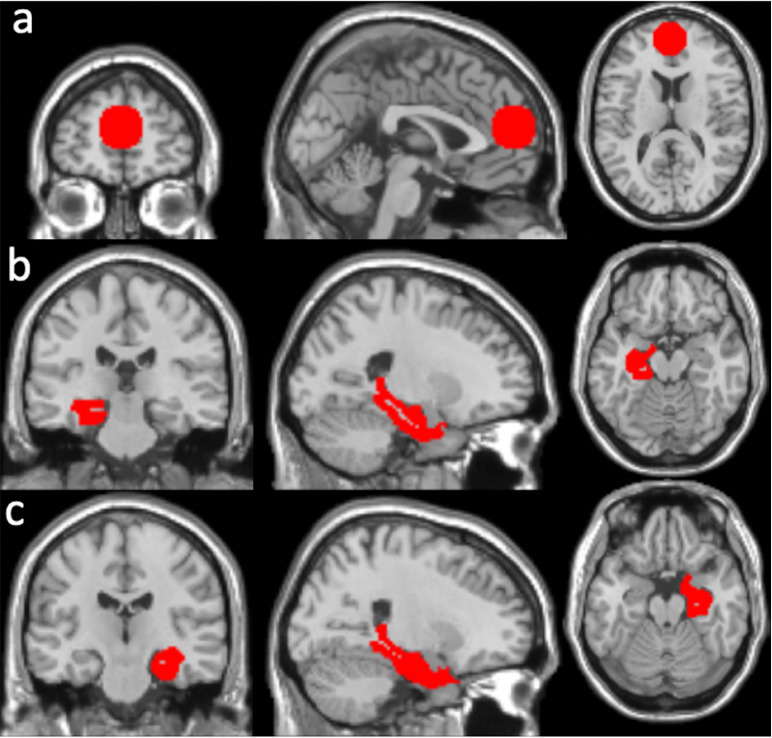 Figure 2
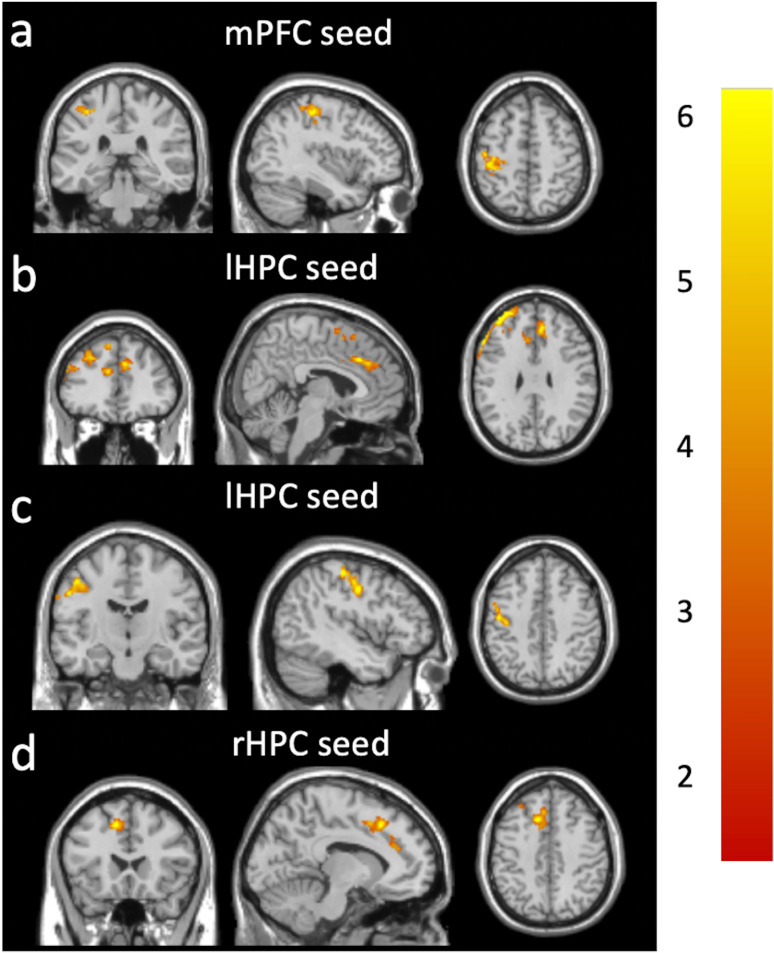 Figure 3
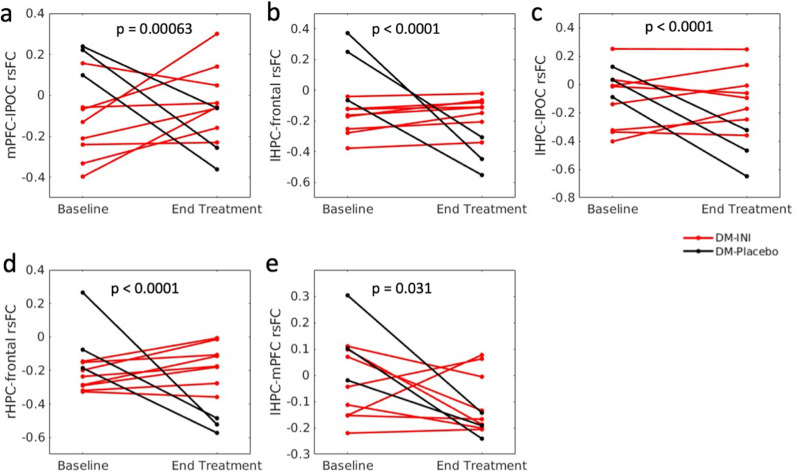 Figure 4
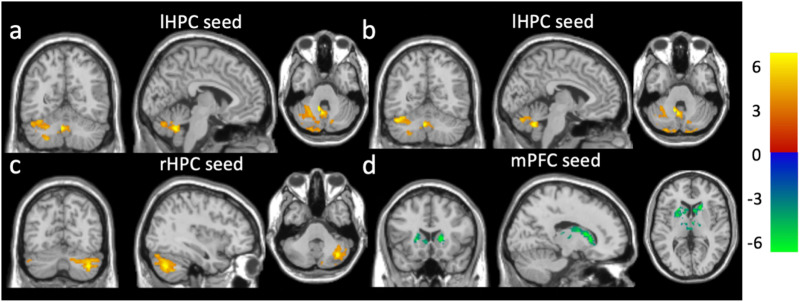 Figure 5
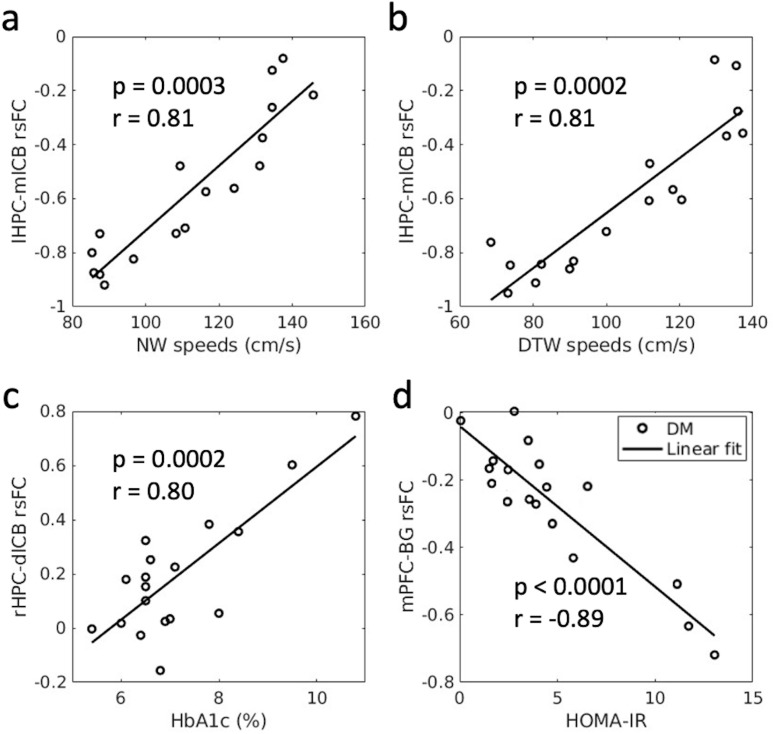 Figure 6
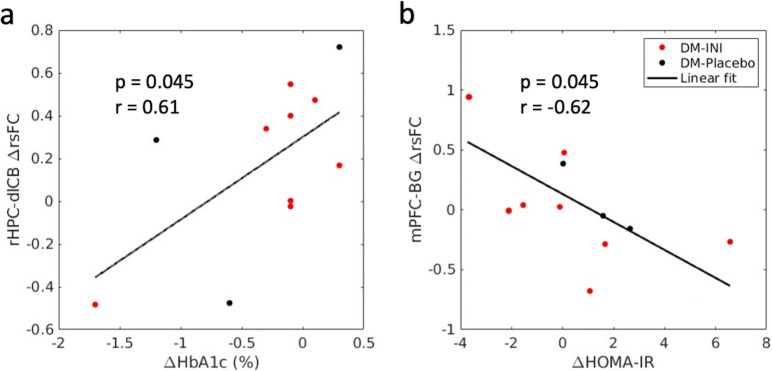 Figure 7
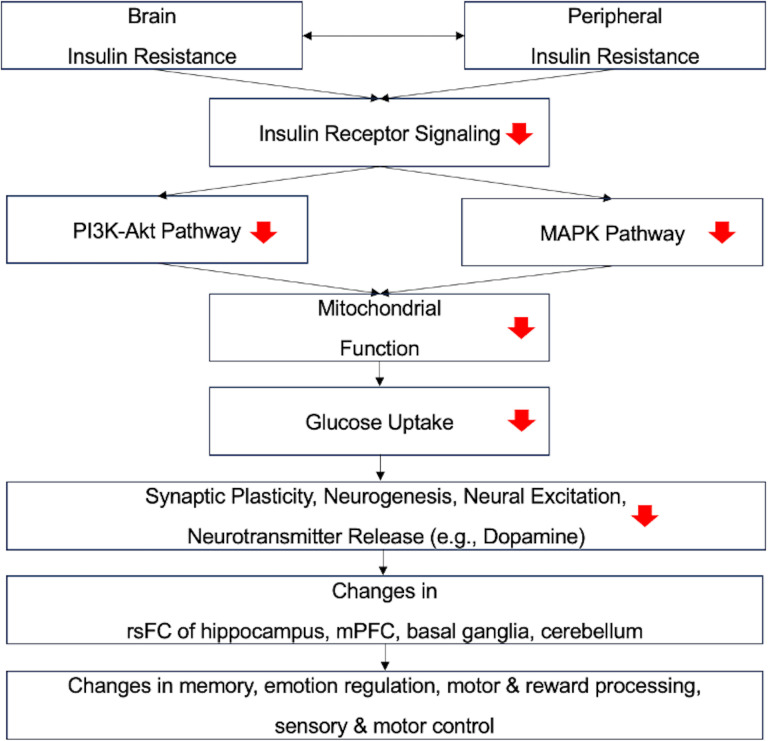 Figure 8
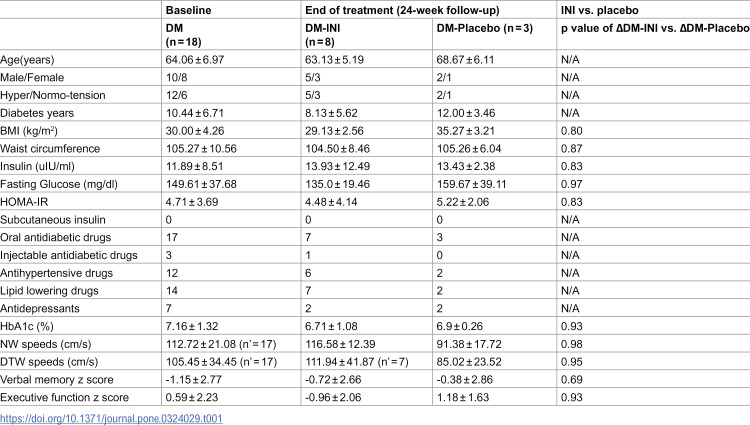 Figure 9
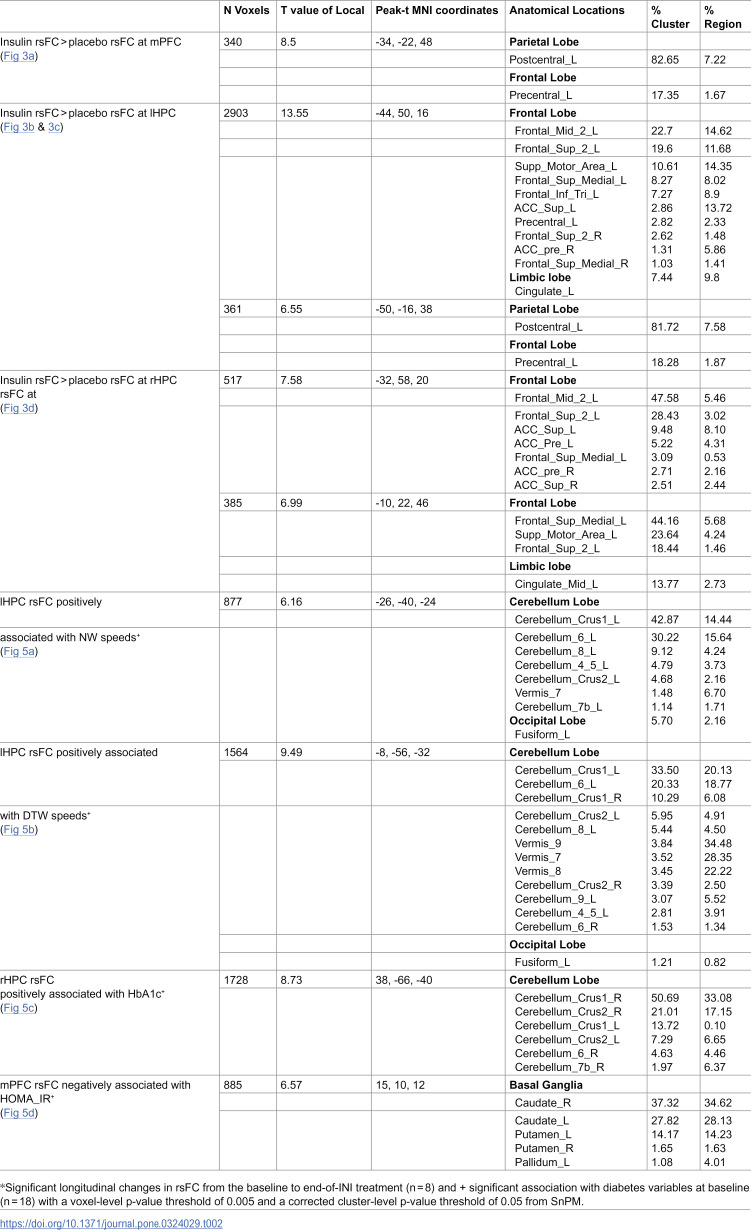 Figure 10
Peer Reviews
No public reviews on file for this paper yet. If you reviewed it on a platform where reviews are public (OpenReview, ICLR, NeurIPS, ICML), you can paste yours below so the community can read it here.
Videos
No videos yet. Explain this paper in a talk, walkthrough, or lecture? Add one.
Taxonomy
TopicsNeurological Disease Mechanisms and Treatments · Optical Imaging and Spectroscopy Techniques · Neonatal and fetal brain pathology