Assessing the bread-leavening ability of wild yeasts isolated from selected fruits collected from local markets
Eshet Lakew Tesfaye, Anteneh Tesfaye Tefera, Diriba Muleta, Samuel Babarinde, Samuel Babarinde, Samuel Babarinde, Samuel Babarinde

TL;DR
This study identifies wild yeasts from fruits that can effectively leaven bread, with one strain outperforming commercial yeast.
Contribution
The study discovers and characterizes H2S-free wild yeast strains with superior leavening ability for baking.
Findings
Three wild yeast isolates (AAUGr5, AAUOr7, AAUPi3) showed efficient CO2 production for leavening.
Isolate AAUGr5 outperformed commercial yeast in leavening at both 30°C and room temperature.
Co-culturing H2S-free wild yeasts enhanced leavening activity, suggesting potential for high-quality bread production.
Abstract
Yeasts play a crucial role in converting sugars in flour into carbon dioxide (CO2) and ethanol, enabling dough leavening. This study focused on identifying efficient wild yeast strains isolated from various fruits for leavening under controlled laboratory conditions. Of the 88 wild yeast isolates obtained, three (AAUGr5, AAUOr7, and AAUPi3) were selected based on their ability to produce CO2 efficiently, using D-glucose (3 g/L) as a substrate and their non-hydrogen sulfide (H2S) production character. These isolates were tentatively identified as members of the Saccharomyces genus through cultural, morphological, and biochemical analyses and optimal physicochemical profiling. Optimal growth conditions in Yeast Extract Peptone Dextrose (YPD) medium were a pH of 5 and a temperature of 30 °C. Maximum growth was observed with 2% (w/v) D-glucose and 0.5% (w/v) NaCl concentrations, achieving…
Genes, proteins, chemicals, diseases, species, mutations and cell lines named across the full text — each resolved to its canonical identifier and authoritative record.
Click any figure to enlarge with its caption.
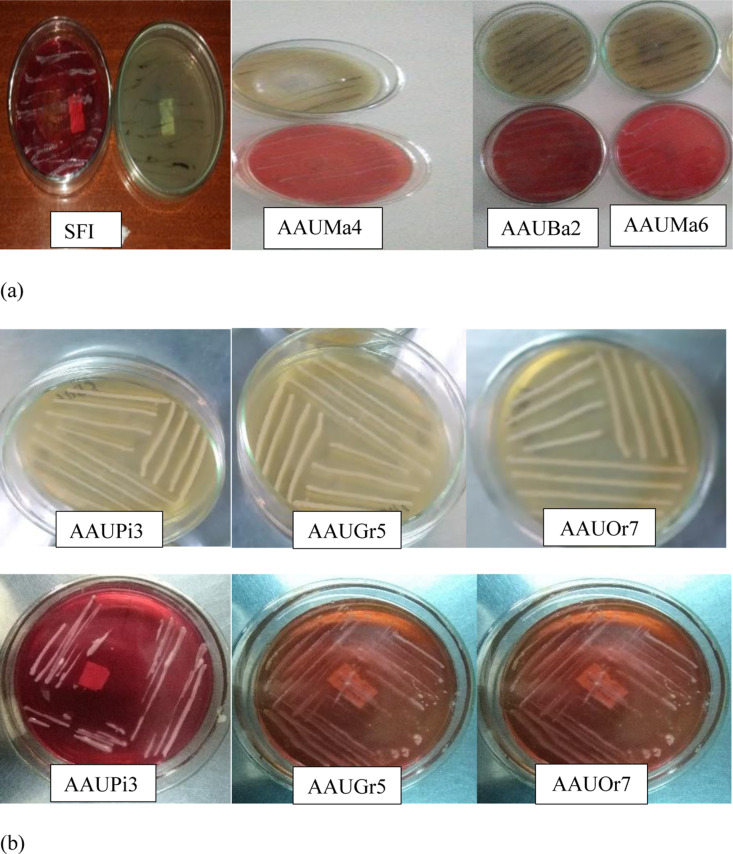 Figure 1
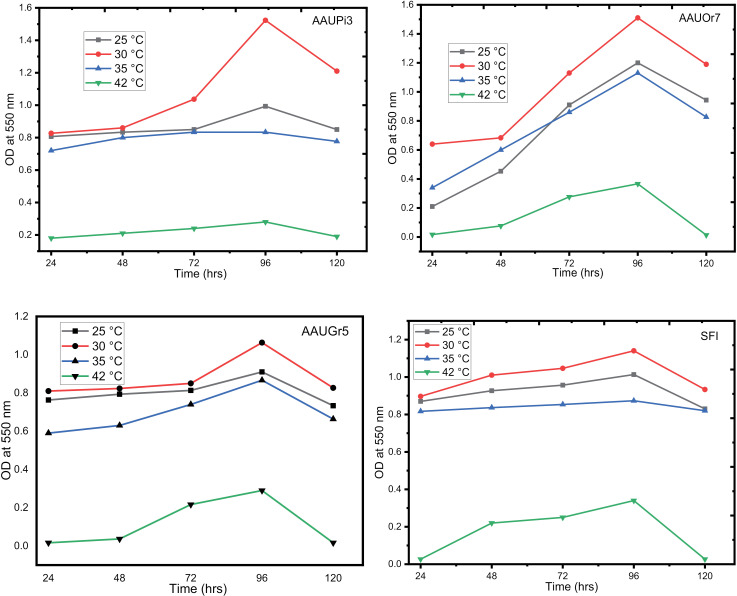 Figure 2
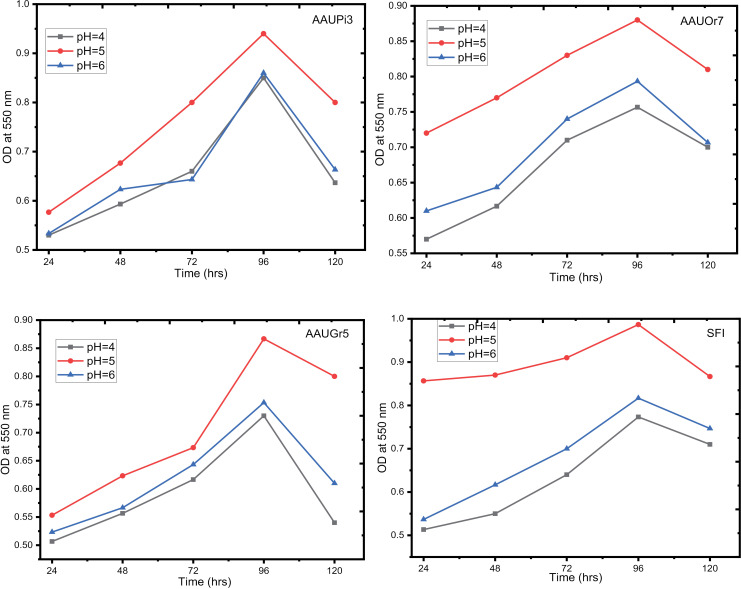 Figure 3
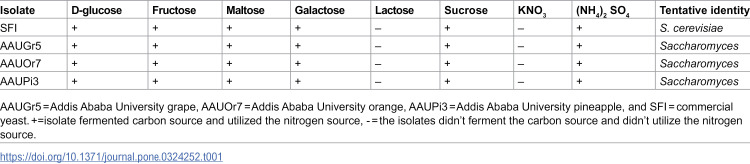 Figure 4
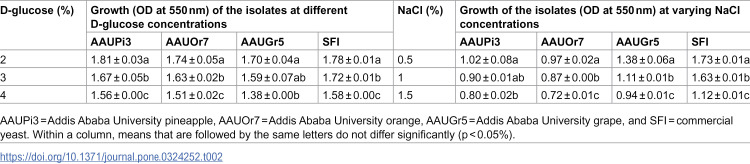 Figure 5
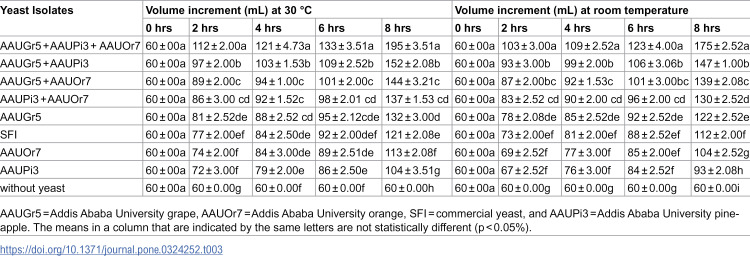 Figure 6
Peer Reviews
No public reviews on file for this paper yet. If you reviewed it on a platform where reviews are public (OpenReview, ICLR, NeurIPS, ICML), you can paste yours below so the community can read it here.
Videos
No videos yet. Explain this paper in a talk, walkthrough, or lecture? Add one.
Taxonomy
TopicsFermentation and Sensory Analysis · Biofuel production and bioconversion · Fungal and yeast genetics research