The absence of changes in the relative age effect present an opportunity for lower income soccer clubs to be more efficient than Europe’s elite
Thomas P. Craig, Kevin Enright, Patrick Maughan, Will Abbott, Javier Fernandez Navarro

TL;DR
This study shows that Scottish soccer academies could improve efficiency by addressing birth date biases, which are still strong in elite European clubs.
Contribution
The study identifies a persistent relative age effect in Scottish soccer and suggests corrective measures for resource-limited clubs.
Findings
Relative age effect profiles remained unchanged over ten years in Scottish soccer academies.
Players born in the first quarter are 3.2–5.2 times more likely to be selected than those born in the fourth quarter.
Physical differences across birth quarters were minimal, except for a trivial CMJ difference.
Abstract
An overrepresentation of athletes born earlier in the year compared with those born later in the year is known as the relative age effect (RAE). This is perceived to be due to physical selection bias which leads to higher degrees of exposure to coaching, physical training and competition at a younger age. Even with increasing knowledge and established interventions, clubs in Europe’s top leagues still present a strong RAE. Scottish clubs have limited resources in comparison meaning academy efficiency is paramount. The main study aim was to assess changes in the RAE over a ten-year period in Scottish soccer. A secondary aim was to establish if physical differences exist across each quarter due to findings in English academy players that maturation status and not RAE is the main discrepancy for physicality. A retrospective analysis of 512 players from a Scottish academy over a ten year…
Genes, proteins, chemicals, diseases, species, mutations and cell lines named across the full text — each resolved to its canonical identifier and authoritative record.
Click any figure to enlarge with its caption.
 Figure 1
 Figure 2
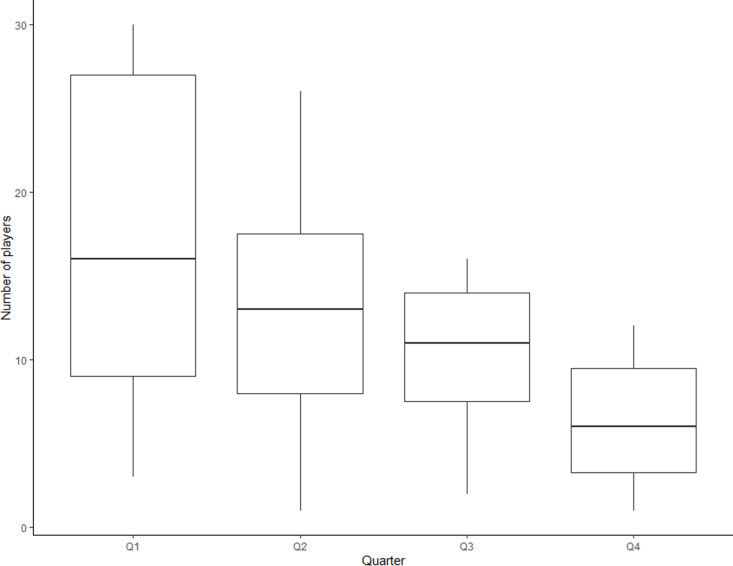 Figure 3
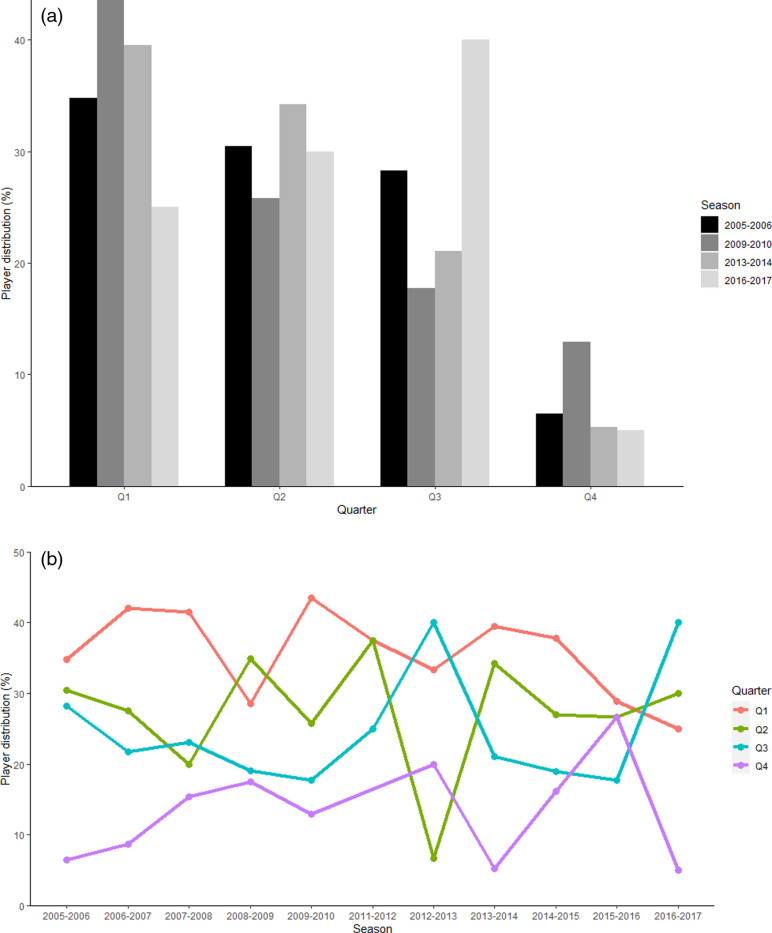 Figure 4
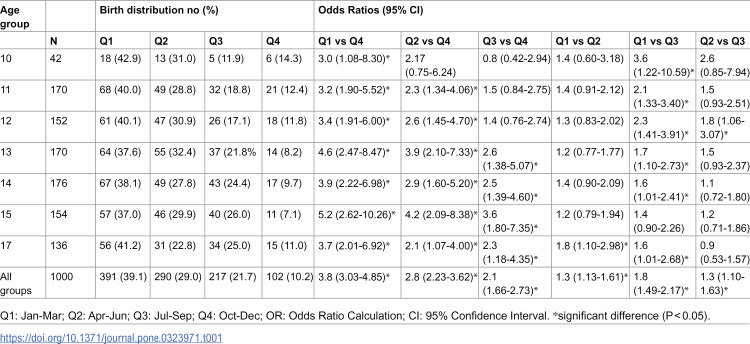 Figure 5
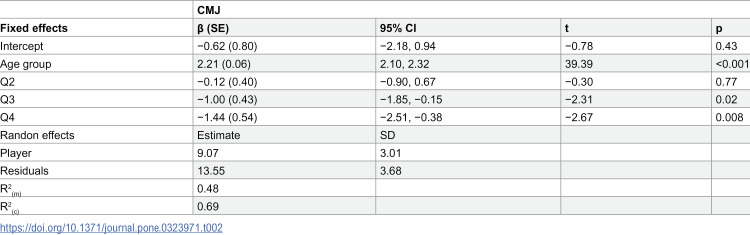 Figure 6
Peer Reviews
No public reviews on file for this paper yet. If you reviewed it on a platform where reviews are public (OpenReview, ICLR, NeurIPS, ICML), you can paste yours below so the community can read it here.
Videos
No videos yet. Explain this paper in a talk, walkthrough, or lecture? Add one.
Taxonomy
TopicsSports Performance and Training · Sport Psychology and Performance · Sports injuries and prevention