
TL;DR
Henrike Berns, a medical student, studied a WNT11 gene variant linked to developmental defects using Xenopus, as part of her research published in Disease Models & Mechanisms.
Contribution
Identified a homozygous WNT11 variant associated with laterality, heart, and renal defects in humans.
Findings
A homozygous WNT11 variant was found to be associated with laterality defects.
The variant also correlates with heart and renal developmental abnormalities.
Xenopus was used to investigate the implications of the WNT11 variant in human development.
Abstract
First Person is a series of interviews with the first authors of a selection of papers published in Disease Models & Mechanisms, helping researchers promote themselves alongside their papers. Henrike Berns is first author on ‘ A homozygous human WNT11 variant is associated with laterality, heart and renal defects’, published in DMM. Henrike is a medical student at the Faculty of Medicine, University of Freiburg, Freiburg, Germany. She conducted the research described in this article while an MD student in Dr Peter Walentek's lab at the University of Freiburg, Freiburg, Germany, investigating WNT11 variants and their implications in human development, using the Xenopus model organism.
Genes, proteins, chemicals, diseases, species, mutations and cell lines named across the full text — each resolved to its canonical identifier and authoritative record.
Click any figure to enlarge with its caption.
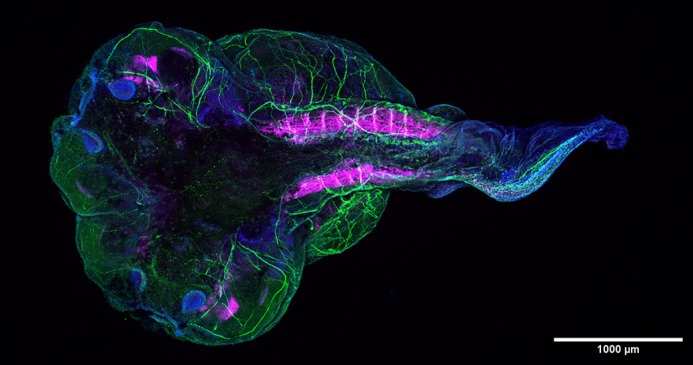 Figure 1
 Figure 2
Peer Reviews
No public reviews on file for this paper yet. If you reviewed it on a platform where reviews are public (OpenReview, ICLR, NeurIPS, ICML), you can paste yours below so the community can read it here.
Videos
No videos yet. Explain this paper in a talk, walkthrough, or lecture? Add one.
Taxonomy
TopicsWnt/β-catenin signaling in development and cancer · Genomics and Rare Diseases · Genetic and Kidney Cyst Diseases