How does the audience return to the music theater? Exploring the influence of musical theater adaptation of Chinese nursery rhymes
Jian Li, Yu Hu, Rafael Galvão de Almeida, Rafael Galvão de Almeida, Rafael Galvão de Almeida

TL;DR
This study explores how adapting Chinese nursery rhymes in musicals affects audience emotions and behaviors, aiming to boost engagement and repurchase intentions.
Contribution
The novelty lies in analyzing how nursery rhyme adaptations in Chinese musicals influence audience interaction, emotional responses, and repurchase intentions.
Findings
Audience interaction significantly enhances emotional reactions, leading to higher satisfaction and repurchase intention.
Scenic design, lyric adaptation, and melody adaptation enrich the artistic experience through cognitive and affective responses.
Abstract
Musicals, as an art form, are attracting greater attention in China’s increasingly competitive market. In particular, the adaptation of Chinese nursery rhymes in musicals and its influence on audience affective reactions and behavioral intentions has emerged as a notable research focus. This study aims to explore the impact of nursery rhyme adaptations in musicals on audience interaction, affective reactions, satisfaction, and repurchase intention. Using questionnaire surveys and structural equation modeling, we empirically analyse how audience interaction and affective reactions in these musical adaptations enhance satisfaction and increase repurchase intention. The results indicate that audience interaction significantly boosts affective reactions, leading to heightened satisfaction and a greater likelihood of repurchase. Furthermore, elements such as scenic design, lyric adaptation,…
Genes, proteins, chemicals, diseases, species, mutations and cell lines named across the full text — each resolved to its canonical identifier and authoritative record.
Click any figure to enlarge with its caption.
 Figure 1
 Figure 2
 Figure 3
 Figure 4
 Figure 5
 Figure 6
 Figure 7
 Figure 8
 Figure 9
 Figure 10
 Figure 11
 Figure 12
 Figure 13
 Figure 14
 Figure 15
 Figure 16
 Figure 17
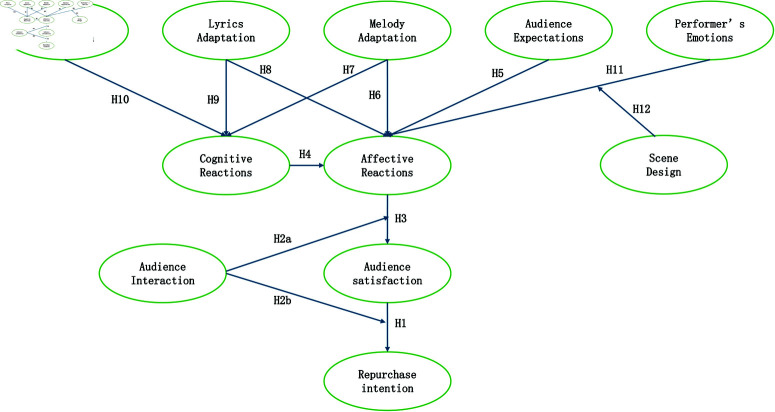 Figure 18
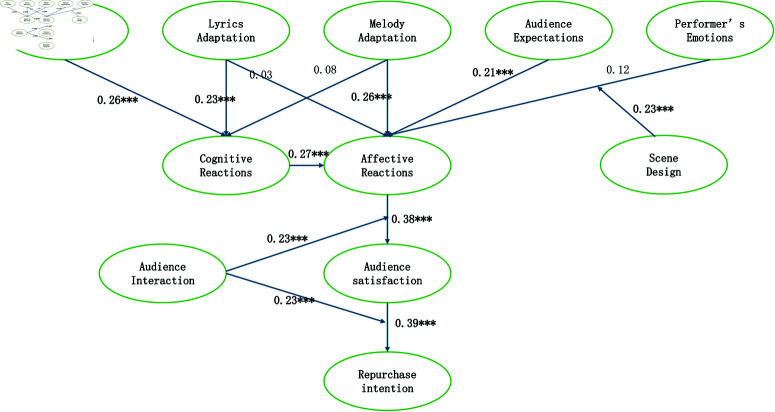 Figure 19
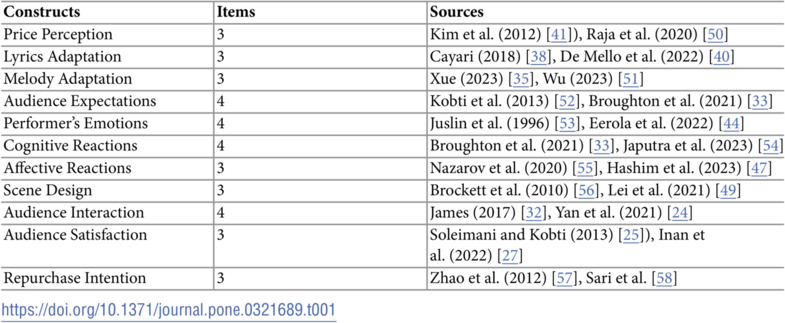 Figure 20
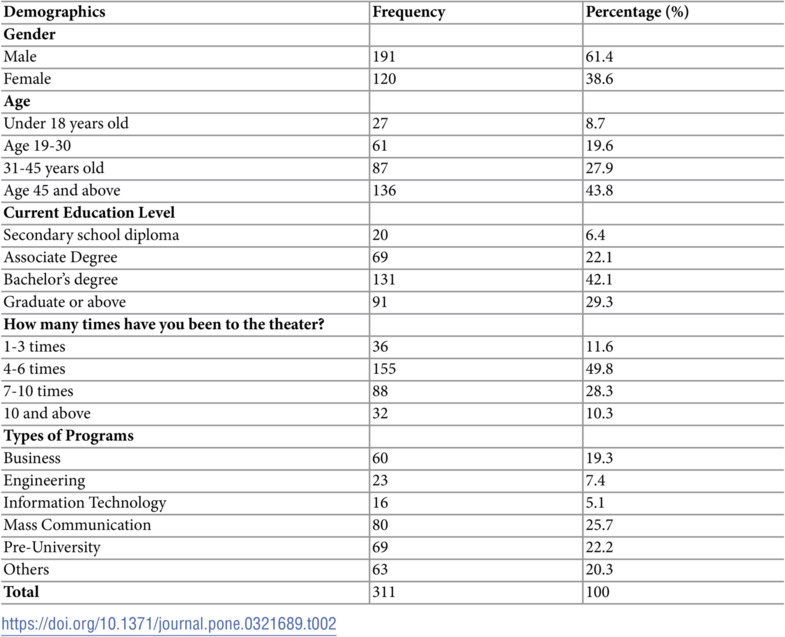 Figure 21
 Figure 22
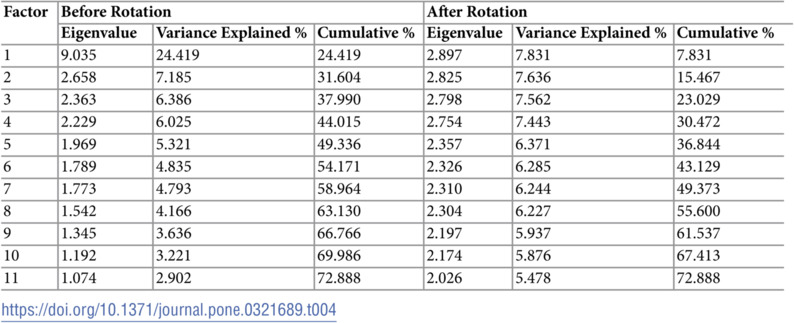 Figure 23
 Figure 24
 Figure 25
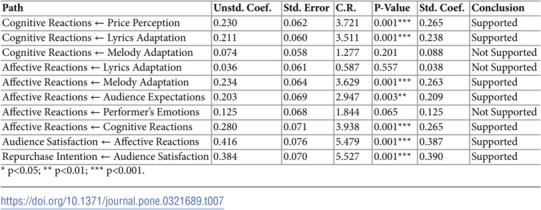 Figure 26
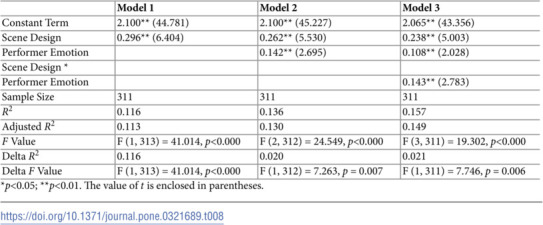 Figure 27
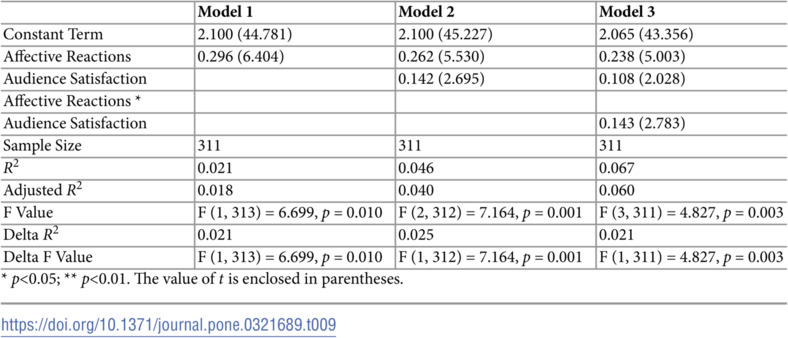 Figure 28
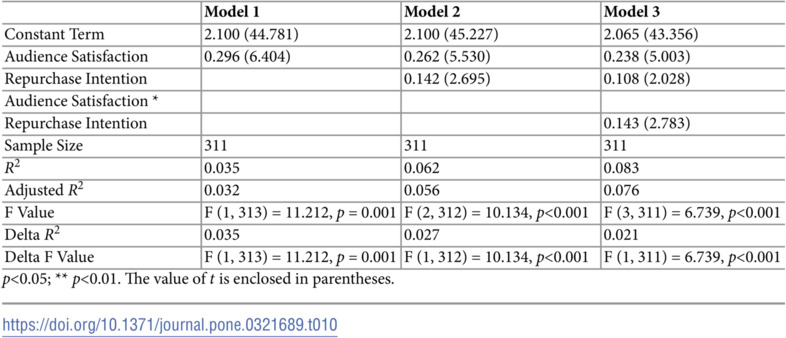 Figure 29
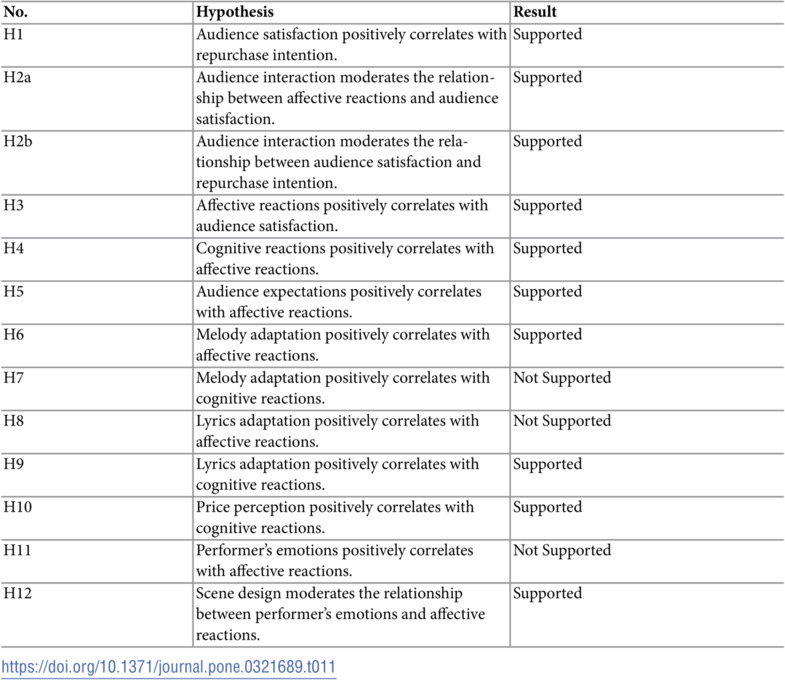 Figure 30
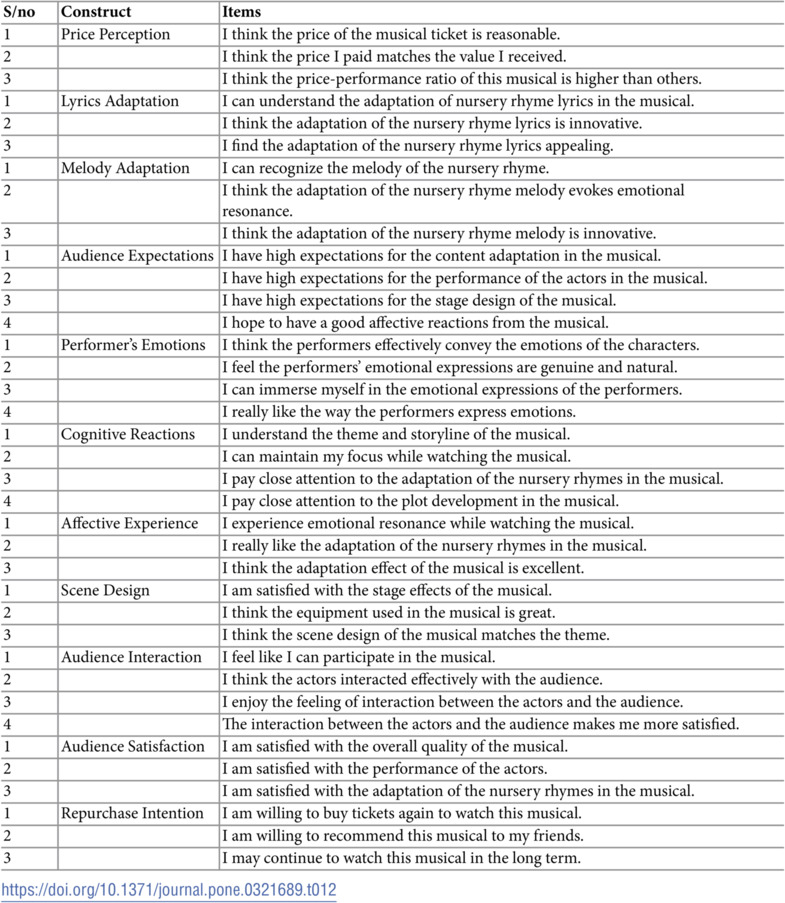 Figure 31
Peer Reviews
No public reviews on file for this paper yet. If you reviewed it on a platform where reviews are public (OpenReview, ICLR, NeurIPS, ICML), you can paste yours below so the community can read it here.
Videos
No videos yet. Explain this paper in a talk, walkthrough, or lecture? Add one.
Taxonomy
TopicsNeuroscience and Music Perception · Diverse Music Education Insights · Cultural Industries and Urban Development