Re-evaluating the choice of gamma stimulation frequency for the potential treatment of Alzheimer’s disease: Novel invisible spectral flicker evokes gamma responses at various frequencies
Mark Alexander Henney, Bianca Laura Hansen, Luna Skytte Hansen, Manja Gersholm Grønberg, Martin William Thorning-Schmidt, Henrik Enggaard Hansen, Mai Nguyen, Paul Michael Petersen, Line Katrine Harder Clemmensen, Marcus Carstensen, Kristoffer Hougaard Madsen

TL;DR
This study explores whether different gamma stimulation frequencies, including 40 Hz, can be used to treat Alzheimer's disease using an invisible flicker method.
Contribution
The study introduces invisible spectral flicker as a comfortable alternative to visible flicker for evoking gamma responses.
Findings
ISF significantly increased cortical power at all tested frequencies compared to baseline.
No specific frequency preference was found in the 36–44 Hz range across participants.
Subject variability was higher than differences between stimulation frequencies.
Abstract
With recent advances in the potential usage of visual gamma stimulation at 40 Hz for the treatment of Alzheimer’s disease, there is motivation to evaluate adjacent frequencies to ensure that specifically 40 Hz is optimal. As visual stimulation with luminance flicker may affect adherence in clinical trials due to its inherent perceived flickering, invisible spectral flicker (ISF) was proposed as a more comfortable alternative for entraining 40 Hz. Based on current understanding of the potential mechanism of action for 40 Hz stimulation, the exact frequency is debatable. This study investigates the ability of ISF to evoke acute gamma responses at several frequencies in the range of 36–44 Hz. Twenty healthy volunteers were included in an electroencephalography (EEG) experiment with ISF stimulation at nine different frequencies (36–44 Hz, 1 Hz interval). Estimated signal-to-noise ratios…
Genes, proteins, chemicals, diseases, species, mutations and cell lines named across the full text — each resolved to its canonical identifier and authoritative record.
Click any figure to enlarge with its caption.
 Figure 1
 Figure 2
 Figure 3
 Figure 4
 Figure 5
 Figure 6
 Figure 7
 Figure 8
 Figure 9
 Figure 10
 Figure 11
 Figure 12
 Figure 13
 Figure 14
 Figure 15
 Figure 16
 Figure 17
 Figure 18
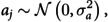 Figure 19
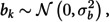 Figure 20
 Figure 21
 Figure 22
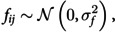 Figure 23
 Figure 24
 Figure 25
 Figure 26
 Figure 27
 Figure 28
 Figure 29
 Figure 30
 Figure 31
 Figure 32
 Figure 33
 Figure 34
 Figure 35
 Figure 36
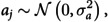 Figure 37
 Figure 38
 Figure 39
 Figure 40
 Figure 41
 Figure 42
 Figure 43
 Figure 44
 Figure 45
 Figure 46
 Figure 47
 Figure 48
 Figure 49
 Figure 50
Peer Reviews
No public reviews on file for this paper yet. If you reviewed it on a platform where reviews are public (OpenReview, ICLR, NeurIPS, ICML), you can paste yours below so the community can read it here.
Videos
No videos yet. Explain this paper in a talk, walkthrough, or lecture? Add one.
Taxonomy
TopicsNeural dynamics and brain function · EEG and Brain-Computer Interfaces · Neuroscience and Neural Engineering