Comparative genomic analysis of Streptococcus suis sequence type 105 and development of a PCR diagnostic tool
Parichart Boueroy, Peechanika Chopjitt, Jednipit Borthong, Thidathip Wongsurawat, Piroon Jenjaroenpun, Rapeephan Duangjanchot, Bhanubong Saiboonjan, Rujirat Hatrongjit, Anusak Kerdsin

TL;DR
Researchers analyzed the genome of a specific Streptococcus suis strain to develop a faster and cheaper PCR test for detecting it in pigs and humans.
Contribution
The study developed a novel PCR diagnostic tool using unique sequences from the ST105 genome of Streptococcus suis.
Findings
ST105 strains from Thailand and Vietnam showed high genomic homology.
36 unique sequences were identified in ST105, with two selected for PCR testing.
mPCR-LFS was found to be more efficient than mPCR-gel electrophoresis.
Abstract
Streptococcus suis serotype 14 is the second most prevalent serotype after serotype 2, and is highly prevalent in Southeast Asia. Among the serotype 14 strains, sequence type (ST) 105 is found in humans and pigs. We analysed the genome sequences of S. suis ST105 to identify unique sequences to develop a multiplex PCR (mPCR) -gel electrophoresis and mPCR-lateral flows trip (LFS) for epidemiological purposes. The ST105 genome was closely related to the ST1 genomes. All ST105 of Thai and Vietnamese strains were highly homologous. Of the 1818 genes found in all compared genomes, 36 unique sequences were detected only in the ST105 strain. Of these, two unique sequences encoding hypothetical proteins were selected as PCR targets. Only S. suis ST105 strains were positive for both mPCRs. mPCR-LFS had fewer complications, lower costs, and less time for testing, than those of mPCR-gel…
Genes, proteins, chemicals, diseases, species, mutations and cell lines named across the full text — each resolved to its canonical identifier and authoritative record.
Click any figure to enlarge with its caption.
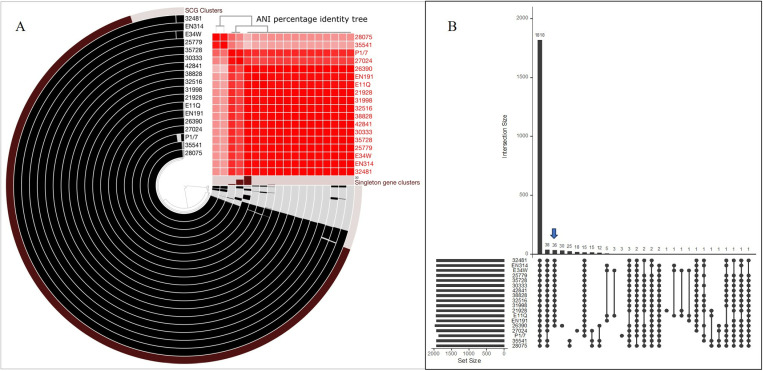 Figure 1
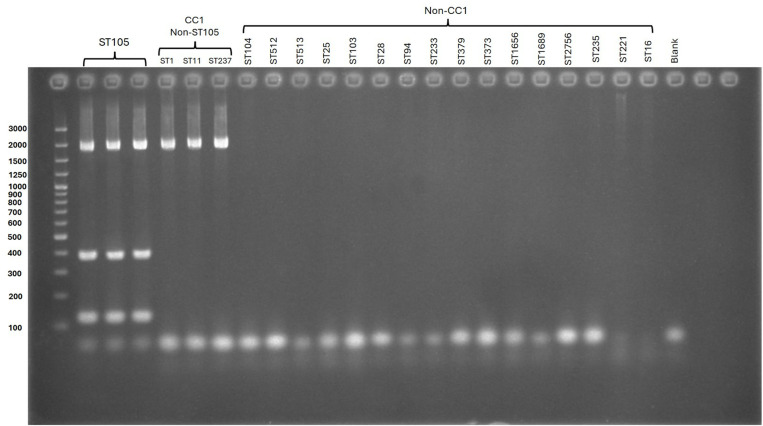 Figure 2
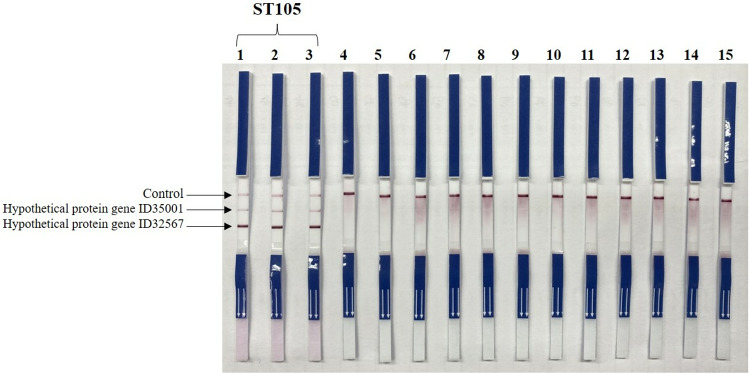 Figure 3
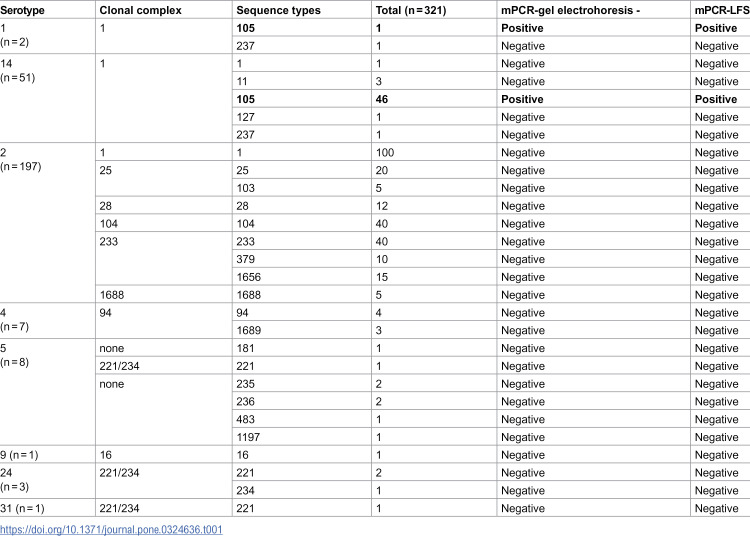 Figure 4
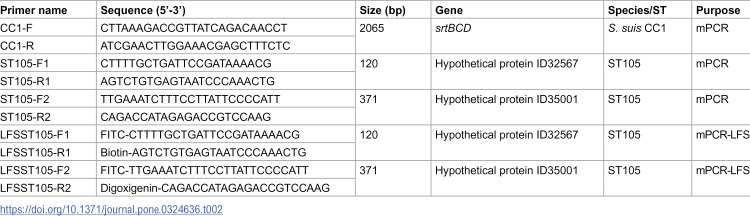 Figure 5
Peer Reviews
No public reviews on file for this paper yet. If you reviewed it on a platform where reviews are public (OpenReview, ICLR, NeurIPS, ICML), you can paste yours below so the community can read it here.
Videos
No videos yet. Explain this paper in a talk, walkthrough, or lecture? Add one.
Taxonomy
TopicsStreptococcal Infections and Treatments · Plant Pathogenic Bacteria Studies · Antimicrobial Resistance in Staphylococcus