Modeling and analysis of infectious diseases based on behavioral game theory on two-layered networks under media coverage
Jianrong Wang, Rong Zeng, Xinghua Chang

TL;DR
This paper uses game theory and two-layer networks to model how individual behavior and media coverage affect the spread of infectious diseases.
Contribution
A novel two-layer network model integrating behavioral game theory and media influence to study infectious disease dynamics.
Findings
Reducing personal protective costs increases the disease outbreak threshold.
Enhanced governmental adjustments to control measures effectively increase the outbreak threshold.
Individual attention to disease information significantly impacts disease spread dynamics.
Abstract
The spread of infectious diseases poses significant threats to public health, the economy, and society as a whole. Despite governmental control measures over individual behavior, the public might still be influenced by factors such as costs, expected benefits, and the behavior of others, leading to incomplete adherence to disease control measures. Therefore, this paper proposes a behavioral game theory based infectious disease model on two-layer networks. First, considering the dynamic interaction between individual awareness behavior and disease spreading, a two-layer coupled network of individual behavioral awareness and disease spreading is established. Second, game theory is used to describe the impact of relevant factors on individual awareness behavior. The first layer represents the individual protective behavior game layer, while the second layer represents the disease spreading…
Genes, proteins, chemicals, diseases, species, mutations and cell lines named across the full text — each resolved to its canonical identifier and authoritative record.
Click any figure to enlarge with its caption.
 Figure 1
 Figure 2
 Figure 3
 Figure 4
 Figure 5
 Figure 6
 Figure 7
 Figure 8
 Figure 9
 Figure 10
 Figure 11
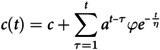 Figure 12
 Figure 13
 Figure 14
 Figure 15
 Figure 16
 Figure 17
 Figure 18
 Figure 19
 Figure 20
 Figure 21
 Figure 22
 Figure 23
 Figure 24
 Figure 25
 Figure 26
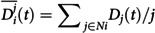 Figure 27
 Figure 28
 Figure 29
 Figure 30
 Figure 31
 Figure 32
 Figure 33
 Figure 34
 Figure 35
 Figure 36
 Figure 37
 Figure 38
 Figure 39
 Figure 40
 Figure 41
 Figure 42
 Figure 43
 Figure 44
 Figure 45
 Figure 46
 Figure 47
 Figure 48
 Figure 49
 Figure 50
Peer Reviews
No public reviews on file for this paper yet. If you reviewed it on a platform where reviews are public (OpenReview, ICLR, NeurIPS, ICML), you can paste yours below so the community can read it here.
Videos
No videos yet. Explain this paper in a talk, walkthrough, or lecture? Add one.
Taxonomy
TopicsCOVID-19 epidemiological studies · Opinion Dynamics and Social Influence · Complex Network Analysis Techniques