Permeability selection of biologically relevant membranes matches the stereochemistry of life on Earth
Olivia Goode, Urszula Łapińska, Juliano Morimoto, Georgina Glover, David S. Milner, Alyson E. Santoro, Stefano Pagliara, Thomas A. Richards

TL;DR
This study explores how certain membranes can select for specific sugar and amino acid stereochemistry, matching that of life on Earth.
Contribution
The study demonstrates that hybrid membranes can uniquely select for l-amino acids and d-sugars relevant to life.
Findings
Hybrid membranes select for d-ribose and d-deoxyribose sugars.
The hybrid membrane uniquely selects for a reduced alphabet of l-amino acids, including alanine.
Such membranes could provide stereochemical compound selection matching core metabolism of life.
Abstract
Early in the evolution of life, a proto-metabolic network was encapsulated within a membrane compartment. The permeability characteristics of the membrane determined several key functions of this network by determining which compounds could enter the compartment and which compounds could not. One key feature of known life is the utilization of right-handed d-ribose and d-deoxyribose sugars and left-handed l-amino acid stereochemical isomers (enantiomers); however, it is not clear why life adopted this specific chirality. Generally, archaea have l-phospholipid membrane chemistries and bacteria and eukaryotes have d-phospholipid membrane chemistries. We previously demonstrated that an l-archaeal and a d-intermediate membrane mimic, bearing a mixture of bacterial and archaeal lipid characteristics (a ‘hybrid’ membrane), displayed increased permeability for several key compounds compared to…
Genes, proteins, chemicals, diseases, species, mutations and cell lines named across the full text — each resolved to its canonical identifier and authoritative record.
Click any figure to enlarge with its caption.
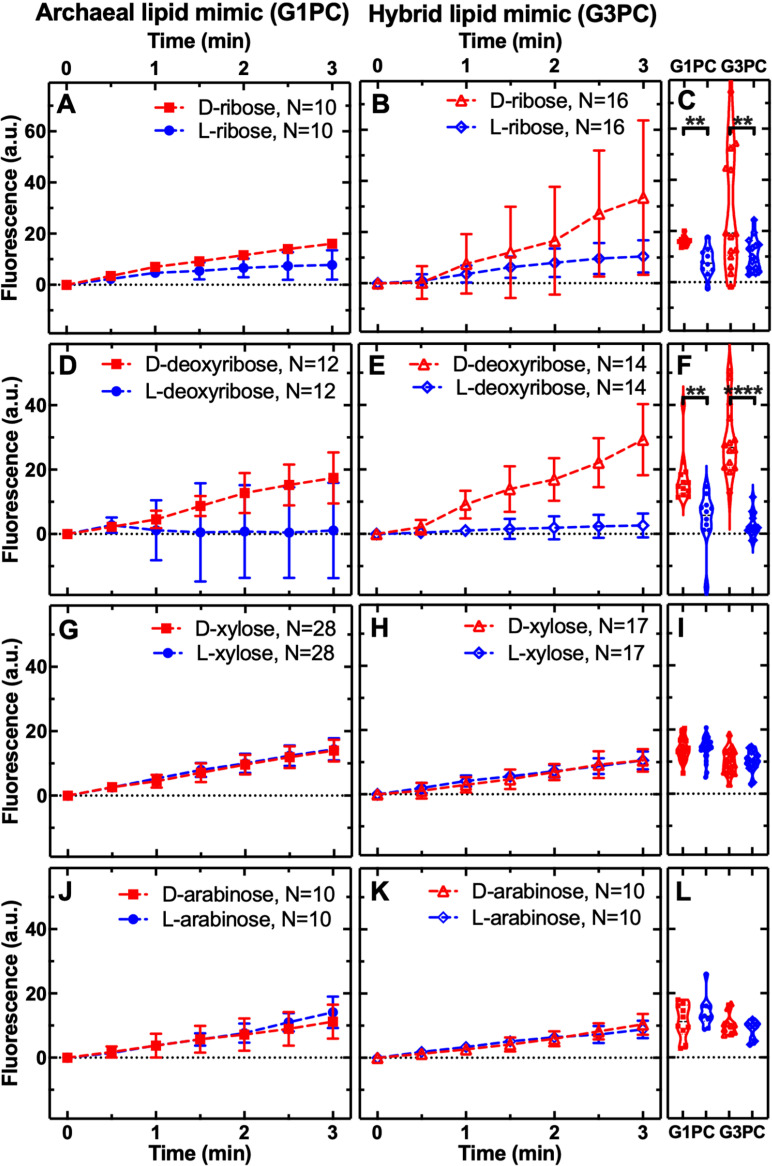 Figure 1
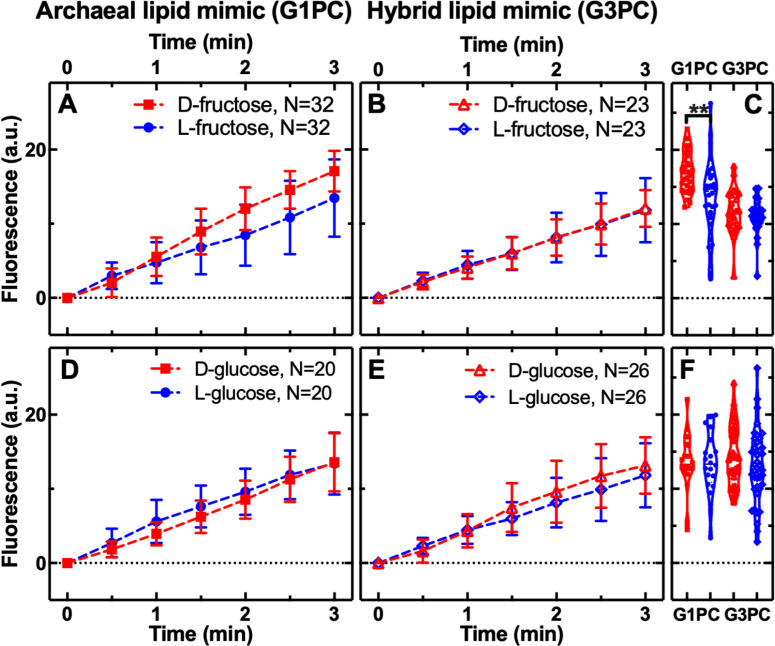 Figure 2
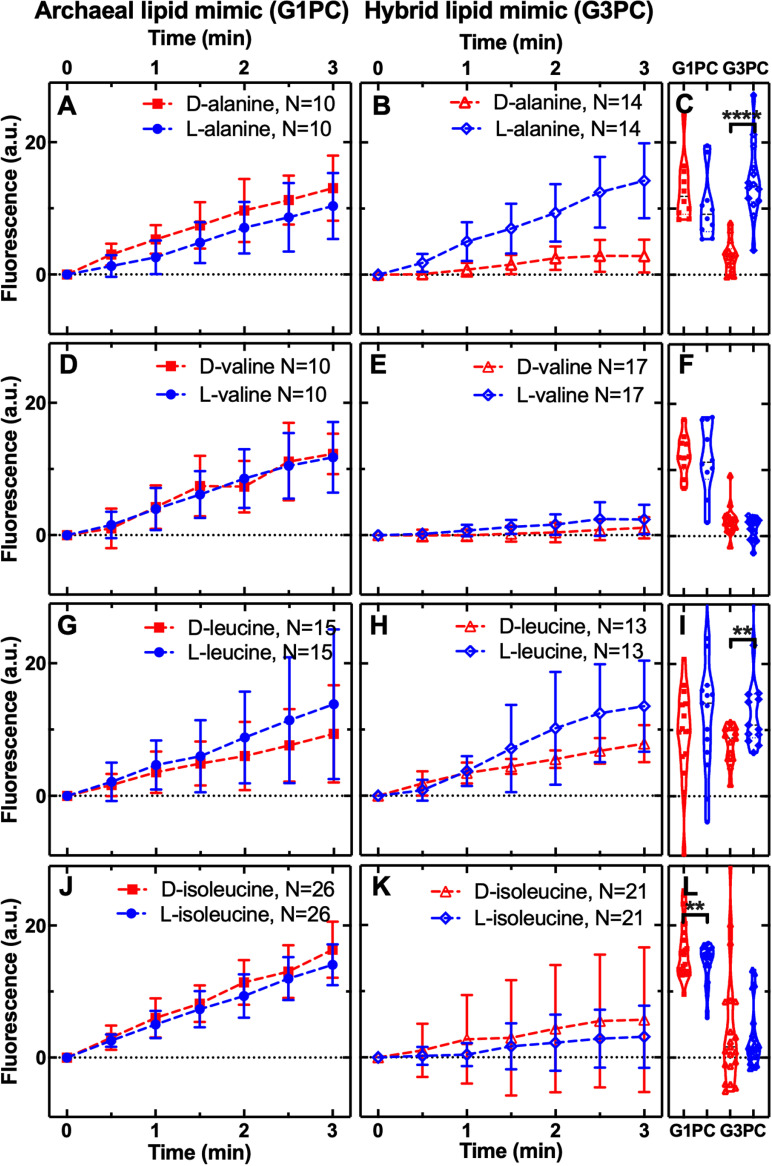 Figure 3
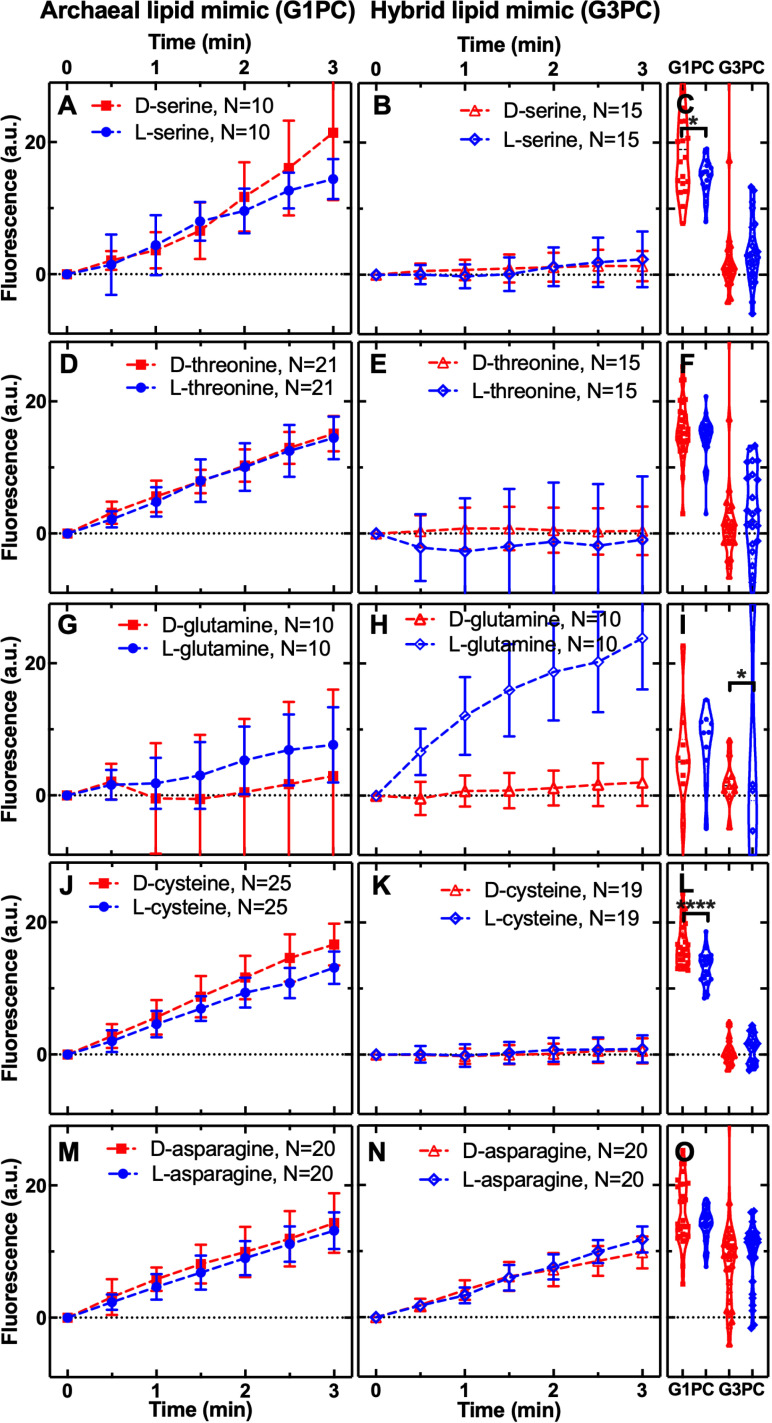 Figure 4
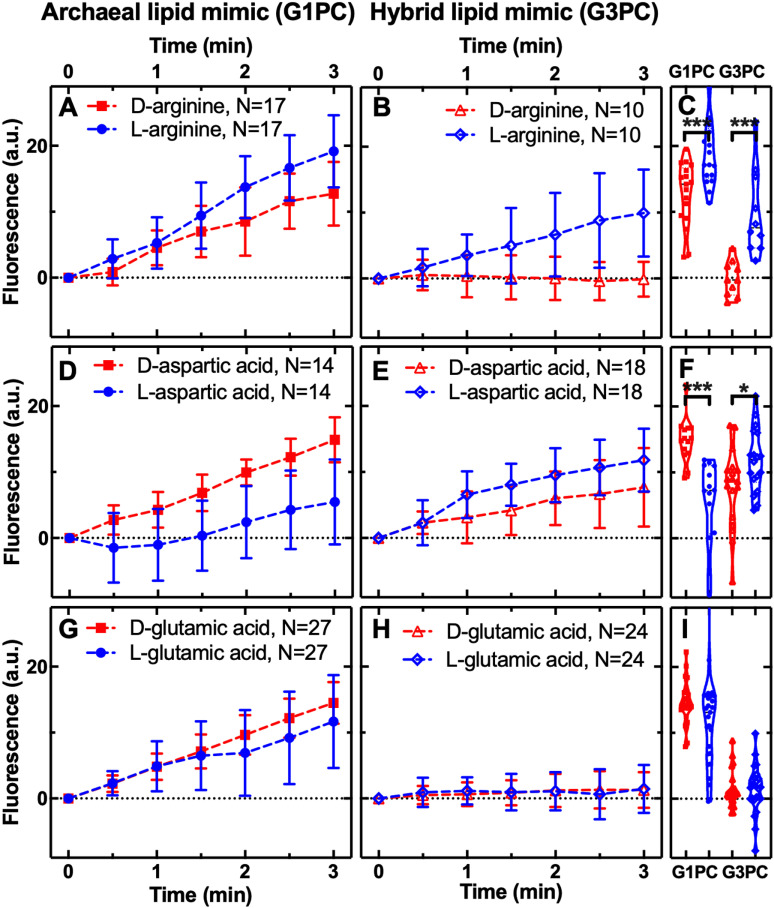 Figure 5
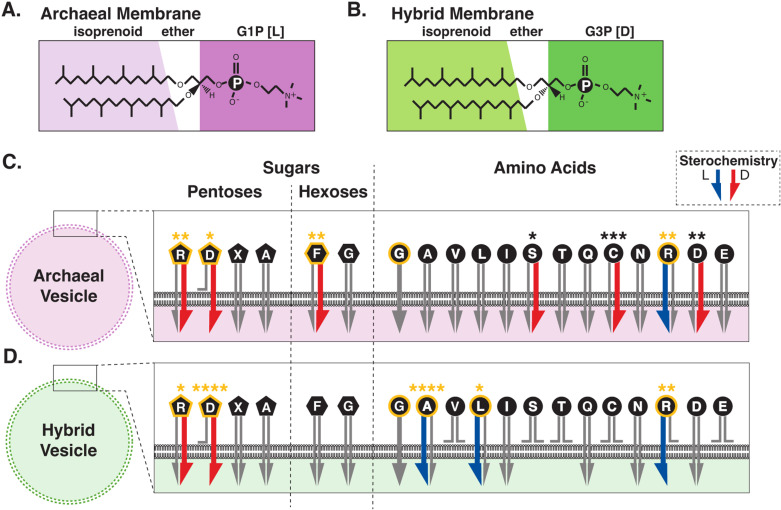 Figure 6
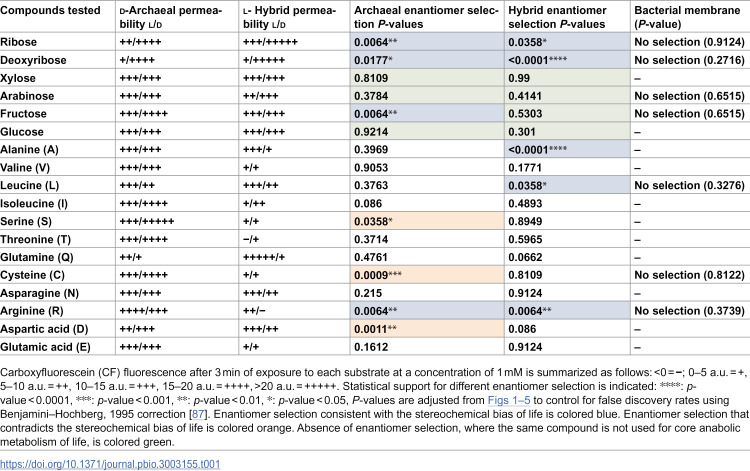 Figure 7
Peer Reviews
No public reviews on file for this paper yet. If you reviewed it on a platform where reviews are public (OpenReview, ICLR, NeurIPS, ICML), you can paste yours below so the community can read it here.
Videos
No videos yet. Explain this paper in a talk, walkthrough, or lecture? Add one.
Taxonomy
TopicsOrigins and Evolution of Life · Photoreceptor and optogenetics research · Protein Structure and Dynamics