Karyotyping with amniotic fluid in 6,572 pregnant women and pregnancy outcomes——A single-center retrospective study
Shiyu Wei, Yuan Yuan, Suhua Tu, Chunrong Pang, Maomei Chen, Min Ren, Lingshan Gou, Lingshan Gou, Lingshan Gou, Lingshan Gou, Lingshan Gou

TL;DR
This study analyzed amniotic fluid karyotypes in over 6,500 high-risk pregnancies to assess chromosomal abnormalities and their impact on pregnancy outcomes.
Contribution
The study provides empirical data on karyotype detection rates and outcomes in high-risk pregnancies at a single center.
Findings
Abnormal karyotypes were detected in 3.29% of cases, with high-risk noninvasive prenatal testing showing the highest detection rate.
Numerical chromosomal abnormalities were the main reason for pregnancy termination, accounting for 86.2% of cases.
The amniotic fluid culture success rate was nearly 100%, indicating high reliability of the diagnostic process.
Abstract
To detect abnormal chromosome karyotypes in amniotic fluid cells and to explore the relationship among various prenatal diagnostic indications, karyotypes, and pregnancy outcomes. The data used in this study were obtained from 6,572 pregnant women at high risk for fetal chromosomal abnormalities who visited the Luzhou Prenatal Diagnostic Center for amniocentesis from January 2017 to February 2023. The data were accessed from May to October 2023. Upon admission to the hospital, all pregnant women underwent amniocentesis guided by B-mode ultrasound, followed by karyotyping. The culture success rate of amniotic fluid was 99.98% (6,571/6,572), with 216 cases of abnormal karyotypes detected (3.29%), including 3 rare cases. There were significant differences in the detection rates of abnormal karyotypes by indication (χ2 = 449.661, P < 0.001), with high-risk noninvasive prenatal testing…
Genes, proteins, chemicals, diseases, species, mutations and cell lines named across the full text — each resolved to its canonical identifier and authoritative record.
Click any figure to enlarge with its caption.
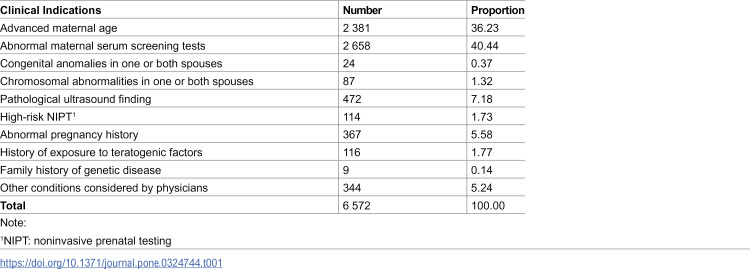 Figure 1
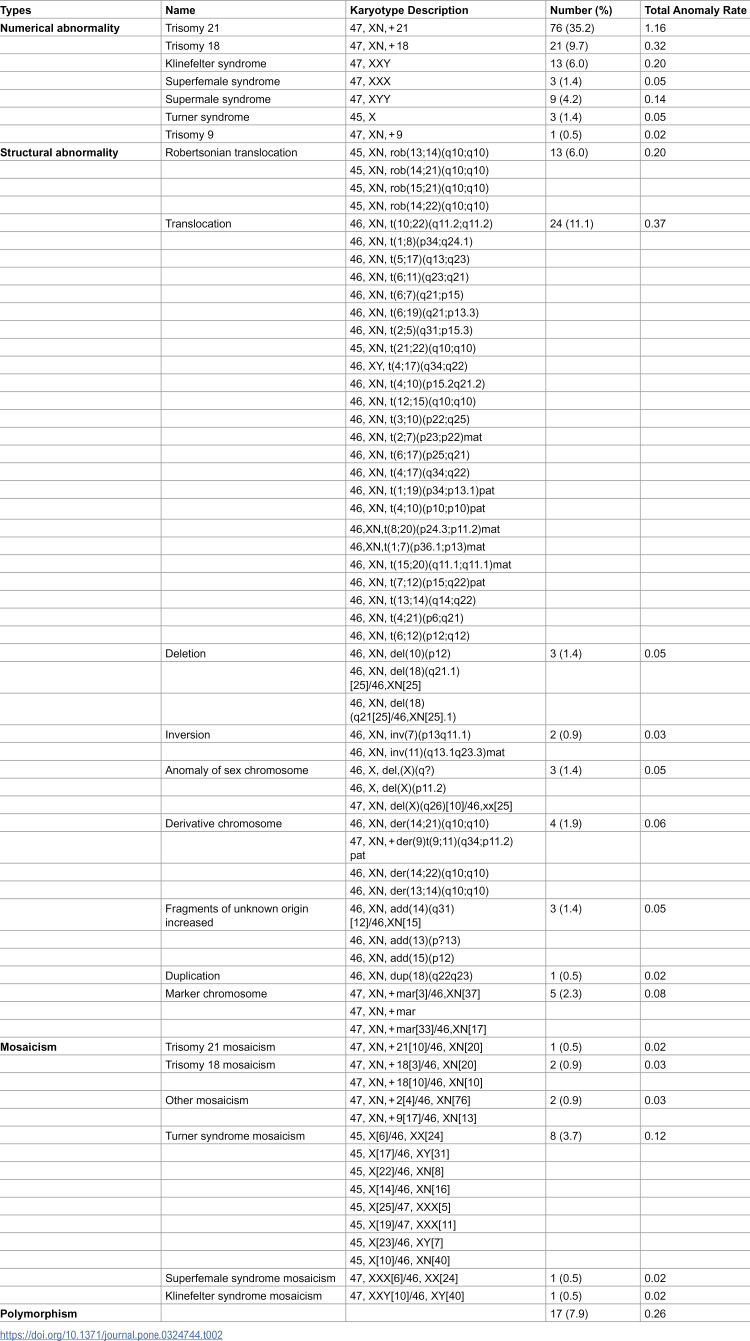 Figure 2
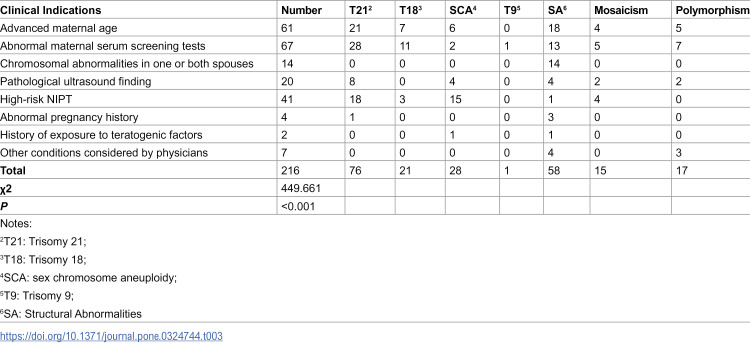 Figure 3
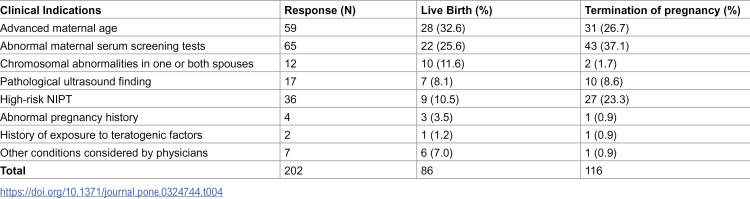 Figure 4
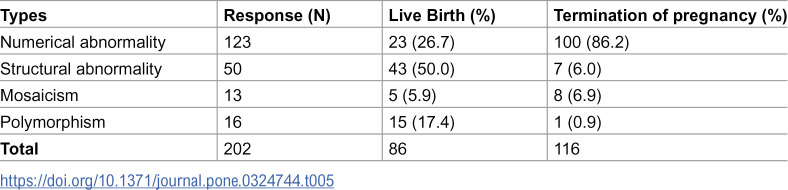 Figure 5
Peer Reviews
No public reviews on file for this paper yet. If you reviewed it on a platform where reviews are public (OpenReview, ICLR, NeurIPS, ICML), you can paste yours below so the community can read it here.
Videos
No videos yet. Explain this paper in a talk, walkthrough, or lecture? Add one.
Taxonomy
TopicsPrenatal Screening and Diagnostics · Congenital Anomalies and Fetal Surgery · Assisted Reproductive Technology and Twin Pregnancy