Insights into growth retardation and dwarfism caused by goose parvovirus in goslings: a transcriptomic profiling study
Keshan Zhang, Guangliang Gao, Zhuping Chen, Hongyuan Zhang, Xianzhi Zhao, Qin Li, Lin Ma, Lecheng Wang, Yi Luo, Qigui Wang

TL;DR
This study explores how goose parvovirus causes dwarfism and high mortality in goslings by analyzing gene expression and immune responses.
Contribution
The study identifies specific genes and pathways involved in GPV-induced growth retardation and provides insights into its pathogenic mechanisms.
Findings
GPV infection leads to high mortality, dwarfism, and severe liver and intestinal damage in goslings.
Transcriptomic analysis revealed 285 differentially expressed genes linked to cell proliferation inhibition and skeletal development.
GPV activates apoptosis and ferroptosis through key regulatory genes like PTGS2, TF, and ASCL1.
Abstract
Goose parvovirus (GPV) poses a significant threat to the waterfowl industry as it results in a high mortality rate and stunted growth in surviving goslings, leading to significant economic losses. We used 120 goslings and goose embryo fibroblasts inoculated with the GPV SYG61 strain to study the pathogenesis of GPV by pathological and gene expression profile changes. Fourteen days after infection with the GPV SYG61 strain, goslings showed a mortality rate of 63.33%, along with dwarfism, significant weight loss, and severe histopathological lesions in the liver and jejunum. Serum analysis revealed a marked increase in the levels of immunosuppressive factors such as TGF-β and IL-10 (p < 0.01 or p < 0.05), while the levels of pro-inflammatory cytokines such as IL-4, IFN-γ, TNF-α, and IgG remained unaffected. In addition, GPV infection inhibited the proliferation of goose embryo fibroblasts…
Genes, proteins, chemicals, diseases, species, mutations and cell lines named across the full text — each resolved to its canonical identifier and authoritative record.
Click any figure to enlarge with its caption.
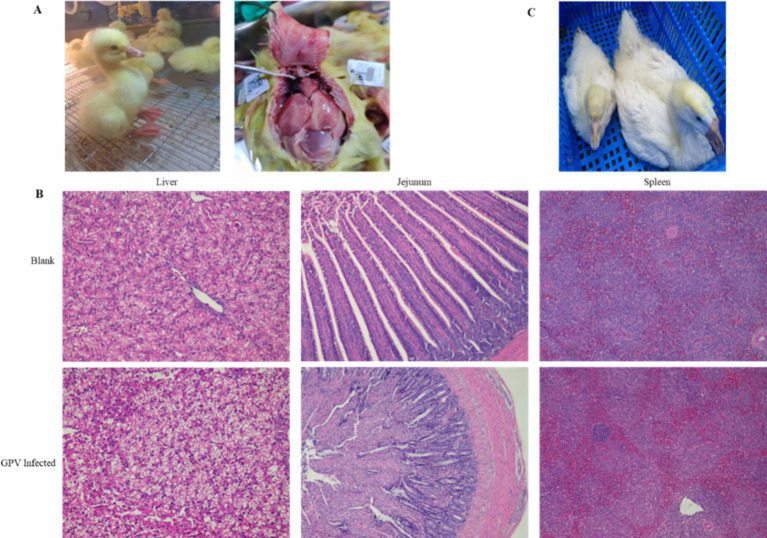 Figure 1
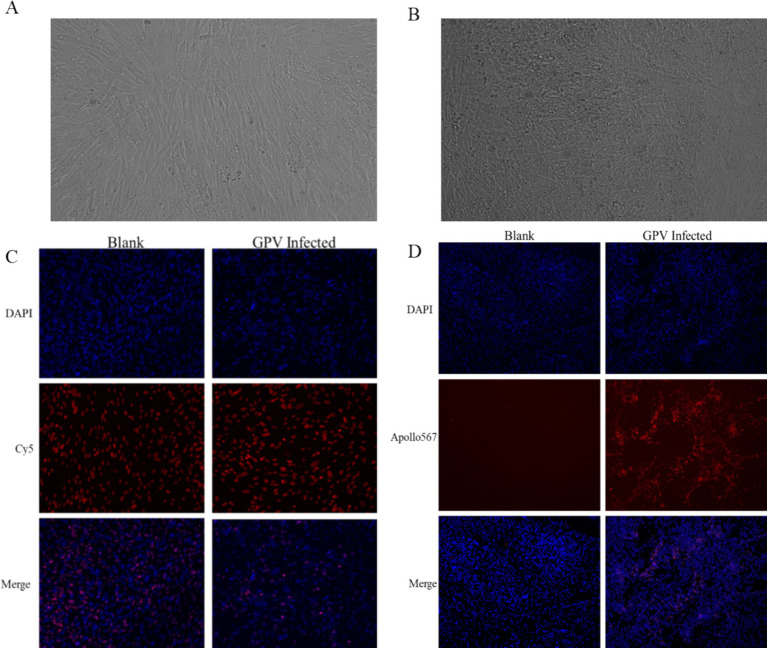 Figure 2
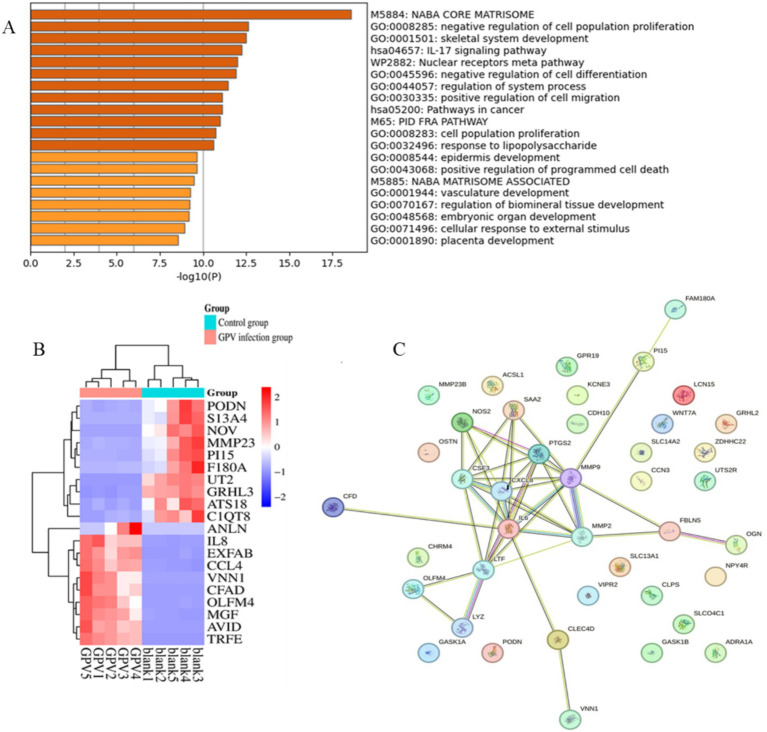 Figure 3
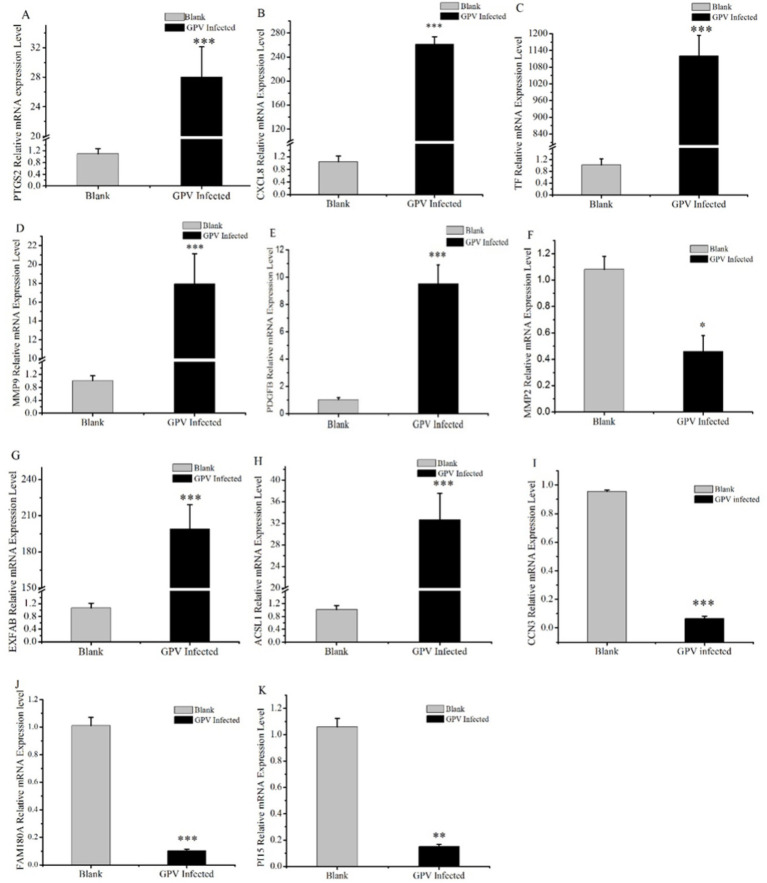 Figure 4
Peer Reviews
No public reviews on file for this paper yet. If you reviewed it on a platform where reviews are public (OpenReview, ICLR, NeurIPS, ICML), you can paste yours below so the community can read it here.
Videos
No videos yet. Explain this paper in a talk, walkthrough, or lecture? Add one.
Taxonomy
TopicsVirus-based gene therapy research · Animal Virus Infections Studies · Parvovirus B19 Infection Studies