Deciphering lentiviral Vpr/Vpx determinants required for HUSH and SAMHD1 antagonism highlights the molecular plasticity of these evolutionary conflicts
Pauline Larrous, Cassandre Garnier, Marina Morel, Michael M. Martin, Karima Zarrouk, Sarah Maesen, Roy Matkovic, Andrea Cimarelli, Lucie Etienne, Florence Margottin-Goguet

TL;DR
The study explores how lentiviruses like HIV-2 and SIVs use Vpr and Vpx proteins to overcome host antiviral defenses like SAMHD1 and HUSH, revealing how these proteins adapt to different host environments.
Contribution
The study identifies specific viral protein regions and mutations that enable antagonism of SAMHD1 and HUSH, highlighting molecular plasticity and host-specific constraints.
Findings
Different interfaces of closely related Vpr proteins are used to degrade different SAMHD1 haplotypes.
A single residue substitution in SIVagm.Gri Vpr enables SAMHD1 degradation, while α-helix 3 substitution confers HUSH antagonism.
HIV-2 and SIVsmm Vpx proteins can degrade HUSH in human and vervet monkey cells but not in owl monkey cells, indicating host specificity.
Abstract
SAMHD1 and the HUSH complex constitute two blocks during primate lentivirus infection, the first by limiting reverse transcription and the second by inhibiting proviral expression. Vpr and Vpx of specific lentiviral lineages have evolved to antagonize these antiviral proteins. While the antagonism of SAMHD1 has been well characterized, the evolutionary and molecular determinants of the antagonism against HUSH are unknown. We used chimeric Vpr proteins between SIVagm.Ver and SIVagm.Gri lentiviruses infecting two African green monkey species to investigate viral determinants involved in HUSH and SAMHD1 antagonisms. We found that different interfaces of closely related Vpr proteins are engaged to degrade different SAMHD1 haplotypes. In addition, we identified distinct viral determinants in SIVagm.Ver Vpr for SAMHD1 and HUSH degradation. The substitution of one residue in SIVagm.Gri Vpr is…
Genes, proteins, chemicals, diseases, species, mutations and cell lines named across the full text — each resolved to its canonical identifier and authoritative record.
Click any figure to enlarge with its caption.
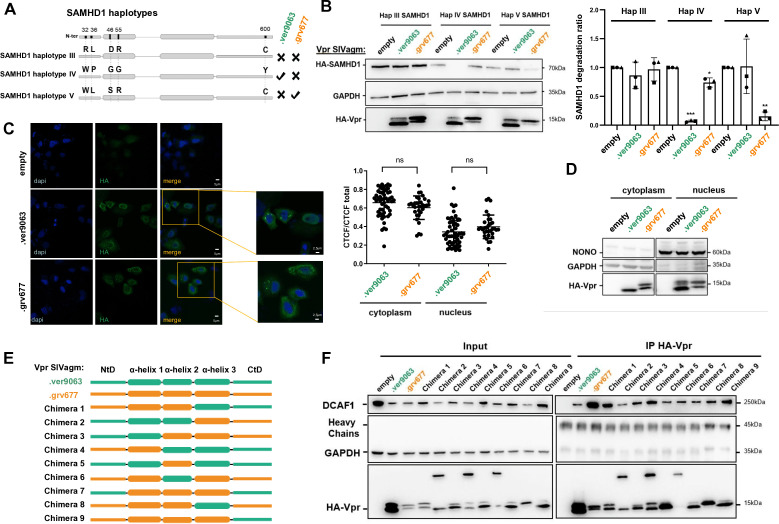 Figure 1
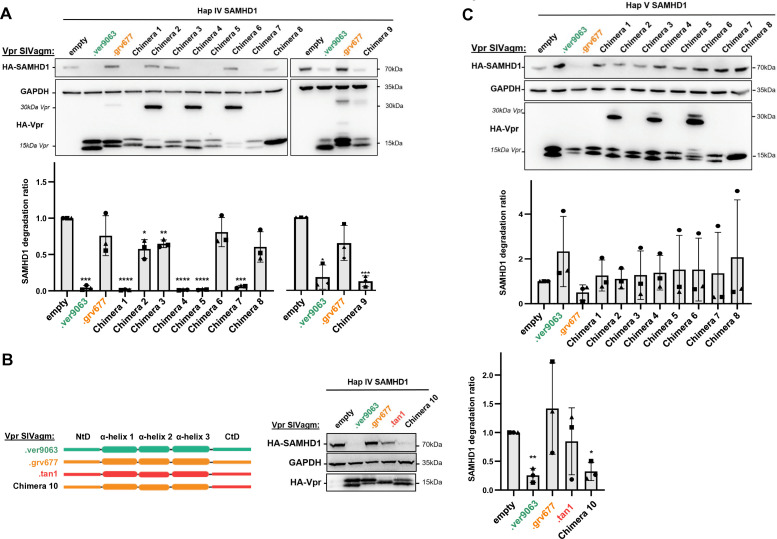 Figure 2
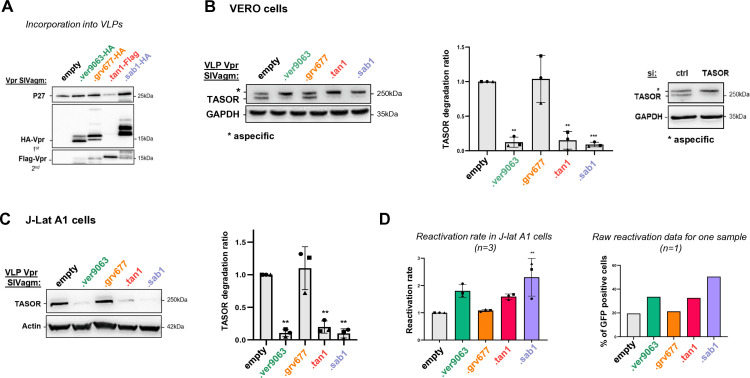 Figure 3
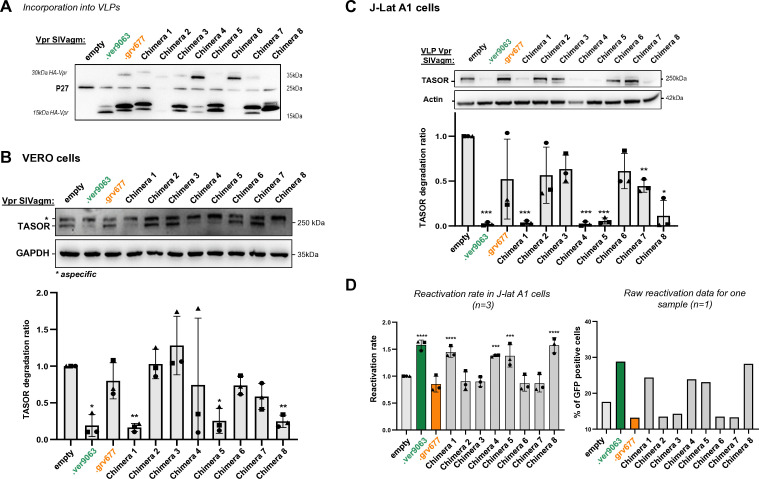 Figure 4
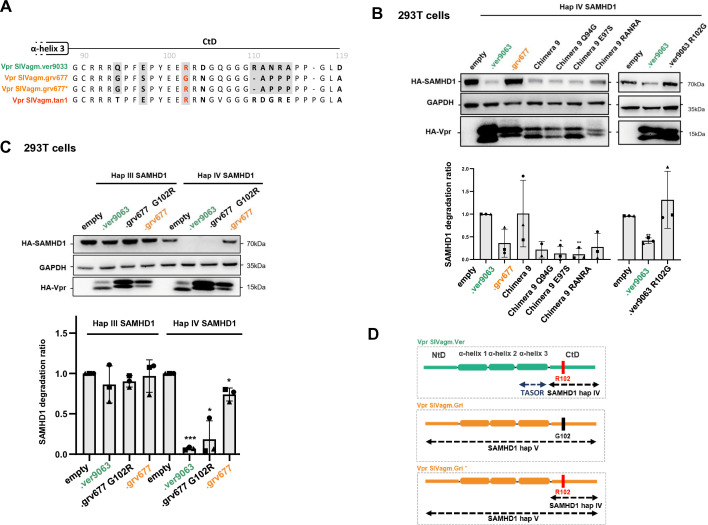 Figure 5
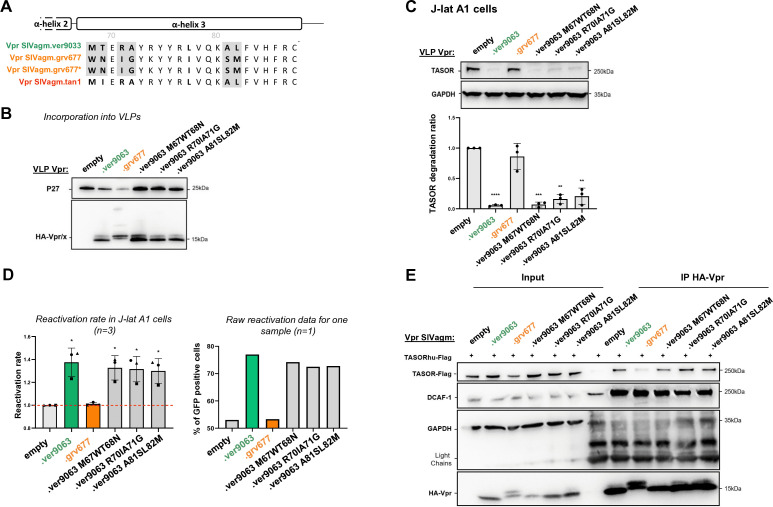 Figure 6
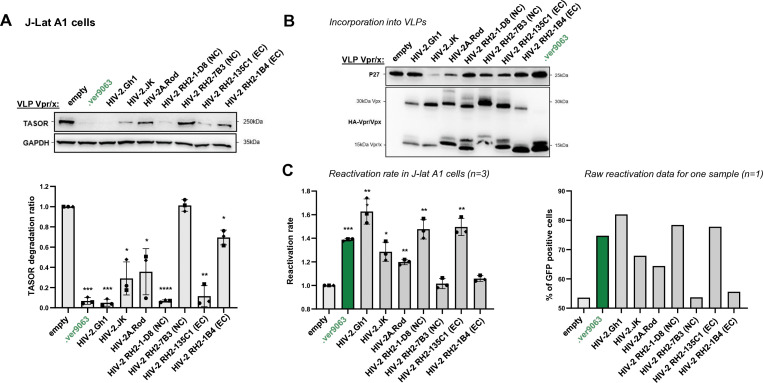 Figure 7
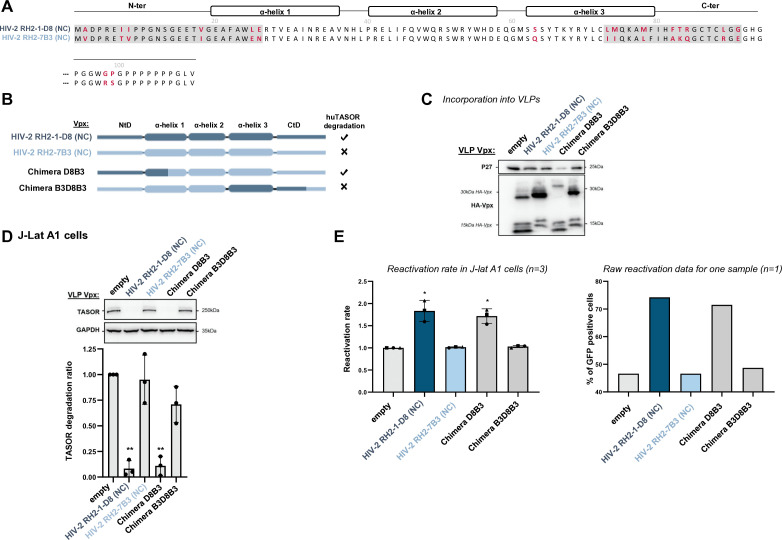 Figure 8
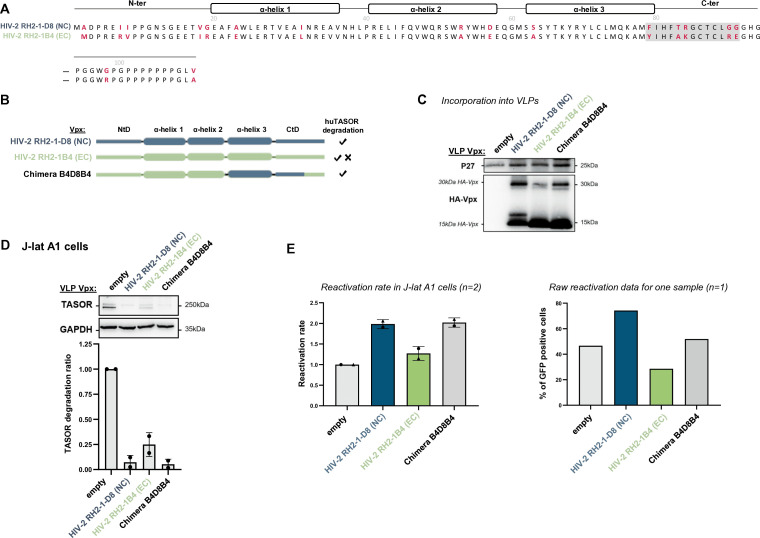 Figure 9
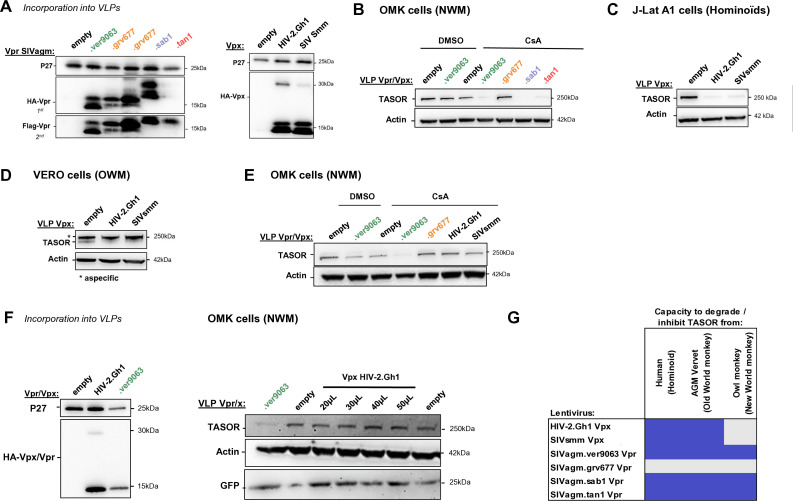 Figure 10
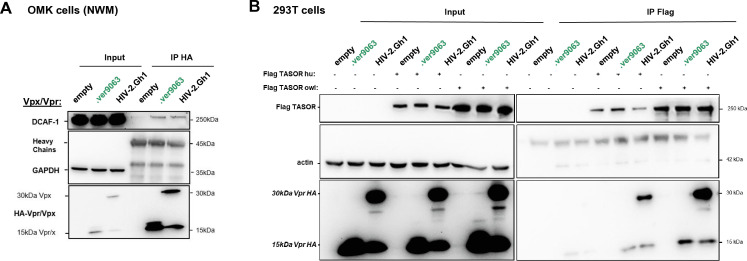 Figure 11
Peer Reviews
No public reviews on file for this paper yet. If you reviewed it on a platform where reviews are public (OpenReview, ICLR, NeurIPS, ICML), you can paste yours below so the community can read it here.
Videos
No videos yet. Explain this paper in a talk, walkthrough, or lecture? Add one.
Taxonomy
TopicsHIV Research and Treatment · Cytomegalovirus and herpesvirus research · interferon and immune responses