A monomeric envelope glycoprotein cytoplasmic tail is sufficient for HIV-1 Gag lattice trapping and incorporation
Nicholas S. Groves, Austin R. Clark, Rebekah S. Aguilar, Yuta Hikichi, Anastasiia Kostenko, Merissa M. Bruns, Alegra T. Aron, Eric O. Freed, Schuyler B. van Engelenburg

TL;DR
This study shows that a single piece of the HIV-1 envelope protein can be enough to get incorporated into new virus particles, even without forming the usual three-part structure.
Contribution
The study reveals that a monomeric Env cytoplasmic tail can replace the trimeric Env for virus incorporation, offering a new target for antiviral drugs.
Findings
A monomeric Env-CT is sufficient for lattice trapping and incorporation into HIV-1 particles.
Env-CT monomers can restrict the incorporation of native Env trimers and glycoproteins from distant HIV-1 isolates.
The mechanism of Env incorporation via Env-CT is conserved across different HIV-1 clades.
Abstract
To become infectious, assembling enveloped viruses must acquire viral glycoproteins to mediate downstream infection events. Human immunodeficiency virus-1 (HIV-1) envelope glycoproteins (Env) are well characterized to function as trimers for membrane fusion and entry; however, we sought to understand whether the trimeric structure of Env is required for incorporation into virus particles. Using superresolution live-cell imaging and biochemical assays, we demonstrate that a monomeric receptor chimera containing the Env cytoplasmic tail (Env-CT), known to regulate Env incorporation, is sufficient for lattice trapping and incorporation into virus assembly sites. We also demonstrate that these Env-CT monomers can restrict the incorporation of native Env trimers, competing for an apparently limited number of interaction sites in each assembling particle. Furthermore, this monomeric construct…
Genes, proteins, chemicals, diseases, species, mutations and cell lines named across the full text — each resolved to its canonical identifier and authoritative record.
Click any figure to enlarge with its caption.
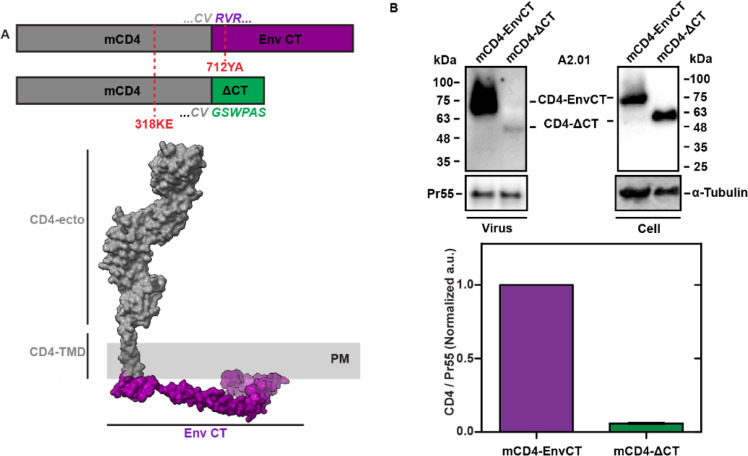 Figure 1
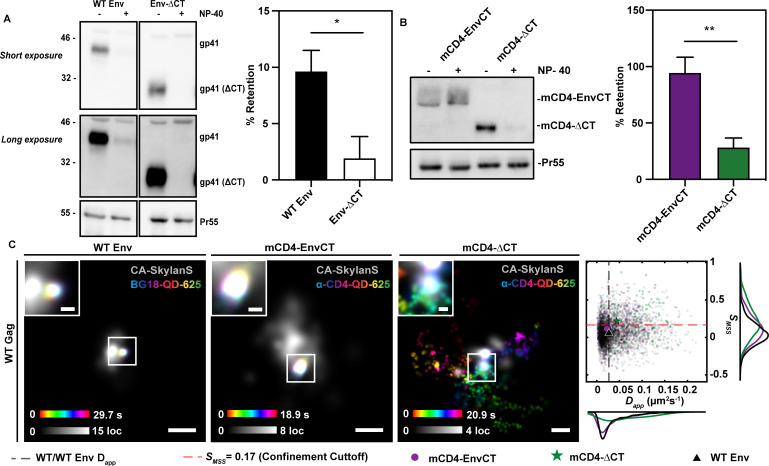 Figure 2
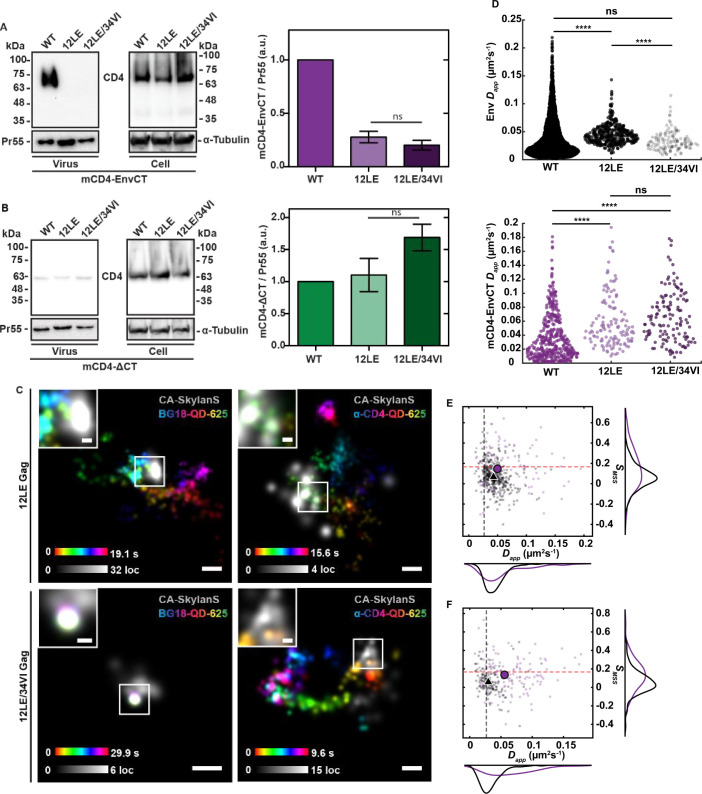 Figure 3
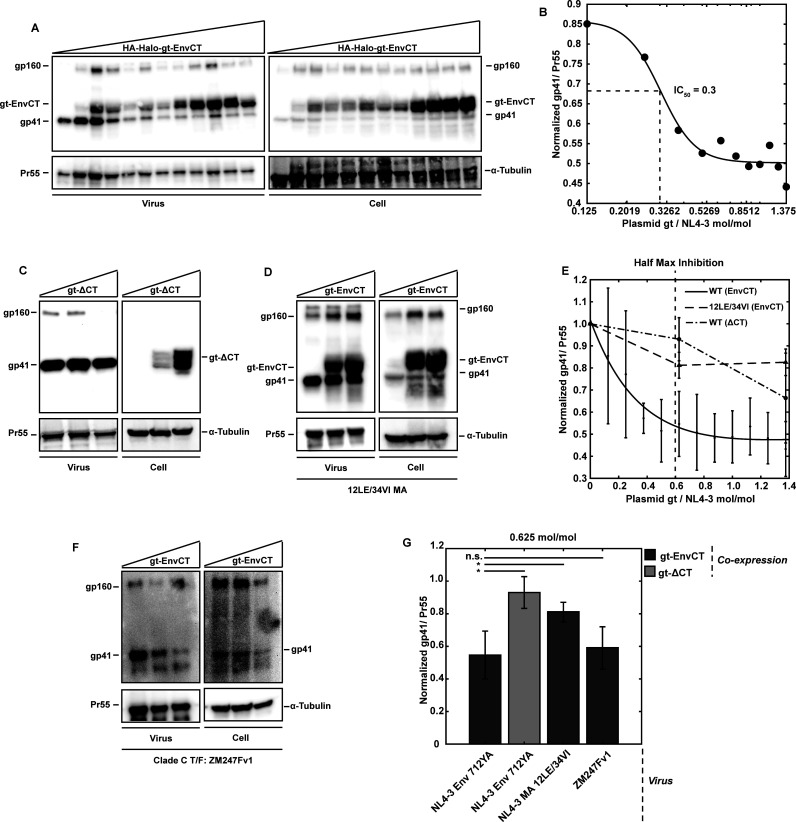 Figure 4
Peer Reviews
No public reviews on file for this paper yet. If you reviewed it on a platform where reviews are public (OpenReview, ICLR, NeurIPS, ICML), you can paste yours below so the community can read it here.
Videos
No videos yet. Explain this paper in a talk, walkthrough, or lecture? Add one.
Taxonomy
TopicsHIV Research and Treatment · Monoclonal and Polyclonal Antibodies Research · Bacteriophages and microbial interactions