Stabilized dengue virus 2 envelope subunit vaccine redirects the neutralizing antibody response to all E-domains
Devina J. Thiono, Demetrios Samaras, Thanh T. N. Phan, Deanna R. Zhu, Ruby P. Shah, Izabella Castillo, Lawrence J. Forsberg, Lakshmanane Premkumar, Ralph S. Baric, Shaomin Tian, Brian Kuhlman, Aravinda M. de Silva

TL;DR
A new dengue vaccine design using stabilized envelope proteins elicits broader and more effective immune responses compared to traditional vaccines.
Contribution
Designing stabilized dengue virus envelope homodimers that better mimic the viral surface and redirect antibody responses to multiple domains.
Findings
Stabilized DENV2 E homodimers stimulate a broader neutralizing antibody response across all E domains.
WT E monomers elicit antibodies primarily targeting domain III, while homodimers induce more complex epitope recognition.
The new design improves the quality and specificity of neutralizing antibodies compared to traditional subunit vaccines.
Abstract
The four dengue virus (DENV) serotypes cause several hundred million infections annually. Several live-attenuated tetravalent dengue vaccines (LAVs) are at different stages of clinical testing and regulatory approval. A major hurdle faced by the two leading LAVs is uneven replication of vaccine serotypes stimulating a dominant response to one serotype at the expense of the other three, leading to the potential for vaccine antibody (Ab)-enhanced, more severe infections by wild-type (WT) DENV serotypes that fail to replicate in the vaccine. Protein subunit vaccines are a promising alternative since antigen dosing can be precisely controlled. However, DENV envelope (E) protein subunit vaccines have not performed well to date, possibly due to differences between the monomeric structure of soluble E and the E homodimer of the viral surface. Previously, we have combined structure-guided…
Genes, proteins, chemicals, diseases, species, mutations and cell lines named across the full text — each resolved to its canonical identifier and authoritative record.
Click any figure to enlarge with its caption.
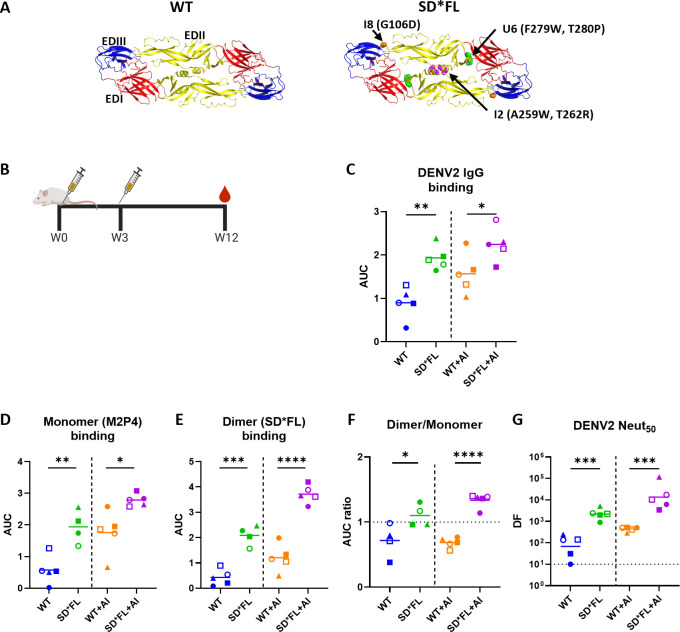 Figure 1
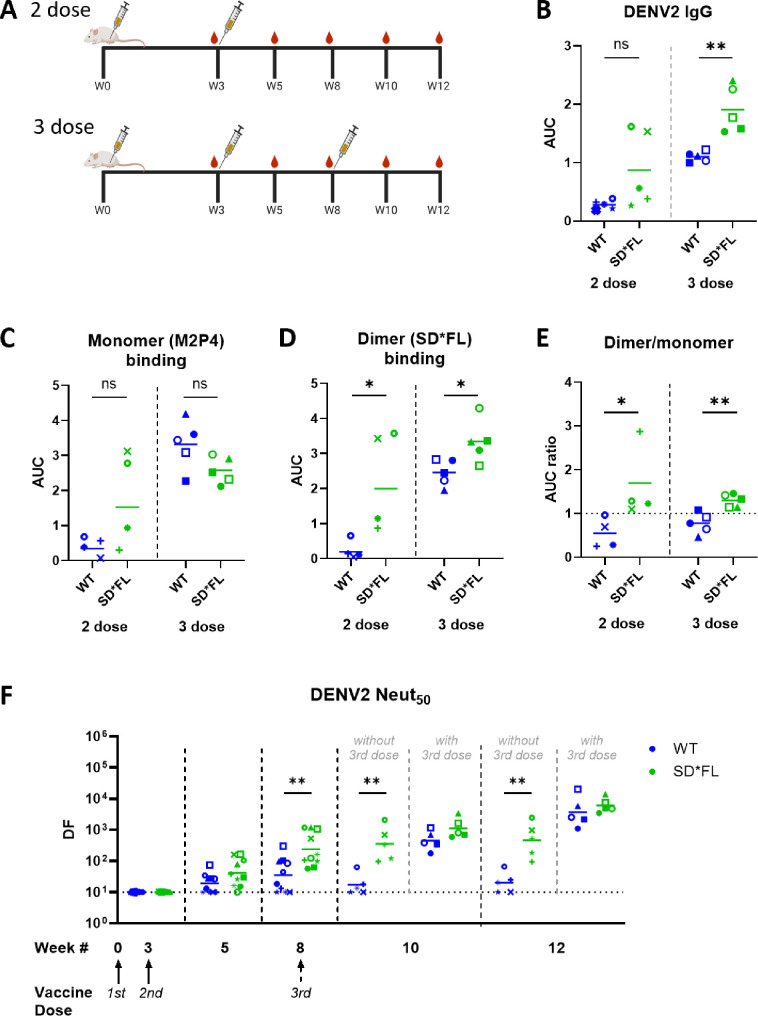 Figure 2
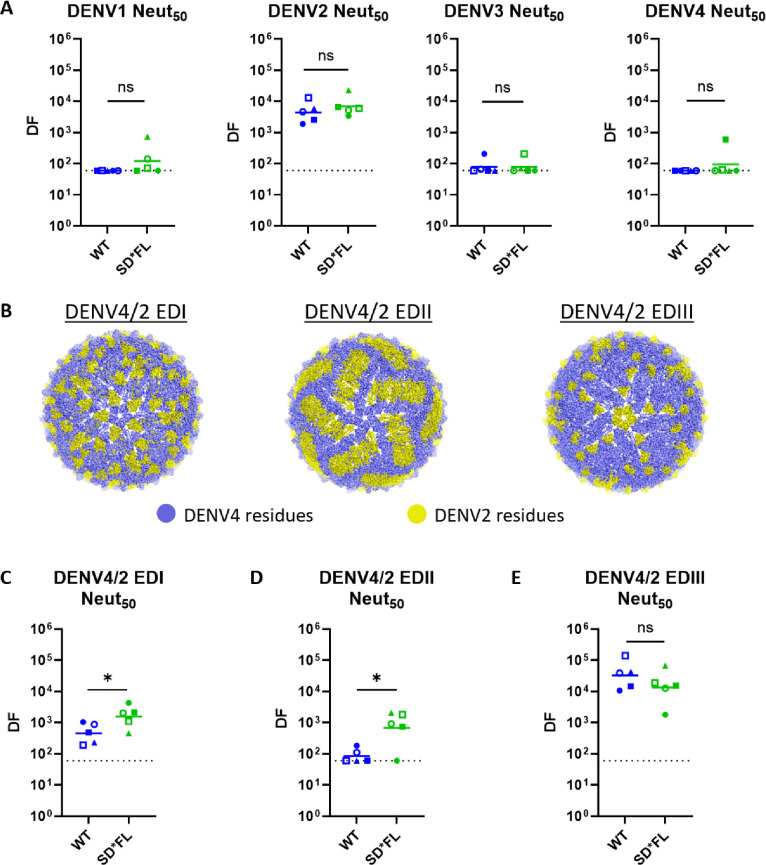 Figure 3
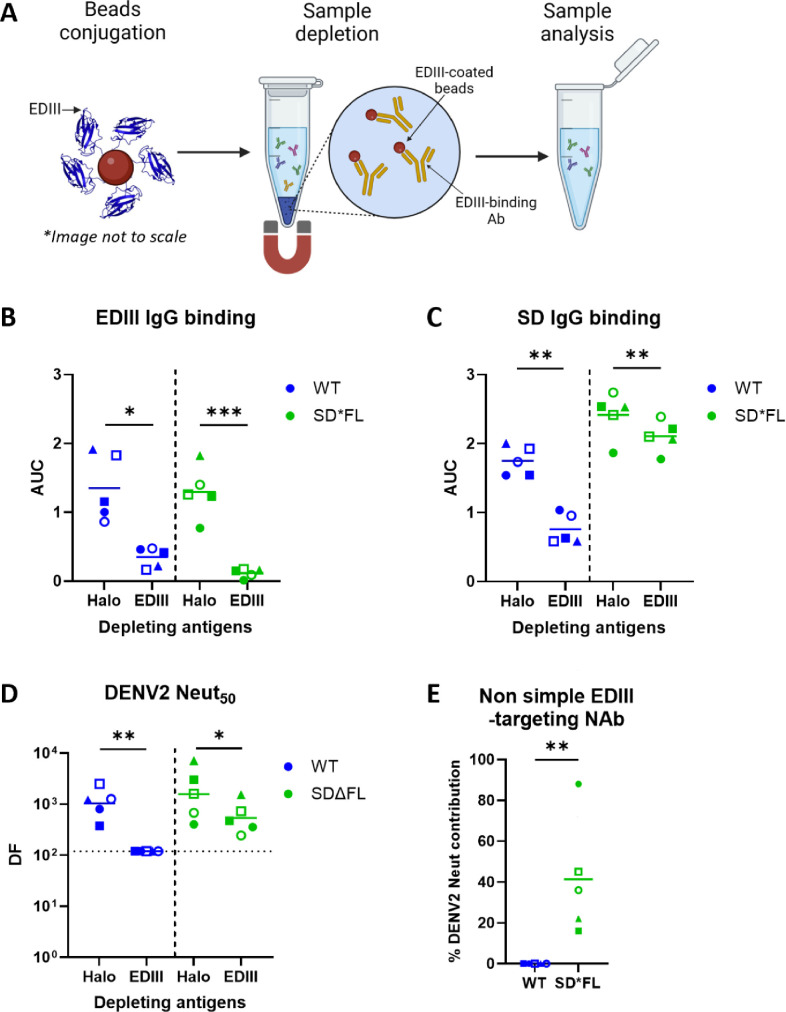 Figure 4
Peer Reviews
No public reviews on file for this paper yet. If you reviewed it on a platform where reviews are public (OpenReview, ICLR, NeurIPS, ICML), you can paste yours below so the community can read it here.
Videos
No videos yet. Explain this paper in a talk, walkthrough, or lecture? Add one.
Taxonomy
TopicsMosquito-borne diseases and control · Viral Infections and Vectors · Viral Infections and Outbreaks Research