Human IgG responses to Anopheles gambiae immunogenic salivary proteins in urban and rural populations of Burkina Faso: biomarkers of exposure to malaria vector bites
Michaël Kaboré, Yéri Esther Hien, Dado Jean Noël Koussé, Fatimata Thiombiano, Mireille Ouédraogo, Abdoul Rahamani Nikiema, Enock Ibrango, Nicolas Ouédraogo, Mariama K. Cherif, Sylvain Ilboudo, Toussaint Rouamba, Guillaume Sylvestre Sanou

TL;DR
The study found that human IgG responses to mosquito saliva proteins differ between urban and rural populations in Burkina Faso, suggesting these responses could help measure malaria transmission.
Contribution
This study introduces IgG responses to Anopheles gambiae salivary proteins as potential biomarkers for assessing malaria transmission in different environments.
Findings
Urban participants had higher IgG levels to Anopheles gambiae bites compared to rural participants.
Secondary school children had higher IgG levels than primary school children.
Organic cotton farmers had higher IgG levels than conventional cotton farmers.
Abstract
Malaria control would be greatly facilitated by the development of new tools for rapidly assessing malaria transmission intensity. In malaria-endemic areas such as Burkina Faso, human populations are frequently exposed to immunomodulatory salivary components injected during mosquito blood feeding. Numerous studies have examined parasite immunity; however, there are few data available on vector immunity as a means of assessing malaria transmission in sub-Saharan Africa. The present study aims to compare IgG-specific response to salivary gland extracts (SGE) of Anopheles gambiae (An. gambiae) in populations living in urban and rural areas in Burkina Faso. A cross-sectional descriptive study was carried out in two sites, Ouagadougou city and Sapouy village, where blood samples (n = 676) from children (0–15 years) and adults were collected. After An. gambiae salivary protein isolation, the…
Genes, proteins, chemicals, diseases, species, mutations and cell lines named across the full text — each resolved to its canonical identifier and authoritative record.
Click any figure to enlarge with its caption.
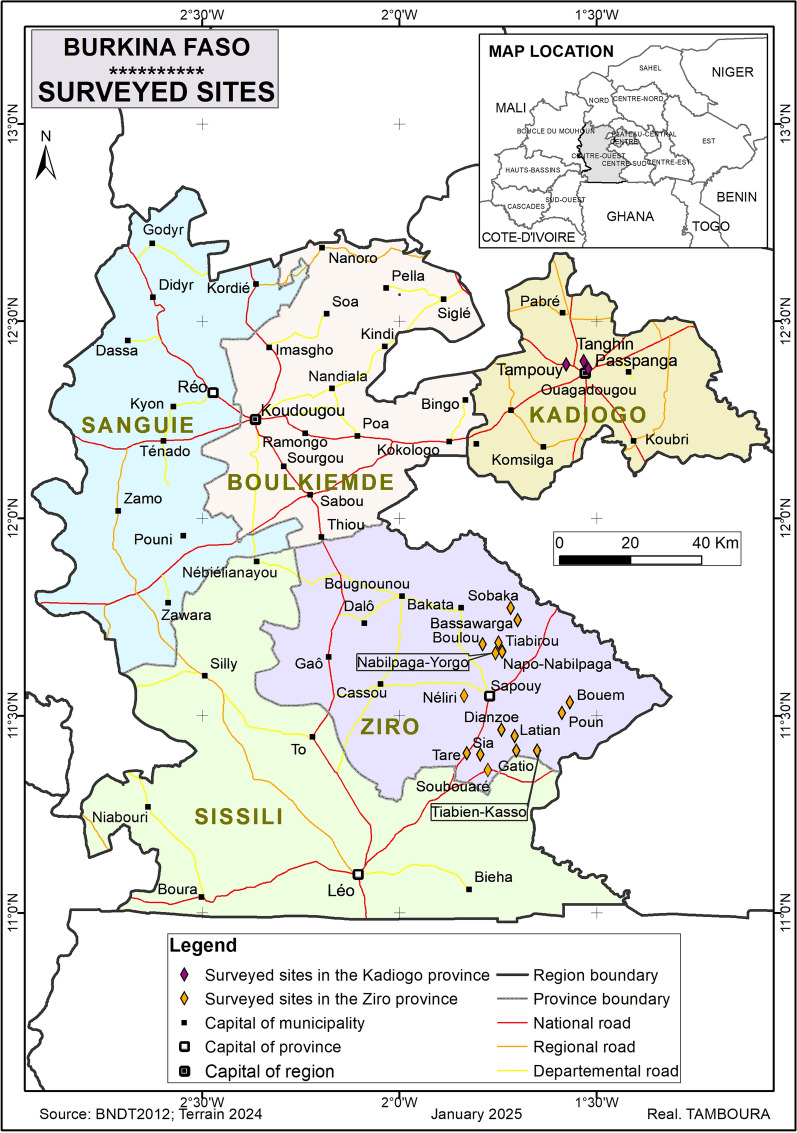 Figure 1
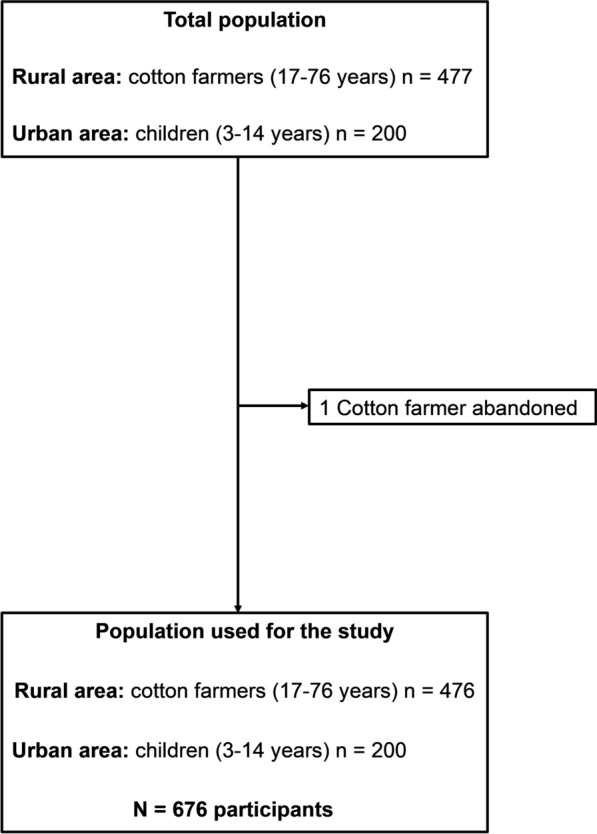 Figure 2
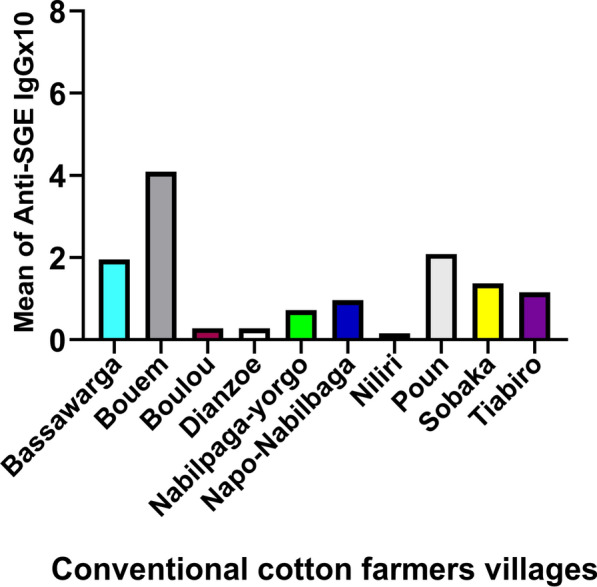 Figure 3
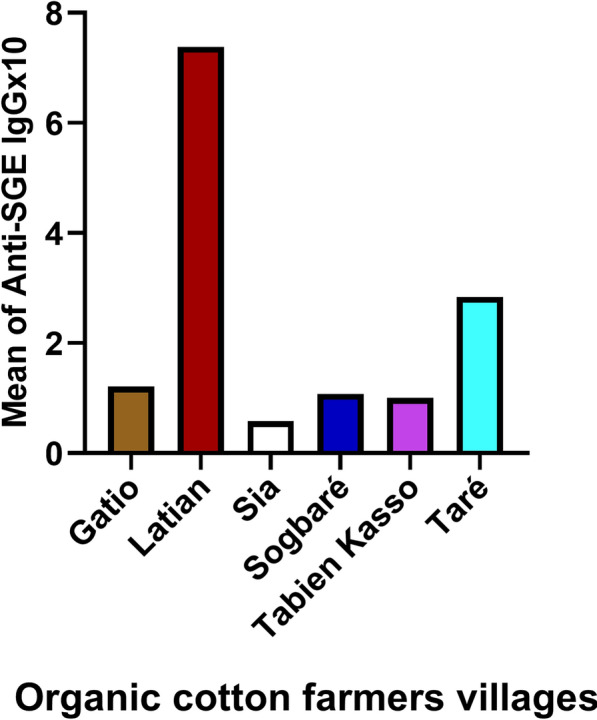 Figure 4
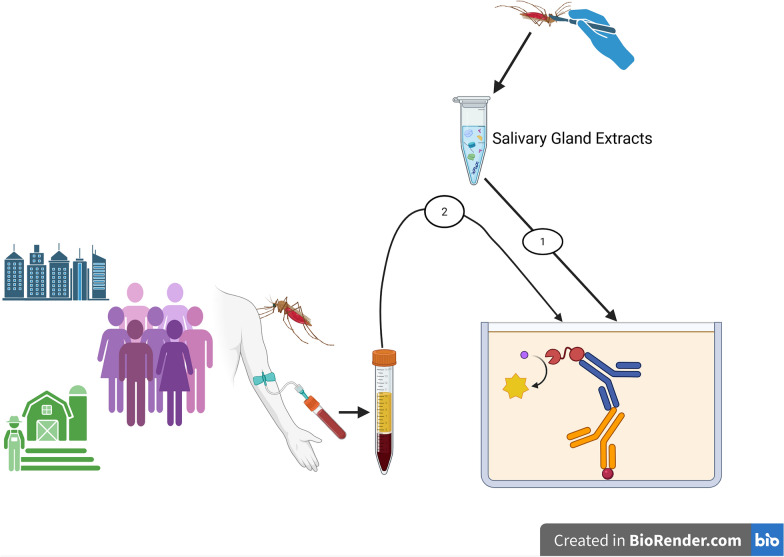 Figure 5
Peer Reviews
No public reviews on file for this paper yet. If you reviewed it on a platform where reviews are public (OpenReview, ICLR, NeurIPS, ICML), you can paste yours below so the community can read it here.
Videos
No videos yet. Explain this paper in a talk, walkthrough, or lecture? Add one.
Taxonomy
TopicsMalaria Research and Control · Mosquito-borne diseases and control · Invertebrate Immune Response Mechanisms