Among-population proteomic differences in Schistocephalus solidus based on excretory/secretory and total body protein predictions
Anni Wang, Daniel I. Bolnick

TL;DR
This study finds that the parasitic cestode Schistocephalus solidus has population-specific differences in its excretory/secretory and total body proteins, which may reflect adaptation to different host environments.
Contribution
The study provides the first evidence of among-population proteomic variation in a helminth parasite's excretory/secretory proteins.
Findings
1362 total proteins were identified in S. solidus, with 542 found only in excretory/secretory proteins.
Signaling and transmembrane proteins were detected in ESPs that had not been previously characterized in S. solidus.
Protein spectrum counts varied significantly among populations, indicating population-level proteomic differences.
Abstract
Parasites secrete and excrete a variety of molecules that evolved to help establish and sustain infections within hosts. Parasite adaptation to their host may lead to between-population divergence in these excretory and secretory products (ESPs), but few studies have tested for intraspecific variation in helminth proteomes. Schistocephalus solidus is a cestode that parasitizes the threespine stickleback, Gasterosteus aculeatus. We used an ultra-performance liquid chromatography–mass spectrometry protocol to characterize the ESPs and whole-body proteome of S. solidus. Specifically, we characterized the proteome of S. solidus at the plerocercoid stage from wild-caught stickleback from three lakes on Vancouver Island (British Columbia, Canada) and one lake in Alaska (USA). We tested for differences in proteome composition among the four populations and specifically between ESPs and body…
Genes, proteins, chemicals, diseases, species, mutations and cell lines named across the full text — each resolved to its canonical identifier and authoritative record.
Click any figure to enlarge with its caption.
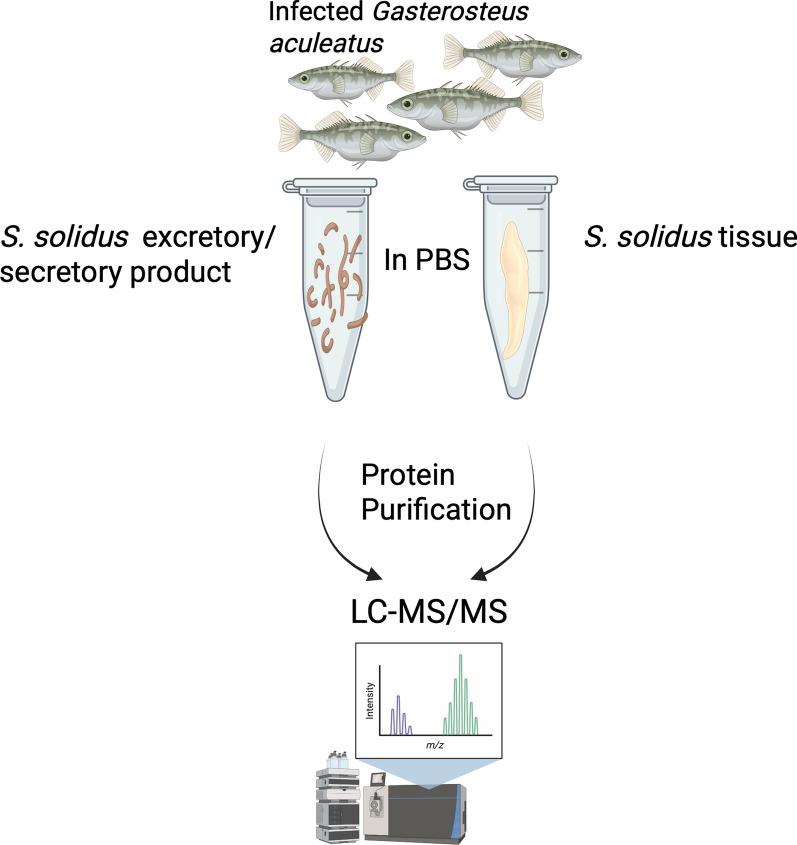 Figure 1
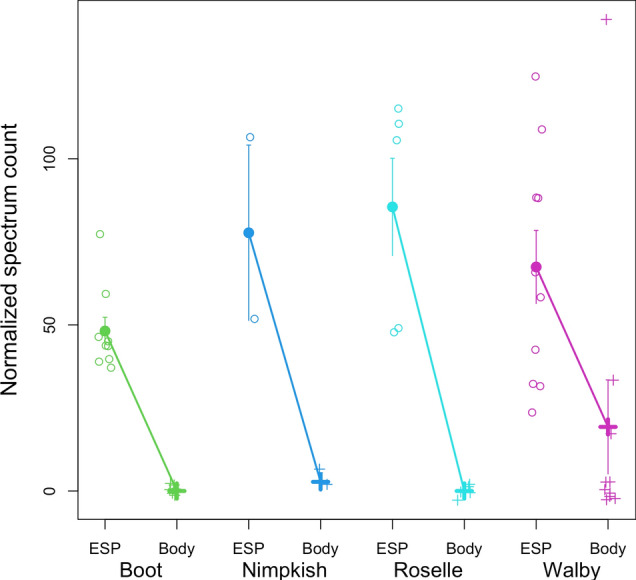 Figure 2
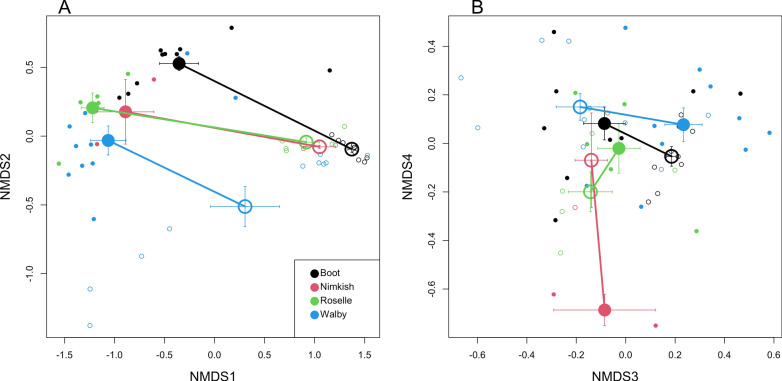 Figure 3
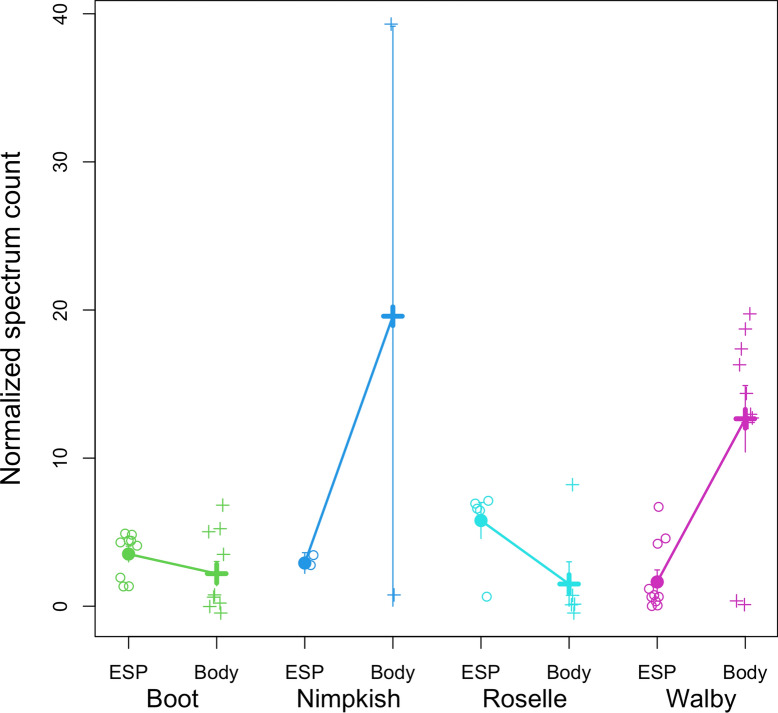 Figure 4
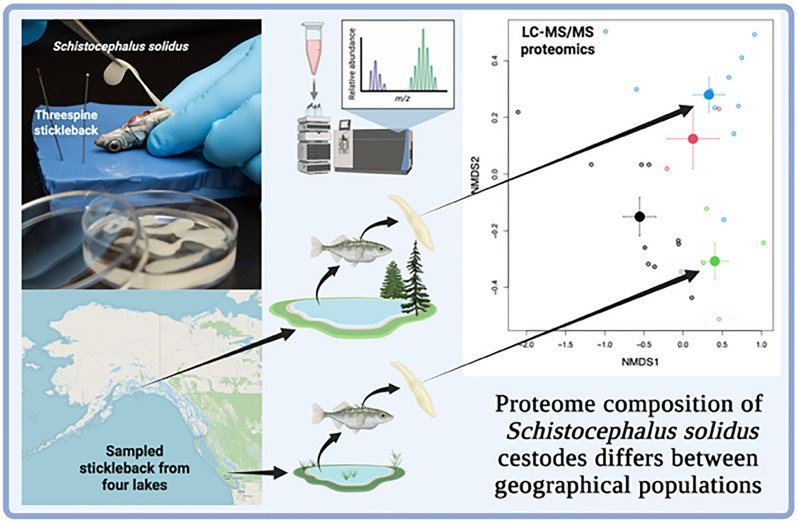 Figure 5
Peer Reviews
No public reviews on file for this paper yet. If you reviewed it on a platform where reviews are public (OpenReview, ICLR, NeurIPS, ICML), you can paste yours below so the community can read it here.
Videos
No videos yet. Explain this paper in a talk, walkthrough, or lecture? Add one.
Taxonomy
TopicsParasite Biology and Host Interactions · Parasites and Host Interactions · Aquaculture disease management and microbiota