Design and evaluation of an educational and self-care application for infertile men: perspective of physician and patients
Jalal Nikukaran, Alireza Fallahzadeh, Mahsa Kaffashpour yazdi, Seyed Ali Fatemi Aghda, Hossein Torkashvand, Reza Akbarzade, Meysam Fallahnezhad, Hadi karimi aqda, Rahime Tajvidi Asr, Shadi Hazhir

TL;DR
This paper presents a mobile app designed to help infertile men in Iran with education and self-care, evaluated for usability and content needs.
Contribution
A novel mobile application for male infertility self-care, validated through physician and patient input and usability testing.
Findings
The app's 'Disease-Related Data, Sexual History' section was deemed essential by both physicians and patients.
Usability evaluation scored 7.97/9, indicating good user satisfaction.
Disagreements between physicians and patients were noted in sections like food allergies and exercise habits.
Abstract
Male infertility has played an important role in childbearing in developing countries, including Iran. With the increasing use of mobile health and the need for self-care, this study aimed to design and evaluate a mobile-based application for infertile men. In this quantitative research, a needs assessment for the content of the application was conducted using a questionnaire and the participation of 20 physicians and 60 patients. After the initial implementation of the application, a usability evaluation was conducted for 200 participants using a Questionnaire of User Interface Satisfaction (QUIS) questionnaire. In this study, the needs assessment included 8 sections: Patient information, disease-related data, Nutrition, treatments and medications, physical activities, personal habits and behaviors, sexual history, software features. In the educational content section, all sub-items…
Genes, proteins, chemicals, diseases, species, mutations and cell lines named across the full text — each resolved to its canonical identifier and authoritative record.
Click any figure to enlarge with its caption.
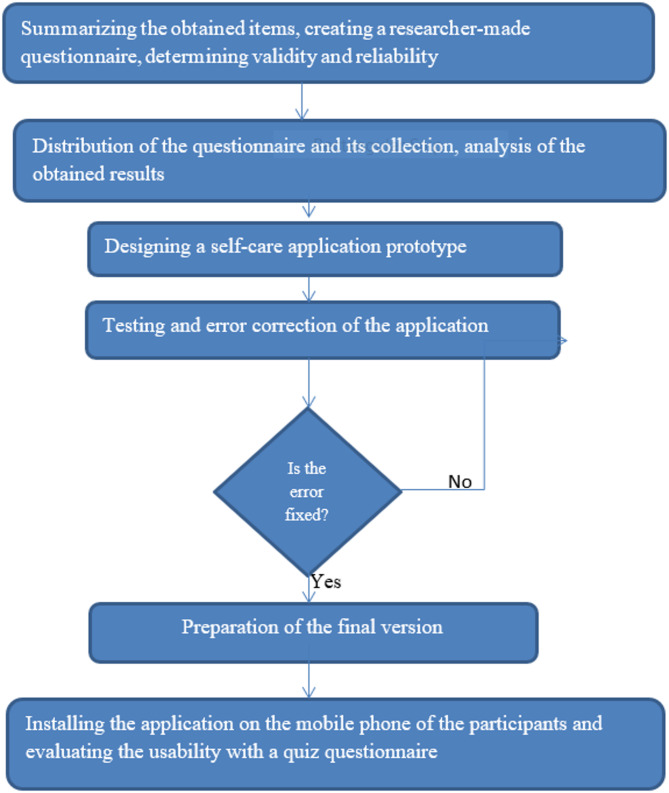 Figure 1
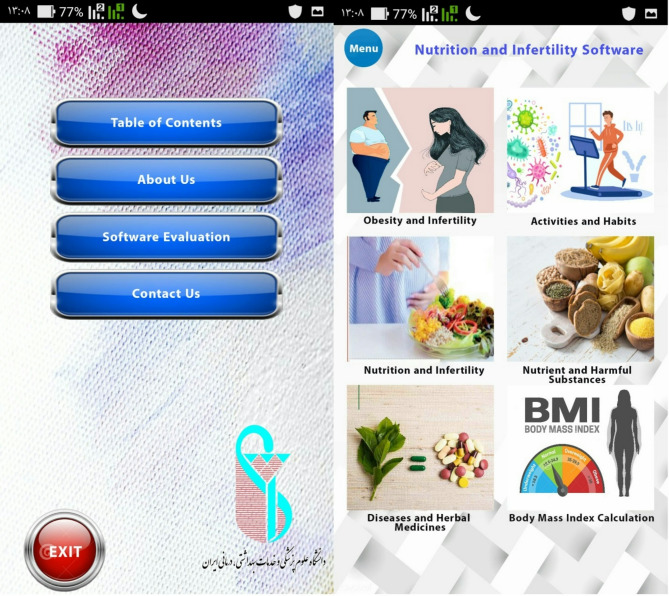 Figure 2
Peer Reviews
No public reviews on file for this paper yet. If you reviewed it on a platform where reviews are public (OpenReview, ICLR, NeurIPS, ICML), you can paste yours below so the community can read it here.
Videos
No videos yet. Explain this paper in a talk, walkthrough, or lecture? Add one.
Taxonomy
TopicsReproductive Health and Technologies · Sexuality, Behavior, and Technology · Ovarian function and disorders