Impact of ventilatory and laboratory parameter trajectories on short-term survival in acute respiratory distress syndrome patients: a retrospective study using joint models
Lars Heubner, Paul Leon Petrick, Evelyn Trips, Andreas Güldner, Maximillian Ragaller, Martin Mirus, Martin Scharffenberg, Axel Rand, Oliver Tiebel, Thea Koch, Peter Markus Spieth

TL;DR
This study shows that tracking changes in ventilatory and lab parameters over time improves short-term survival predictions for ARDS patients compared to using static values.
Contribution
The novel use of joint models to analyze the time-dependent dynamics of clinical parameters in ARDS patients.
Findings
Changes in ventilatory parameters like driving pressure and PEEP over time strongly predict mortality in ARDS patients.
Inflammatory markers such as CRP and procalcitonin show significant slope-dependent associations with survival outcomes.
Longitudinal analysis using joint models outperforms static risk assessment in ARDS prognosis.
Abstract
Clinical research is based on the parameters at defined time points, such as admission, diagnosis or discharge, for the purpose of risk factor analysis in relation to outcome. However, these parameters are collected with greater frequency in clinical practice. The objective of this study was to demonstrate a correlation between the time course of closely monitored parameters, such as blood gases, ventilatory parameters or routine laboratory values, and the survival of patients with acute respiratory distress syndrome (ARDS) caused by pneumonia. This single-center, retrospective study included 274 ARDS patients with primary pneumonia requiring invasive mechanical ventilation. Patients were treated at a German university hospital between January 2014 and April 2021. Ethical approval was obtained from the local ethics committee (BO-EK-374072021). Longitudinal data on ventilatory and…
Genes, proteins, chemicals, diseases, species, mutations and cell lines named across the full text — each resolved to its canonical identifier and authoritative record.
Click any figure to enlarge with its caption.
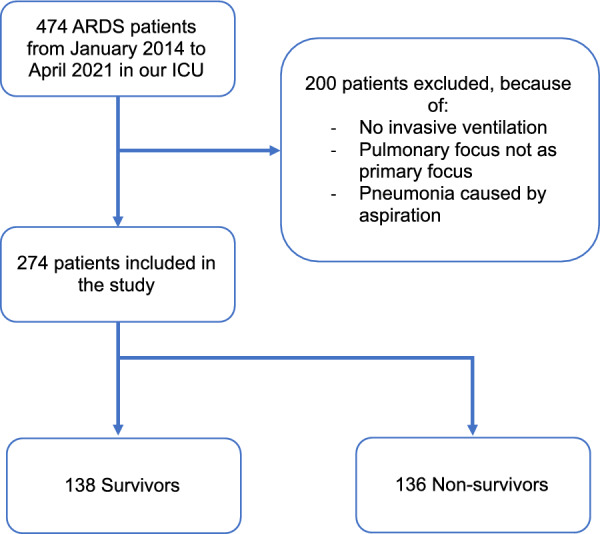 Figure 1
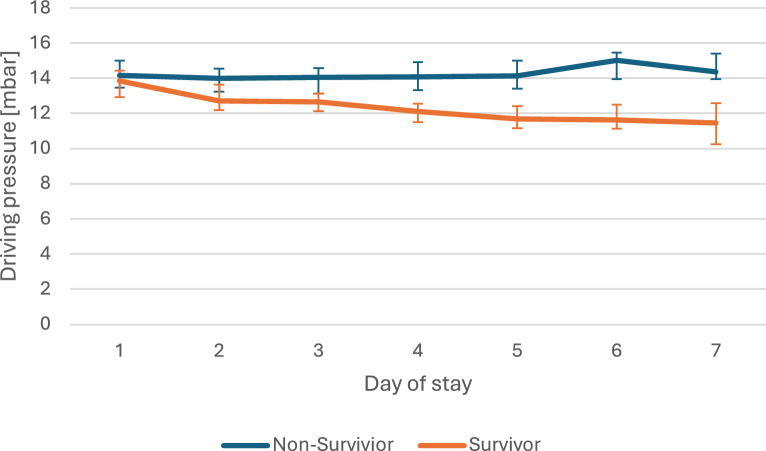 Figure 2
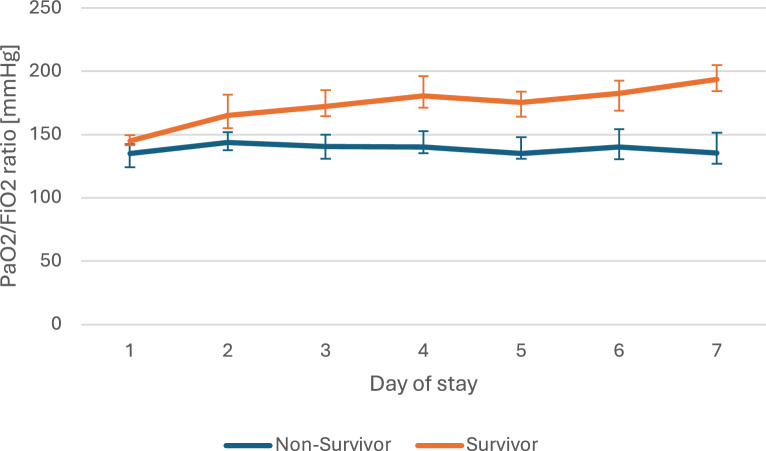 Figure 3
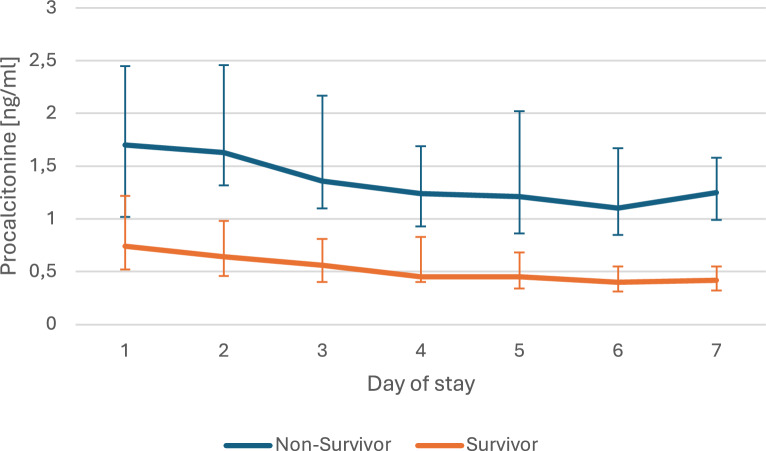 Figure 4
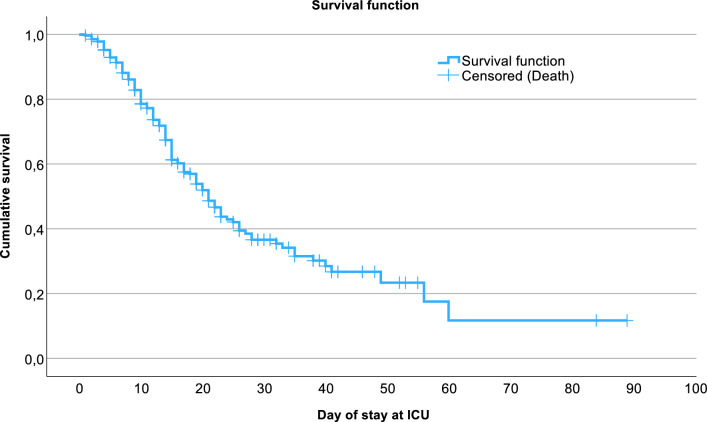 Figure 5
Peer Reviews
No public reviews on file for this paper yet. If you reviewed it on a platform where reviews are public (OpenReview, ICLR, NeurIPS, ICML), you can paste yours below so the community can read it here.
Videos
No videos yet. Explain this paper in a talk, walkthrough, or lecture? Add one.
Taxonomy
TopicsRespiratory Support and Mechanisms · Sepsis Diagnosis and Treatment · Intensive Care Unit Cognitive Disorders