Empirically Integrating the Evidence for Different Predictive Coding Components Using Auditory False Perception
Feifan Chen, Anusha Yasoda‐Mohan, Colum Ó Sé, Sven Vanneste

TL;DR
This study explores how the brain's internal model and sensory input interact to shape perception, using illusions and brain responses to understand individual differences in predictive coding.
Contribution
The paper is the first to empirically integrate multiple components of the predictive coding system using behavioral and electrophysiological data.
Findings
High perceivers rely more on internal models and are more sensitive to context-driven prediction errors.
Behavioral illusion likelihood correlates with self-reported likelihood but not when controlling for perceptual threshold.
The study links predictive coding components to individual perceptual biases in sensory contexts.
Abstract
Perception is a probabilistic estimation of the sensory information we receive at any given time and is shaped by an internal model generated by the brain by assimilating information over the life course. This predictive system in the brain has several components–(i) the internal model, (ii) the model‐based prediction called priors, (iii) the weighted difference between the prior and sensory input called prediction error (PE) and (iv) the weighted sum of the prior and input called perceptual inference. Until now, different studies have explored the independent components of this predictive coding system, and we, for the first time to our knowledge, integrate them. To do this, we induce a conditioned hallucination (CH) illusion by means of a multisensory integration paradigm and use this as a model to study the behavioral and electrophysiological responses to this experience.…
Genes, proteins, chemicals, diseases, species, mutations and cell lines named across the full text — each resolved to its canonical identifier and authoritative record.
Click any figure to enlarge with its caption.
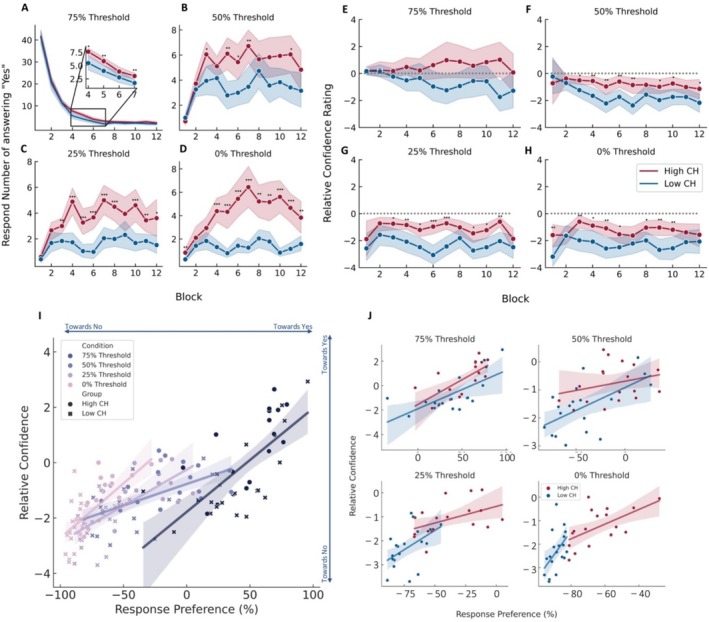 Figure 1
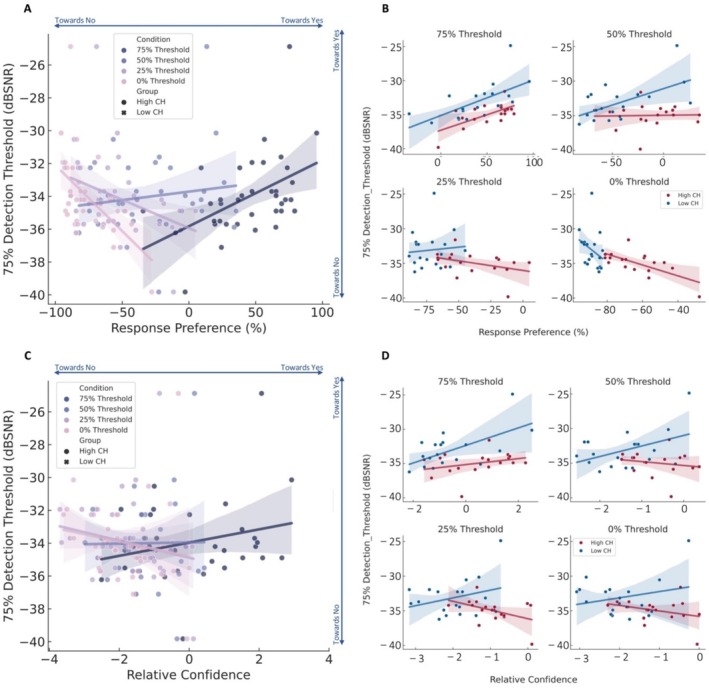 Figure 2
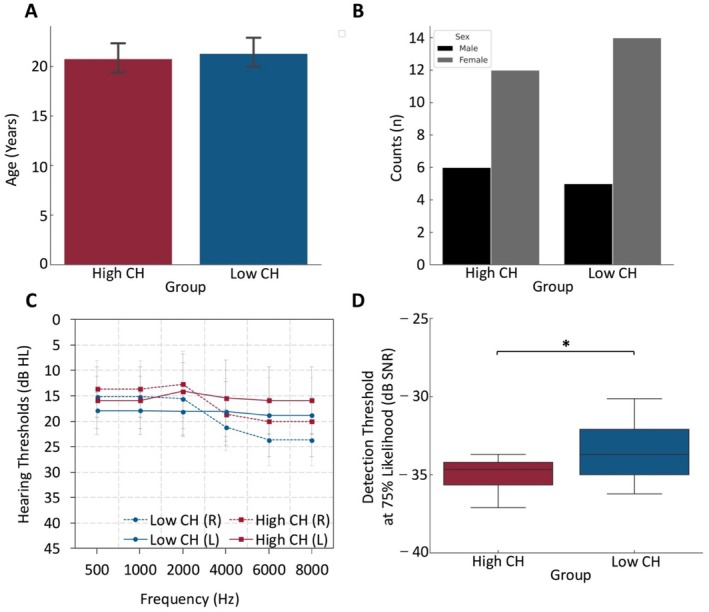 Figure 3
 Figure 4
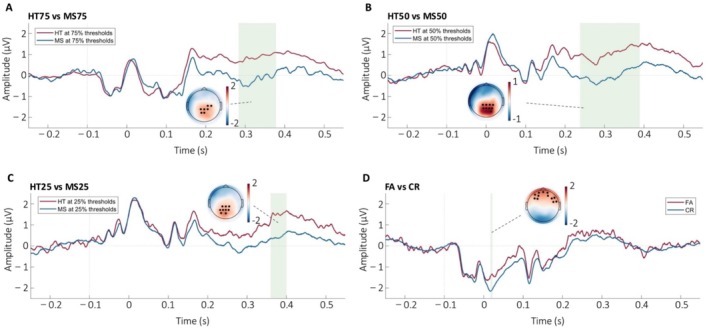 Figure 5
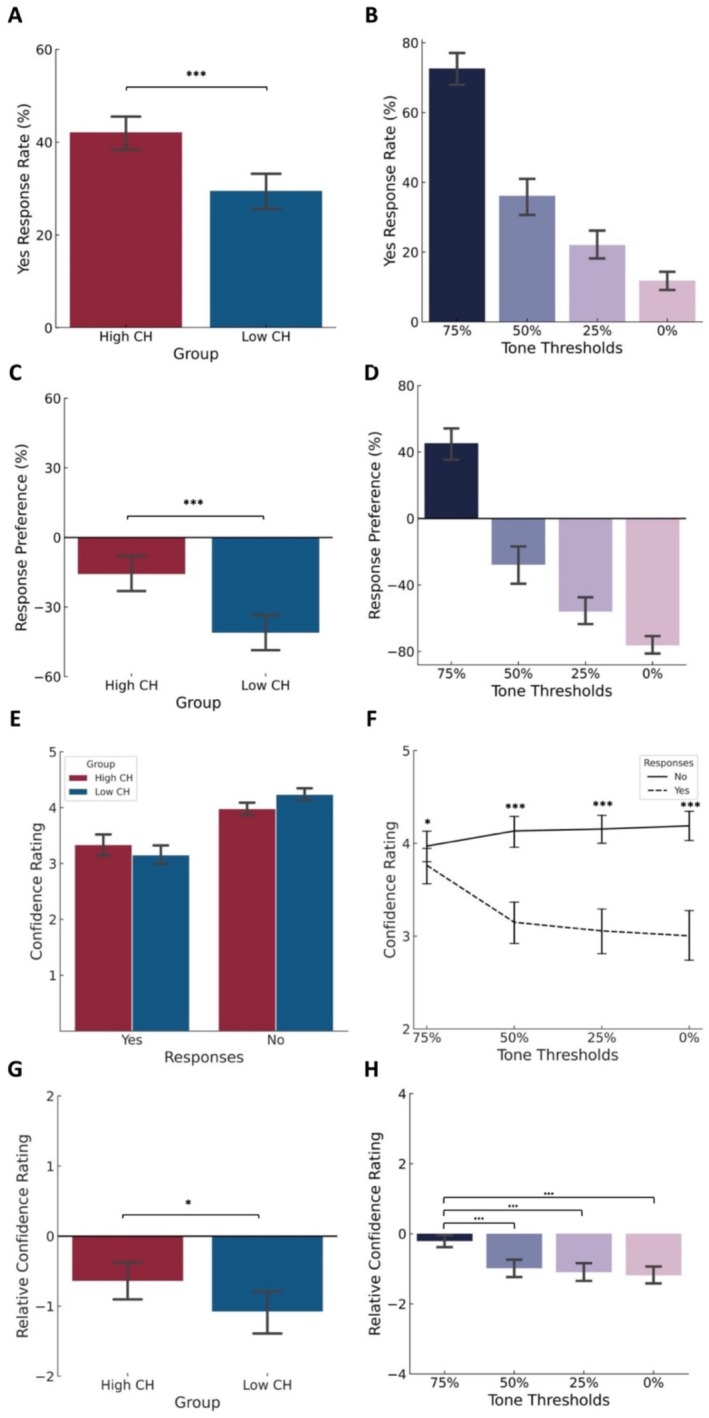 Figure 6
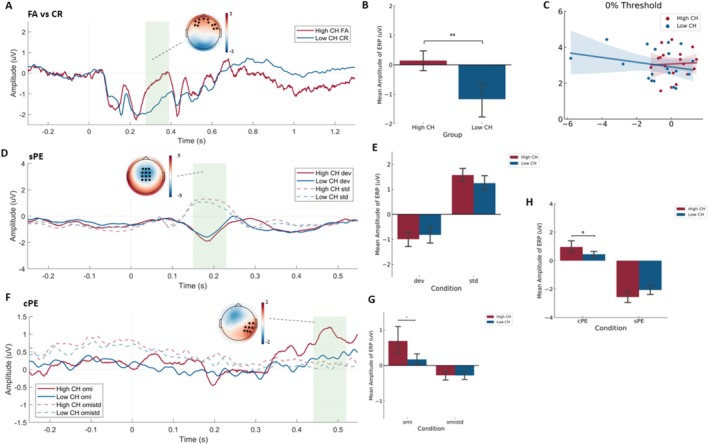 Figure 7
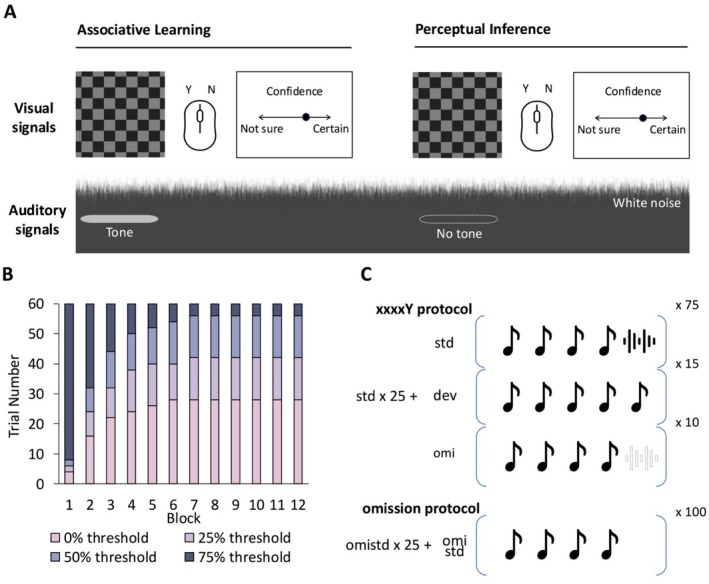 Figure 8
Peer Reviews
No public reviews on file for this paper yet. If you reviewed it on a platform where reviews are public (OpenReview, ICLR, NeurIPS, ICML), you can paste yours below so the community can read it here.
Videos
No videos yet. Explain this paper in a talk, walkthrough, or lecture? Add one.
Taxonomy
TopicsNeuroscience and Music Perception · Multisensory perception and integration · Hearing Loss and Rehabilitation