Development of a Rapid On-Site Method for the Detection of Kazachstania servazzii and Candida sake in Kimchi Using Loop-Mediated Isothermal Amplification
Yoon-Soo Gwak, Gyeong-Eun Kim, Chan-Il Bae, Hae-Yeong Kim, Mi-Ju Kim

TL;DR
A fast and sensitive method was developed to detect harmful yeasts in kimchi using LAMP technology, which can help maintain kimchi quality during fermentation.
Contribution
The novel contribution is the development of LAMP assays for on-site detection of Kazachstania servazzii and Candida sake in kimchi.
Findings
LAMP assays specifically amplified Kazachstania servazzii and Candida sake DNA with detection limits of 0.4 pg and 4 pg, respectively.
The LAMP method detected as low as 10^3 CFU/ml for K. servazzii and 10^2 CFU/ml for C. sake in kimchi samples.
The LAMP reactions completed within 35 minutes, showing high specificity, sensitivity, and rapidity for on-site detection.
Abstract
Kimchi has recently gained considerable global interest for its health benefits, including its probiotic properties and anticancer and antioxidative effects. However, in the later stages of kimchi fermentation, an increase in the number of yeast species that form a white film on the surface of kimchi, such as Kazachstania servazzii and Candida sake, takes place, which can negatively affect kimchi quality. Thus, we developed loop-mediated isothermal amplification (LAMP) assays for the on-site detection of K. servazzii and C. sake in kimchi. The internal transcribed spacer (ITS) region of 24 yeast strains were aligned to identify the specific region of the target yeasts, after which the LAMP primer for each target species was designed. The developed LAMP primer sets specifically amplified K. servazzii and C. sake and detected 0.4 and 4 pg of K. servazzii and C. sake DNA, respectively. In…
Genes, proteins, chemicals, diseases, species, mutations and cell lines named across the full text — each resolved to its canonical identifier and authoritative record.
Click any figure to enlarge with its caption.
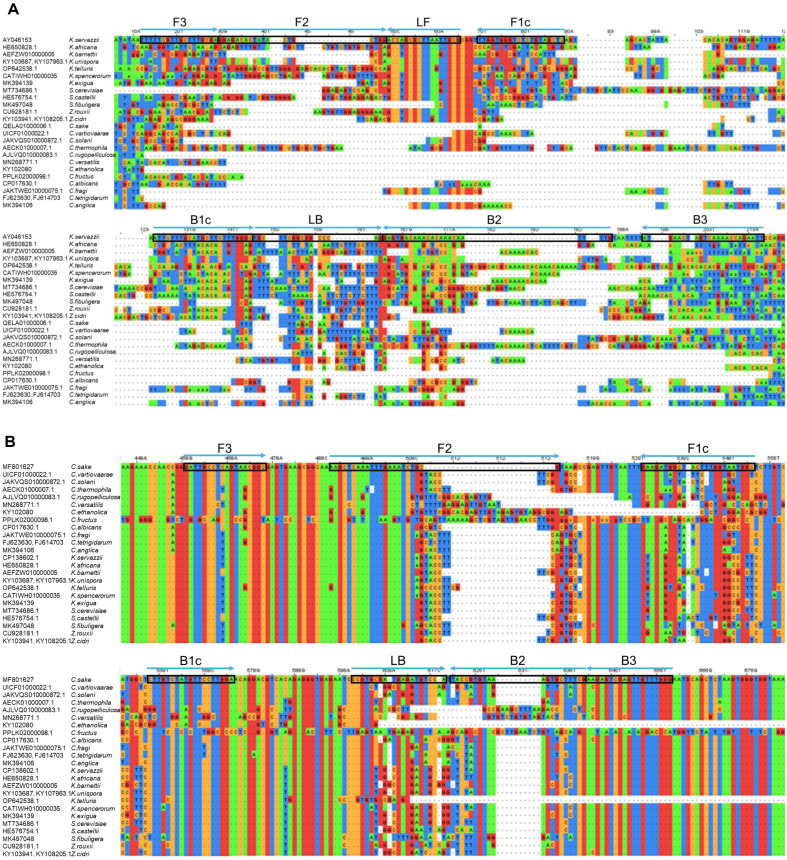 Figure 1
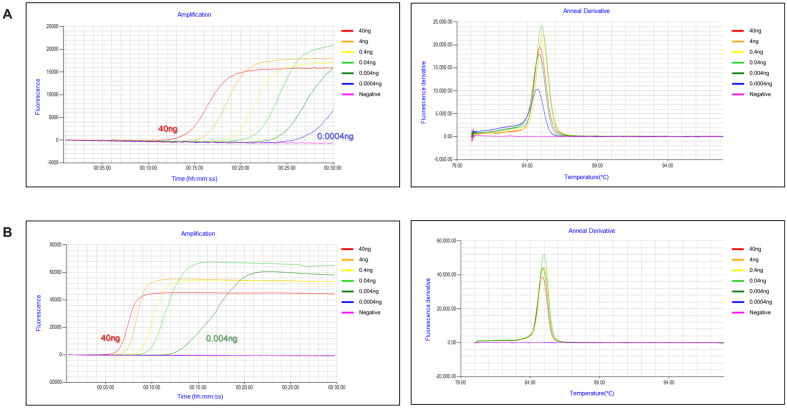 Figure 2
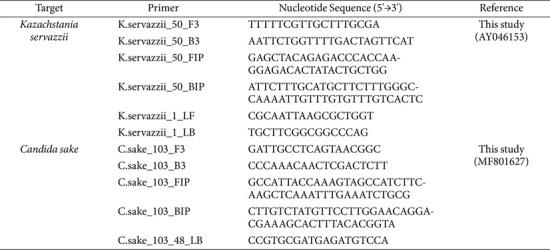 Figure 3
Peer Reviews
No public reviews on file for this paper yet. If you reviewed it on a platform where reviews are public (OpenReview, ICLR, NeurIPS, ICML), you can paste yours below so the community can read it here.
Videos
No videos yet. Explain this paper in a talk, walkthrough, or lecture? Add one.
Taxonomy
TopicsIdentification and Quantification in Food · Mycotoxins in Agriculture and Food · Nephrotoxicity and Medicinal Plants