Cardiovascular risk factors modulate the effect of brain imaging-derived phenotypes on ischaemic stroke risk
Yuan-yuan Liang, Meng-jie Li, Dong-rui Ma, Meng-nan Guo, Xiao-yan Hao, Shuang-jie Li, Chun-yan Zuo, Chen-wei Hao, Zhi-yun Wang, Yan-mei Feng, Chenyuan Mao, Chan Zhang, Bo Song, Yuming Xu, Changhe Shi

TL;DR
This study shows how cardiovascular risk factors, especially blood pressure, affect brain structure and increase ischaemic stroke risk through specific brain imaging traits.
Contribution
The study identifies specific brain imaging-derived phenotypes through which cardiovascular risk factors, particularly blood pressure, influence ischaemic stroke risk.
Findings
8 of 12 cardiovascular risk factors were associated with 538 brain imaging-derived phenotypes.
Blood pressure (systolic and diastolic) affects ischaemic stroke through six brain imaging-derived phenotypes.
Findings suggest non-vascular mechanisms may also contribute to stroke risk.
Abstract
Studies have shown that cardiovascular risk factors are closely related to the occurrence of stroke, especially ischaemic stroke, as they can lead to changes in brain structure and function. However, the role of cardiovascular risk factors—induced changes in brain structure and function in the development of ischaemic stroke has not been studied. The aim of this study is thus to explore the causal association among cardiovascular risk factors, brain phenotypes and ischaemic stroke by assessing Mendelian randomization. We used univariate Mendelian randomization to sequentially investigate the causal effects of the 12 most common cardiovascular risk factors on brain structure and 3935 brain imaging-derived phenotypes in the development of ischaemic stroke. We also examined the mediating effect of brain structure on blood pressure—induced ischaemic stroke using a multivariable Mendelian…
Genes, proteins, chemicals, diseases, species, mutations and cell lines named across the full text — each resolved to its canonical identifier and authoritative record.
Click any figure to enlarge with its caption.
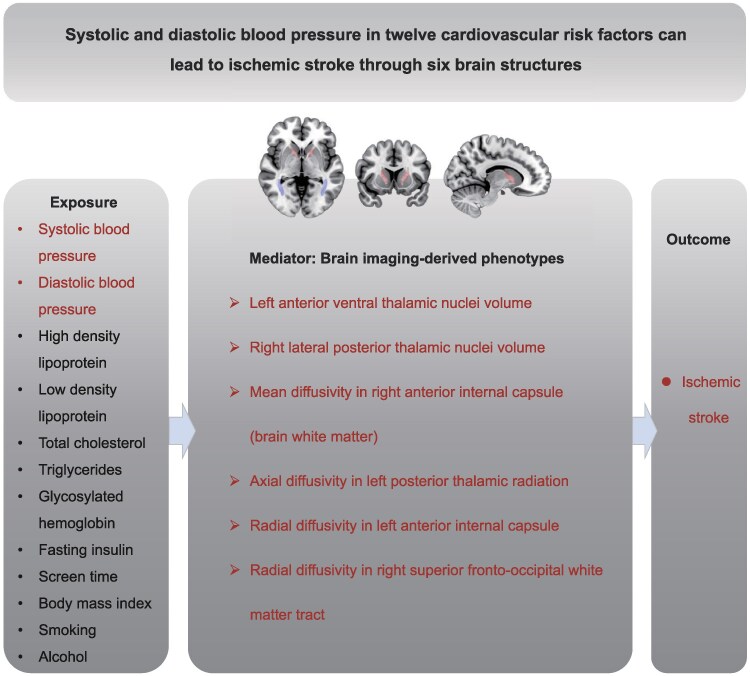 Figure 1
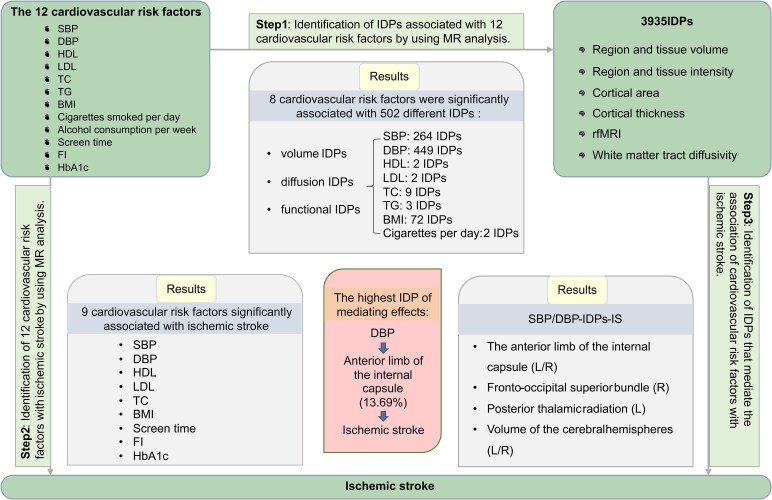 Figure 2
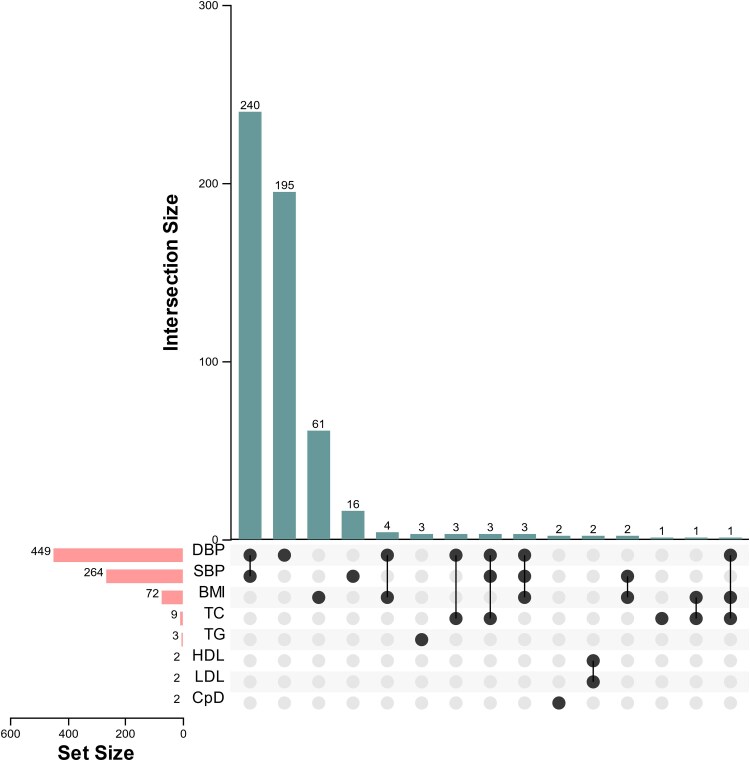 Figure 3
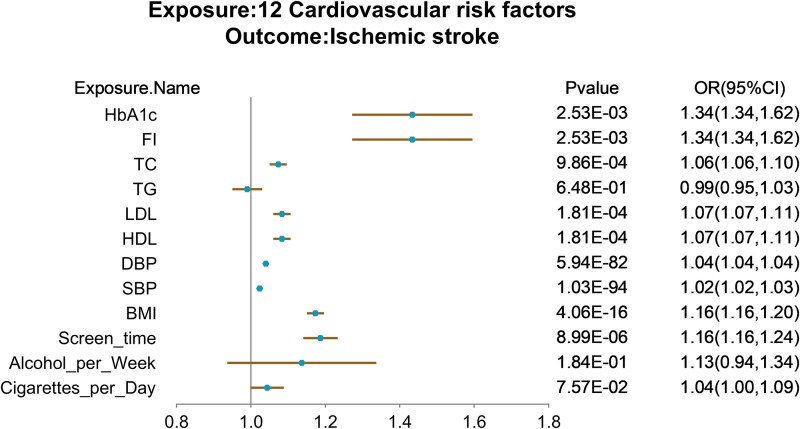 Figure 4
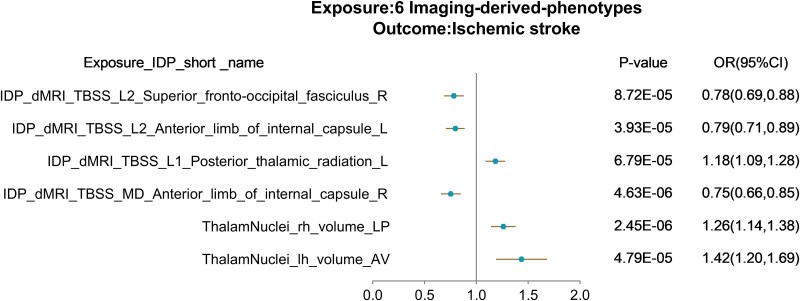 Figure 5
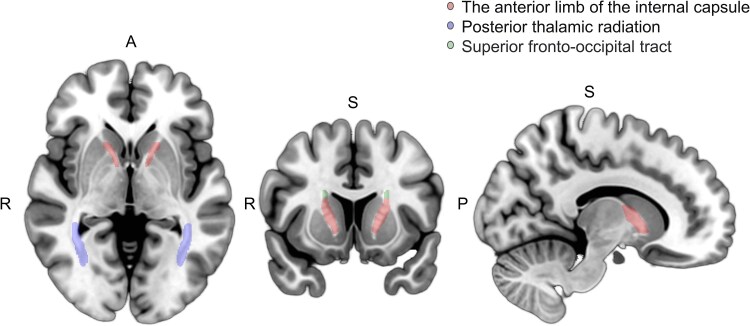 Figure 6
Peer Reviews
No public reviews on file for this paper yet. If you reviewed it on a platform where reviews are public (OpenReview, ICLR, NeurIPS, ICML), you can paste yours below so the community can read it here.
Videos
No videos yet. Explain this paper in a talk, walkthrough, or lecture? Add one.
Taxonomy
TopicsRadiomics and Machine Learning in Medical Imaging · Cerebrovascular and Carotid Artery Diseases · Cardiovascular Disease and Adiposity