Prospective analysis of adiposity metrics for complicated acute colonic diverticulitis: Should WSES Classification and visceral adiposity be integrated for predictive analyses?
Damla Beyazadam, Tunc Eren, Nuray Colapkulu Akgul, Sukriye Julide Sagiroglu, Nesrin Gunduz, Ozgur Ekinci, Orhan Alimoglu

TL;DR
This study explores how body fat metrics predict complications in acute colonic diverticulitis, suggesting visceral fat may protect against severe outcomes.
Contribution
The study identifies visceral adiposity as a potential protective factor against complicated diverticulitis, suggesting its integration into predictive models.
Findings
Patients with complicated diverticulitis had significantly lower BMI and visceral fat area.
Lower BMI and visceral fat were associated with higher likelihood of interventional procedures.
A visceral-to-subcutaneous fat ratio below 0.68 independently predicts complicated diverticulitis.
Abstract
Colonic diverticulitis is correlated with age, body mass index (BMI), and increased visceral or subcutaneous fat. Obesity contributes to diverticulosis, diverticulitis and its complications onset, as visceral fat activates inflammatory pathways that exacerbate these conditions. The aim of this study was to evaluate the association of visceral adiposity and BMI on complications of acute colonic diverticulitis. A prospective cohort study was conducted on patients with acute diverticulitis admitted to the general surgery ward of a university hospital in Istanbul from September 2017 to February 2022. A total of 208 patients were classified into uncomplicated and complicated diverticulitis per the World Society of Emergency Surgery guidelines. After documenting demographic, clinical, and laboratory data, along with BMI and computed tomography measurements of visceral and subcutaneous fat…
Genes, proteins, chemicals, diseases, species, mutations and cell lines named across the full text — each resolved to its canonical identifier and authoritative record.
Click any figure to enlarge with its caption.
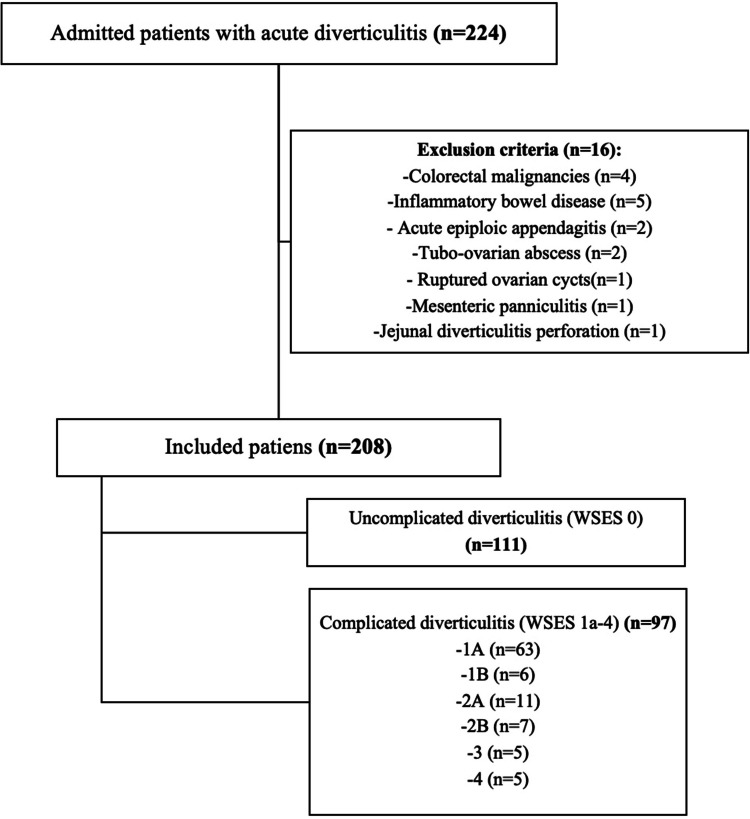 Figure 1
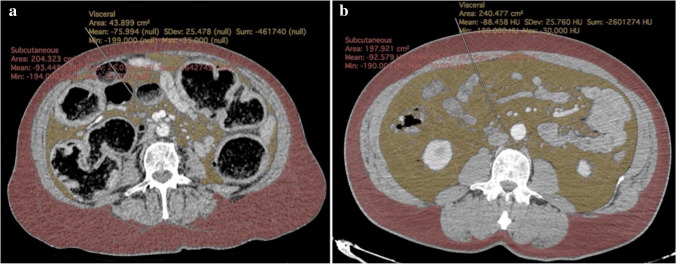 Figure 2
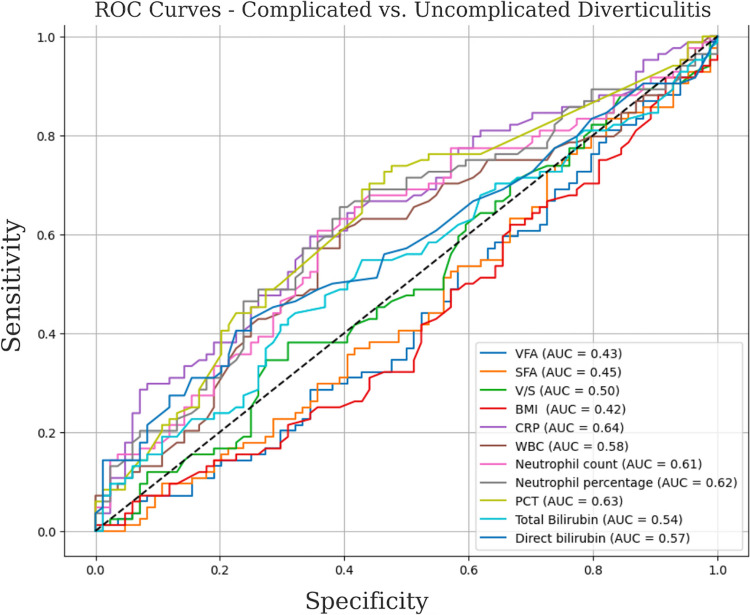 Figure 3
Peer Reviews
No public reviews on file for this paper yet. If you reviewed it on a platform where reviews are public (OpenReview, ICLR, NeurIPS, ICML), you can paste yours below so the community can read it here.
Videos
No videos yet. Explain this paper in a talk, walkthrough, or lecture? Add one.
Taxonomy
TopicsDiverticular Disease and Complications · Appendicitis Diagnosis and Management · Gastrointestinal disorders and treatments