Computational anatomy: the cerebellar microzone computation
Mike Gilbert, Anders Rasmussen

TL;DR
The paper proposes that the cerebellum's microzones perform computations based on anatomy alone, without learning, challenging traditional views of cerebellar function.
Contribution
The novel contribution is a computational model of cerebellar microzones that suggests their function arises from anatomical structure rather than learned synaptic changes.
Findings
Cerebellar microzone computation is modeled as a passive effect of anatomy, not learning.
Rate information is linearly conserved in cerebellar signaling, supporting the anatomical model.
Parallel fiber synaptic memory plays a supporting role in the proposed network computation.
Abstract
The cerebellum is a large brain structure. Most of the mass and volume of the cerebellum is made up by the cerebellar cortex. The outer layer of the cerebellar cortex is divided functionally into long, thin strips called microzones. We argue that the cerebellar microzone computation is the aggregate of simple unit computations and a passive effect of anatomy, unaided and unlearned, which we recreate in silico. This is likely to polarise opinion. In the traditional view, data processing by the cerebellum (stated very briefly) is the effect of learned synaptic changes. However, this has become difficult to reconcile with evidence that rate information is linearly conserved in cerebellar signalling. We present an alternative interpretation of cell morphologies and network architecture in the light of linear communication. Parallel fibre synaptic memory has a supporting role in the network…
Genes, proteins, chemicals, diseases, species, mutations and cell lines named across the full text — each resolved to its canonical identifier and authoritative record.
Click any figure to enlarge with its caption.
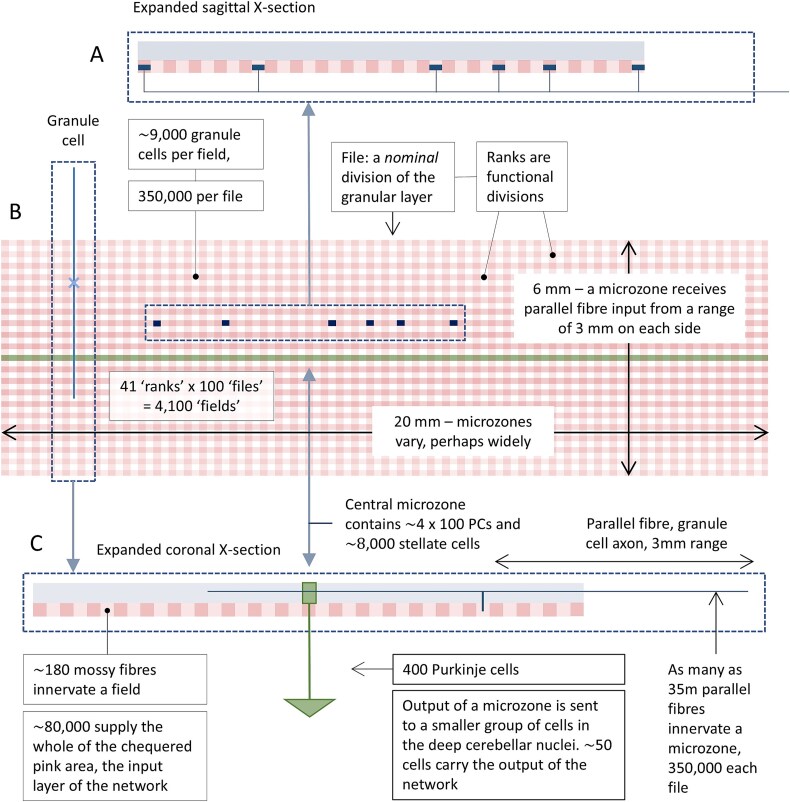 Figure 1
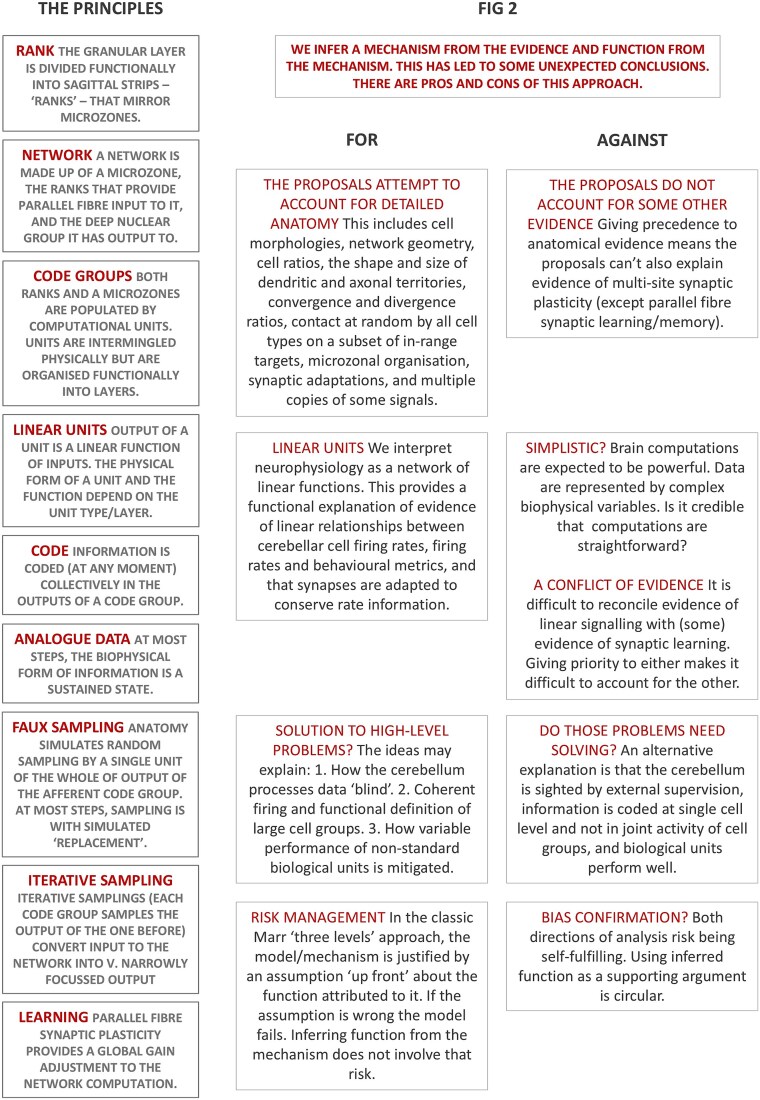 Figure 2
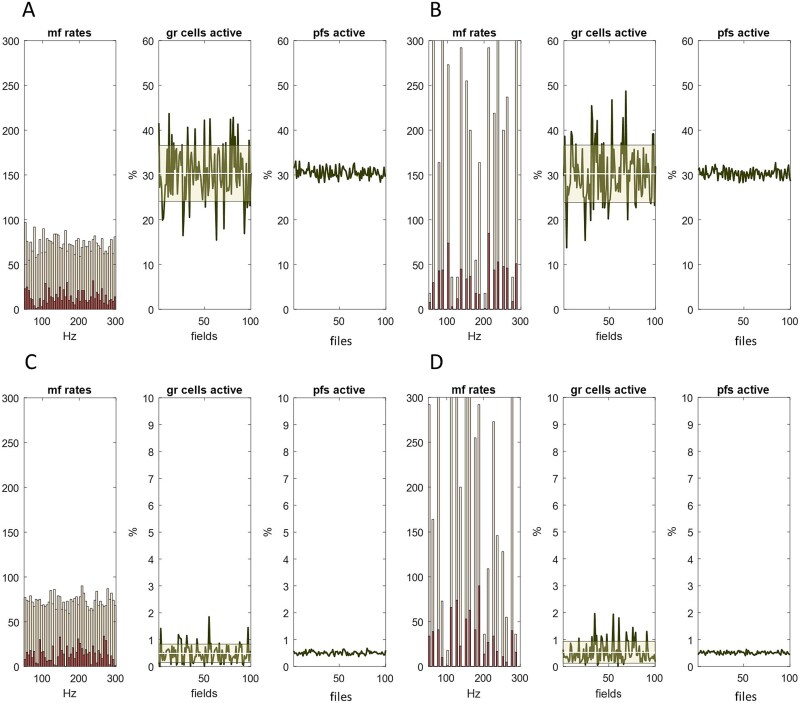 Figure 3
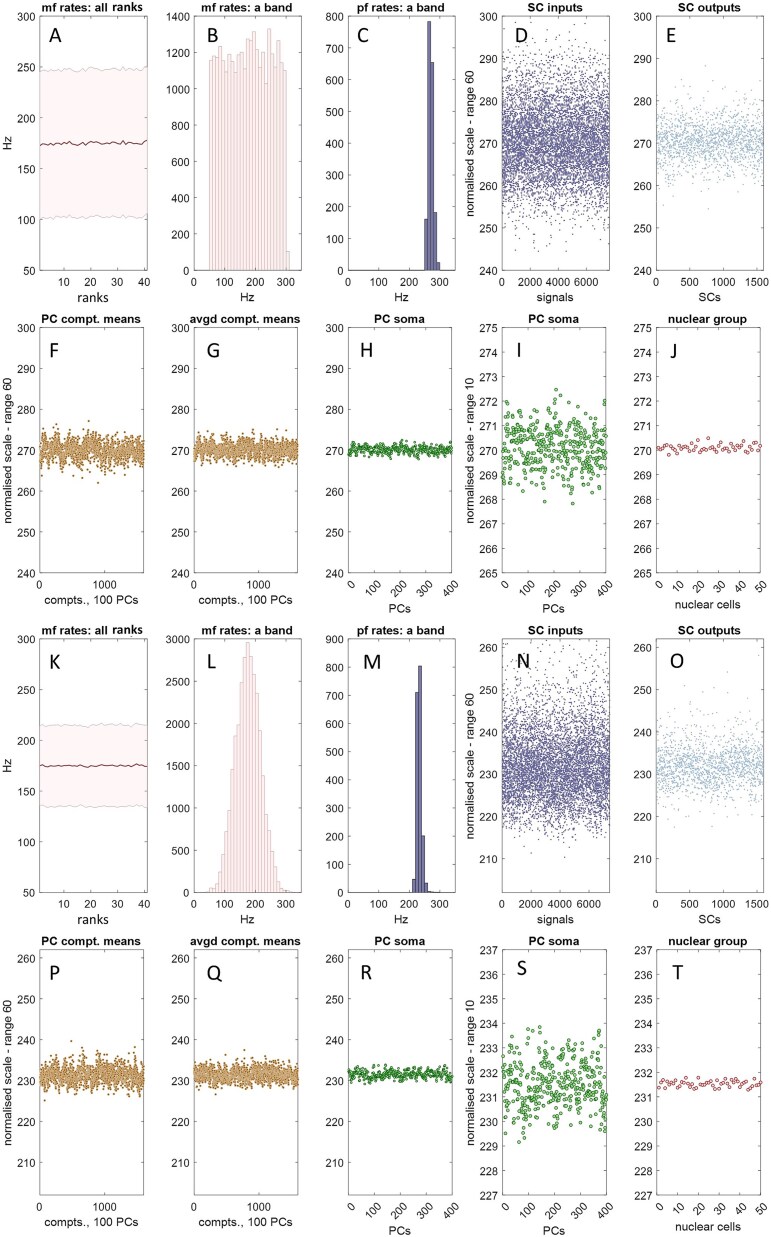 Figure 4
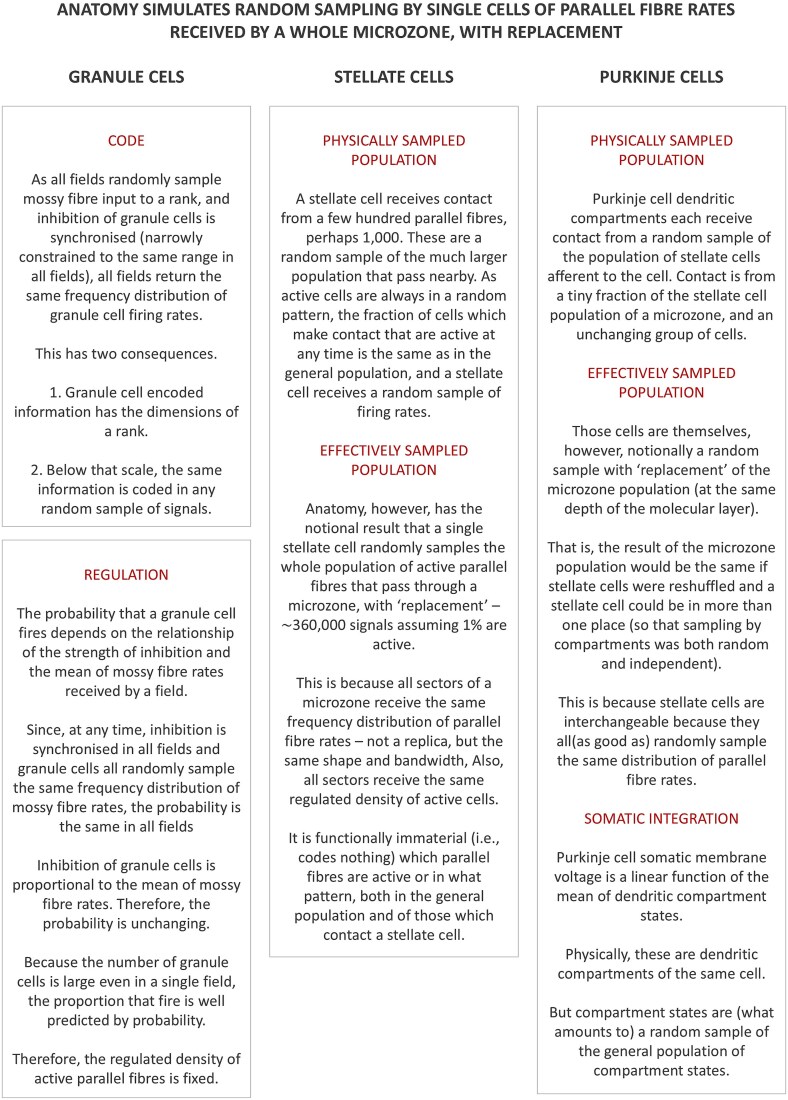 Figure 5
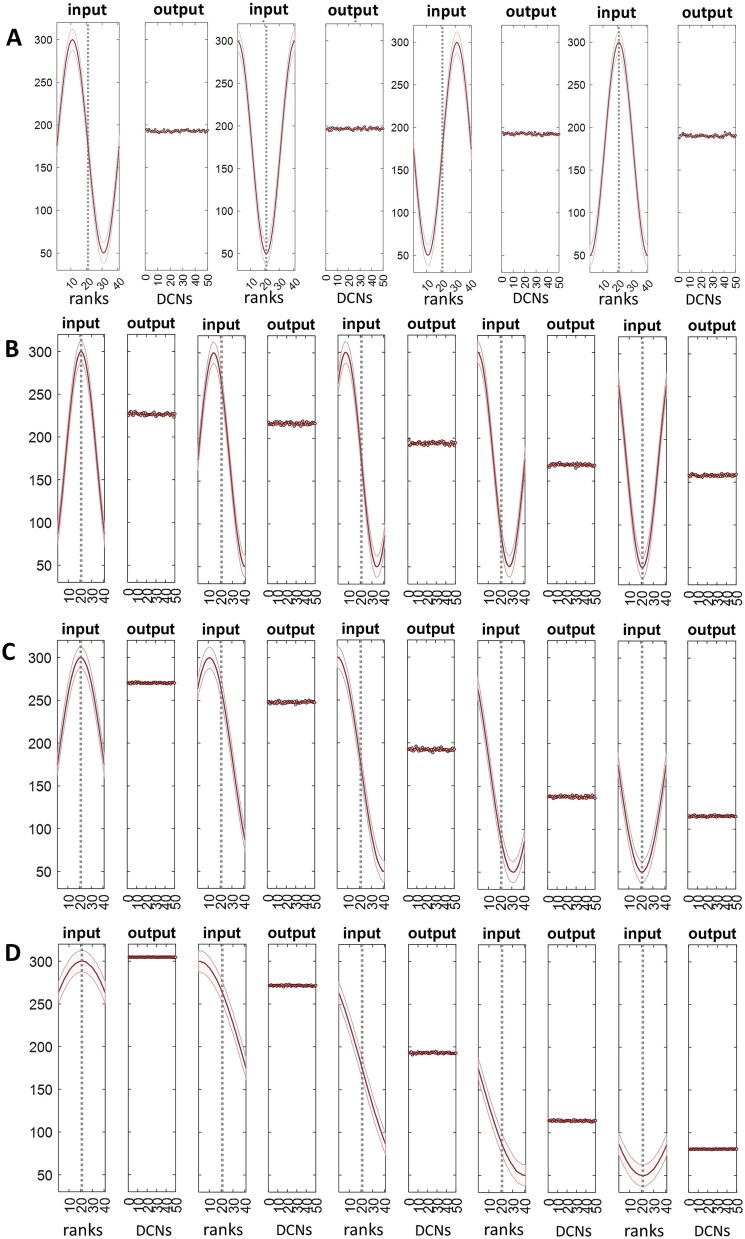 Figure 6
Peer Reviews
No public reviews on file for this paper yet. If you reviewed it on a platform where reviews are public (OpenReview, ICLR, NeurIPS, ICML), you can paste yours below so the community can read it here.
Videos
No videos yet. Explain this paper in a talk, walkthrough, or lecture? Add one.
Taxonomy
TopicsVestibular and auditory disorders · Neural dynamics and brain function · Neonatal and fetal brain pathology