Differential activation of monocytes and PMNs in orofacial granulomatosis patients induced by bacterial and non-bacterial stimuli
Francesco Palestra, Luca Modestino, Annagioia Ventrici, Arianna Monteforte, Gina Memoli, Anne Lise Ferrara, Leonardo Cristinziano, Remo Poto, Francesca Wanda Rossi, Gilda Varricchi, Amato De Paulis, Gianni Marone, Giuseppe Spadaro, Angelica Petraroli, Stefania Loffredo

TL;DR
This study explores immune cell activation in orofacial granulomatosis patients in response to bacterial and non-bacterial stimuli.
Contribution
The study reveals distinct activation patterns of monocytes and PMNs in OFG patients compared to healthy donors.
Findings
OFG-derived monocytes release more pro-inflammatory cytokines and less IL-10 and IFN-γ compared to healthy donors.
OFG-derived PMNs show increased TNF-α, MPO, ROS production, and activation markers compared to healthy donors.
OFG patients have elevated serum levels of MMP-9, MPO, TNF-α, and neutrophil extracellular trap biomarkers.
Abstract
Orofacial Granulomatosis (OFG) is a rare chronic inflammatory disorder characterized by persistent or recurrent swelling of the lips and oral mucosa, often accompanied by granulomatous inflammation in the orofacial region with limited effective treatment options available. Emerging evidence suggests an immune dysregulation in the development and progression of OFG. Immune cells, including monocytes and neutrophils (PMNs), are involved in autoimmune and inflammatory diseases by releasing pro-inflammatory and immunomodulatory molecules. Considering that microbial agents have been suggested as potential triggers for OFG, in this study we evaluated the effect of LPS, fMLP and PMA on the activation of monocytes and PMNs purified by 11 OFG patients and 11 sex-and age-matched healthy donors (HDs). Upon stimulation, OFG-derived monocytes displayed a higher release of pro-inflammatory…
Genes, proteins, chemicals, diseases, species, mutations and cell lines named across the full text — each resolved to its canonical identifier and authoritative record.
Click any figure to enlarge with its caption.
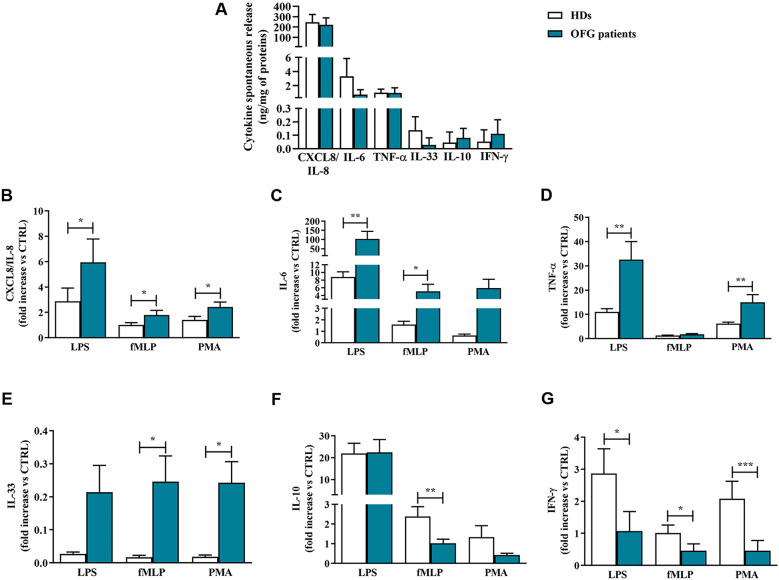 Figure 1
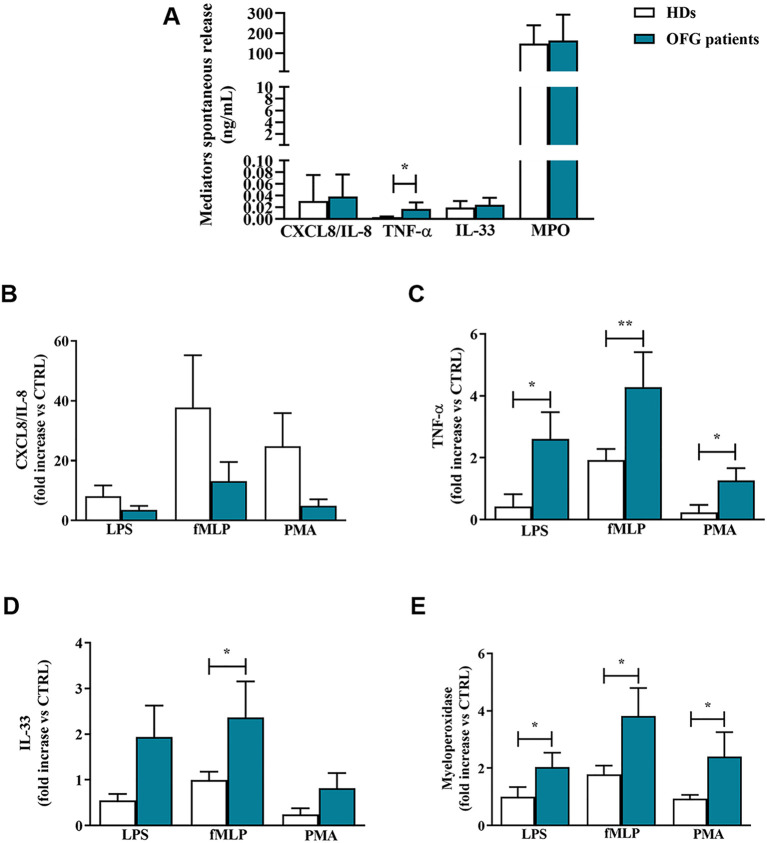 Figure 2
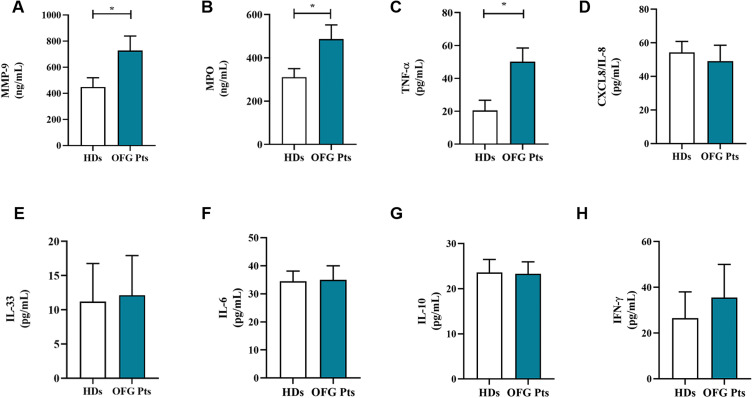 Figure 3
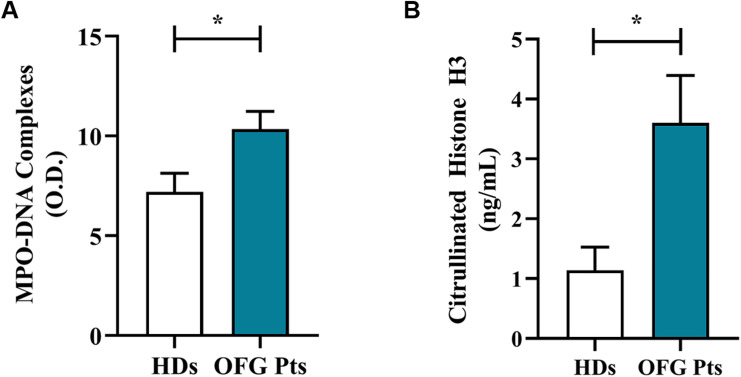 Figure 4
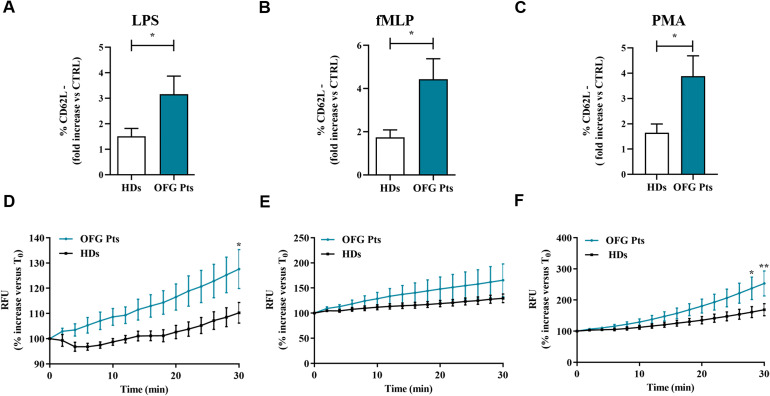 Figure 5
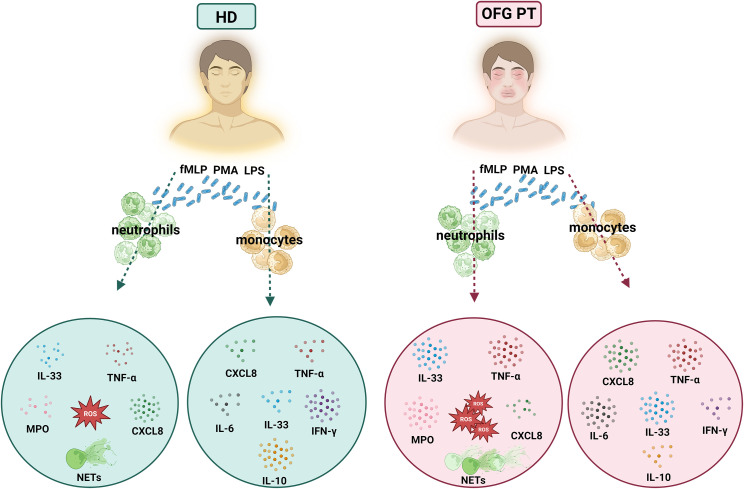 Figure 6
Peer Reviews
No public reviews on file for this paper yet. If you reviewed it on a platform where reviews are public (OpenReview, ICLR, NeurIPS, ICML), you can paste yours below so the community can read it here.
Videos
No videos yet. Explain this paper in a talk, walkthrough, or lecture? Add one.
Taxonomy
TopicsNeutrophil, Myeloperoxidase and Oxidative Mechanisms · Autoimmune and Inflammatory Disorders · Inflammasome and immune disorders