Adherence and persistence with istradefylline treatment in patients with Parkinson’s disease in the United States
Reversa Joseph, Joyce Qian, Hannah Cummings, Yen-Hua Chen, Shubham Tewari, Michael Soileau

TL;DR
This study found that patients with Parkinson’s disease in the U.S. who started istradefylline at a higher dose or had Medicare Advantage insurance were more likely to stick with their treatment.
Contribution
The study identifies specific factors, including insurance type and starting dose, that influence treatment adherence and persistence with istradefylline.
Findings
Median adherence to istradefylline over 12 months was 74.0%.
Patients with Medicare Advantage had significantly higher adherence and persistence than those with commercial insurance.
Starting istradefylline at 40 mg was associated with better persistence compared to 20 mg.
Abstract
Medication adherence and persistence are associated with better outcomes for patients with Parkinson’s disease. To evaluate 12-month adherence and persistence with istradefylline and identify factors associated with persistence among patients. A retrospective cohort study was conducted using IQVIA longitudinal prescription (LRx) and medical (Dx) claims data. Adult patients initiating istradefylline between 2019 and 2022 with ≥1 LRx and ≥1 Dx claim every 6 months over 12-month baseline and follow-up periods were included. Adherence was measured by the proportion of days covered (PDC) and medication possession ratio (MPR). Persistence was measured by the duration of prescription fills, allowing for a ≤60-day gap. Multivariate logistic regression was used to evaluate factors associated with 12-month persistence. Among 2,045 patients, 76.0% were covered by Medicare Advantage and 23.9%…
Genes, proteins, chemicals, diseases, species, mutations and cell lines named across the full text — each resolved to its canonical identifier and authoritative record.
Click any figure to enlarge with its caption.
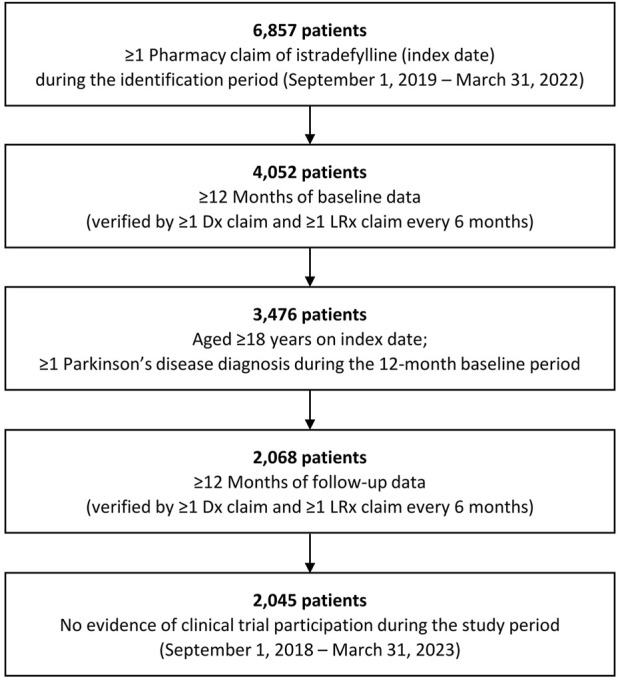 Figure 1
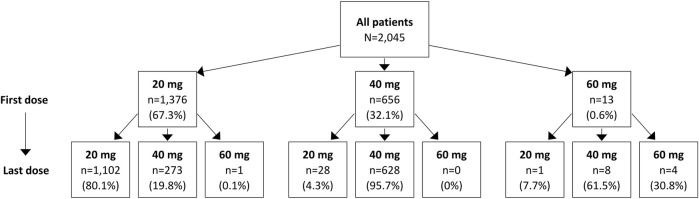 Figure 2
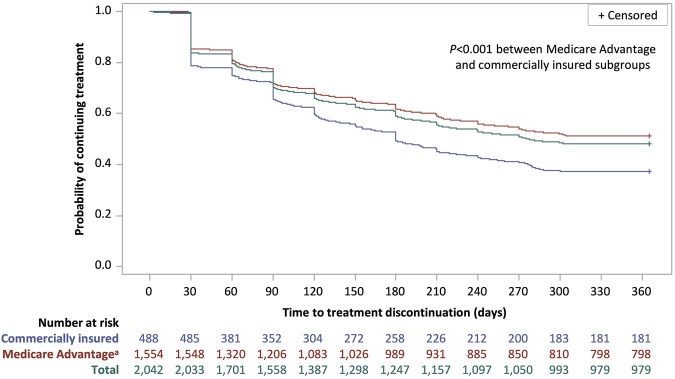 Figure 3
Peer Reviews
No public reviews on file for this paper yet. If you reviewed it on a platform where reviews are public (OpenReview, ICLR, NeurIPS, ICML), you can paste yours below so the community can read it here.
Videos
No videos yet. Explain this paper in a talk, walkthrough, or lecture? Add one.
Taxonomy
TopicsParkinson's Disease Mechanisms and Treatments · Neurological disorders and treatments · Autism Spectrum Disorder Research