Exploring focal adhesion data: dynamic parameter extraction from FRAP and FLAP experiments using chemical master equation
Luciana Renata de Oliveira, Matheus Gimenez Fernandes, José Salvatore Leister Patane, Jean-Marc Schwartz, José Eduardo Krieger, Christoph Ballestrem, Ayumi Aurea Miyakawa

TL;DR
This paper introduces a new stochastic model to analyze protein dynamics in focal adhesions using FRAP and FLAP data, offering deeper insights into molecular interactions.
Contribution
A novel stochastic model based on the chemical master equation is introduced to extract dynamic parameters from FRAP and FLAP experiments.
Findings
The model infers protein-specific entry and exit rates, providing new insights into focal adhesion dynamics.
The framework was validated using experimental data from NIH3T3 fibroblasts expressing various focal adhesion proteins.
The model reveals regulatory roles of vinculin and actin in talin dynamics within focal adhesions.
Abstract
The dynamic behavior of proteins within cellular structures can be studied using fluorescence recovery after photobleaching (FRAP) and fluorescence loss after photobleaching (FLAP) experiments. These techniques provide insights into molecular mobility by estimating parameters such as turnover rates (kT) and diffusion coefficients (D). However, traditional deterministic models often rely on simplifying assumptions that may not fully capture the stochastic nature of molecular interactions. In this study, we developed a novel stochastic model based on the analytical solution of the chemical master equation to extract dynamic parameters from FRAP and FLAP experiments in the focal adhesion (FA) network. Our approach extends beyond standard FRAP/FLAP analysis by inferring additional parameters, such as protein-specific entry (kIn) and exit (kOut) rates, allowing a deeper understanding…
Genes, proteins, chemicals, diseases, species, mutations and cell lines named across the full text — each resolved to its canonical identifier and authoritative record.
Click any figure to enlarge with its caption.
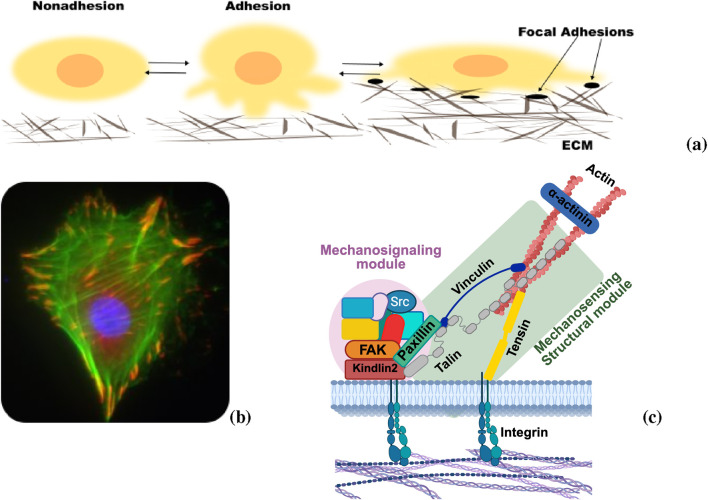 Figure 1
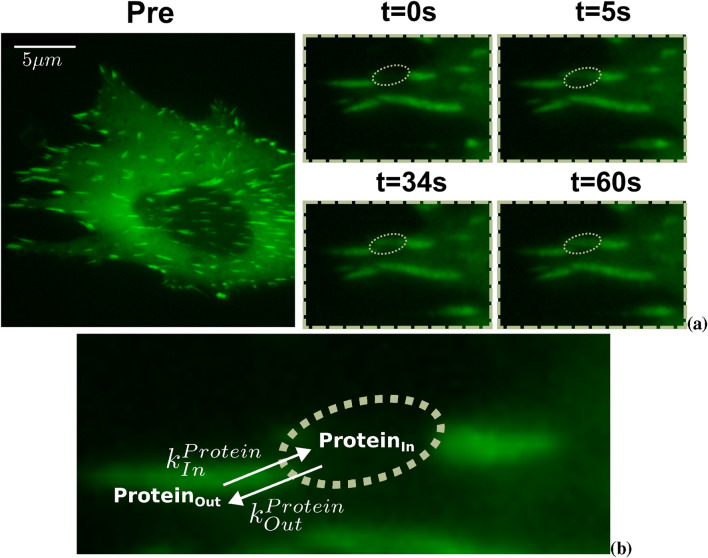 Figure 2
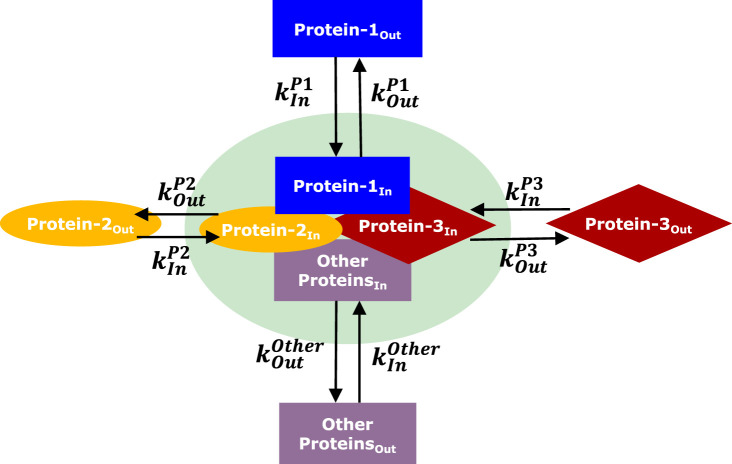 Figure 3
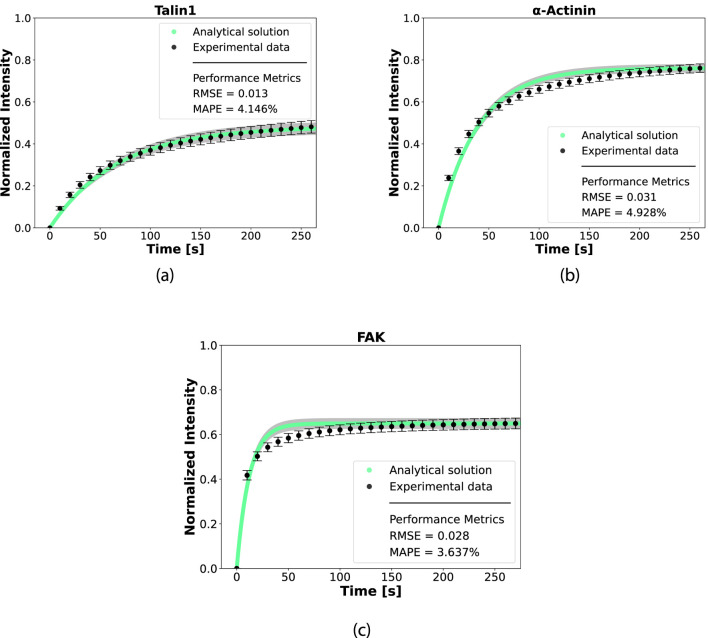 Figure 4
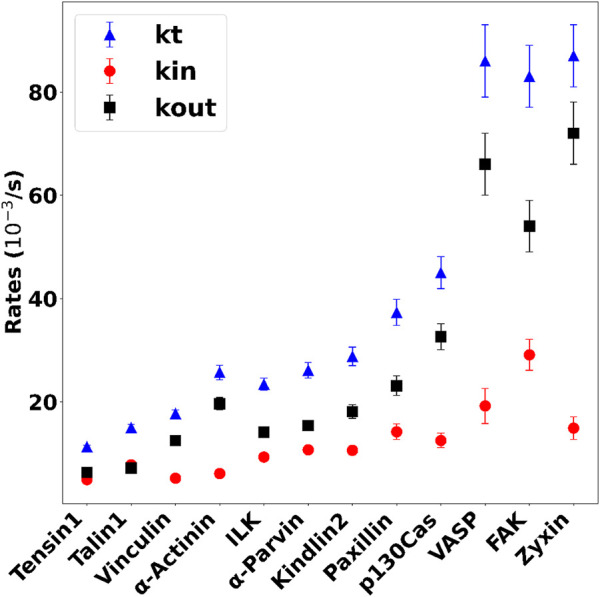 Figure 5
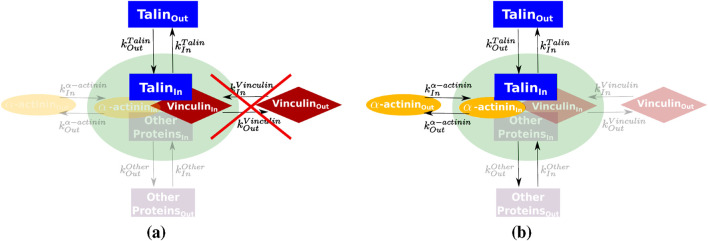 Figure 6
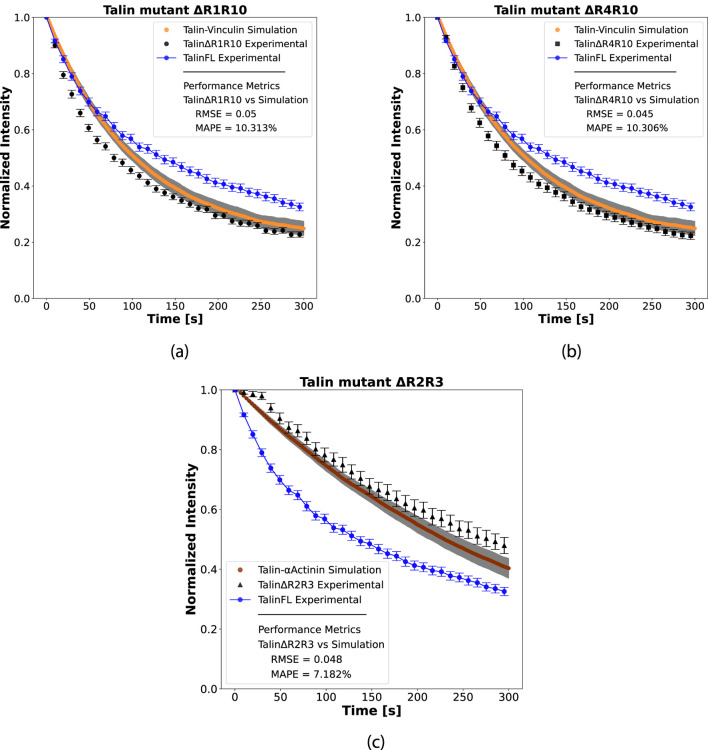 Figure 7
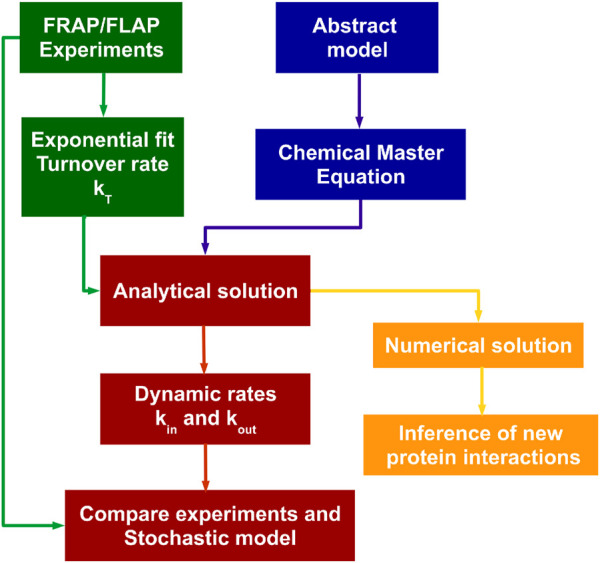 Figure 8
Peer Reviews
No public reviews on file for this paper yet. If you reviewed it on a platform where reviews are public (OpenReview, ICLR, NeurIPS, ICML), you can paste yours below so the community can read it here.
Videos
No videos yet. Explain this paper in a talk, walkthrough, or lecture? Add one.
Taxonomy
TopicsAdvanced Fluorescence Microscopy Techniques · Force Microscopy Techniques and Applications · Advanced Biosensing Techniques and Applications