The Impact of Killer Cell Immunoglobulin-Like Receptors and Human Leukocyte Antigen-E, Human Leukocyte Antigen-G Polymorphisms on Innate Immunity and COVID-19 Severity
Cigdem Kekik, Sonay Temurhan, Yeliz Ogret, Behnoush Nasr Zanjani, Demet Kıvanc, Fatma Savran Oguz, Murat Kose, Fatma Betul Oktelik, Gunnur Deniz

TL;DR
This study explores how genetic variations in immune-related genes affect the severity of COVID-19, showing that certain gene variants can protect against or worsen the disease.
Contribution
The study identifies specific KIR, HLA-E, and HLA-G alleles associated with mild or severe outcomes in SARS-CoV-2 infection.
Findings
Inhibitory KIR alleles like KIR2DL1 and KIR3DL1 are linked to protection against severe disease.
Activator alleles such as KIR2DS2 and KIR3DS1 are associated with increased disease severity.
HLA-E genotypes like HLA-E∗01:01-HLA-E∗01:03 may offer protection, while HLA-E∗01:03-HLA-E∗01:03 may worsen prognosis.
Abstract
Background: Severe acute respiratory syndrome coronavirus 2 (SARS-CoV-2) infection spans a spectrum of symptoms, ranging from mild respiratory issues to severe outcomes like pneumonia, acute respiratory distress syndrome, and fatality. Natural killer (NK) cells, governed by killer cell immunoglobulin-like receptors (KIRs), play a pivotal role in directly combating viral infections. Emerging studies indicate a decline in NK cell numbers and heightened NKG2A expression in infected individuals. Objective: This study focuses on genotyping human leukocyte antigen (HLA)-E, HLA-G, and KIR in SARS-CoV-2-positive individuals, comparing data between those with mild and moderate/severe symptoms. The cohort comprised 100 COVID-19-positive patients and 100 healthy volunteers, both groups subjected to DNA isolation and genotyping using sequence-based sequencing. Results: In 97 COVID-19-positive…
Genes, proteins, chemicals, diseases, species, mutations and cell lines named across the full text — each resolved to its canonical identifier and authoritative record.
Click any figure to enlarge with its caption.
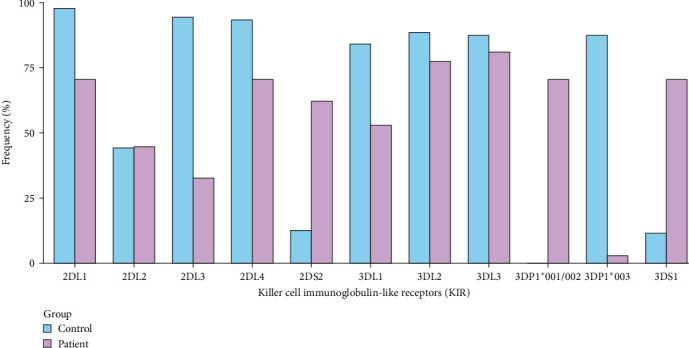 Figure 1
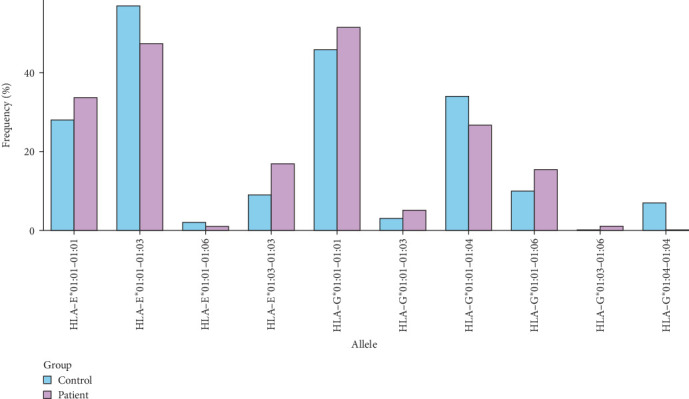 Figure 2
Peer Reviews
No public reviews on file for this paper yet. If you reviewed it on a platform where reviews are public (OpenReview, ICLR, NeurIPS, ICML), you can paste yours below so the community can read it here.
Videos
No videos yet. Explain this paper in a talk, walkthrough, or lecture? Add one.
Taxonomy
TopicsImmune Cell Function and Interaction · COVID-19 Clinical Research Studies · SARS-CoV-2 and COVID-19 Research