Noise correlations and neuronal diversity may limit the utility of winner-take-all readout in a pop out visual search task
Ori Hendler, Ronen Segev, Maoz Shamir, Lyle Graham, Lyle Graham, Lyle Graham, Lyle Graham

TL;DR
This paper challenges the winner-take-all theory of visual search by showing it cannot explain high accuracy in pop out tasks due to neuronal diversity and noise correlations.
Contribution
The study introduces a novel analysis of WTA mechanisms in pop out visual search, revealing their limitations due to noise and neuronal heterogeneity.
Findings
Single-best-cell WTA fails to accumulate information from large neuronal populations due to heterogeneity.
Generalized population-based WTA is hindered by noise correlations, reducing accuracy.
Current WTA models cannot explain high behavioral accuracy in pop out visual search tasks.
Abstract
Visual search involves active scanning of the environment to locate objects of interest against a background of irrelevant distractors. One widely accepted theory posits that pop out visual search is computed by a winner-take-all (WTA) competition between contextually modulated cells that form a saliency map. However, previous studies have shown that the ability of WTA mechanisms to accumulate information from large populations of neurons is limited, thus raising the question of whether WTA can underlie pop out visual search. To address this question, we conducted a modeling study to investigate how accurately the WTA mechanism can detect the deviant stimulus in a pop out task. We analyzed two types of WTA readout mechanisms: single-best-cell WTA, where the decision is made based on a single winning cell, and a generalized population-based WTA, where the decision is based on the winning…
Genes, proteins, chemicals, diseases, species, mutations and cell lines named across the full text — each resolved to its canonical identifier and authoritative record.
Click any figure to enlarge with its caption.
 Figure 1
 Figure 2
 Figure 3
 Figure 4
 Figure 5
 Figure 6
 Figure 7
 Figure 8
 Figure 9
 Figure 10
 Figure 11
 Figure 12
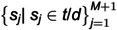 Figure 13
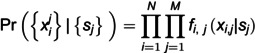 Figure 14
 Figure 15
 Figure 16
 Figure 17
 Figure 18
 Figure 19
 Figure 20
 Figure 21
 Figure 22
 Figure 23
 Figure 24
 Figure 25
 Figure 26
 Figure 27
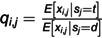 Figure 28
 Figure 29
 Figure 30
 Figure 31
 Figure 32
 Figure 33
 Figure 34
 Figure 35
 Figure 36
 Figure 37
 Figure 38
 Figure 39
 Figure 40
 Figure 41
 Figure 42
 Figure 43
 Figure 44
 Figure 45
 Figure 46
 Figure 47
 Figure 48
 Figure 49
 Figure 50
Peer Reviews
No public reviews on file for this paper yet. If you reviewed it on a platform where reviews are public (OpenReview, ICLR, NeurIPS, ICML), you can paste yours below so the community can read it here.
Videos
No videos yet. Explain this paper in a talk, walkthrough, or lecture? Add one.
Taxonomy
TopicsNeural dynamics and brain function · Olfactory and Sensory Function Studies · Visual Attention and Saliency Detection