Target-tracking control method for autonomous vehicles based on hyperbolic-tangent line-of-sight guidance and odometry error compensation
Xiaosong Liu, Huanhai Zhu, Zebiao Shan, Qingsong Lu, Liben He

TL;DR
This paper introduces a new control method for autonomous vehicles that improves tracking accuracy using odometry and error compensation, even in complex environments.
Contribution
A novel target-tracking control method using hyperbolic-tangent line-of-sight guidance and odometry error compensation is proposed.
Findings
The proposed method reduced average position tracking error by 45.39% compared to ET-Fuzzy-MPC under complex road conditions.
Tracking error remained stable within 0.192 m during practical curved-path tests, showing improved accuracy and performance.
Abstract
The target-tracking accuracy of autonomous vehicles is closely related to that of onboard sensors. Methods such as image processing and base station positioning are susceptible to various types of interference in real-world scenarios, resulting in sensor data errors or even losses that ultimately affect the tracking accuracy of autonomous vehicles. This study proposes a target-tracking control method that relies solely on wheel odometry to address this issue. This method incorporates an extended state observer to compensate for the cumulative errors generated by the odometry mechanism, effectively enhancing the robustness and accuracy of the system in complex environments. In addition, a hyperbolic-tangent line-of-sight guidance strategy based on a partition-switching mechanism is designed to improve the dynamic response capability of an autonomous vehicle. This strategy nonlinearly…
Genes, proteins, chemicals, diseases, species, mutations and cell lines named across the full text — each resolved to its canonical identifier and authoritative record.
Click any figure to enlarge with its caption.
 Figure 1
 Figure 2
 Figure 3
 Figure 4
 Figure 5
 Figure 6
 Figure 7
 Figure 8
 Figure 9
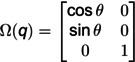 Figure 10
 Figure 11
 Figure 12
 Figure 13
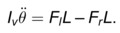 Figure 14
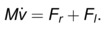 Figure 15
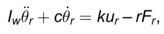 Figure 16
 Figure 17
 Figure 18
 Figure 19
 Figure 20
 Figure 21
 Figure 22
 Figure 23
 Figure 24
 Figure 25
 Figure 26
 Figure 27
 Figure 28
 Figure 29
 Figure 30
 Figure 31
 Figure 32
 Figure 33
 Figure 34
 Figure 35
 Figure 36
 Figure 37
 Figure 38
 Figure 39
 Figure 40
 Figure 41
 Figure 42
 Figure 43
 Figure 44
 Figure 45
 Figure 46
 Figure 47
 Figure 48
 Figure 49
 Figure 50
Peer Reviews
No public reviews on file for this paper yet. If you reviewed it on a platform where reviews are public (OpenReview, ICLR, NeurIPS, ICML), you can paste yours below so the community can read it here.
Videos
No videos yet. Explain this paper in a talk, walkthrough, or lecture? Add one.
Taxonomy
TopicsControl and Dynamics of Mobile Robots · Robotic Path Planning Algorithms · Adaptive Control of Nonlinear Systems