The effects of handling on mouse behavior: cupped hands versus familiar or novel huts or tunnels
Maya J. Bodnar, I. Joanna Makowska, Catherine A. Schuppli, Daniel M. Weary

TL;DR
This study compares different methods of handling mice to determine which ones reduce stress and improve interaction with handlers.
Contribution
The study introduces hut handling as a practical and welfare-friendly alternative to traditional tail handling.
Findings
Hut-handled mice spent the most time interacting with handlers compared to tunnel- or cupped-handled mice.
Familiar handling objects improved initial interaction but not long-term behavior in the elevated plus maze.
No significant difference in anxiety levels was observed across handling methods in the elevated plus maze test.
Abstract
Mice are commonly tail-handled, despite evidence that this is aversive. Alternatives include cupping and tunnel handling; both methods are associated with improved welfare outcomes, including reduced anxiety and improved ease of handling, but tail handling may be perceived as more practical for handlers. Practicality may be improved by using handling objects already present in facilities, such as upturned mouse huts. Our first aim was to compare hut handling with the established refined alternatives of cupping and tunnel handling. As both tunnels and huts may be used as part of mouse caging, a second aim was to assess the effects of handling object familiarity (from the home cage vs. a novel object). Outcomes assessed were voluntary interaction with the handler and time spent in the open arms of an elevated plus maze (EPM). Mice (n = 51) were randomly assigned a handling method:…
Genes, proteins, chemicals, diseases, species, mutations and cell lines named across the full text — each resolved to its canonical identifier and authoritative record.
Click any figure to enlarge with its caption.
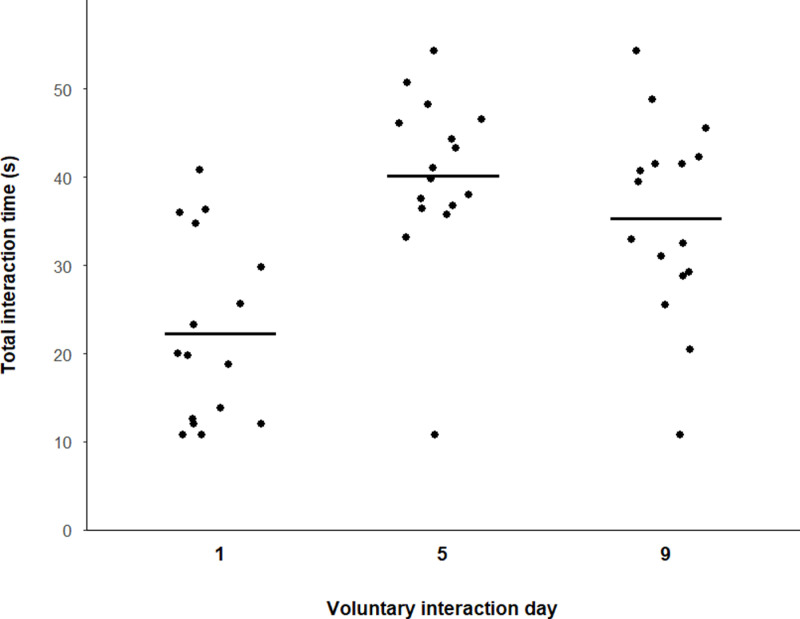 Figure 1
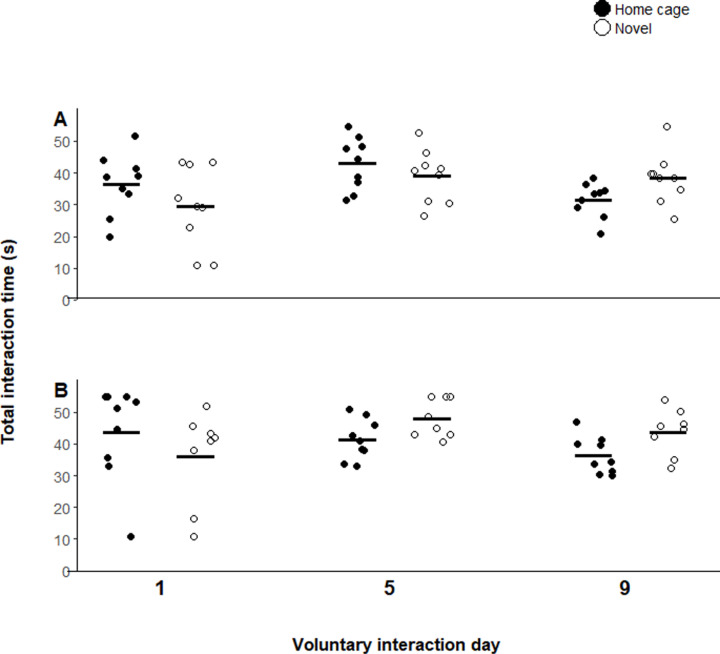 Figure 2
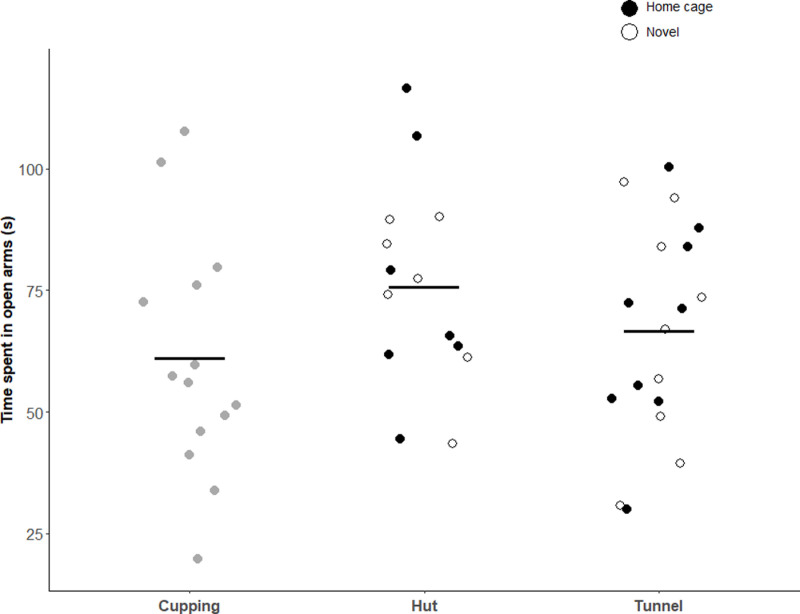 Figure 3
Peer Reviews
No public reviews on file for this paper yet. If you reviewed it on a platform where reviews are public (OpenReview, ICLR, NeurIPS, ICML), you can paste yours below so the community can read it here.
Videos
No videos yet. Explain this paper in a talk, walkthrough, or lecture? Add one.
Taxonomy
TopicsAnimal Behavior and Welfare Studies · Neuroendocrine regulation and behavior · Olfactory and Sensory Function Studies