Fingerling stocking size has no influence on proliferative gill disease severity in farm-raised Channel Catfish
Bradley M Richardson, Noor ul-Huda, Cynthia Ware, Alvin C Camus, Caitlin E Older, Fernando Y Yamamoto, Penelope M Goodman, J Grant Reifers, Charles M Walker, Justin M Stilwell, David P Marancik, David J Wise, Matt J Griffin

TL;DR
Stocking larger fingerling Channel Catfish does not reduce the severity of proliferative gill disease caused by Henneguya ictaluri.
Contribution
This study demonstrates that fingerling size does not influence gill disease severity or mortality in catfish exposed to H. ictaluri.
Findings
Larger fingerling size did not improve survival or reduce gill damage in ponds with H. ictaluri.
Parasite concentration in pond water was the main predictor of gill condition metrics.
Smaller fingerlings showed slightly better gill condition in high parasite concentration ponds, likely due to survival bias.
Abstract
The myxozoan Henneguya ictaluri is the causative agent of proliferative gill disease (PGD) in Channel Catfish Ictalurus punctatus and hybrid catfish (Channel Catfish × Blue Catfish I. furcatus), which is a significant disease concern within the commercial catfish industry of the southeastern United States. Incidence of PGD occurs most frequently in fingerling-sized catfish when the fish are being transferred from nursery ponds to grow-out ponds. Mitigation strategies for PGD primarily involve the avoidance of stocking fish into ponds with existent lethal concentrations of the parasite, as determined through sentinel fish exposures or H. ictaluri-specific quantitative PCR. This study aimed to evaluate the potential of stocking larger fingerlings to improve survival and investigate the influence on three metrics of gill condition. Two sizes of Channel Catfish fingerlings (∼12 and ∼20 cm)…
Genes, proteins, chemicals, diseases, species, mutations and cell lines named across the full text — each resolved to its canonical identifier and authoritative record.
Click any figure to enlarge with its caption.
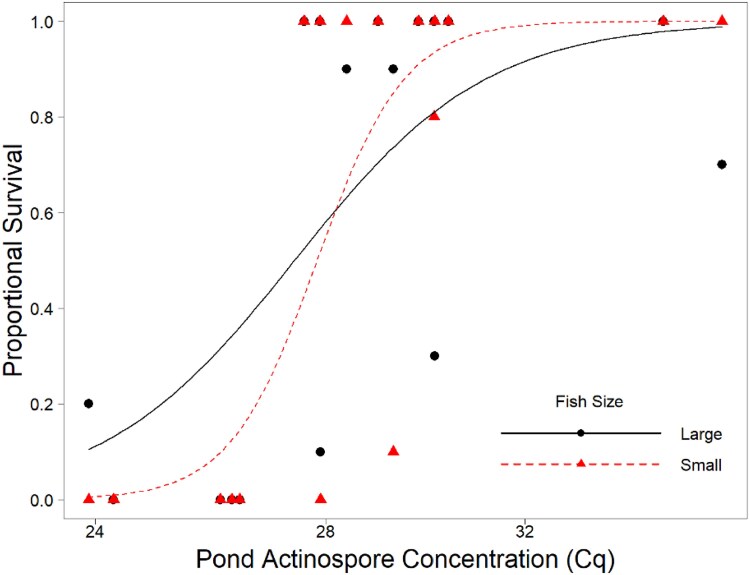 Figure 1
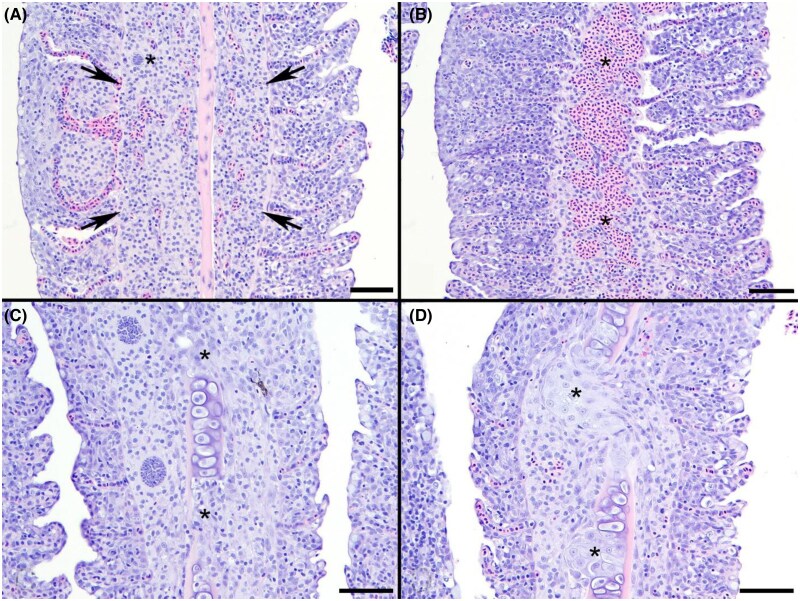 Figure 2
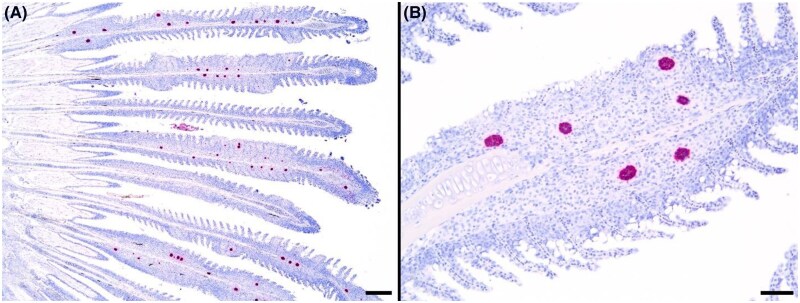 Figure 3
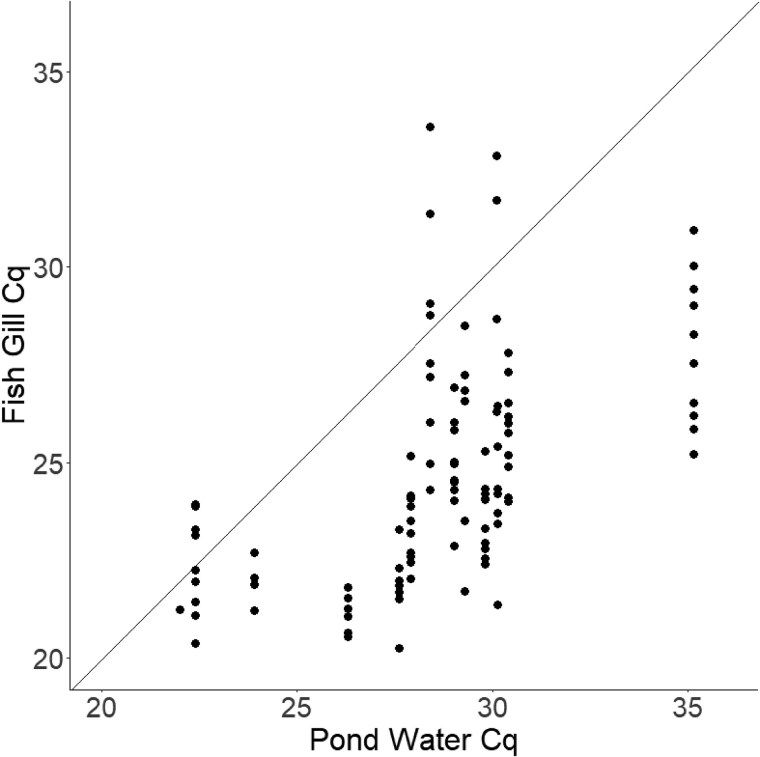 Figure 4
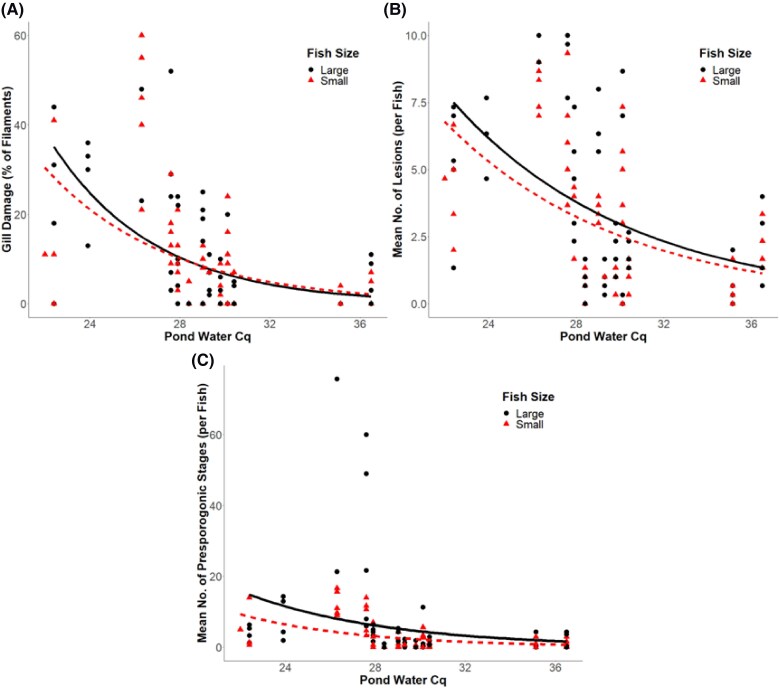 Figure 5
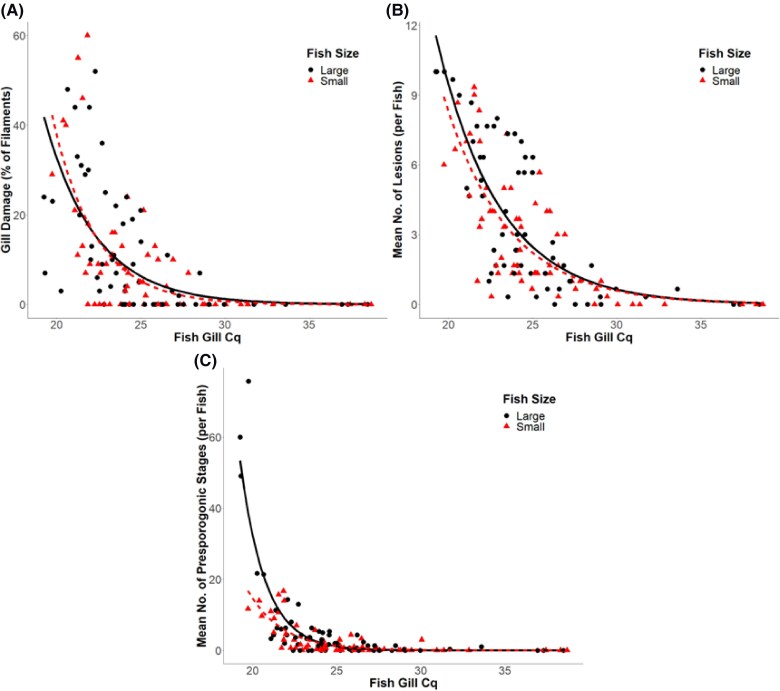 Figure 6
Peer Reviews
No public reviews on file for this paper yet. If you reviewed it on a platform where reviews are public (OpenReview, ICLR, NeurIPS, ICML), you can paste yours below so the community can read it here.
Videos
No videos yet. Explain this paper in a talk, walkthrough, or lecture? Add one.
Taxonomy
TopicsMyxozoan Parasites in Aquatic Species · Microbial infections and disease research · Aquaculture disease management and microbiota