Exposure to green space is associated with higher skin microbiota species richness in children
Thessa Van Pee, Hanne Croons, Esmée Bijnens, Doris Vandeputte, Eleni Renaers, Hanne Sleurs, Lore Verheyen, Nick Giesberts, Maartje Vangeneugden, Leen Rasking, Michelle Plusquin, Janneke Hogervorst, Tim S Nawrot

TL;DR
Children exposed to more green space have a more diverse skin microbiome, especially during warm seasons.
Contribution
First study to show a link between early-life green space exposure and skin microbiota richness in children.
Findings
Total and high-growing green space within 100–500 m was linked to higher skin microbiota richness.
Positive associations were strongest during the warm season.
Certain bacterial families increased in abundance with nearby green space.
Abstract
Skin is the exterior interface of the human body with the environment and harbors millions of microorganisms crucial for skin health. Associations between early-life green space exposure and the skin microbiome of children remain unstudied. Skin swabs were collected from 402 children (4–12 years old) enrolled in the ENVIRONAGE birth cohort. Skin alpha diversity indices and the relative abundance at family and species levels were determined using 16S rRNA gene HiFi amplicon sequencing. Total green, high-growing green, and low-growing green were estimated in several radii around their current residential and school address based on high-resolution land cover data. Multiple linear regression models between green-space indices and skin microbiome alpha diversity indices were adjusted for sex, age, frequency of soap use, maternal education, season of skin swab collection, sequencing batch,…
Genes, proteins, chemicals, diseases, species, mutations and cell lines named across the full text — each resolved to its canonical identifier and authoritative record.
Click any figure to enlarge with its caption.
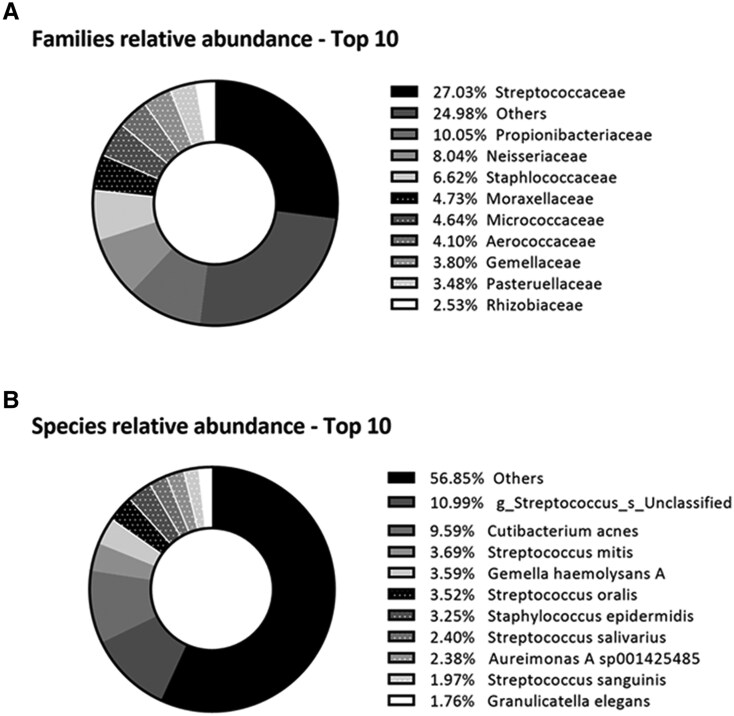 Figure 1
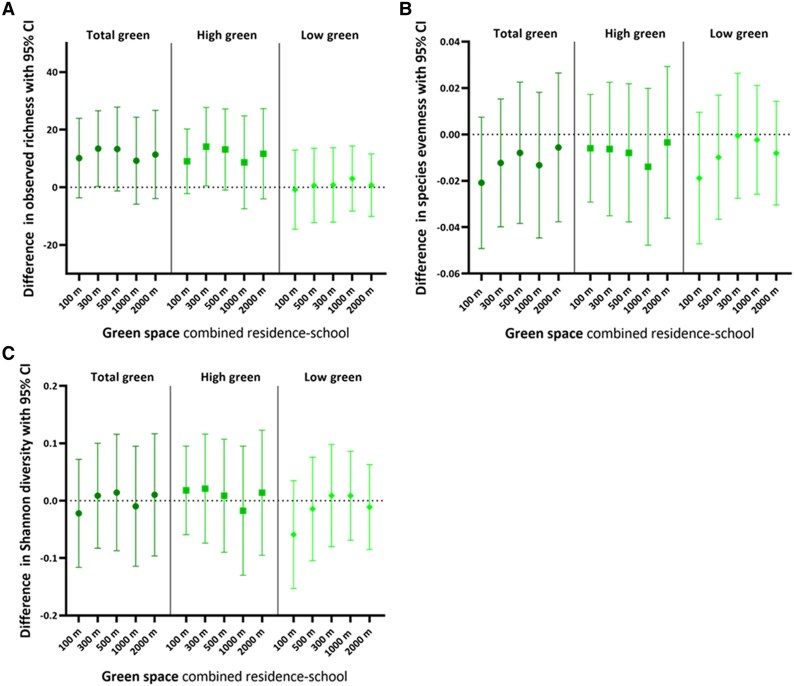 Figure 2
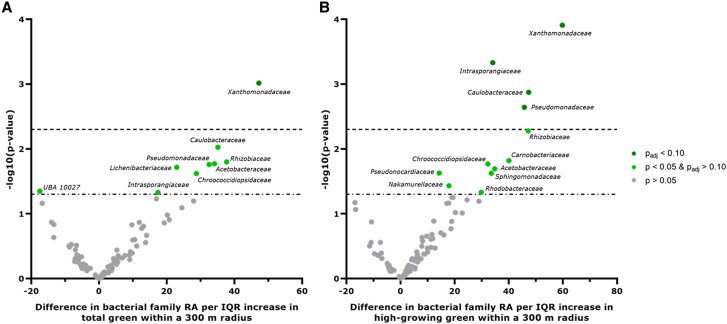 Figure 3
Peer Reviews
No public reviews on file for this paper yet. If you reviewed it on a platform where reviews are public (OpenReview, ICLR, NeurIPS, ICML), you can paste yours below so the community can read it here.
Videos
No videos yet. Explain this paper in a talk, walkthrough, or lecture? Add one.
Taxonomy
TopicsUrban Green Space and Health · Dermatology and Skin Diseases · Indoor Air Quality and Microbial Exposure