When cocrystals become radical-activable
Miaomiao Xue, Yinjuan Huang, Qichun Zhang

Abstract
Genes, proteins, chemicals, diseases, species, mutations and cell lines named across the full text — each resolved to its canonical identifier and authoritative record.
Click any figure to enlarge with its caption.
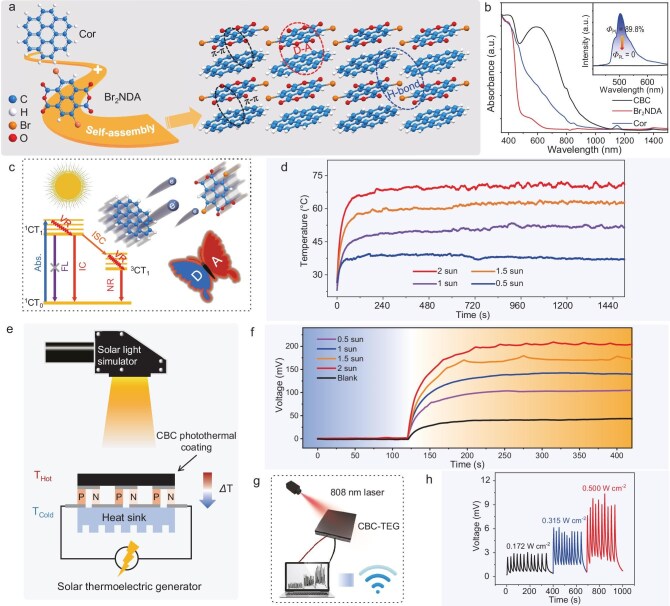 Figure 1
Peer Reviews
No public reviews on file for this paper yet. If you reviewed it on a platform where reviews are public (OpenReview, ICLR, NeurIPS, ICML), you can paste yours below so the community can read it here.
Videos
No videos yet. Explain this paper in a talk, walkthrough, or lecture? Add one.
Taxonomy
TopicsCrystallography and molecular interactions
Organic cocrystals, formed by at least two different organic small molecules via diverse forces (e.g. π–π interactions, hydrogen/halogen bonding and
charge transfer (CT)), can allow researchers to engineer their bandgaps and tune their optical/electrical properties for various applications [1,2]. In particular, the donor-to-acceptor electron delocalization in organic CT cocrystals can induce new orbital hybridization, promoting the formation of narrow bandgap and red-shifted absorption, which can boost the notable photothermal conversion [3,4]. Furthermore, if open-shell radicals (half-filled bands originated from the π-orbital overlap) are realized in cocrystals, the system becomes radical-activable, and can display more efficient light absorption and non-radiative recombination. This factor is very important for improving photothermal conversion as well as enhancing efficient energy transformation. Recent research published in National Science Review [5] by Zhuo and co-workers provides an excellent example to affirm this.
In this research [5], Zhuo et al. developed an organic radical-incorporating CT cocrystal (CBC) by choosing an open-shell radical of 2,6-dibromonaphthalene-1,4,5,8-tetracarboxylic dianhydride (Br_2_NDA) as the electron acceptor, and using coronene (Cor) as the electron donor (Fig. 1a). Owing to the remarkable electron affinity of radicals, Br_2_NDA can easily accept electrons from Cor, leading to a high degree of electron delocalization and strong CT interaction. This process further contributes to the reduced energy bandgap with a strong near-infrared absorption close to 1100 nm as well as non-radiative recombination (Fig. 1b), resulting in a high photothermal conversion efficiency of 67.2% for the cocrystals (Fig. 1d). The femtosecond transient absorption (Fs-TA) results proved that the ultrafast non-radiative process of excited states (Fig. 1c), including internal conversion (IC), intersystem crossing (ISC), and charge dissociation to the ground state caused by the radicals, promote highly efficient energy conversion from solar to thermal energy.
Furthermore, a photothermal ink was fabricated using the CBC cocrystal as the active component and the transparent resin was applied as the matrix, which can be easily coated on a thermoelectric generator as a cost-effective light absorber to form a high-performance solar thermoelectric generator (STEG) (i.e. CBC-thermoelectric generator (TEG)) (Fig. 1e). Impressively, a high photothermal temperature of 70.3°C can be achieved, and the as-prepared STEG can output a voltage of 209 mV under irradiation of a simulated solar source with an intensity of 2 suns (Fig. 1d and f). Moreover, the STEG was also endowed with the capabilities of non-contact and long-distance real-time information conversion, exhibiting great potential in self-powered optoelectronics (Fig. 1g and h).
In summary, this paper reports an effective strategy to fabricate organic radical-activable CT cocrystals with greatly reduced bandgap and rapid non-radiative dynamic pathways via using radical molecules as the electron acceptor, which promotes superior photothermal conversion. This strategy provides innovative guidance for developing novel organic radical-activable co-crystals for advanced applications in photothermal conversion as well as in thermoelectric generators.
The reference list from the paper itself. Each links out to its DOI / PubMed record.
- 1Wang X, Wang Z, Wang X et al. Angew Chem Int Ed 2024; 63: e 202416181.10.1002/anie.20241618139305144 · doi ↗ · pubmed ↗
- 2Wang Z, Yu F, Chen W et al. Angew Chem Int Ed 2020; 59: 17580–6.10.1002/anie.20200593332618035 · doi ↗ · pubmed ↗
- 3Wang Y, Zhu W, Du W et al. Angew Chem Int Ed 2018; 57: 3963–7.10.1002/anie.20171294929442430 · doi ↗ · pubmed ↗
- 4Li R, Yang F, Zhang L et al. Angew Chem Int Ed 2023; 62: 202301267.10.1002/anie.20230126736802335 · doi ↗ · pubmed ↗
- 5Zhuo S, Zhao YD, Liu YX et al. Natl Sci Rev 2025; 12: nwaf 121.10.1093/nsr/nwaf 12140336593 PMC 12057696 · doi ↗ · pubmed ↗