A Cross-Sectional Study on Social Phobia Among Medical Undergraduates of Ahmedabad City
Sahil R Solanki, Prachi Patel, Prashant Kariya, Nupur Amin, Chintan Chaudhary, Kamleshkumar G Jain

TL;DR
This study examines the prevalence of social phobia among medical students in Ahmedabad and finds associations with factors like tobacco use and socioeconomic status.
Contribution
The study provides new insights into social phobia prevalence and its sociodemographic associations among medical undergraduates in Ahmedabad.
Findings
Moderate social phobia was most common, affecting 28.3% of students.
Tobacco consumption, socioeconomic class, accommodation, and sports involvement were significantly associated with social phobia grades.
Female students were more prevalent in the sample, and indoor sports participation was higher among women.
Abstract
Introduction Medical students with social phobia are characterized by the persistent excessive fear of scrutiny, embarrassment, and humiliation in social performance; pervasive social timidity; social distress; the avoidance of some individuals; and difficulty in basic social discourses. This study aims to find the prevalence of social phobia and its association with various sociodemographic determinants among medical students in Ahmedabad city. Methods This cross-sectional study was conducted among Bachelor of Medicine, Bachelor of Surgery (MBBS) undergraduates from six recognized medical colleges in Ahmedabad, India. Based on a previous prevalence of social phobia (46%), the sample size was calculated as 470 using the formula n = 4pq/l² (p = 46, q = 54, and l = 4.6) and rounded to 480. From each college, 80 students (20 from each academic year) were selected using systematic random…
Genes, proteins, chemicals, diseases, species, mutations and cell lines named across the full text — each resolved to its canonical identifier and authoritative record.
Click any figure to enlarge with its caption.
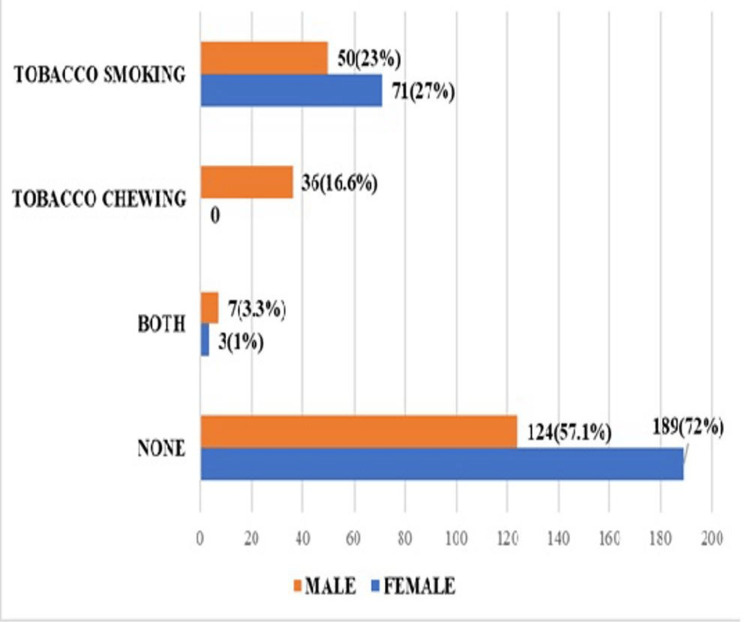 Figure 1
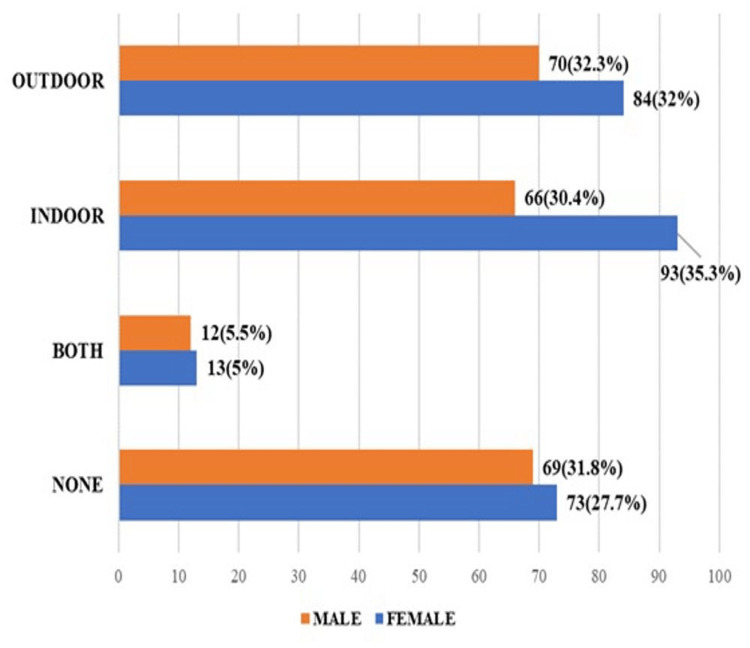 Figure 2
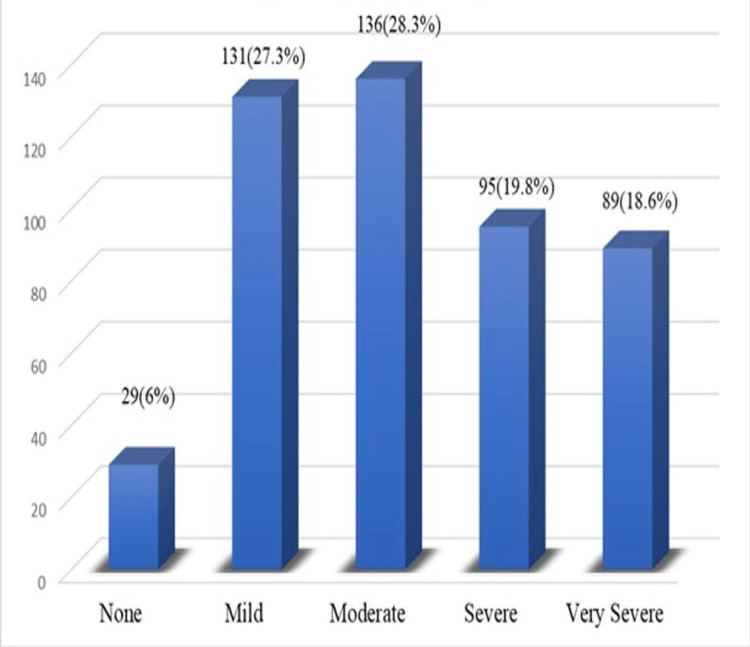 Figure 3
| Variable | Categories | Frequency | Percentage |
| Age (in completed years) | <20 | 129 | 26.9% |
| >20 | 351 | 73.1% | |
| Gender | Male | 217 | 45.2% |
| Female | 263 | 54.8% | |
| Year of study | First MBBS | 120 | 25% |
| Second MBBS | 120 | 25% | |
| Third MBBS, part 1 | 120 | 25% | |
| Third MBBS, part 2 | 120 | 25% | |
| Stay | Hostel | 206 | 42.9% |
| Local | 201 | 41.9% | |
| Paying guest | 73 | 15.2% | |
| Socioeconomic class (as per the modified BG Prasad classification)* | Upper | 369 | 76.9% |
| Upper middle | 77 | 16% | |
| Middle | 13 | 2.7% | |
| Lower middle | 14 | 2.9% | |
| Lower | 7 | 1.5% |
| Variable | Categories | Grades of Social Phobia | Chi-Square Statistic | P-value | ||||
| None | Mild | Moderate | Severe | Very Severe | ||||
| Age | <20 | 6 | 26 | 41 | 30 | 26 | 5.915 | 0.206 |
| >20 | 23 | 105 | 95 | 65 | 63 | |||
| Gender | Male | 17 | 62 | 62 | 42 | 34 | 4.153 | 0.386 |
| Female | 12 | 69 | 74 | 53 | 55 | |||
| Year of study | First year | 8 | 28 | 40 | 22 | 21 | 8.13 | 0.775 |
| Second year | 4 | 40 | 28 | 26 | 21 | |||
| Third year, part 1 | 9 | 35 | 33 | 22 | 24 | |||
| Third year, part 2 | 8 | 28 | 35 | 25 | 23 | |||
| Tobacco consumption | None | 24 | 106 | 110 | 60 | 13 | 168.621 | <0.0001 |
| Tobacco chewing | 2 | 12 | 10 | 3 | 9 | |||
| Tobacco smoking | 2 | 12 | 11 | 32 | 64 | |||
| Both | 1 | 1 | 5 | 0 | 3 | |||
| Socioeconomic class | Upper | 23 | 117 | 96 | 69 | 64 | 37.467 | 0.002 |
| Upper middle | 0 | 11 | 29 | 20 | 17 | |||
| Middle | 2 | 1 | 2 | 4 | 4 | |||
| Lower middle | 3 | 2 | 5 | 2 | 2 | |||
| Lower | 1 | 0 | 4 | 0 | 2 | |||
| Stay | Hostel | 13 | 61 | 75 | 29 | 28 | 26.898 | 0.001 |
| Local | 11 | 45 | 43 | 52 | 50 | |||
| Paying guest | 5 | 25 | 18 | 14 | 11 | |||
| Involvement in sports | None | 0 | 5 | 16 | 47 | 74 | 283.327 | <0.0001 |
| Indoor | 12 | 32 | 63 | 39 | 13 | |||
| Outdoor | 17 | 86 | 47 | 3 | 1 | |||
| Both | 0 | 8 | 10 | 6 | 1 | |||
Peer Reviews
No public reviews on file for this paper yet. If you reviewed it on a platform where reviews are public (OpenReview, ICLR, NeurIPS, ICML), you can paste yours below so the community can read it here.
Videos
No videos yet. Explain this paper in a talk, walkthrough, or lecture? Add one.
Taxonomy
TopicsAnxiety, Depression, Psychometrics, Treatment, Cognitive Processes · COVID-19 and Mental Health · Perfectionism, Procrastination, Anxiety Studies
Introduction
Anxiety disorders are one of the highly prevalent common psychiatric disorders that contribute substantially to the global burden of disease and years lived with disability. Over the past few decades, it has evolved as a standalone disorder unique from the other phobias [1]. Social phobia is the second most common type of anxiety disorder and the third most common mental disorder, following depression and alcohol use disorder. Its prevalence among medical students (7%-13%) was low in Western countries compared to middle- and low-income countries (30%-90%) [2]. Diagnostic and Statistical Manual of Mental Disorders (DSM), Fifth Edition, has classified social anxiety disorder (SAD) (social phobia) under anxiety disorders, and it is defined as "a persistent fear of one or more social or performance situations in which the person is exposed to unfamiliar people or to possible scrutiny by others" [3]. Individuals experiencing social anxiety visibly struggle with social situations. They show fewer facial expressions, avert their gaze more often, and express greater difficulty initiating and maintaining conversations, compared to individuals without social anxiety [4].
Medical students with social phobia are characterized by the persistent excessive fear of scrutiny, embarrassment, and humiliation in social performance; pervasive social timidity; social distress; the avoidance of some individuals; and difficulty in basic social discourses [2]. SAD is increasingly becoming relevant in the present age of competition and pressure to perform well, especially among students [3]. Studies also indicate that younger individuals are disproportionately affected by social anxiety, with prevalence rates at around 10% by the end of adolescence, with 90% of cases occurring by age 23 [4].
The sustained social phobia without prior identification raises susceptibility to substance abuse and poor quality of life in the future. Medical students are confronted with various stressors, and the need to become accustomed suitably to achieve academic and professional success elucidates the importance of having good mental health [2]. The prevalence of social phobia among medical students was found to be 46% at Kolhapur, Maharashtra State, India [5]; 30.5% at Davangere, Karnataka State, India [6]; 41.1% at Perambalur, Tamil Nadu State, India [2]; and 11.37% at Bhavnagar, Gujarat State, India [7].
Owing to the paucity of literature regarding social phobia among medical students in Ahmedabad city, the present cross-sectional study was planned with the objectives to find the prevalence of social phobia and its association with various sociodemographic determinants among medical students in Ahmedabad city.
Materials and methods
Study design
The present study has a cross-sectional study design.
Study setting
The research was carried out across six recognized medical colleges in Ahmedabad, Gujarat, India, encompassing students from all four academic years of the Bachelor of Medicine, Bachelor of Surgery (MBBS) program.
Study population and sampling
After taking permission from the Institutional Ethics Committee, the study was started in July 2023. The study duration was one and a half years. Based on a previous study, the prevalence of social phobia was found to be 46% [5]. Taking p as 46, q (100-p) as 54, and allowable error (l) (10% of p) as 4.6 by the formula n = 4pq/l², the sample size came to 470, which was rounded off to 480 [8].
Medical education in India has four academic years in the MBBS course. From each of the six recognized medical colleges, 80 students were selected (480/6 = 80). Further, 20 students from each academic year in each of the medical colleges were selected (80/4 = 20). These 20 students from each academic year were selected by systematic random sampling. A list of all students in each year was obtained, and every fifth student was selected until the sample size of 20 per academic year per college was obtained. For those students who refused to participate, the subsequent student was selected for the study. Those students who gave consent and were not taking any psychiatric medications were included in the study.
Data collection
Data collection was done with the selected students by personal interview. The questionnaire consisted of two parts. Part 1 included sociodemographic information about the students. The updated and modified BG Prasad classification was used to calculate socioeconomic class [9]. The second part was a scale for social phobia called Social Phobia Inventory (SPIN), which is based upon the score grading social phobia into five categories: none, mild, moderate, severe, and very severe [10].
Statistical analysis
Data entry was done in MS Excel (Microsoft Corp., Redmond, WA) and analyzed using the Statistical Package for Social Sciences (SPSS) trial version 26 (IBM Corp., Armonk, NY). Frequency, percentage, and chi-square test were used for analyzing data.
Ethical considerations
The study protocol was reviewed and approved by the Institutional Ethics Committee of Gujarat Cancer Society (GCS) Medical College, Hospital and Research Centre, Ahmedabad, India (GCSMC/EC/Project/APPROVE/2023/616). Written informed consent was obtained from all participants prior to data collection.
Results
The sociodemographic details of the study subjects are shown in Table 1. The mean age of the students was 20.28 + 1.23 years. There were more women (263, 54.8%) as compared to men (217, 45.2%). As per the methodology, an equal number of students were selected from each academic year. Hostel stay (206, 42.9%) was the most common mode of accommodation. As per the modified BG Prasad classification, the upper class (369, 76.9%) was the most common, followed by the upper middle class (77, 16%).
Most of the study participants (313, 65%) did not have any tobacco consumption. Among male students, 93 (42.9%) were consuming tobacco, while among female students, 74 (28%) had tobacco consumption. Out of the total men (217), 50 (23%) were tobacco smokers, while 36 (16.6%) were tobacco chewers, as shown in Figure 1. Out of the total women (263), 71 (23%) were tobacco smokers, while three (1%) were both tobacco chewers and smokers.
Genderwise distribution of tobacco consumption among medical students (n = 480)
Out of the total men (217), 70 (32.3%) had outdoor sports involvement, followed by 69 (31.8%) who had no sports involvement, as shown in Figure 2. Out of the total women (263), 93 (35.3%) were into indoor sporting activity, followed by 84 (32%) who had outdoor sporting activity.
Genderwise distribution of medical students involved in sports (n = 480)
A moderate grade of social phobia was most commonly seen in 136 (28.3%) medical students, followed by mild social phobia in 131 (27.3%), as shown in Figure 3. Severe social phobia was seen in 95 (19.8%) students, while very severe social phobia was found in 89 (18.6%) medical students.
Grades of social phobia among the study participants (n = 480)
As shown in Table 2, a statistically significant association was found between grades of social phobia and variables such as tobacco consumption (p ≤ 0.0001), socioeconomic class (p = 0.002), stay (p = 0.001), and involvement in sports (p ≤ 0.0001), while variables such as age, gender, and year of study did not show any statistically significant association.
Discussion
The mean age of medical students was 20.28 + 1.23 years, which is closer to a study done at Bhavnagar city, India (19 ± 1.1 years) [7]. There were more female participants (54.8%) as compared to men. This finding is similar to the study carried out in Saudi Arabia, which had 56.2% female participants [12]. The present study showed hostel stay in 42.9% of students, while a study in Delhi showed 60.4% of students staying in a hostel [3]. This difference could be due to a larger number of students migrating to the national capital of India for education as compared to Ahmedabad city.
The upper socioeconomic class was most common among the study subjects (76.9%), while a study in Saudi Arabia also showed a higher number of participants (56.2%) belonging to the high-income category [12]. Tobacco consumption was found to be 42.9% among male students, which is in line with the results of the Global Adult Tobacco Survey (GATS) 2 for India [13]. For female students, tobacco consumption was found to be 28%, which is higher than the results of GATS 2 (14.2%). This difference may be due to media influence, peer pressure, and changing trends among the youth.
The present study showed almost equal participation by male and female students in indoor and outdoor gaming activities. Indoor gaming showed higher female participation (35.3%) than male participation (30.3%). This could be due to a preference for comfort, socializing opportunities, and easy accessibility.
Mild social phobia was found to be 27.3%, which is closer to the findings of the studies done at Davangere (20.6%) [6], Karnataka State, and Perambalur (21.4%) [2], Tamil Nadu State, in India. Moderate, severe, and very severe grades of social phobia were found to be 28.3%, 19.8%, and 18.6%, respectively, in the current study. These findings are higher as compared to Sudan (21.6%, 10.9%, and 9.6%) [14], Saudi Arabia (19.6%, 8.5%, and 5%) [12], and Perambalur, Tamil Nadu State, India (13.6%, 4.6%, and 1.5%) [2]. This could be due to differences in the sample size, study settings, and time frames during which the studies were conducted.
Age did not have a statistically significant association (p = 0.206) with social phobia in the present study. A similar result is also shown by the studies at Kolhapur (p = 0.384) [5], Maharashtra, and Perambalur (p = 0.597) [2], Tamil Nadu. Gender did not have a statistically significant association with social phobia (p = 0.386), which is similar to the studies at Saudi Arabia (p = 0.491) [12] and Bhavnagar city (p = 0.30) [7], India, while a study at Mangalore [15], Karnataka State, showed a significant association of gender with social phobia.
The type of accommodation or stay for medical students had a statistically significant association with social phobia (p = 0.001) in the present study, which was also shown by the study at Bhavnagar city [7], India (p = 0.01). Involvement in outdoor and indoor sports had a statistically significant association (p < 0.0001) with social phobia. This result is further supported by a recent review, which shows that sports can reduce anxiety and stress while promoting teamwork and enhancing social skills [16].
The limitations of the study include the exclusion of various sociodemographic factors such as family history of social phobia, body mass index (BMI), academic performance, internet and mobile phone usage, and family conflicts, which may influence social phobia. Additionally, the study focuses solely on the participants from Ahmedabad city. To obtain more generalized results for the state or India, a multicentric study should be conducted.
Conclusions
More than half of the participants were female medical students. Less than half of the students were staying in a hostel, while hostel stay was a little higher than local stay. The upper socioeconomic class was seen in three-fourths of the study participants. Men had higher tobacco use than women. One-third of men and women showed participation in outdoor sports. Women had higher involvement in indoor sports as compared to men. Moderate social phobia was seen in almost one-third of the study subjects, followed by mild social phobia. Tobacco consumption, stay, socioeconomic class, and involvement in sports were significantly associated with various grades of social phobia.
The reference list from the paper itself. Each links out to its DOI / PubMed record.
- 1Nationally representative epidemiological study of social anxiety disorder from India Indian J Psychiatry Suhas S Jayasankar P Patley R 12611268652023 https://journals.lww.com/indianjpsychiatry/fulltext/2023/65120/nationally_representative_epidemiological_study_of.10.aspx?context=latestarticles 3829886910.4103/indianjpsychiatry.indianjpsychiatry_826_23PMC 10826865 · doi ↗ · pubmed ↗
- 2Prevalence of social phobia and its determinants among undergraduate medical students of Tamil Nadu, India: a cross-sectional study J Clin Diagn Res Sundaram R Srinivasan V Abdul Malik Mahalingam G Saradham HR Kalidossani HR Madhu H 24J Clin Diagn Res 172023 https://openurl.ebsco.com/EPDB%3Agcd%3A 1%3A 29194625/detailv 2?sid=ebsco%3Aplink%3Ascholar&id=ebsco%3Agcd%3A 162908068&crl=c&link_origin=scholar.google.com
- 3Prevalence of social anxiety disorder and its determinants among undergraduate medical students of East Delhi Int J Community Med Public Health Preeti Preeti Das P 1335133962019 https://d 1wqtxts 1xzle 7.cloudfront.net/71820167/2886-libre.pdf?1634081712=&response-content-disposition=inline%3B+filename%3D Prevalence_of_social_anxiety_disorder_an.pdf&Expires=1744905862&Signature=M 0k L Tq PD 9H 9L 1YRJDDU Ka Tw-Sep LM 7s 4yr 9X Jb Vt 4MA 67tfc R 5os Bi K Ulx T 2Np Vg OC Jvx XPQIH 6c Q Ze L Ji Xd Qym-2t K 7RD Ul 5HYX Gb XIY-C 97Ic Ap 4Qz Jwcu 6XX 1Le EF
- 4Social anxiety in young people: a prevalence study in seven countries P Lo S One Jefferies P Ungar M 0152020 https://journals.plos.org/plosone/article?id=10.1371/journal.pone.023913310.1371/journal.pone.0239133 PMC 749810732941482 · doi ↗ · pubmed ↗
- 5Social anxiety disorder in medical students: socio-demographic correlates Int J Community Med Public Health Jogdande AJ Gupta A 3293329642017 https://www.ijcmph.com/index.php/ijcmph/article/view/1700
- 6Social anxiety disorder among medical students in a tertiary care hospital in Davangere, Karnataka Int J Community Med Public Health Dsouza MJ Daniel AJ Muntazeem MG 1434143662019 https://www.ijcmph.com/index.php/ijcmph/article/view/4584
- 7Association of social anxiety disorder with depression and quality of life among medical undergraduate students J Family Med Prim Care Ratnani IJ Vala AU Panchal BN Tiwari DS Karambelkar SS Sojitra MG Nagori NN 24324862017 https://journals.lww.com/jfmpc/fulltext/2017/06020/Association_of_social_anxiety_disorder_with.15.aspx 2930252510.4103/2249-4863.219992 PMC 5749064 · doi ↗ · pubmed ↗
- 8Mahajan's Methods in Biostatistics for Medical Students and Research Workers Banerjee B New Delhi, India Jaypee 2018 https://www.jaypeedigital.com/book/9789352703104?utm