Pain manifestations in nursing professionals: a scoping review
Sabrina de Melo Oliveira, Larissa de Lima Ferreira, Thaís Araújo da Silva, Iracema da Silva Frazão

TL;DR
This review maps the prevalence of musculoskeletal pain among nursing professionals, highlighting the need for better health monitoring.
Contribution
The study provides a comprehensive overview of pain manifestations in nursing professionals using a scoping review methodology.
Findings
Most studies showed lumbar region pain was the most prevalent among nursing professionals.
The majority of included studies were from Asia, indicating regional focus in pain research.
Cross-sectional study designs dominated the literature on occupational pain in this profession.
Abstract
To map the literature on the prevalence of pain in nursing professionals. This is a scoping review that was conducted according to the Joanna Briggs Institute (JBI) methodology for scoping reviews, and according to the Preferred Reporting Items for Systematic Reviews and Meta-Analyses extension for Scoping Reviews (PRISMA-ScR). The protocol was developed and registered in the Open Science Framework (OSF) [https://osf.io/2zu73/]. The search was carried out in the following databases: PubMed/MEDLINE, Virtual Health Library (VHL), Web of Science, Scientific Electronic Library Online (SciELO), SciVerse Scopus, Embase, and the Catalog of Theses and Dissertations of the Coordination for the Improvement of Higher Education Personnel (CAPES). A total of 49 studies were included, all of which were cross-sectional studies, and the total sample of the included studies was 35,069 participants.…
Genes, proteins, chemicals, diseases, species, mutations and cell lines named across the full text — each resolved to its canonical identifier and authoritative record.
Click any figure to enlarge with its caption.
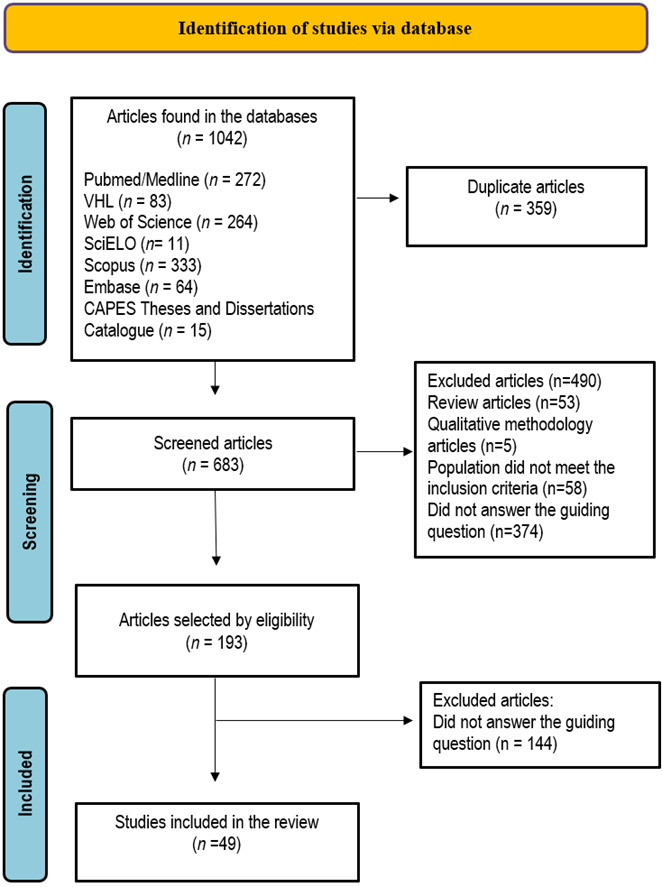 Figure 1
Peer Reviews
No public reviews on file for this paper yet. If you reviewed it on a platform where reviews are public (OpenReview, ICLR, NeurIPS, ICML), you can paste yours below so the community can read it here.
Videos
No videos yet. Explain this paper in a talk, walkthrough, or lecture? Add one.
Taxonomy
TopicsPain Management and Opioid Use · Musculoskeletal pain and rehabilitation
Introduction
Pain is defined by the International Association for the Study of Pain (IASP) as “an unpleasant sensory and emotional experience associated with, or similar to, that associated with actual or potential tissue damage.” 1 It is one of the most common symptoms leading to medical care and impacts individuals’ personal and financial lives.2^,^3 Pain can be classified according to its time of evolution (acute or chronic), its site of origin (peripheral, central, visceral, and somatic), and its pathophysiological mechanism (neuropathic, nociplastic, and nociceptive).3^,^4 When observed clinically, it is possible to identify that pain triggers a wide variety of motor adaptations, ranging from subtle motor compensations during the performance of tasks to the complete avoidance of painful movements and activities.2
Chronic pain (CP) is characterized by its persistence after three months of the typical recovery period from an injury, or by being associated with chronic pathological conditions, leading to continuous or recurrent pain.4^,^5 Furthermore, CP is classified as a disease by the International Classification of Diseases - 11, entitled primary chronic pain (that is not explained by another chronic condition), there are also secondary chronic pains, which are related to other pathologies or conditions (CP related to cancer, neuropathic CP, secondary visceral CP, secondary musculoskeletal CP, secondary post-surgical/post-traumatic CP or secondary headache/orofacial CP).5 CP is considered an important public health problem, with serious consequences for both the individual and society in personal, social and economic terms, and may also be associated with higher levels of physical and emotional stress. Furthermore, it has a higher prevalence in women between the ages of 45 and 65.4^,^5 CP interferes with the ability to work, since it is one of the main causes of disability. A study conducted with North American citizens estimated that the costs of people with chronic pain were around US$560 billion per year in medical costs and lost productivity.3 CP is the main cause of sick leave, absenteeism and low productivity in the workplace.4
Currently, there is a growing increase in the prevalence of work-related musculoskeletal disorders (WMSDs) in several countries, manifesting in different clinical forms and reaching epidemic proportions. In the United States, WMSDs are the main cause of pain, suffering and disability in the workplace.6 WMSDs affect workers in various occupations, and this set of disorders affects muscles, tendons and nerves. The most common risk factors are poor posture and forced repetitive tasks; The presence of these disorders usually presents with insidious pain that, if left untreated, can lead to temporary or permanent incapacity for work.7 Work-related pain is directly linked to the increased number of sick leaves and absenteeism, and is the leading cause of disability, socioeconomic problems and reduced quality of life in the adult population of developed countries. Workers in various occupations have their health affected by debilitating musculoskeletal pain and/or work-related injuries in the hospital environment; musculoskeletal diseases continue to be the leading cause of decline in the workforce.7^,^8
Nursing professionals, in particular, are at greater risk than other health professionals of experiencing work-related musculoskeletal injuries and disorders, including low back pain.7^,^8 In nursing professionals, ergonomic factors, such as patient handling and other activities related to manual patient repositioning, have been identified as major risk factors for the presence of pain and injuries for these professionals, especially in the lumbar spine region.9 Nursing staff constitute the largest group of workers in the hospital setting and are responsible for the majority of patients’ care.10 During their duties, nursing professionals have a high physical burden; the continuous and repetitive action of lifting and transferring patients, associated with physical limitations due to poor ergonomics of hospital equipment, results in greater physiological stress for these professionals.8^,^9
The presence of disabling pain in this population requires attention, since nursing professionals are indispensable for the provision of quality health care and are present at all levels of health care. According to the Federal Nursing Council (COFEN), it is estimated that this category is responsible for approximately 90% of the care processes carried out in the health area, as well as for 60 to 80% of all actions in Primary Health Care.11 Disabling pain can lead to an increase in sick leave and absenteeism among these professionals, causing a workforce deficit to provide health care to patients. A preliminary search was carried out in the following databases: PROSPERO, PubMed, Cochrane Database of Systematic Reviews and Open Science Framework and no published or ongoing scoping and systematic reviews were found that address the prevalence of pain manifestations in nursing professionals. Based on this assumption, it was observed that there is a need for an overview of the prevalence of pain in nursing professionals. That said, this review aims to map the literature on the prevalence of pain in nursing professionals.
Methods
This scoping review was conducted according to the Joanna Briggs Institute (JBI) methodology for scoping reviews,12 and according to the Preferred Reporting Items for Systematic Reviews and Meta-Analyses extension for Scoping Reviews (PRISMA-ScR)13 for preparing the review report. The protocol for this review was developed and registered in the Open Science Framework (OSF) [https://osf.io/2zu73/]. The guiding question for this review was developed based on the mnemonic PCC, Population (nursing professionals), Concept (pain) and Context (work environment). Thus, this scoping review aims to answer the research question: What is the prevalence of pain in nursing professionals?
Eligibility criteria
The inclusion criteria were established based on the elements of the guiding question, according to the PCC mnemonic, as detailed below: (P) - Population: studies that assessed the prevalence of pain in nursing professionals, whether nursing technicians, nursing assistants or nurses; (C) - Concept: manifestations of pain presented by nursing professionals; and (C) - Context: work environment. In view of the above, studies were included regardless of the year of publication and in all languages, with a view to developing a complete review with relevant quality. The following were excluded: studies that did not fit the research theme, studies that assessed other health professionals, qualitative studies, review studies, reports, protocols, letters, comments and conference proceedings.
Search strategy
The search strategy aimed to locate published and unpublished studies. As recommended by the JBI (REF), the search process was carried out in 3 phases in the development of a comprehensive research strategy.
First phase: conducting an initial limited search in a selected database, with the aim of finding articles related to the topic of interest. In this first stage, the PubMed database was chosen. In this initial search, the following descriptors and Boolean operators were used: pain AND nurses AND occupational diseases. Based on the initial result (n=700), the titles, abstracts and index terms used to describe and categorize them were read. When observing that the initial strategy presented high sensitivity and many of the studies did not meet the inclusion criteria, the necessary adjustments were made to perform a new search in the same database, using the descriptors: Nurse, Occupational Disease, Musculoskeletal Disease, Ache, Physical Suffering. The result of the new search was 272 articles. The titles and abstracts of the first 20 articles were read to determine whether they would be relevant to the guiding question of the review. After observing that the new strategy proved to be more appropriate, adaptations were made for the other databases. The final search strategies are detailed in Table 1, with the respective adaptations for each of them.
Table 1. Search strategiesDatabase Search strategyResultPubMed((((nurse) AND (occupational disease)) AND (Musculoskeletal Disease)) AND (ache)) AND (Physical Suffering)272BVS(nurses) AND (pain) AND (occupational disease) AND (Physical Suffering)83Web of Science((ALL=(nurse)) AND ALL=(pain)) AND ALL=(occupational disease)264SciELO(pain) AND (nurses) AND (occupational diseases)11Scopus(TITLE-ABS-KEY ( nurse ) AND TITLE-ABS-KEY ( occupational AND disease ) AND TITLE-ABS-KEY ( musculoskeletal AND disease ) AND TITLE-ABS-KEY ( pain ) )333Embase('nurse'/exp OR nurse) AND 'occupational disease' AND 'musculoskeletal disease' AND pain64CAPES Theses and Dissertations Catalogue(nurse) AND (pain) OR (Physical Suffering) AND (occupational disease)15
Second phase: it involves conducting targeted researches in each of the selected databases and information sources, as previously defined in the protocol. The following databases were investigated: PubMed/MEDLINE, Virtual Health Library (VHL), Web of Science, Scientific Electronic Library Online (SciELO), SciVerse Scopus, Embase and the Catalog of Theses and Dissertations of the Coordination for the Improvement of Higher Education Personnel (CAPES).
Third phase: scanning the reference lists of the selected studies for critical evaluation, in order to identify any additional relevant research.
Study selection
After the search, all identified citations were imported into the bibliography management software EndNote Web® and duplicate studies were removed. The remaining articles were imported into Rayyan Systems Inc. (Qatar Computing Research Institute, Doha, Qatar).15^,^16 After a pilot test, two independent reviewers screened the titles and abstracts according to the eligibility criteria for the review. Potentially relevant studies were retrieved in full and their citation details were imported into Rayyan Systems Inc. Any discrepancies were resolved by a third reviewer. The analysis of gray literature resulting from dissertations or theses occurred without the aid of automated tools. Two independent researchers performed the analysis of the titles and abstracts directly in the CAPES Dissertation and Theses Catalog. When necessary, the authors or coordinators of the graduate programs were contacted to request the full studies. Dissertations or theses that met the eligibility criteria were evaluated in full. The reasons for exclusion of articles, dissertations or theses after reading the full text were described in the PRISMA-ScR flowchart.13
Data extraction
Data were collected using the instrument suggested by the JBI.12 Subsequently, these data were standardized and organized in an electronic spreadsheet that included information on the title, authors, year of publication, type of study, number of participants, study location and prevalence of pain presented by nursing professionals.
Results
A total of 1042 studies were identified in the databases, of which 359 were duplicates, totaling 683. After analysis, 490 studies that did not meet the selection criteria were excluded. 193 studies were eligible, and after reading them in full, 144 studies were excluded. Thus, 49 studies were selected for this review. The results of the search and the study inclusion process are described in the PRISMA-SCR flowchart (Figure 1). The studies were published from 1996 to 2023. All were cross-sectional studies and the total sample of nursing professionals included was 35,069. Most of the included studies were concentrated in the Asian continent (71.4%) 18^-^26^,^29^,^33^,^35^,^36^,^38^,^39^,^42^,^44^-^49^,^51^,^52^-^58^,^60^-^64 followed by the European (14.2%) 30^-^32^,^34^,^37^,^40^,^50 American (8.1%) 28^,^41^,^43^,^65 and African (6.1%) 17^,^27^,^59 continents, with a predominance of publications in the last ten years (Table 2).
Figure 1. Flowchart of study selection according to PRISMA-SCR.
Table 2. Characteristics of included studies by author, year of publication and resultsAuthor, year of publication, country and sampleResultsAkodu et al., 201917 Nigeria, n= 135Prevalence of WMSD in 12 months:• Low back region: 43.2% • Knees: 9.9% • Shoulders: 9.9%• Thoracic region: 9.9% • Neck: 8.6% • Elbows: 6.1%• Ankles: 3.7% • Hips/thighs: 4.9%• Wrist: 2.5% • Fingers: 1.2%Almaghrabi et al., 202118 Saudi Arabia, n=23482.9% of nurses complained of low back pain.• 0 day: 14.4% • 1 to 7 days: 50%• 8-30 days: 8.2%• >30 days: 19.6%• Daily: 7.7%Almhdawi et al., 202019 Jordan, n= 597Prevalence of WMSD in the lower quadrant in 12 months:• Low back region: 77.4%• Knee: 37.5%• Ankle/foot: 28.5%• Hips/thighs: 22.3%Amin et al., 2014 20 Malaysia n= 376Prevalence of WMSD in 12 months by body region:• Neck: 48.94% • Shoulder: 36.94% • Low back region: 35.28%• Thoracic region: 40.69% • Arms: 6.63% • Wrists: 26.33%• Thighs: 19.36% • Knees: 25.55%• Feet: 47.2% • At least 1 region: 73.2%Ando et al., 200021 Japan, n= 314Prevalence of pain in the last month:• Low back region: 57.7%• Shoulder: 42.8%• Neck: 31.3%• Arm: 18.6%Attar et al., 201422 Saudi Arabia, n= 200The overall 12-month prevalence of self-reported WMSD was 85%.• Low back region: 65.7% • Ankle/foot: 41.5% • Wrist/hand: 10%• Shoulder: 29% • Knee: 21%• Neck: 20% • Hips/thighs: 16.5%•Mid back: 5% •Elbow: 3%Barzideh et al., 201423 Iran, n= 385Regions of musculoskeletal symptoms in the last 12 months:• Low back region: 61.8% • Legs/feet: 59.7%• Knees: 54.8% • Thoracic region: 54%• Neck: 48.6% • Wrists/hands: 48.1%• Shoulders: 45.5% • Thighs: 29.1%Chandralekha et al., 202224 India, n= 207The prevalence of WMSD among those in the last 12 months was 81.2%• Low back region: 55.1% • Neck: 43.5%• Shoulders: 43%• More than one region: 38.2%• More than 6 regions: 18.8%Cheung et al., 200525 China, n= 406The overall prevalence of back pain was 71.2%.• Neck: 62.9% • Shoulders: 73.1% • Back: 71.2%• Thoracic region: 61.2% • Low back region: 55.9% • Knees: 65.1%• Ankles/feet: 53.4% • Wrists/hands: 30.3%• Hips or thighs: 27.7% • Elbows: 17.3%Cheung et al.,201826 China, n= 440Prevalence of WMSD symptoms at the time of the survey:• At least 1 region: 88.4% • Shoulders: 53% • Low back region: 41.4%• Knees: 37.5 % • Ankles/feet: 28.2 % • Elbows/forearms 27.5%• Wrists/hands: 25.8% • Fingers 25.7% • Neck: 24.8%• Calf: 17.7% • Hips/thighs: 11.6% • Thoracic region: 6.4%Chiwaridzo et al., 201827 Zimbabwe, n= 11782.1% reported WMSD in the last 12 months.• Back (lower and upper): 84.3%• Low back region: 67.9%Daraiseh et al., 201028 USA, n= 263Musculoskeletal symptoms at 1 month were more prevalent in the following regions:• Low back region: 74.1%• Neck: 55.2%• Ankle/foot: 52.5%• Shoulders: 50%Dhas et al., 202329 , Qatar n= 127Presence of pain reported by region of the body:• Low back region: 55.2% • Neck: 35.5% • Shoulder: 33.9%• Thoracic region: 29.2% • Wrist/hand: 17.4%• Ankle/foot: 15.8% • Knee: 15%• Hips/thighs: 11.9% • Elbow: 7.9%Engels et al., 199630 The Netherlands, n= 846Complaints of pain by body region:• Thoracic region: 7.9% • Low back region: 33.8% • Arm/Neck: 30.4%• Neck: 22.9% • Shoulder: 19.5% • Elbow: 2.3%• Wrist/hand: 5.7% • Leg: 15.7% • Hips/thighs: 6.9%• Knee: 10.2% • Ankle/foot: 3.7%Eriksen et al., 200331 Norway, n= 6.485Prevalence of musculoskeletal pain during the last 14 days:• Head: 41.9% • Neck: 53.5% • Shoulder: 47.1%• Elbow: 11.7% • Wrist/hand: 20.8% • Thoracic region: 27.3%• Low back region: 54.9% • Hips/thighs: 26.6% • Knee: 20.5%• Ankle/foot: 15.5% • Any region: 88.8% • Generalized pain: 26.6%Freimann et al., 201632 Estonia, n= 409Prevalence of musculoskeletal pain in the last year and in the last month:• Low back region: 56.9% • Neck: 55.7%• Shoulder: 30.9% • Elbow: 12.4%• Wrist/hand: 20% • Knee: 31.2%• Any region: 70%Gaowgzeh, 201933 Saudi Arabia, n= 6061.7% of nurses had low back pain.• Strong: 9.5%• Moderate: 42.9%• Mild: 47.6%Gilchrist et al., 202134 Czech Republic, n=569• 84.7% of participants reported low back pain during the previous 12-month period • 76.6% of participants reported low back pain during the previous monthKarki et al., 202335 Nepal, n= 165Prevalence of MSD in the last 12 months:• Neck: 60% • Shoulders: 45.5% • Elbows: 7.3%• Wrists/hands: 43% • Thoracic region: 51.5%• Low back region: 75.8% • Hips/thighs: 35.2%• Knees: 38.8% • Ankles/feet: 37%Khan et al, 201936 Pakistan, n= 254- 185 nurses presented low back pain • 33.46% for more than 10 years • 23.23% for 6 to 10 years • 15.35% for 1 to 5 years. • 0.79% for less than 1 year.- Among those who worked 6 to 7 hours: • 5.11% had mild pain • 12.6% had moderate pain • 10.63% had moderate pain- Among those who worked 7 to 8 hours: • 9.06% had mild pain • 23.23% had moderate pain • 12.2% had moderate painKnibbe et al., 199637 The Netherlands, n= 355Prevalence of back pain:• Last 12 months: 66.8%• Last 3 months: 51.8%• Last 7 days: 20.6%Koğa et al., 201938 Türkiye, n= 253• 62.8% of nurses reported a family history of low back pain. • Lifetime prevalence of severe low back pain: 28.2% • Lifetime prevalence of ongoing low back pain: 21.1%Krishnan et al., 202139 Malaysia, n= 300Complaints of musculoskeletal pain or discomfort reported by nurses over a 12-month period:• Low back: 86.7%; • Ankle/feet: 86.7%; • Neck: 86%;• Shoulders: 85.3%; • MMI: 85%; • Cervical spine: 84.3%;• Knees: 77.3%; • Femoral region: 73.7%; • Hip (66.3%);• Wrist/hand: 63%; • Forearm: 61.7%; • Elbow: 55%;Latina et al., 202040 Italy, n= 280Reports of pain in the last 12 months:• Low back region: 83.4% • Neck: 71.3% • Shoulders: 64.5%• Back: 59.6% • Wrist: 43.9%• Knees: 41.9% • Hips/thighs: 39.6%• Ankles: 29.4% • Elbows: 24.2%Machado et al., 201441 Brazil, n= 309Low back pain was the most frequent health problem reported by professionals (52.8%).Mehrdad et al., 201042 Iran, n= 317Musculoskeletal symptoms in the last 12 months:• Low back region: 73.2% • Neck: 46.3% • Shoulders: 48.6%• Elbows: 16.6% • Thoracic region: 43.5%• Wrists/hands: 42.2% • Ankles/feet: 39.3%• Hips/Thighs: 28.8% • Knees: 68.7%Moreira et al., 201443 Brazil, n= 258Musculoskeletal symptoms in the last 12 months:• At least 1 region: 93.5% • Cervical spine: 47.8% • Thoracic spine: 50.8% • Lower back spine: 57.1%• Spine: 76.3% • Shoulder: 52% • Elbow: 7.8%• Hip/thigh: 32.7% • Wrist/hand: 31.8% • Upper limb: 62%• Knee: 31.8% • Ankle/foot: 40.4% • Lower limb: 65.3%Nasaif et al., 202344 Bahrain, n= 550The prevalence of musculoskeletal complaints in the last 12 months was 88.1%.• Low back region:72.3%• Shoulders: 52.8%• Neck: 49.0%• Elbow: 12.1%Nguyen et al., 202045 Vietnam, n= 1.179Prevalence of musculoskeletal symptoms during the last 12 months:• Neck: M: 36.2% / W: 45.2% • Shoulder/arm: M: 22.2% / W: 30.6% • Elbow/forearm: M: 5.9% / W:30.6%• Wrist/hand: M: 8.1% / W: 18.4% • Cervical spine: M: 24% / W: 33.4% • Lower back spine: M:28.5% / W: 47.9%• Hip/thigh: M: 3.2% / W: 6.5% • Knee/leg: M: 14% / W: 21.4% • Ankle/foot: M: 16% / W: 8.8%Nourollahi et al., 201846 Iran, n= 80Prevalence of WMSD in the body regions of hospital nurses:• Low back region: 72% • Knees: 62% • Cervical spine: 57%• Legs: 61% • Hands/wrist: 55%• Neck: 46% • Shoulders: 42%• Elbows: 30% • Hips: 21%Pinnar, 201047 Türkiye, n= 2.400Prevalence of WRMD in 12 months by body regions• Low back region: 49.7% • Cervical region: 19.2%• Neck: 35% • Shoulders: 38%•Back/neck/shoulders: 13.7% •Legs: 30%• Any region: 79.5%Samaei et al., 201748 Iran, n=243The prevalence of low back pain among 243 nursing professionals in Iran in the last 12 months was 69.5%.Senthilkumar et al., 201949 India, n= 100Prevalence of pain in body parts:ICU Nurses: • Neck: 57.6% • Shoulders: 44% • Back: 40.2% • Legs: 30.1%General ward nurses: • Neck: 42.1% • Shoulders: 35.6% • Back: 30.6% • Legs: 25.4%Serranheira et al., 201250 Portugal, n= 2.140- Prevalence of pain symptoms in the last 12 months: • Low back region: 60.6% • Neck: 48.6% • Thoracic region: 44.5%- Prevalence of pain symptoms in the last 7 days: • Low back region: 29.5% • Neck: 25.8% • Thoracic region: 21.1%Sezgin et al., 201551 Türkiye, n= 1.515The prevalence of MSD by body regions:• Legs: 64.4% • Low back region: 58.8% • Back: 44.6%• Shoulders: 33.7% • Neck: 30.3%• Feet: 14.9% • Arms: 14.6%• Fist: 9.6% • Head: 7.4%Sharma et al., 202252 India, n= 260The prevalence of WMSD in the last 12 months among Indian nurses was 80%• Neck: 36% • Shoulders: 32%• Elbow: 5% • Wrists/hands: 10%• Back: 52% • Hip: 25%• Knee: 28% • Ankles/Feet: 46%Frequency of pain:• Regular: 50%• Occasionally: 25%• Never: 25/%Shieh et al., 201653 China, n= 78872% of study participants reported having low back pain.Smith et al., 200354 Japan, n= 305Prevalence of MSD:• Low back region: 59% • Neck: 27.9% • Shoulders: 46.6% • Thoracic region: 10.2%• Arms: 2.6% • Elbows: 2% • Forearms: 1.6%• Wrists: 4.3% • Thighs: 11.8% • Knees: 16.4%• Legs: 8.5% • Ankles: 7.5% • Any region: 78.4%Smith et al., 200455 China, n= 282Prevalence of musculoskeletal complaints in the last 12 months:• Any region: 70% • Low back region: 56%• Neck: 45%• Shoulder: 40%• Thoracic region: 37%Smith et al., 200456 China, n= 206MSD prevalence in the 12-month period:• Low back region: 56.7% • Neck: 42.8% • Thoracic spine: 38.9%• Shoulder: 38.9% • Elbows: 10% • Knees: 31.1%• Wrists: 27.8% • Legs: 22.8%• Ankle/feet: 34.4% • Any region: 70%Smith et al., 200557 Korea, n= 330Prevalence of musculoskeletal symptoms:• Neck: 62.7% • Shoulders: 74.5% • Thoracic region: 29.7%• Elbow: 6.4% • Forearm: 9.7% • Wrists/hands: 46.7%• Low back region: 72.4% • Thighs: 14.2% • Knees: 35.2%• Legs: 52.1% • Feet: 38.8% • Any region: 93.6%Tang et al.,202258 China, n= 651Twelve-month prevalence of SCI:• Low back region: 73.5% • Neck: 73.2% • Shoulders: 66.2%• Thoracic region: 56.3% • Thighs/hips: 38.9%• Elbows: 29.5% • Wrists/hands: 42.6%• Knees: 42.3% • Ankles/feet: 42.5%Tinubu et al., 201059 Nigeria, n= 128Prevalence of musculoskeletal disorders:• Low back region: 44.1% • Neck: 28% • Knees: 22.4%• Thoracic region: 16.8% • Wrists/hands: 16.2%• Shoulders: 12.6% • Ankles/feet: 10.2%• Elbows: 7.1% • Hips/thighs: 3.4%Tojo et al.,201860 Japan, n= 640The prevalence of foot and ankle pain in the last month was 23% (SNQ) and 51% (MFPDI).• Hallux: 14% • Little toe: 14% • Plantar forefoot: 9%• Medial arch: 9% • Midfoot: 16%• Ankle: 10% • Heel: 6%• Heel back: 7% • Overall: 23%Yan et al., 201761 China, n= 6674- Prevalence of WMSD in the last 12 months:• Neck: 59.77% • Shoulder: 49.66% • Back: 39.5%• Elbow: 14.49% • Low back: 62.71% • Wrists: 21.7%• Hip: 20.41% • Knee: 33.35% • Ankle: 29.86%• 1 body region: 77.43% • 2 body regions: 68%Yang et al., 201962 China, n= 679Prevalence of pain by body region in the last 12 months:• Low back region: 80.1% • Neck: 78.6% • Shoulder: 70.4%• Thoracic spine: 39.3% • Elbow: 15.8% • Wrist/hand: 38.9%• Hip/thigh: 29.9% • Knee: 37.4%• Ankle/foot: 31.5% • Overall WMSD: 97.1%Yao et al., 201963 China, n= 692Prevalence of WMSD in the last 12 months:• Elbow: 17.3% • Hip: 23.8% • Knee: 34.5%• Hands/wrists: 30.1% • Ankle/foot: 30.6% • Neck: 68.2%• Back: 39.7% • Shoulder: 54.6%• Waist: 67.6% • Any region: 84%Yilmaz et al., 202264 Türkiye, n= 169Pain regions:• Low back region: 68% • Neck: 52.1% • Back: 68%• Shoulder: 46% • Elbow: 10.7%• Hands/wrists: 29.6% • Hips/thighs: 28.4%• Knees: 37.3% • Foot/ankle: 41.4%Zhang et al., 202065 USA, n= 327Reports of pain in the following areas of the body:• Low back region: 63% • Neck: 50.6%• Shoulder: 42.4% • Knee: 35%• Fist/forearm: 24.2%• Ankle/foot: 39.3%.Legend: MSD - Musculoskeletal disorders; WMSD - Work-related musculoskeletal disorders; RSI - Repetitive strain injury; SCI - Musculoskeletal injuries; ADL - Activities of daily living; SNQ - Standardized Nordic Questionnaire; MFPDI - Manchester Foot Pain and Disability Index.
Discussion
This scoping review mapped the literature on the prevalence of pain in nursing professionals. Among the selected studies that evaluated multiple regions of the body (38 studies)17^,^19^-^26^,^28^-^32^,^35^,^39^,^40^,^42^-^47^,^49^-^52^,^54^-^59^,^61^-^65, the majority demonstrated that the most affected area was the low back region (81.57%), followed by the neck (71.5%) and shoulder (31.57%) regions. Eight studies evaluated only the prevalence of low back pain18^,^33^,^34^,^36^,^38^,^41^,^48^,^53, two of back pain 27^,^37 and one only pain in the foot and ankle region.60 The incidence of low back pain among hospital nursing professionals is considerably high, being the main reason for sick leave in this professional segment.76 High physical or mechanical demands strain and fatigue the muscles, which can trigger low back pain due to prolonged positions and repetitive movements.73 Low back pain is recognized as a significant occupational risk in most countries, causing long-term impacts on the health of nurses, compromising their work performance and job stability, and having an overall impact on the quality of care provided to patients.74 In addition, nurses who have had low back pain and continue to work are at greater risk of experiencing situations that aggravate their low back pain.75
In all included studies, the pain was of musculoskeletal origin. Musculoskeletal disorders (MSDs) represent a major health concern, being internationally recognized as the second leading cause of physical disability.66 MSDs represent a significant problem for nursing professionals, since they directly impact quality of life, increase absenteeism and restriction of work functions, in addition to the considerable financial cost for individuals and organizations.59 Some studies have concluded that the high prevalence of pain in various regions of the body was associated with psychosocial factors, especially stress, suggesting that the interactions of psychosocial factors and physical exhaustion potentially increased the risk of musculoskeletal pain in nursing professionals.(^20,42,55)^ In addition, another study indicated that high psychological and physical demands at work were associated with an increase in back injuries.23
Musculoskeletal pain symptoms have also been associated with organizational factors, such as type of hospital, frequent schedule changes, type of shift work, patient handling, and working conditions,21^,^49^,^51 similarly, high physical workload is associated with increased low back pain in hospital nurses, along with longer working hours and many hours standing with constant commuting.18^,^22^,^25^,^26^,^53^,^59 High workloads and stress have been associated not only with pain but also with the risk of injuries. In the study by Clark^67^ et al., it was observed that high work demands were related to an increased likelihood of needlestick injuries and near misses among hospital nurses.67 Musculoskeletal pain in nurses is a result of work demands and physical exhaustion resulting from the professional activities performed, mainly affecting the low back, thoracic, and cervical regions.68^-^70
In the study by Tojo et al.60, where the prevalence of pain in the foot and ankle region was investigated, a pain prevalence rate in the last month of 23% was found using the standardized Nordic questionnaire and 51% using the Manchester Foot Pain and Disability Index. Other studies included also provided data on prevalence in the foot and ankle region, where in four of them, the prevalence rate was greater than 50%23^,^25^,^28^,^39. Several conditions can generate chronic pain in the feet and ankle, however, the pain is mainly caused by inadequate footwear.71 Another important factor is work activities, since nurses spend most of their working time standing, they can develop several conditions resulting from the use of inadequate footwear, which can cause pain in the feet and ankles, such as plantar fasciitis, bunions and hammertoes. ^(^72
Work-related musculoskeletal disorders in nursing staff arise from direct activities with patients, such as bed baths, adjusting patients in bed, changing clothes, and transferring patients between beds and stretchers. This occurs when appropriate techniques are not used to deal with repetitive, monotonous, and physically demanding activities.77 Additionally, rotating shifts and night work contribute to pain, fatigue, and illness among these professionals.78
The conclusion of this study is that the prevalence of pain in nursing professionals was of musculoskeletal origin, with the most affected areas being the low back, neck, and shoulder regions. Working conditions, long working hours, and the intense workload faced by nursing professionals are associated with the presence of pain, especially in the low back region. The high prevalence of pain found reinforces the importance of monitoring the health of nursing workers, as well as the need for occupational changes, preventive actions and health education, since the presence of pain affects the well-being of the physical and occupational health of the nursing professional, which can compromise the quality of care and increase absenteeism at work.
The reference list from the paper itself. Each links out to its DOI / PubMed record.
- 1Santana JM Perissinotti DMN Oliveira JO Jr Correia LMF Oliveira CM Fonseca PRB Revised definition of pain after four decades Brazilian Journal of Pain 202033197198
- 2Merkle SL Sluka KA Frey-Law LA The interaction between pain and movement Journal of Hand Therapy 202033160663002583910.1016/j.jht.2018.05.001PMC 6335190 · doi ↗ · pubmed ↗
- 3Cohen SP Vase L Hooten WM Chronic pain: an update on burden, best practices, and new advances Lancet 202129397102892082209710.1016/S 0140-6736(21)00393-734062143 · doi ↗ · pubmed ↗
- 4FigueiróJAB Angelotti G Pimenta CAM Dor e Saúde Mental São Paulo Atheneu 2005
- 5Aguiar DP Souza CPQ Barbosa WJM Santos-Júnior FFU Oliveira AS de Prevalence of chronic pain in Brazil: systematic review Brazilian Journal of Pain 202143257267
- 6Santos KOB Almeida MMC Gazerdin DD da S Dorsalgias e incapacidades funcionais relacionadas ao trabalho: registros do sistema de informação de agravos de notificação (SINAN/DATASUS)Revista brasileira de saúde ocupacional 201641
- 7Epstein S Sparer EH Tran BN Ruan QZ Dennerlein JT Singhal D Lee BT Prevalence of Work-Related Musculoskeletal Disorders Among Surgeons and Interventionalists: A Systematic Review and Meta-analysis JAMA Surgery 20181532 e 1749472928246310.1001/jamasurg.2017.4947 PMC 5838584 · doi ↗ · pubmed ↗
- 8Shieh SH Sung FC Su CH Tsai Y Hsieh VC Increased low back pain risk in nurses with high workload for patient care: A questionnaire survey Taiwanese Journal of Obstetrics Gynecology 20165545255292759037610.1016/j.tjog.2016.06.013 · doi ↗ · pubmed ↗