The effect of a gratitude program based on positive thinking on nurses' resilience in the post-Coronavirus 2019 pandemic era
Ali Dehghani

TL;DR
A gratitude program based on positive thinking significantly improved nurses' resilience after the Coronavirus pandemic.
Contribution
This study demonstrates the effectiveness of a gratitude-based intervention in enhancing nurses' resilience post-pandemic.
Findings
The intervention group showed significantly higher resilience scores than the control group immediately and two months after the program.
Repeated measures testing confirmed sustained improvements in resilience over time in the intervention group.
The control group showed no significant changes in resilience scores over time.
Abstract
To evaluate the effect of a gratitude program based on positive thinking on nurses' resilience in the post-Coronavirus pandemic era. This is a quasi-experimental study. Eighty nurses in Peimanieh Hospital affiliated to Jahrom University of Medical Sciences were selected using convenience sampling method. They were randomly assigned to the intervention group (n=40) and control groups (n=40) from September to December 2023 in the southern of Iran. The intervention group were given a gratitude plan based on positive thinking in 28 days using WhatsApp in the form of daily. Training content were according to the positive psychotherapy and gratitude of Seligman and Rhonda Byrne. The subjects of control group were not taught. Data were gathered using Connor-Davidson Resilience Scale. The findings determined that immediately and two months after the intervention the total mean resilience…
Genes, proteins, chemicals, diseases, species, mutations and cell lines named across the full text — each resolved to its canonical identifier and authoritative record.
Click any figure to enlarge with its caption.
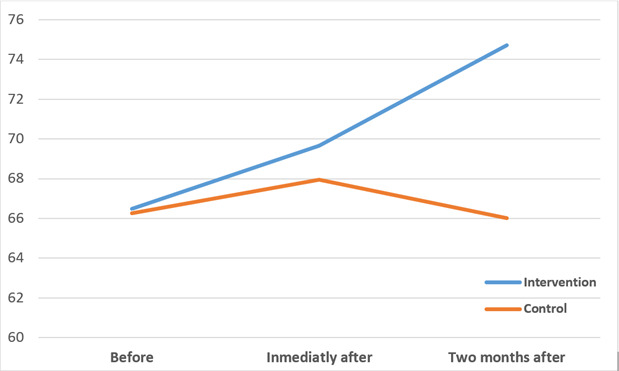 Figure 1
Peer Reviews
No public reviews on file for this paper yet. If you reviewed it on a platform where reviews are public (OpenReview, ICLR, NeurIPS, ICML), you can paste yours below so the community can read it here.
Videos
No videos yet. Explain this paper in a talk, walkthrough, or lecture? Add one.
Taxonomy
TopicsResilience and Mental Health · Grit, Self-Efficacy, and Motivation · COVID-19 and Mental Health
Introduction
In 2020, the World Health Organization classified the coronavirus infection as a pandemic. This virus has caused many pressure on healthcare systems everywhere the universe. Injuries to healthcare workers are on the rise due to rising infections, and lack of access to necessary personal protective equipment and medical beds. Nursing staff are in the early stages of the health crisis and are facing many challenges caused by COVID-19.1 Lorente et al. found that in addition to COVID-19, the possibility of infection, heavy workload, and inadequate preparation were related with mental health impairments among caregivers, but these impairments could be reversed. The author said it was controlled by resilience.2 Another study found that upper resilience and positivity were related with less burnout, negative emotions, and emotional exhaustion.3
One of the variables that plays an important role in the nurse's profession is resilience.The resilience as an approach that allows individual to compatibility to undesirable and keep hope.4 Resilience criteria assess an individual's ability to seek out and utilize support networks, increase self-awareness and accept situations, and grow after stressful situations.5 Positive thinking is a new event in the psychological society that relies on need to understand the positive aspects of human experience and what makes life worth living.6 Previous research has shown the influence of positive thinking on mental health indexes in people with chronic illnesses.7^,^8 One aspect of positive thinking is gratitude, which makes people happier, more hopeful, and more satisfied with life.9 Gratitude interventions lead to significant improvements in psychological, spiritual, and physical health. Because grateful people are stronger than others at forming social engagements, using stress management skills, being inclusive, and working creatively to solve problems.10
The use of social media as a training approach has been introduced to make conveying concepts and materials easier, more comprehensive, and more engaging through text, audio, images, and video, and this method is now widely used for concept conveyance.11 The unique features of PC- and phone-based multimedia training programs allow you to overcome the limitations of traditional training, including how to understand the current situation of the new coronavirus infection outbreak. Therefore, this study aims to examine the effects of a gratitude program based on positive thinking using multimedia on nurses' resilience, taking into consideration the mental health of the nursing profession and nurses in the post-coronavirus pandemic era.
Methods
This study is a quasi-experimental study conducted at the Peimanieh Hospital affiliated to Jahrom University of Medical Sciences from September to December 2023, Iran. Participation criteria, absence of psychological problems, and intention to participate in the study of nursing staff in the new coronavirus infection ward. Exclusion criteria were not completing the questionnaire or attending the training course. In this study, 80 nurses were selected using convenience sampling method from among nurses who had the study inclusion criteria and after randomly divided into control and intervention groups. Due to the limited number of nurses who had the study inclusion criteria and were willing to participate in the study, random sampling was not possible and randomization was done only in the distribution of samples into intervention and control groups. The intervention type was assigned to nurses randomly using permuted block randomization with a block size of 10 (using the table on random permutation). Blinding was not performed.
Data were collected through demographic information and the scale Connor-Davidson Resilience Scale (CD-RISC). The CD-RISC included 25 questions distributed in 5 dimensions, each item is rated using a five-point (1=Strongly disagree, 2=Disagree, 3=Neutral, 4=Agree and 5=Strongly agree). The score for each dimension was determined by summing the scores for that question. The overall resilience score is the sum of the scores for all questions range from zero to 100, with higher values indicating more resilience.12 The validity of scale was confirmed by Mohammadi, with Cronbach’s alpha being 0.8913 In the current research, this coefficient obtained was 0.77.
In the intervention group, training and practice on gratitude program based on positive thinking through multimedia application (WhatsApp) was conducted in 28 days in the form of daily. Training content were according to the positive psychotherapy and gratitude of Seligman and Rhonda Byrne.14^,^15 Contents discussed in every session with more details in the appendix data. Instructional methods include video clips and audio files that correspond to the training topics.
Ethical considerations. This study was confirmed by the ethics committee of Jahrom University of Medical Sciences (Ethics Number IR.JUMS.REC.1400.051). All the participants signed an informed consent. The aims and approach of the research were explained to them and they were then given adequate trust regarding the confidentiality of the data. In addition to, after the completion of the study and for meet the study ethics, the educational contents for the control group were accomplished.
Data analysis. Information was analyzed using SPSS V.21. Shapiro-Wilk tests of data distribution, chi-square tests, independent t tests, repeated measures, and LSD post hoc tests were used. The significance level was assumed to be p<0.05.
Results
There were five persons withdrew in the control group. One person did not participate in the educational sessions in the intervention group; in the end, 39 nurses participate in the intervention group and 35 persons participate in the control group.
Hence, six of the participants were withdrawn from the study during the study due to lack of follow-up. Based on the findings, the demographic characteristics were the same in both groups (p>0.05) (Table 1).
Table 1. Frequency distribution of demographic variables in the study groupsVariableGroup ** p-value** **Intervention (n=39)**Control (n=35) Gender; n (%)
Male5 (12.8)5 (14.3)0.52^*^Female34 (87.2)30 (85.7)Marital status; n (%)
Single10 (25.6)7 (20)0.29^*^Married29 (74.4)28 (80)Educational status; n (%)
Bachelor of Nursing35 (89.8)31 (88.6)0.70^^Master of Nursing4 (10.3)4 (11.4)Age; (Mean±SD)37.05 ± 5.6735.23 ± 8.380.27^^Work experience; (Mean±SD)3.33 ± 1.103.34 ± 1.710.97^^ Chi-square, ** Independent samples test
The between the two groups regarding the resilience score and its dimensions no significant differences were observed in the before the intervention (p>0.05). Immediately after the intervention, a significant difference in resilience scores was observed between the two groups (*p<*0.05) for the total and for three of the five dimensions (positive acceptance of change and secure relationships, control and spiritual influences). Furthermore, between the two groups in the 2 months after the intervention was observed significant differences in the total and dimensions scores of the CD-RISC, although the mean value was upper in the intervention group (p<0.001). Repeated measurements showed that mean resilience improved significantly over time in the intervention group (p<0.001) (Table 2) (Diagram 1).
Table 2. Comparison of the mean total scores of resilience and its subscales before, immediately, and two months after the intervention in the two groupsVariableGroupTime ** p-value**Before interventionImmediately after interventionTwo months after intervention Total resilienceIntervention66.48 ± 17.7869.66 ± 4.7474.71 ± 7.440.002Control66.25 ± 9.0367.94 ± 10.5066.02 ± 8.410.32p-value0.940.030.0001 Personal competenceIntervention18.94 ± 5.7819.97 ± 2.3721.74 ± 2.800.0001Control19.42 ± 3.9619.96 ± 2.4019.82 ± 2.580.16p-value0.120.180.001 Trust in one’s instincts and tolerance of negative AffectIntervention17.66 ± 0.7018.02 ± 0.5423.67 ± 0.210.001Control17.91 ± 0.7418.82 ± 0.5718.88 ± 0.520.63p-value0.320.130.0001 Positive acceptance of change and secure relationshipsIntervention13.33 ± 3.9915.48 ± 2.1916.41 ± 2.140.016Control13.17 ± 3.1113.62 ± 3.9112.71 ± 3.650.12p-value0.840.0130.0001 ControlIntervention8.58 ± 2.9010.02 ± 1.8713.65 ± 1.220.02Control7.45 ± 2.897.00 ± 2.878.05 ± 2.330.18p-value0.090.0120.013 Spiritual influencesIntervention5.07 ± 2.456.98 ± 1.618.24 ± 1.140.01Control5.57 ± 1.985.59 ± 2.015.32 ± 1.950.30p-value0.340.040.0001
Diagram 1Total mean scores of resilience before, immediately, and two months after the intervention in the two groups
Discussion
The findings of this research showed that in the intervention group, the mean resilience of the nurses immediately and two months after the intervention improved compared to before the intervention; however, a significant difference was not observed in the resilience of the control group. This findings revealed significant improvements in mean resilience from baseline to two months after the intervention, while between time points in the control group was not significant difference. Research has shown that positive thinking gratitude programs promote resilience in caregivers. The results suggest that such programs can help improve nurses' resilience and its dimensions over time, especially in the post-COVID-19 pandemic. Matel-Anderson et al.16 performed a cross-sectional and correlational study on 131 college students those results suggested an impact of self-esteem on resilience using positive thinking. Results from Mehafarid et al.17 This study found that positive thinking education influenced nurses' resilience, resiliency, and burnout. Also, the studies showed optimism training and positive thinking in the form of past life events and modifying them by setting positive goals for the future, has been effective in increasing self-efficacy, meaning and hope for life and well-being of individuals.18 In the studies such as Seligman et al.,19 and Luthans et al.20 the impact of positive thinking education psychological intervention plan in improving work quality and resilience in hard working conditions as well as the positive effect it has on burnout has been considered. This finding that the effectiveness of positive thinking and optimism teaching techniques was consistent with present research including McCalister et al.21 and Friborg et al.22 The findings of the present study and related studies show that using gratitude programs based on positive thinking over a longer period of time can have better effects on improving the resilience and psychological state of the participants. Also, the use of gratitude interventions over time leads to a significant increase in individuals' mental, emotional, and physical well-being, because grateful people are more capable than others in terms of forming social commitments, using stress coping skills, and problem-solving.10 Therefore, in the present study, the difference in resilience scores was greater two months after the end of the intervention.
Explaining this finding, it can be said that positive thinking and optimism training programs aimed at promoting resilience and acceptance or coping with the realities of the coronavirus and its consequences for nurses could increase the resilience rate of nurses. The conclusion of this finding is that people with high resilience, in stressful situations and unfortunate situations such as post-COVID - 19 pandemic, maintain their psychological health and have psychological adaptation, thereby increasing their performance and feeling of satisfaction.23 Other studies have shown that nurses who have strong positive thoughts feel better. Research has confirmed the effectiveness of positive thinking in improving health tolerance, physical activity, social functioning, and quality of life.24 Bagheri Charook et al.25 confirm that teaching positive thinking strategies leads to improved functioning and productivity. Hence, in explaining the above results, it can be said that it is significant to pay attention to the characteristics and positive aspects of behaviors instead of focusing on the weaknesses and negative aspects of behavior.
The study findings highlighted that positive thinking programs lead to the promotion of resilience in nurses. Enhancing resilience in nursing, especially during times of crisis and after that, has an effective role in increasing the spirit of nursing as well as the quality of nursing care. This study emphasizes that the use of social media education in the post-crisis era allows nurses to engage with positive thinking content and improve their resilience in order to enhance their knowledge and practice. Positive thinking programs may help with motivation and retention among health professionals. Gratitude programme based on positive thinking is associated with a healthy work environment among nurses.
From the limitations of the current research is that the samples were chosen trough census, therefore the future researches would rather to be executed on a more nurses and trough random sampling. Another limitation of this study is that only one instrument was used to assess the resilience.
Conclusion. The findings provide evidence for the use of a gratitude programme based on positive thinking, to increase resilience in nurses in the post-Coronavirus 2019 era. This study also shows the importance and potential of social media programs in positive thinking and resilience educational curricula.
The reference list from the paper itself. Each links out to its DOI / PubMed record.
- 1Li X Zhou Y Xu X Factors associated with the psychological well‐being among front‐line nurses exposed to COVID‐2019 in China: A predictive study Journal of Nursing Management 20212922402493289045310.1111/jonm.13146 · doi ↗ · pubmed ↗
- 2Lorente L Vera M PeiróT Nurse's stressors and psychological distress during the COVID‐19 pandemic: The mediating role of coping and resilience Journal of Advanced Nursing 2021773133513443321076810.1111/jan.14695 PMC 7753515 · doi ↗ · pubmed ↗
- 3Zhang X Jiang X Ni P Li H Li C Zhou Q Association between resilience and burnout of front‐line nurses at the peak of the COVID‐19 pandemic: Positive and negative affect as mediators in Wuhan International Journal of Mental Health Nursing 20213049399543389371810.1111/inm.12847 PMC 8251287 · doi ↗ · pubmed ↗
- 4American Psychological Association Coronavirus pandemic (COVID-19). Our Word in Data [Internet]https://ourworldindata.org/coronavirus 2018
- 5Leys C Arnal C Wollast R Rolin H Kotsou I Fossion P Perspectives on resilience: personality trait or skill?European Journal of Trauma & Dissociation 202042100074100074
- 6Wei H Roberts P Strickler J Corbett RW Nurse leaders’ strategies to foster nurse resilience Journal of Nursing Management 20192746816873044903810.1111/jonm.12736 · doi ↗ · pubmed ↗
- 7Makaremnia S Manshadi MD Khademian Z Effects of a positive thinking program on hope and sleep quality in Iranian patients with thalassemia: a randomized clinical trial BMC Psychology 2021943433372685310.1186/s 40359-021-00547-0PMC 7968188 · doi ↗ · pubmed ↗
- 8Pahlavan A Ahi G Effectiveness of positive psychology interventions on death anxiety and sleep quality of female patients with multiple sclerosis (MS)Research in Clinical Psychology and Counseling 2020922842