On-Chip Quantum Sensing of Kondo Spins in a High-Mobility Quasi-One-Dimensional Nanoconstriction
Shun-Tsung Lo, Che-Cheng Wang, Sheng-Chin Ho, Jun-Hao Chang, Ming-Wei Chen, G. L. Creeth, L. W. Smith, Shih-Hsiang Chao, Yu-Chiang Hsieh, Pei-Tzu Wu, Yi-Cheng Wu, Chi-Te Liang, M. Pepper, J. P. Griffiths, I. Farrer, G. A. C. Jones, D. A. Ritchie, Tse-Ming Chen

TL;DR
Researchers developed a quantum method to detect magnetic impurities in nanostructures using electronic resonators and quantum point contacts.
Contribution
A noninvasive quantum sensing technique is introduced to distinguish Kondo spins from other correlated states in nanoconstrictions.
Findings
Local Kondo screening and nonlocal spin singlet states can be controlled by the occupancy parity of an electronic resonator.
The 0.7 anomaly in quantum point contacts has a different origin and opposes Kondo spin singlet formation.
Abstract
The precise nature of Kondo spins has remained enigmatic when extended to multiple spin impurities or, more intriguingly, when the localized spin itself may already be the consequence of many-body interactions in a presumably delocalized open nanoconstriction, such as a quantum point contact (QPC). It is experimentally challenging to distinguish the Kondo state from other coexisting many-body spin states in such a strongly correlated system. Here we lithographically define an all-on-chip electronic resonator (ER) and a QPC in a high-mobility GaAs/AlGaAs heterostructure transistor. Local Kondo screening of the QPC spin and nonlocal spin singlet across the ER-QPC integration is controllable in response to ER occupancy parity. We also show that the 0.7 anomaly, another strongly correlated state in QPCs, not only has a different physical origin but furthermore counteracts the Kondo spin…
Click any figure to enlarge with its caption.
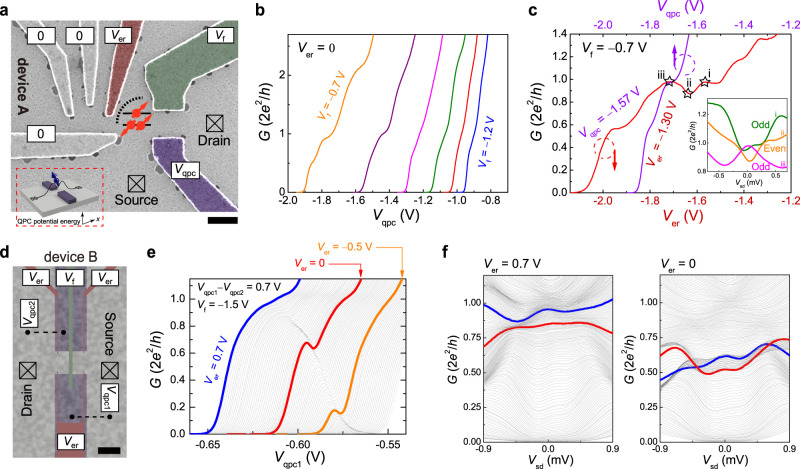 Figure 1
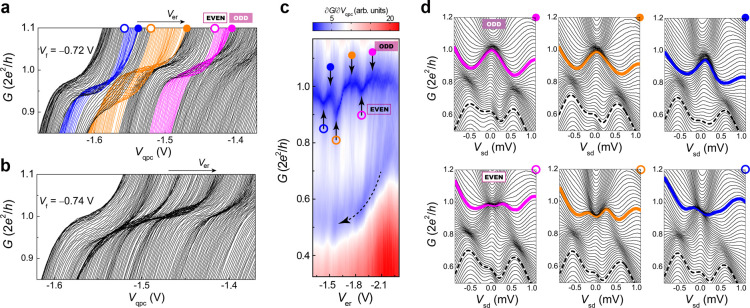 Figure 2
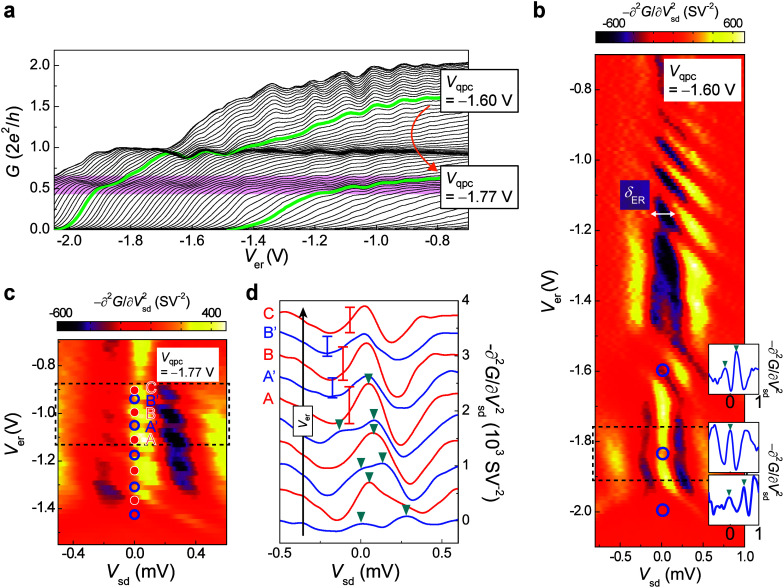 Figure 3
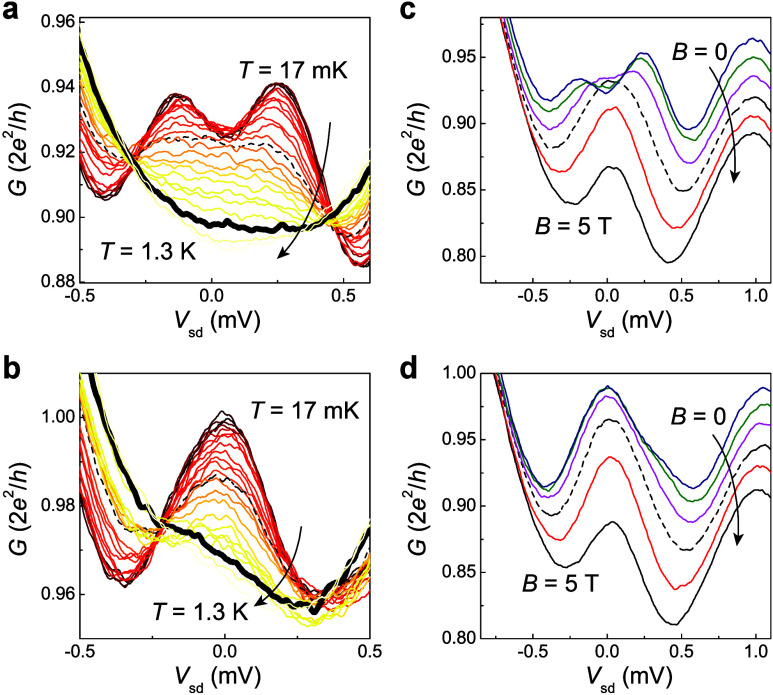 Figure 4
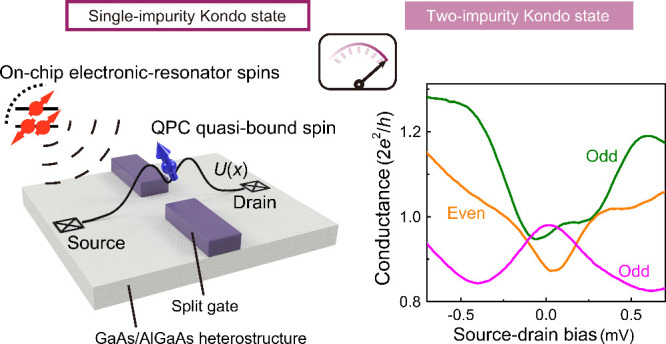 Figure 5
- —Engineering and Physical Sciences Research Council10.13039/501100000266
- —National Yang Ming Chiao Tung University, TaiwanNA
- —National Science and Technology Council, TaiwanNA
- —National Cheng Kung University, TaiwanNA
- —Ministry of Education, TaiwanNA
Peer Reviews
No public reviews on file for this paper yet. If you reviewed it on a platform where reviews are public (OpenReview, ICLR, NeurIPS, ICML), you can paste yours below so the community can read it here.
Videos
No videos yet. Explain this paper in a talk, walkthrough, or lecture? Add one.
Taxonomy
TopicsQuantum and electron transport phenomena · Advancements in Semiconductor Devices and Circuit Design · Semiconductor materials and devices
The Kondo effect leads to the screening of a bound electron spin or, equivalently, to fluctuations of the bound spin moment through the formation of a spin singlet with itinerant electron spins. It remains one of the most renowned and challenging problems in condensed matter physics, continually attracting interest and being central to many emergent materials and nanostructures.^1−15^ While Kondo effects have been observed in various mesoscopic systems, their possible presence in quantum point contacts (QPCs)—manifested in Kondo-like zero-bias anomaly (ZBA) peaks in the nonlinear conductance—is particularly intriguing and has created extraordinary interest and debate.^16−28^ First, QPC is a quasi-one-dimensional (1D) constriction where electrons are in principle mobile, and hence, a localized spin impurity, the prerequisite for the Kondo effect, is not obviously expected. The formation of quasi-bound spin in QPCs was later suggested to be possible through the interplay of strong electron–electron (e-e) interactions and the QPC barrier, which is associated with Friedel oscillations.^19,20^ This mechanism is fundamentally different from other Kondo systems such as quantum dots, where the spin impurity is unambiguously implanted through electrostatic potential. This thereby makes the Kondo problem in QPC more intricate since the spin impurity itself (if it does appear) is already the consequence of many-body interactions, and how exactly such an interaction-driven quasi-bound spin and its further Kondo-type interaction with surrounding itinerant electrons mutually interact with each other remains elusive. Most studies have treated them separately and independently. Second, on the other hand, there is also evidence showing that the observed ZBAs are not necessarily the consequence of a Kondo mechanism and can also be well interpreted by other mechanisms such as a smeared van Hove singularity at the 1D sub-band bottom, forming the so-called van Hove ridge in the QPC density of states.^22,23^ Moreover, the characteristics of conductance anomalies revealed by different studies are diverse, with some supporting the Kondo model and others opposing it,^16−28^ as many-body interactions are sensitive to changes in the QPC potential. The fact that ZBAs in QPCs could be attributed to different scenarios and possess diverse characteristics has made it difficult to identify and reach a conclusion about its real microscopic origin when relying only on inferences from QPC conductance features.
Third, and more importantly, the coexistence of other many-body non-Kondo quantum states in QPCs further adds to the uncertainty but also presents new opportunities for exploring novel quantum phenomena in these systems. By investigating the interplay between various many-body states in a QPC, one may uncover exciting new possibilities for controlling and manipulating spin dynamics. QPCs have long been a fascinating laboratory for studying many-body physics, and their exceptional controllability of carrier density and interactions has enabled the realization of various spin effects such as Wigner crystallization,^29−31^ ferromagnetic spin chains,^32^ helical spin transport,^33^ and spontaneous lifting of spin degeneracy^27,34,35^ with coherent and controllable spin manipulation.^36,37^ Among all the many-body phenomena in QPCs, the most renowned and still debated is a conductance shoulder at approximately 0.7 GQ, commonly known as the 0.7 anomaly,^24^ in addition to the single-particle 1D conductance quantization in steps of GQ = 2e^2^/h (where e is the electron charge and h is Planck’s constant). The 0.7 anomaly appears in the linear conductance (that is, at zero source-drain bias), and its presence is usually associated with the aforementioned ZBA peaks in the nonlinear conductance; hence it has been attributed to the same origin.^16−21^ However, it has also been suggested that the 0.7 anomaly is a consequence of quasistatic spin texture (spin polarization) instead of dynamic spin fluctuation associated with the Kondo effect.^22−28^ This debate has not been resolved since the various proposed interpretations, despite being completely different in their precise nature, all vary with the conductance, density, and interaction strength in a similar way, making it difficult to distinguish between them solely by tuning the parameters of a QPC.^38^ It is therefore essential to develop an approach that allows for the nonlocal and noninvasive sensing of various QPC quantum states, enabling the examination of their interplay without substantially modifying the QPC parameters.
In this study, we integrate a weakly confined Fabry–Pérot-type electronic resonator (ER) with controllable quantized electronic states in close proximity to a QPC and study how the QPC responds to a change in the ER electron occupancy and coupling between them for nonlocal and noninvasive detection of various QPC quantum states. The principle is to have the emergent localized spin in the QPC (if it does exist) coupled with the ER spin state^39,40^ in our finely set controllable two-impurity Kondo system. This ER-QPC integration, in which the electron number parity and e-e interaction strength are designed to be separately controlled by ER and QPC gates, provides the key to verify and identify different microscopic schemes for QPC conductance anomalies. We distinguish the interaction-driven QPC spin states by their distinct ZBA responses to the ER spins and demonstrate that the nonlocal ER-QPC two-impurity Kondo state collapses when it interferes with the 0.7 anomaly. These results shift the current understanding of the origin of conductance anomalies, specifically the 0.7 and ZBA anomalies, from a belief that they stem from the same mechanism to the one that recognizes their emergence from the competition and coexistence of distinct spin effects.
We employ a weakly confined Fabry–Pérot (FP)-type ER as an artificial impurity near a QPC and study how the QPC reacts upon a change in the ER state filling and coupling between them. An off-site ER with odd occupancy contains a bound spin and can have an exchange couple with the QPC quasi-bound spin (if it exists) to give rise to the two-impurity (or even-parity) Kondo effect and double-peak ZBA. When the net spin moment is removed, as in an ER with even occupancy, the QPC quasi-bound spin alone forms a single-impurity (or odd-parity) Kondo state, resulting in a single-peak ZBA. The ability to control the spin moment using the ER occupancy aids in sensing and understanding the Kondo state intricately dressed by other QPC quantum states.
Device A, comprising a QPC with a spatially separate FP-type ER,^39,40^ is defined by surface gates above a GaAs/AlGaAs two-dimensional electron gas (Figure 1a; see Supporting Note 1 for experimental methods). This design facilitates nonlocal and noninvasive quantum sensing of QPC Kondo-related phenomena by independent tuning of the QPC and ER constrictions, which are formed by the gate voltages Vqpc and Vf, and Ver and Vf, respectively. A Kondo spin within the shallow QPC quasi-bound state (Figure 1a, bottom inset) and related QPC states, arising from many-body interactions, will all be modulated by the conductance parameter. The FP-type ER constriction (Figure 1a, dotted arc) reflects itinerant electrons, and quantum interference occurs to form discrete energy modes (solid lines) accommodating electron spins (red arrows). Both the QPC and ER constrictions are crucial in establishing the anticipated two-impurity Kondo state, with one impurity located in the QPC and the other in the ER. The typical QPC 1D quantized conductance in steps of GQ is observed when the ER gate is grounded (Figure 1b). Figure 1c presents the characteristic measurement results of QPC linear conductance and summarizes the influence of the ER constriction on the QPC behavior. Adjusting the voltages applied to the QPC and ER forming gates (Vqpc and Ver, respectively) produces distinctly different impacts on the QPC conductance. The QPC conductance as a function of Ver shows oscillations superimposed on the quantized conductance traces (red trace), whereas these oscillations are absent or weakened when sweeping Vqpc (purple trace), which distinguishes the impacts of Ver control on ER-QPC constrictions from those due to Vqpc. The observed quasiperiodic conductance oscillations above GQ are related to the sequential filling of quantized ER modes with Ver, which discretely modulates the coupling of QPC to the source reservoir and gives rise to the linear conductance oscillations. In this regime of higher conductance and carrier density, the QPC interaction effects are reduced, enabling a clearer observation of the ER transport properties from QPC conductance. Conversely, around G = GQ or below, the conductance oscillations are linked to parity switches of the ER-QPC Kondo state. This is evidenced by the alternating single- and double-peak ZBAs in the nonlinear conductance (inset of Figure 1c), with further details studied later. We demonstrate that an accidental ER, formed between the neighboring QD and QPC barriers, is more effective at tuning the QPC Kondo spin parity than a distant, strictly confined quantum dot (QD) in the integrated QD-QPC devices T1 and T2 (see Supporting Figures S1 and S2). The observed parity control of the ER-QPC ZBAs in devices T1 and T2 indicates the formation and function of a working ER and establishes the basis for gate layout and operation in device A with enhanced ER controllability. Moreover, unlike the well-isolated FP-type ER in most previous studies,^39,40^ the weaker ER constriction in device A allows the ER to be positioned closer to the QPC, enhancing ER-QPC coupling while minimizing its impact on the QPC barrier.
For comparison, in device B, the ER constriction is tuned by finger gates above the split gates, which are electrically isolated by a dielectric layer (Figure 1d). This dual-gated structure eliminates the spatial separation between the QPC and the ER, allowing the ER constriction to invasively interfere with the formation of QPC quasi-bound states and the associated Kondo physics. By varying the ER and QPC gate voltages, the bound state within the QPC can be locally enhanced or suppressed, resulting in a controllable resonance structure in the linear conductance (Figure 1e). This device design enables tuning of the resonance all the way from G = 0 toward and then weakening into the G = GQ quantized plateau. While the resonance structure may resemble the 0.7 anomaly when above G = 0.5GQ, its evolution from G = 0 suggests a different underlying mechanism. Regarding the nonlinear conductance, only the single-peak ZBA is observed regardless of the location of the controllable resonance structure (Figure 1f). We note that, manipulating the interfered ER-QPC constriction using the top finger gates changes the bound-state confinement on-site but does not alter the spatial extent of the QPC potential hill. As a result, only the ZBA peak height is modulated, and a two-impurity Kondo state and ZBA peak splitting do not occur in device B.
Many different approaches have been proposed to detect a quasi-bound spin in a QPC, including the use of multiple pairs of split gates and scanning gate microscopy.^38,41−44^ However, the details remain unclear, as these methods detect only the charge component of the quasi-bound state or significantly distort the QPC potential (see the further discussion in Supporting Note 2). Building on insights into two-impurity QD Kondo systems^45−55^ and our proposed gate layout, we are able to examine how the QPC quantum state reacts to the spatially separate ER spins (Figure 1a) by tracing the ZBAs with systematic Vqpc and Ver control over the QPC and ER constrictions in device A. Figure 2a,b shows the linear conductance as a function of Vqpc at various Ver settings to change the ER electron occupancy. The first quantized plateau oscillates in G with Ver, and this oscillation is reminiscent of the alternation between a single- and two-impurity Kondo effect, which respectively increases and decreases the linear conductance, similar to the cases in double QDs.^45,46^ The oscillations diminish as a more negative bias depletes the ER states and reduces the ER-QPC coupling (Figure 2b). The odd–even conductance modulation under the optimized Vf setting in Figure 2a is emphasized by plotting transconductance ∂G/∂Vqpc as a function of G and Ver (Figure 2c). Regions colored dark blue (low transconductance) correspond to where the plateau exists. Note that there is an additional plateau-like feature below the first plateau, which is identified as the 0.7 anomaly; however, it does not oscillate but monotonically decreases to 0.5GQ with Ver (along the arrow direction), in stark contrast to that of the first plateau. The fact that the 0.7-anomaly conductance does not oscillate in the same manner as the alternating single- and double-peak ZBAs with switching the ER occupancy parity implies the presence of an additional mechanism—referred to as 0.7-anomaly physics—that influences QPC Kondo-related behavior. To further explore this, we investigated the nonlinear conductance. Figure 2d shows that single- and double-peak ZBAs appear alternately with successive changes of the ER occupancy (equivalent to turning on and off a net ER spin moment) when the conductance is close to GQ (bold traces). The switch cycle for linear and nonlinear conductance features are in phase, i.e., the presence of single- and double-peak ZBAs in the nonlinear conductance, coincide with the maximum and minimum extremes of oscillations in linear conductance of the first plateau (denoted in solid and open symbols for single- and two-impurity Kondo states, respectively, in Figure 2a,c,d). This result is significant in that it provides conclusive evidence of the existence of QPC quasi-bound spin which is nonlocally accessible. We also notice that when G is lowered to the 0.7-anomaly region (dashed traces in Figure 2d), the ZBAs weaken and are all in the form of a single peak no matter whether the ER has a zero or nonzero spin moment. This suggests a counteracting relationship between the coexisting Kondo effect and 0.7-anomaly physics.
Figure 3a presents the interplay between the 0.7 anomaly and Kondo ZBAs by showing G as a function of Ver at various Vqpc settings. The QPC conductance oscillates quasiperiodically with Ver due to ER state filling,^40^ and these oscillations can penetrate into the 0.7-anomaly region. The corresponding evolution of nonlinear conductance is also crucial. For clarity, we also present the second derivative of the nonlinear conductance – ∂^2^G/∂Vsd^2^ (Figure 3b–d) for the analyses, which removes the rising background of 1D conductance and provides a better method to locate and investigate the ZBA peak structures (see Supporting Figure S3a).
The resonant line structure observed in the −∂^2^G/∂Vsd^2^(Vsd, Ver) map at Vqpc = −1.60 V for Ver > −1.4 V provides compelling evidence for the control of interference-induced quantized states in the FP-type ER (Figure 3b). The obtained energy level spacing δ_er_ ≈ 0.3 meV gives an estimation of the ER size L ≈ 200 nm by δ_er_ ≈ ℏ^2^π^2^/m**L*^2^ (where m* = 0.067me is the electron effective mass)^39,40^ within its lithographic scale of Ler ≈ 400 nm (Figure 1a). In this region, the oscillatory QPC conductance indicates the filling of ER states (the top green bold trace in Figure 3a). Although tuning Ver changes the ER occupancy by two electrons (i.e., a spin-zero charge state), odd occupancy (i.e., a nonzero spin state) can emerge due to coupling with a nearby QPC bound spin (if it exists), forming an anticipated two-impurity Kondo state and double-peak ZBA, as demonstrated in the reported ER-QD system.^39^ In the ER-QD system, the QD spin impurity is unambiguously implanted, allowing precise control over the ER-QD Kondo state. In contrast, Kondo phenomena in the ER-QPC system are more complex, because the QPC spin impurity itself arises as a consequence of many-body interactions and is highly sensitive to QPC parameter tuning. When entering the tunneling regime below the first plateau at Ver = −1.4 V, the conductance oscillations become complex due to enhanced many-body interactions. Interestingly, switching between the single- and double-peak ZBAs in response to ER occupancy changes only occurs when the conductance is sufficiently high or low, i.e., near the first plateau or below 0.5GQ (top and bottom insets in Figure 3b, respectively). The ZBA retains single-peak character around Ver = −1.8 V (middle inset in Figure 3b), the regime that interferes with the 0.7 anomaly (shaded area in Figure 3a). We continue to probe the observed counteracting relationship between 0.7-anomaly physics and Kondo effect by investigating the linear and nonlinear conductance against Ver at Vqpc = −1.77 V. The linear conductance at Vqpc = −1.77 V is characterized in Figure 3a (lower green bold trace), where there are more oscillation cycles due to manipulation of ER occupancy within the 0.7-anomaly conductance region (shaded area). Figure 3c shows the −∂^2^G/∂Vsd^2^(Vsd, Ver) mapping data while Figure 3d shows the line-cut traces at increasing values of Ver, indicated by circles in Figure 3c, along the arrow direction. The successive parity switches of ER occupancy cause the ZBA to alternate between single and double peaks (red solid and blue open circles, respectively, in Figure 3c, and corresponding red and blue traces in Figure 3d) when G < 0.5GQ (i.e., Ver < −1.1 V). However, this alternation disappears when entering the region of 0.7 anomaly (Ver > −1.1 V). The ZBAs in this region remain as a single peak regardless of the ER spin moment and only their peak height (vertical bars) is modulated in an alternating fashion.^49^ The controllable ER occupancy offers a means for the noninvasive sensing of QPC quantum states. Our results show that the quasi-bound spin is no longer accessible to its nearby ER spin and/or itinerant electrons to form the Kondo effect when the 0.7-anomaly physics coexists in the QPC. In contrast to the argument that the 0.7 conductance anomaly arises from the Kondo effect,^16,17,19^ we show the complete opposite that the 0.7-anomaly physics actually hampers QPC Kondo spin fluctuations, resulting into a suppressed ZBA peak height and splitting. These findings support the notion that the observed 0.7 conductance anomaly arises from the interplay of different coexisting QPC quantum states. They also align with the prediction that the 0.7 anomaly occurs at a conductance and carrier density regime where e-e interactions are strongest, promoting QPC spin polarization^56,57^ and consequently weakening ER-QPC singlet coupling.
Finally, we demonstrate the temperature and magnetic field dependence of the single- and double-peak ZBAs in device A. As the temperature increases, the double-peak ZBA (Figure 4a) is smeared into a broad peak at T = 0.6 K, while the single-peak ZBA (Figure 4b) is still present (dashed traces). The single-peak ZBA eventually disappears at T = 1.1 K (bold traces), which is significantly lower than the approximately 10 K predicted by the Kondo model.^16^ The Kondo correlation can also be examined by an in-plane magnetic field B. Figure 4c shows the re-emergence of single-peak ZBA from double-peak ZBA at B = 3 T (dashed trace). As B increases further, only peak suppression is observed without further splitting for both ZBA parities (Figure 4c,d). The absence of double-peak ZBAs may result from the thermal broadening of ER states (4kBT ≈ 0.2 meV at T = 0.6 K, where kB is the Boltzmann constant) and Zeeman effect (whose contribution cannot be estimated in this work due to the undetermined Landé g-factor in the presence of strong interactions^58^). The detailed peak evolution with either temperature or magnetic field depends on the delicate competition between single- and two-impurity Kondo states, which is further complicated by strong interactions in QPCs (see Supporting Note 4 for further discussion).
The microscopic origin of the 0.7 anomaly together with the possible existence of the Kondo effect in QPC is one of the most intriguing and challenging problems in mesoscopic physics and has been debated for more than two decades. Our tunable ER-QPC designs and experiments bring fresh insights into this fundamental problem. We directly demonstrate the existence of a quasi-bound spin and Kondo correlation in the QPC by alternately forming the single- and two-impurity Kondo effects via nonlocal ER spin moment control. However, in stark contrast to the proposal that if the Kondo spin fluctuations exist in QPCs they are responsible for causing the 0.7 anomaly, we show that they are two separate entities and can coexist with each other. Our nonlocal and noninvasive access to the QPC quantum state is essential to exploring such a quantum system, which has more than one many-body phenomena coexisting within it. It allows us to manipulate and track one particular effect without significantly disturbing the other, by which we can separate the different mechanisms and explore the interplay among them. It reveals that the 0.7 quantum state behaves as a quasi-static spin texture and counteracts the fast Kondo spin fluctuation. Our results provide a versatile route for not merely investigating the interactions between localized and itinerant spins in open nanoconstrictions but also for controlling and detecting elusive spin states in QPCs or other quantum systems, which may open up new possibilities in semiconductor spintronics and quantum engineering.
The reference list from the paper itself. Each links out to its DOI / PubMed record.
- 1Im H.; Lee D. U.; Jo Y.; Kim J.; Chong Y.; Song W.; Kim H.; Kim E. K.; Yuk T.; Sin S.-J.; Moon S.; Prance J. R.; Pashkin Y. A.; Tsai J.-S. Observation of Kondo condensation in a degenerately doped silicon metal. Nat. Physics 2023, 19, 676–681. 10.1038/s 41567-022-01930-3. · doi ↗
- 2Hartstein M.; Toews W. H.; Hsu Y.-T.; Zeng B.; Chen X.; Hatnean M. C.; Zhang Q. R.; Nakamura S.; Padgett A. S.; Rodway-Gant G.; Berk J.; Kingston M. K.; Zhang G. H.; Chan M. K.; Yamashita S.; Sakakibara T.; Takano Y.; Park J.-H.; Balicas L.; Harrison N.; Shitsevalova N.; Balakrishnan G.; Lonzarich G. G.; Hill R. W.; Sutherland M.; Sebastian S. E. Fermi surface in the absence of a fermi liquid in the Kondo insulator Sm B 6. Nat. Physics 2018, 14, 166–172. 10.1038/nphys 4295. · doi ↗
- 3Shen B.; Zhang Y.; Komijani Y.; Nicklas M.; Borth R.; Wang A.; Chen Y.; Nie Z.; Li R.; Lu X.; Lee H.; Smidman M.; Steglich F.; Coleman P.; Yuan H. Q. Strange-metal behaviour in a pure ferromagnetic Kondo lattice. Nature 2020, 579, 51–55. 10.1038/s 41586-020-2052-z.32132691 · doi ↗ · pubmed ↗
- 4Borzenets I. V.; Shim J.; Chen J. C. H.; Ludwig A.; Wieck A. D.; Tarucha S.; Sim H.-S.; Yamamoto M. Observation of the Kondo screening cloud. Nature 2020, 579, 210–213. 10.1038/s 41586-020-2058-6.32161385 · doi ↗ · pubmed ↗
- 5Madhavan V.; Chen W.; Jamneala T.; Crommie M. F.; Wingreen N. S. Tunneling into a single magnetic atom: spectroscopic evidence of the Kondo resonance. Science 1998, 280, 567–569. 10.1126/science.280.5363.567.9554843 · doi ↗ · pubmed ↗
- 6Spinelli A.; Gerrits M.; Toskovic R.; Bryant B.; Ternes M.; Otte A. F. Exploring the phase diagram of the two-impurity Kondo problem. Nat. Commun. 2015, 6, 1004610.1038/ncomms 10046.26616044 PMC 4674668 · doi ↗ · pubmed ↗
- 7Pasupathy A. N.; Bialczak R. C.; Martinek J.; Grose J. E.; Donev L. A. K.; Mc Euen P. L.; Ralph D. C. The Kondo effect in the presence of ferromagnetism. Science 2004, 306, 86–89. 10.1126/science.1102068.15459383 · doi ↗ · pubmed ↗
- 8Roch N.; Florens S.; Bouchiat V.; Wernsdorfer W.; Balestro F. Quantum phase transition in a single-molecule quantum dot. Nature 2008, 453, 63310.1038/nature 06930.18509439 · doi ↗ · pubmed ↗