The genome sequence of Glossophaga mutica (Chiroptera, Phyllostomidae, Glossophaginae; Merriam, 1898)
Nancy B. Simmons, Melissa R. Ingala, Brian P. O'Toole, Linelle Abueg, Kirsty McCaffrey, Bonhwang Koo, Giulio Formenti, Erich D. Jarvis, Myrtani Pieri, Meike Mai, Larry N. Singh, Philip Philge, Laramie L. Lindsey, Ning Zhang, Jonathan L. Gray, Emma C. Teeling, Sonja C. Vernes

TL;DR
This paper presents the genome sequence of Glossophaga mutica, a species of nectar-feeding bat, assembled into 32 chromosomal pseudomolecules.
Contribution
The study provides a high-quality, chromosome-level genome assembly for Glossophaga mutica.
Findings
The genome assembly spans 2.13 gigabases.
The majority of the genome is organized into 32 chromosomal pseudomolecules.
The X sex chromosome was successfully assembled.
Abstract
We present a genome assembly from an individual female Glossophaga mutica (Chordata; Mammalia; Chiroptera; Phyllostomidae). The genome sequence is 2.13 in span. The majority of the assembly is scaffolded into 32 chromosomal pseudomolecules, with the X sex chromosome assembled.
Genes, proteins, chemicals, diseases, species, mutations and cell lines named across the full text — each resolved to its canonical identifier and authoritative record.
Click any figure to enlarge with its caption.
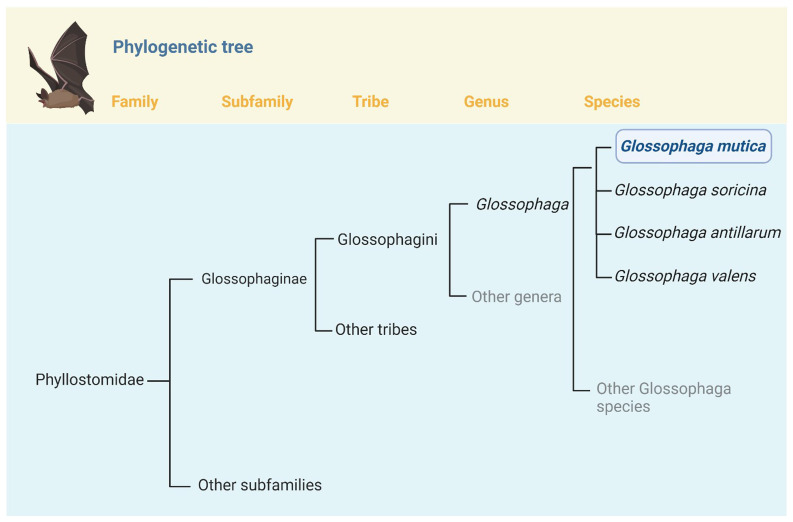 Figure 1
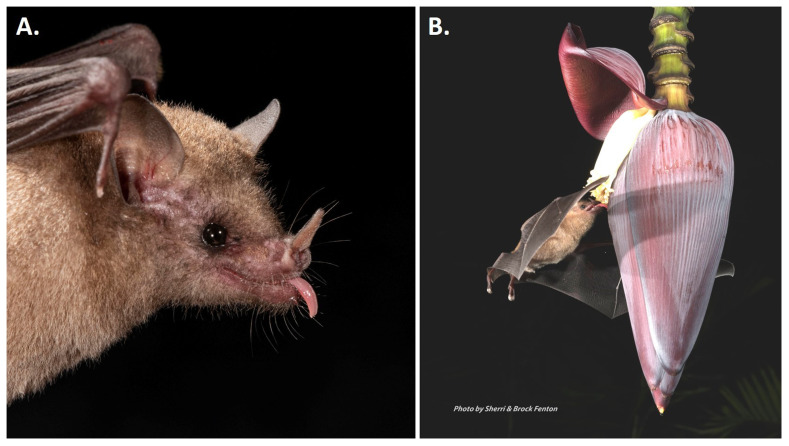 Figure 2
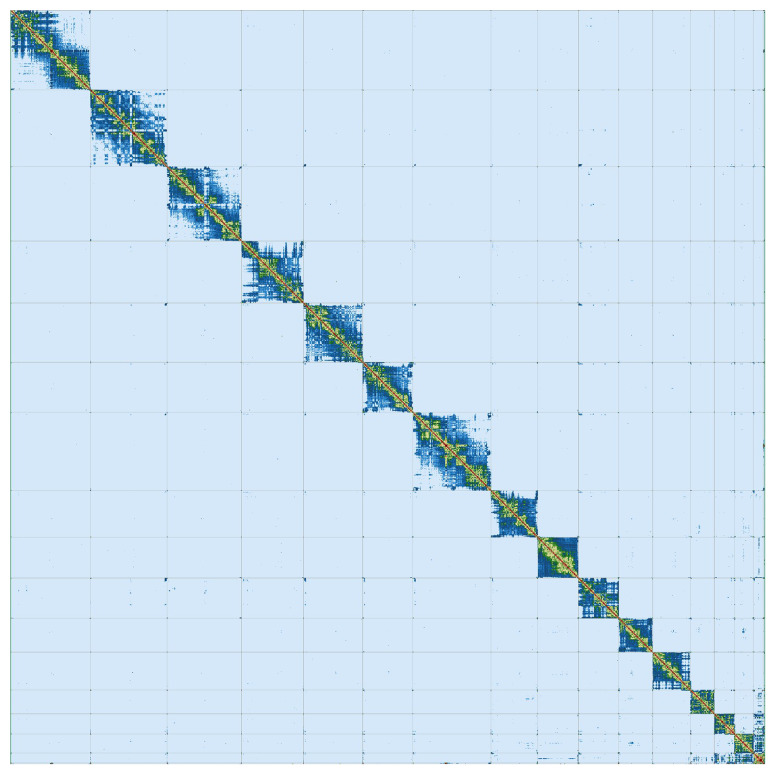 Figure 3
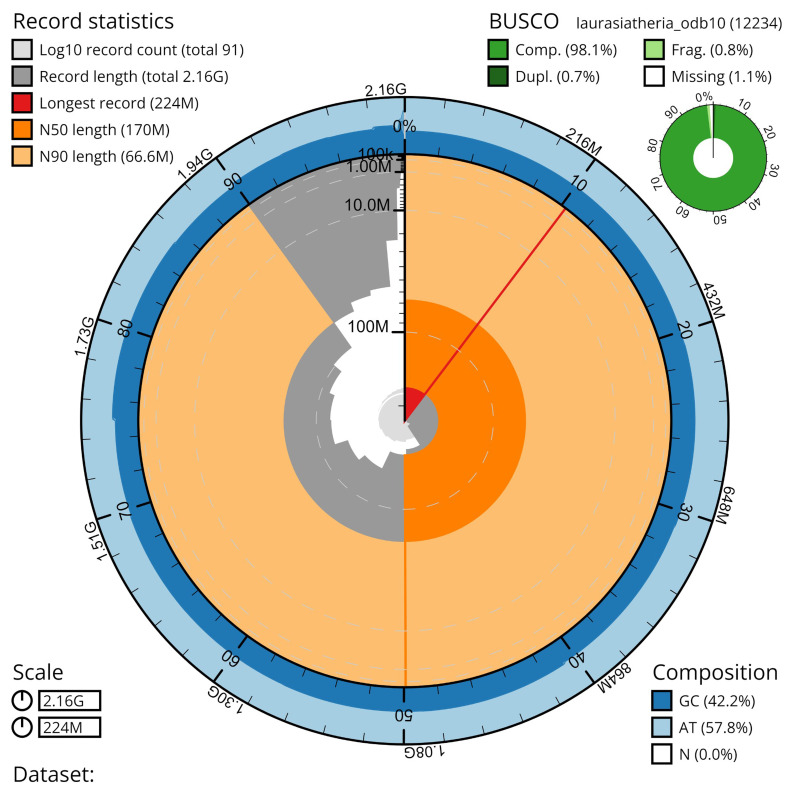 Figure 4
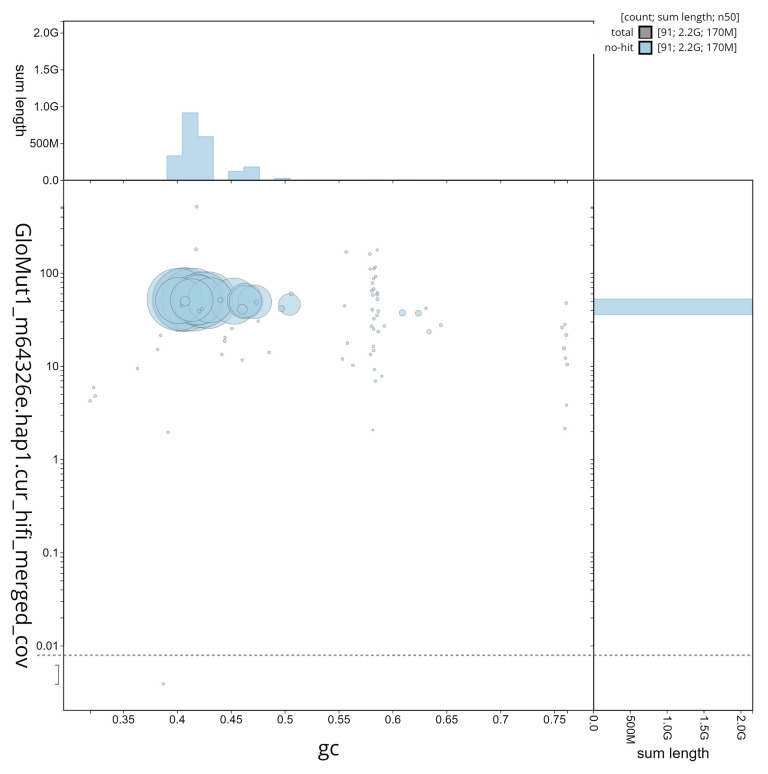 Figure 5
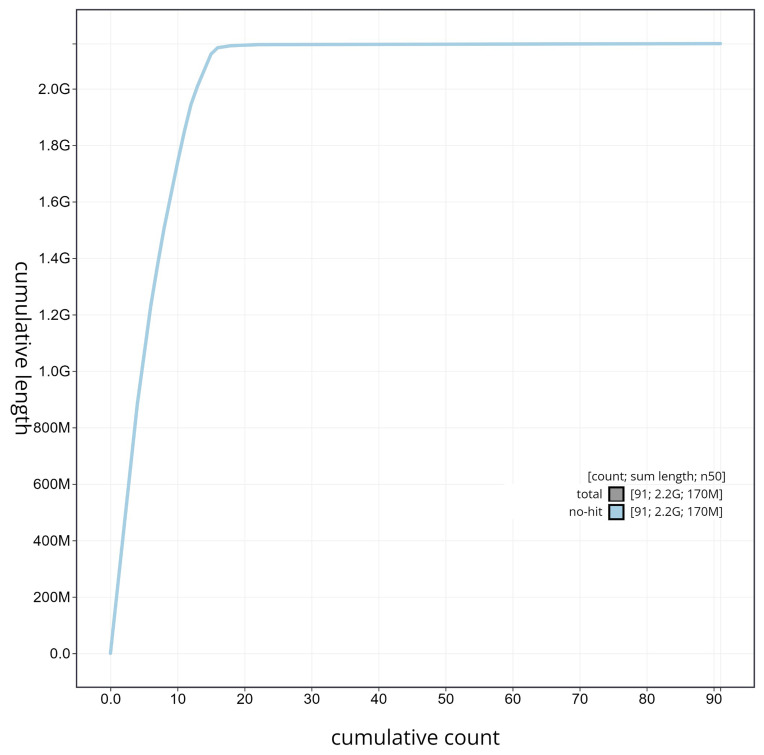 Figure 6
|
| |
|---|---|
| Assembly identifier | GCA_039655065.1 |
| Species |
|
| Specimen | mGloMut1 |
| NCBI taxonomy ID | 2994998 |
| BioProject | Bat1K: Accession: PRJNA489245; ID: 489245 |
| BioSample ID | SAMN40946060 |
| Isolate information | Female – liver tissue |
|
| |
| Pacific Biosciences
| SRR29061521, SRR29061519, SRR29061517 (BAM);
|
| Hi-C Illumina | SRR29061523, SRR29061524 |
| Assembly accession | GCA_039655065.1 |
| Accession of
| GCA_039656995.1 (haplotype 2) |
| Span (Gb) | 2.16 |
| Number of contigs | 219 |
| Contig N50 length (Mb) | 77 |
| Number of scaffolds | 82 |
| Scaffold N50 length (Mb) | 170 |
| Longest scaffold (Mb) | 228.4 |
| NCBI accession | Chromosome | Size (Mbp) | GC% |
|---|---|---|---|
| 1 | 224.30 | 0.4063 | |
| 2 | 223.83 | 0.4073 | |
| 3 | 219.48 | 0.4147 | |
| 4 | 213.30 | 0.4009 | |
| 5 | 177.83 | 0.4285 | |
| 6 | 169.73 | 0.4236 | |
| 7 | 143.34 | 0.4177 | |
| 8 | 133.53 | 0.4196 | |
| X | 116.65 | 0.4016 | |
| 9 | 115.37 | 0.4526 | |
| 10 | 108.76 | 0.4308 | |
| 11 | 97.23 | 0.4136 | |
| 12 | 66.63 | 0.4631 | |
| 13 | 58.47 | 0.4722 | |
| 14 | 54.22 | 0.4634 | |
| 15 | 22.81 | 0.5043 |
| Software tool | Version | Source |
|---|---|---|
| bamUtil | 1.0.15 |
|
| MultiQC | 1.13 |
|
| Genomescope | 2.0 |
|
| hifiasm | 0.19.3 |
|
| purge_dups | 1.2.6 |
|
| BUSCO | 5.3.2 |
|
| Merqury | 1.3 |
|
| Assembly-stats | 17.02 |
|
| Arima-HiC Mapping Pipeline | - |
|
| YaHS | 1.1 |
|
| HiGlass | 1.11.7 |
|
| samtools | 1.9 |
|
| PretextView | - |
|
| BUSCO | 5.7.0 |
|
| BlobToolKit | 4.3.5 |
|
| pbmm2 | 1.13.1 |
|
| Blast | 2.15.0+ |
|
- —ERC Consolidator Grant
- —UKRI Future Leaders Fellowship
- —Science Foundation Ireland Future Frontiers
- —Irish Research Council Laureate Award
- —Taxonomic Mammalogy Fund of the American Museum of Natural History.
- —Peter Buck Postdoctoral Fellowship
Peer Reviews
No public reviews on file for this paper yet. If you reviewed it on a platform where reviews are public (OpenReview, ICLR, NeurIPS, ICML), you can paste yours below so the community can read it here.
Videos
No videos yet. Explain this paper in a talk, walkthrough, or lecture? Add one.
Taxonomy
TopicsBat Biology and Ecology Studies · Species Distribution and Climate Change · Wildlife Ecology and Conservation
Species taxonomy
Eukaryota; Metazoa; Chordata; Craniata; Vertebrata; Euteleostomi; Mammalia; Eutheria; Laurasiatheria; Chiroptera; Yangochiroptera; Phyllostomidae; Glossophaginae, Glossophagini, Glossophaga mutica ^ 1– 3 ^.
Introduction
The genus Glossophaga is a clade of small bodied nectarivorous/omnivorous bats belonging to the Tribe Glossophagini within the Subfamily Glossophaginae ^ 1– 3 ^ ( Figure 1). Glossophaga bats are common throughout the Neotropics with multiple species often occurring in sympatry ^ 4– 8 ^. Although Glossophaga species are frequently categorized as nectarivores because of their long rostrum and specialized tongue morphology (described by 9– 11), it has long been clear that many or all Glossophaga are actually facultative omnivores, variously feeding on nectar, pollen, fruit, and insects depending on the season and location ^ 5– 7, 12– 14 ^.
*Position of Glossophaga mutica in the phylogeny of Family Phyllostomidae. Glossophaga mutica is one of 9 species currently recognized in the genus Glossophaga
3 . Glossophaga belongs to the Tribe Glossophagini, which currently includes 3 genera and 14 species
1– 3 . Within Glossophaga, the closest relatives of G. mutica are G. soricina, G. antillarum, and G. valens; until recently these taxa were considered conspecific
19 . Phylogeny based on a variety of sources
4, 19, 25– 27 .*
Glossophaga mutica Merriam, 1989 ^ 15 ^ is a member of the Glossophaga soricina species complex. Until recently, mutica was recognized as a subspecies of G. soricina ^ 4, 6, 8, 16– 18 ^. However, Calahorra-Oliart et al. ^ 19 ^ argued based on morphological and molecular evidence that mutica represents a species distinct from soricina, and this arrangement has been followed in the most recent comprehensive bat classifications ^ 3, 20 ^. As now defined, Glossophaga mutica (including populations formerly included in G. soricina handleyi Webster and Jones, 1980) ^ 21 ^ occurs in Mexico including the Tres Marias Islands, Guatemala, Belize, Honduras, El Salvador, Nicaragua, Costa Rica, Panama, and northern and western Colombia, while G. soricina is restricted to South America east of the Andes ^ 19, 20 ^. Calahorra-Oliart et al. ^ 20 ^ suggested that the mainland and Tres Marias islands forms of G. mutica should be considered different subspecies; in this case, mainland Central American populations would be called G. mutica handleyi Webster and Jones, 1980 ^ 21 ^ and the island populations would be referred to the nominate subspecies G. mutica mutica.
Glossophaga mutica can be distinguished from congeners on the basis of morphological traits including size (forearm 33–38mm; greatest length of skull 19.9–21.9 mm; 7–15 g), dorsal fur brown (not dark brown) and bicolored with the base of hairs whitish; braincase relatively round; rostrum moderately long and of intermediate width; upper incisors almost equal in size and procumbent with tip of I1 protruding well beyond the tip of I2; lower incisors in contact with one another and canines with no gaps between adjacent teeth ^ 6, 7, 16, 19 ^. As shown in Figure 2, the tip of the tongue often extends out of the mouth when the bat is at rest.
Glossophaga mutica.Adult individuals of Glossophaga mutica. A, portrait showing ear, face, and noseleaf morphology; note that the tongue is often extended over the chin in these bats. B, Glossophaga mutica feeding from a banana flower [Photos taken at Lamanai, Belize by Brock and Sherri Fenton].
Reports of the ecology and biology of Glossophaga “soricina” in Mexico and Central America apply to what is now known as G. mutica. This species is widespread and often abundant in the lowlands, especially in seasonally dry forest and disturbed areas; it is less common in evergreen forests and highland areas ^ 7 ^. It roosts in small to large groups in hollow trees, caves, tunnels, and anthropogenic structures including buildings and culverts ^ 7, 22 ^. The diet of G. mutica is diverse and consists of primarily moths and fruit in the wet season, and nectar and pollen in the dry season, but also includes beetles, dipterans, and leafhoppers ^ 7, 14, 23, 24 ^.
Glossophaga mutica has not been evaluated by the IUCN Redlist but was included in Glossophaga soricina (categorized as Least Concern) in the most recent evaluation by Barquez et al. ^ 28 ^. Given that G. mutica has a broad geographic range, is often abundant where it occurs, utilizes multiple habitats and roost types, and is not subject to any particular known threats, it is unlikely that it would be considered a threatened species.
Genome sequence report
The genome was sequenced from a single female Glossophaga mutica (field number BZ-383, catalog number AMNH:Mammalogy:280902 collected at the Lamanai Archaeological Reserve, Orange Walk District, Belize, on 11 November 2021. A total of 46-fold coverage in Pacific Biosciences Hi-Fi long reads (contig N50 77 Mb) was generated after removal of all reads shorter than 10kb. Primary assembly contigs were scaffolded with chromosome confirmation Hi-C data. The final assembly has a total length of 2.13 Gb in 104 sequence scaffolds with a scaffold N50 of 170 Mb ( Table 1). The majority, 99.86%, of the assembly sequence was assigned to 32 chromosomal-level scaffolds, representing 15 autosomes (numbered by sequence length, and the X sex chromosome. Chromosomal pseudomolecules in the genome assembly of Glossophaga mutica are shown in Table 2. The assembly has a BUSCO ^ 29 ^ completeness of 96.6% using the laurasiatheria reference set.
Table 1.: Genome data for Glossophaga mutica.
Table 2.: Chromosomal pseudomolecules in the genome assembly of Glossophaga mutica.NCBI accession Chromosome Size (Mb) GC%. The chromosome number of Glossophaga mutica is 2n=32.
Methods
The Glossophaga mutica specimen was a female individual collected on an American Museum of Natural History (AMNH) field expedition at the Lamanai Archaeological Reserve in the Orange Walk District of Belize. The individual sampled was identified as Glossophaga mutica based on morphometrics (e.g., forearm length, body mass) and morphological traits (e.g., rostrum proportions, pelage, and incisor morphology) as described above. The bat was caught in a 2-panel harp trap set on a trail near the Mask Temple in the Lamanai Archaeological Reserve (17.76715 N, 88.65135 W). All efforts were made to minimize any distress or suffering by the animal. The individual sampled was subjected to minimal handling after capture, and it was held in a clean cloth bag after capture as per best practices for field containment of bats. After species identification, the individual was euthanized humanely the same night it was captured. The animal was euthanized by isoflurane inhalation (<1ml to moisten cotton ball, formula CHF _2_OCCIHCF 3), a humane approved method that rapidly causes unconsciousness and eventually death upon inhalation. Bats euthanized by this method are rendered unconscious within seconds due to their high respiration rate, and death occurs within a minute or two with no significant suffering by the animal. Capture and sampling were conducted under Belize Forest Department Permit FD/WL/1/21(16) and Belize Institute of Archaeology Permit IA/S/5/6/21(01), and samples were exported under Belize Forest Department permit FD/WL/7/22(07). All work was conducted with approval by the AMNH Institutional Animal Care and Use Committee (AMNHIACUC-20210614). All data were recorded and reported in accordance with the ARRIVE guidelines ^ 30 ^ – see data availability section and Table 1. Tissues were removed from the subject individual immediately following euthanasia and were flash-frozen in a liquid nitrogen dry shipper, with the cold chain maintained from field to museum to laboratory.
DNA was extracted using Nanobind extraction from muscle tissue following the Circulomics Nanobind HMW DNA Extraction Protocol. Pacific Biosciences HiFi libraries were constructed according to the manufacturer's instructions. Hi-C data was generated using the Arima Hi-C+ High Coverage kit from the liver tissue sample. Sequencing was performed by the Genomic Operations DNA Pipelines at Paratus Sciences on Pacific Biosciences Sequel IIe (HiFi reads) and Illumina NextSeq 2000 (Hi-C) instruments.
Assembly was carried out following the Vertebrate Genome Project Galaxy pipeline v2.0 ^ 31 ^. A brief synopsis of the method is as follows: Genome size was estimated using GenomeScope2 ^ 32 ^. Hifiasm with Hi-C phasing was used for genome assembly ^ 33 ^. The quality of the assembly was evaluated using Merqury ^ 34 ^ and BUSCO ^ 29 ^. Scaffolding with Hi-C data ^ 35 ^ was carried out with YaHS ^ 36 ^. PretextView was implemented to generate a Hi-C contact map ( Figure 3). Figure 4– Figure 6 were generated using BlobToolKit ^ 37 ^. Software utilised for the G. mutica analysis are depicted in Table 3.
Hi-C Contact Map of the Glossophaga mutica assembly with 16 chromosomes, visualized using PretextView.
Genome assembly metrics generated using blobtoolkit for the Glossophaga mutica genome assembly.The larger snail plot depicts scaffold statistics including N50 length (bright orange) and base composition (blue). The smaller plot shows BUSCO completeness in green.
GC coverage plot generated for the Glossophaga mutica assembly using blobtoolkit.Individual chromosomes and scaffolds are represented by each circle. The circles are sized in proportion to chromosome/scaffold length. Histograms show the sum length of chromosome/scaffold size along each axis. Color of circles indicate taxonomic hits of each Phylum represented in the assembly.
Cumulative sequence plot generated for the Glossophaga mutica assembly using blobtoolkit.The grey line shows the cumulative length for all chromosomes/scaffolds in the assembly. Colored lines represent Phylum represented in the assembly.
Ethics
All work was conducted with approval by the AMNH Institutional Animal Care and Use Committee (AMNHIACUC-20210614 given on 6/14/2021). All efforts were made to ameliorate suffering of animals.
The reference list from the paper itself. Each links out to its DOI / PubMed record.
- 1Baker RJ Solari S Cirranello AL : Higher-level classification of phyllostomid bats with a summary of DNA synapomorphies. Acta Chiropt. 2016;18(1):1–38. 10.3161/15081109 ACC 2016.18.1.001 · doi ↗
- 2Cirranello A Simmons NB Solari S : Morphological diagnoses of higher-level phyllostomid taxa ( Chiroptera: Phyllostomidae). Acta Chiropt. 2016;18(1):39–71. 10.3161/15081109 ACC 2016.18.1.002 · doi ↗
- 3Simmons NB Cirranello AL : Bat species of the world: a taxonomic and geographic database.2024.
- 4Hoffmann FG Baker RJ : Systematics of bats of the genus Glossophaga ( Chiroptera: Phyllostomidae) and phylogeography in G. soricina based on the cytochrome- b gene. J Mammal. 2001;82(4):1092–1101. 10.1644/1545-1542(2001)082<1092:SOBOTG>2.0.CO;2 · doi ↗
- 5Emmons LH Feer F : Neotropical rainforest mammals: a field guide. (2nd ed.). University of Chicago Press,1997.
- 6Griffiths TA Gardner AL : Subfamily Glossophaginae Bonaparte, 1845. In: A. L. Gardner (Ed.): Mammals of South America, Volume 1: Marsupials, xenarthrans, shrews, and bats.University of Chicago Press,2007;244–255.
- 7Reid F : A field guide to the mammals of Central America and Southeast Mexico. Oxford University Press,2009. 10.1093/oso/9780195343229.001.0001 · doi ↗
- 8Dias CAR Santos Junior JE Perini FA : Biogeographic scenarios for the diversification of a widespread neotropical species, Glossophaga soricina ( Chiroptera: Phyllostomidae). Syst Biodivers. 2017;15(5):440–450. 10.1080/14772000.2016.1271060 · doi ↗