Global Publication Pattern in Ankle Arthroscopy: A Scopus®-Indexed Bibliometric Visualization Analysis
Tauseef Ahmad, Kaylem M Feeney

TL;DR
This study analyzed global research trends in ankle arthroscopy using bibliometric methods to identify key contributors, journals, and collaboration patterns.
Contribution
The study provides a comprehensive bibliometric analysis of ankle arthroscopy research, highlighting global collaboration and publication trends.
Findings
The United States produced the most publications in ankle arthroscopy research.
Foot and Ankle International was the top-ranked core journal in the field.
Collaboration networks were strongest between the United Kingdom and neighboring European countries.
Abstract
Ankle arthroscopy has become a common procedure performed by foot and ankle surgeons worldwide in the evaluation and management of ankle pathology. This study aimed to assess and characterize the global trends and network collaboration in ankle arthroscopy research. A retrospective bibliometric study was conducted using predefined keywords. The data utilized in this study were extracted from the Scopus® database. The data were imported into Bibliometrix, an R-tool for prerequisite analysis and network collaboration mapping. A total of 938 peer-reviewed publications (original articles = 778, review articles = 160) were analyzed and characterized. The included articles were published in English between 1973 and 2021. These articles were published in 175 journals and were authored by 2,708 authors. The collaboration index among the authors was 3.08. The most frequent year of publication…
Genes, proteins, chemicals, diseases, species, mutations and cell lines named across the full text — each resolved to its canonical identifier and authoritative record.
Click any figure to enlarge with its caption.
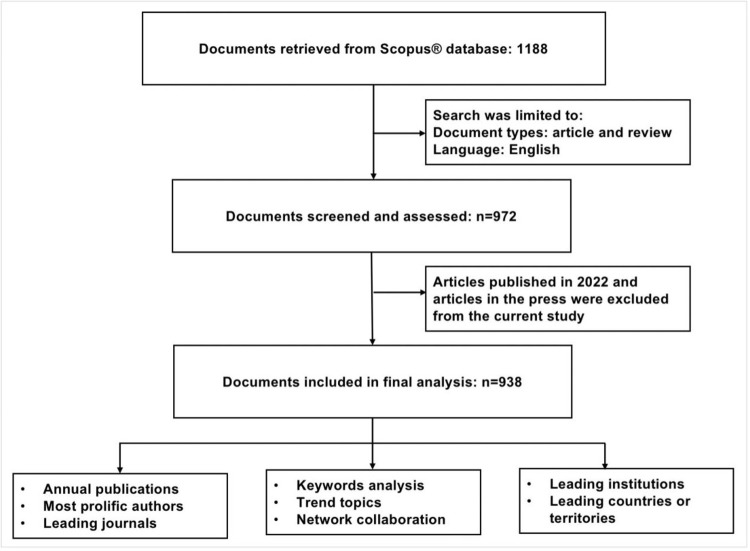 Figure 1
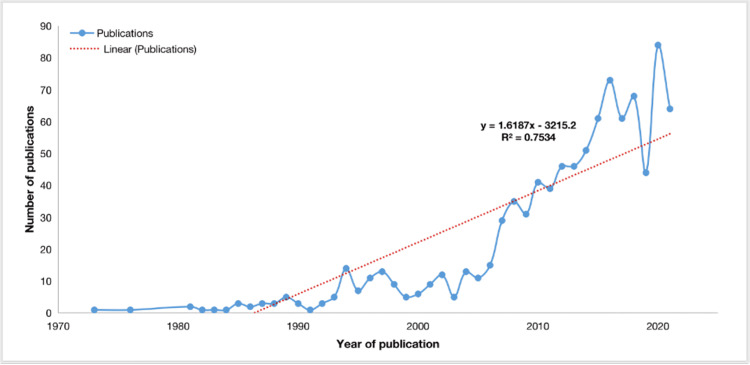 Figure 2
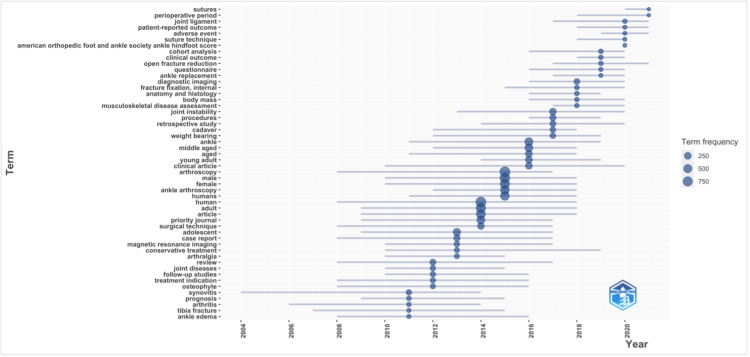 Figure 3
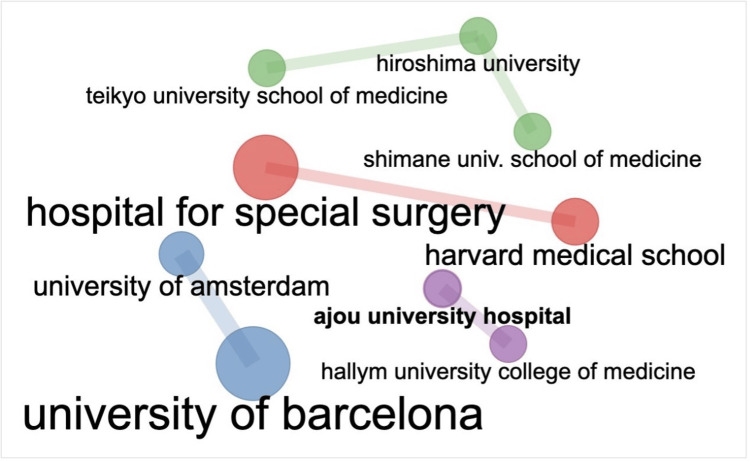 Figure 4
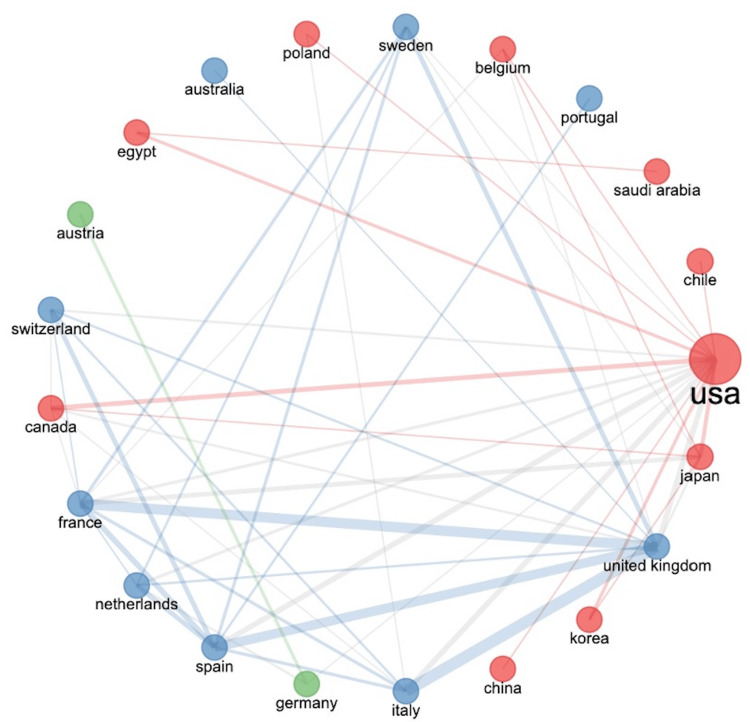 Figure 5
| Description | Results |
| Time span of the included studies | 1973-2021 |
| Journals | 175 |
| Documents | 938 |
| Average years from publication | 10 |
| Average citations per document | 20.05 |
| Average citations per year per document | 1.766 |
| References | 1 |
| Document types | |
| Article | 778 |
| Review | 160 |
| Document contents | |
| Keywords Plus (ID) | 3403 |
| Author's keywords (DE) | 1327 |
| Authors | |
| Authors | 2708 |
| Author appearances | 3754 |
| Authors of single-authored documents | 51 |
| Authors of multi-authored documents | 2657 |
| Authors collaboration | |
| Single-authored documents | 75 |
| Documents per author | 0.346 |
| Authors per document | 2.89 |
| Co-authors per documents | 4 |
| Collaboration index | 3.08 |
| Journal | Number of publications | IF 2021 |
| Foot and Ankle International | 121 | 3.569 |
| Journal of Foot and Ankle Surgery | 85 | 1.345 |
| Arthroscopy - Journal of Arthroscopic and Related Surgery | 63 | 5.973 |
| Knee Surgery Sports Traumatology Arthroscopy | 46 | 4.114 |
| Foot and Ankle Surgery | 40 | 2.84 |
| Arthroscopy Techniques | 37 | 1.47 |
| Clinics in Podiatric Medicine and Surgery | 33 | 0.769 |
| Techniques in Foot and Ankle Surgery | 32 | 0.36 |
| Arthroscopy | 21 | 5.973 |
| Orthopaedics and Traumatology: Surgery and Research | 17 | 2.425 |
| American Journal of Sports Medicine | 16 | 7.01 |
| Archives of Orthopaedic and Trauma Surgery | 16 | 2.928 |
| Clinics in Sports Medicine | 15 | 2.186 |
| Orthopedics | 14 | 1.345 |
| Current Orthopaedic Practice | 13 | 0.217 |
| Journal of Bone and Joint Surgery | 12 | 6.558 |
| Operative Techniques in Sports Medicine | 12 | 0.318 |
| Foot | 11 | 1.317 |
| Foot and Ankle Specialist | 11 | 1.43 |
| Injury | 11 | 2.687 |
| Sports Medicine and Arthroscopy Review | 10 | 2.617 |
| Authors | Number of publications | Articles Fractionalized |
| Lui TH | 35 | 26.25 |
| Takao M | 25 | 4.57 |
| Amendola A | 20 | 4.80 |
| Vega J | 19 | 4.70 |
| Ferkel RD | 18 | 7.59 |
| Van Dijk CN | 15 | 4.28 |
| Dalmau-Pastor M | 14 | 3.30 |
| Maffulli N | 14 | 3.86 |
| Digiovanni CW | 13 | 2.57 |
| Ochi M | 13 | 2.34 |
| Uchio Y | 13 | 2.52 |
| Malagelada F | 12 | 2.55 |
| Bauer T | 10 | 1.95 |
| Giza E | 10 | 1.94 |
| Guillo S | 10 | 2.16 |
| Karlsson J | 10 | 2.25 |
| Lee JW | 10 | 2.04 |
| Rank | Affiliations | Country | Number of publications |
| 1 | North District Hospital | Hong Kong | 50 |
| 2 | Harvard Medical School | The United States | 46 |
| 3 | University of Amsterdam | The Netherlands | 44 |
| 4 | Hiroshima University | Japan | 43 |
| 4 | Hospital for Special Surgery | The United States | 43 |
| 6 | University of Barcelona | Spain | 37 |
| 7 | Shimane Medical University | Japan | 34 |
| 8 | University of California | The United States | 30 |
| 9 | Duke University Medical Center | The United States | 29 |
| 9 | Hallym University College of Medicine | Korea | 29 |
| 10 | Tokushima University Graduate School | Japan | 26 |
| 11 | Shimane Univ. School of Medicine | Japan | 21 |
| Keyword | Number of times used (n) |
| Arthroscopy | 932 |
| Human | 917 |
| Male | 850 |
| Adult | 775 |
| Female | 773 |
| Article | 675 |
| Ankle arthroscopy | 614 |
| Humans | 610 |
| Ankle | 468 |
| Priority journal | 439 |
| Middle aged | 419 |
| Ankle joint | 387 |
| Adolescent | 344 |
| Treatment outcome | 336 |
| Talus | 281 |
| Nuclear magnetic resonance imaging | 257 |
| Aged | 253 |
| Ankle injuries | 242 |
| Young adult | 238 |
| Clinical article | 235 |
| Joint instability | 233 |
| Ankle injury | 226 |
| Follow-up | 220 |
| Surgical technique | 220 |
| Arthroscopic surgery | 185 |
| Case report | 176 |
| Procedures | 174 |
| Debridement | 151 |
| Ankle instability | 150 |
| Review | 149 |
| Retrospective study | 144 |
| Controlled study | 142 |
| Ankle pain | 141 |
| Ankle fracture | 134 |
| Retrospective studies | 130 |
| Osteoarthritis | 128 |
| Major clinical study | 126 |
| Diagnostic imaging | 123 |
| Postoperative complication | 120 |
| Ankle radiography | 114 |
| Computer-assisted tomography | 112 |
| Cadaver | 109 |
| Postoperative period | 107 |
| Weight bearing | 106 |
| Magnetic resonance imaging | 102 |
| Range of motion | 101 |
| Tibia | 98 |
| Postoperative care | 95 |
| Synovitis | 93 |
| Osteosynthesis | 92 |
| Country | Number of publications |
| United States | 376 |
| United Kingdom | 107 |
| Japan | 68 |
| South Korea | 59 |
| Italy | 51 |
| China | 45 |
| Spain | 45 |
| Netherlands | 38 |
| France | 37 |
| Germany | 32 |
| Hong Kong | 25 |
| Turkey | 25 |
| Canada | 23 |
| Switzerland | 20 |
| Egypt | 15 |
| Sweden | 13 |
| Australia | 12 |
| Austria | 10 |
| Brazil | 8 |
| Croatia | 8 |
| India | 8 |
| Poland | 8 |
| Portugal | 8 |
| Belgium | 7 |
| Saudi Arabia | 7 |
| Ireland | 6 |
| Argentina | 4 |
| Chile | 4 |
| Greece | 4 |
| Singapore | 4 |
| Thailand | 4 |
| Taiwan | 3 |
| Colombia | 2 |
| Denmark | 2 |
| Hungary | 2 |
| Israel | 2 |
| Lebanon | 2 |
| Malaysia | 2 |
| Qatar | 2 |
| Andorra | 1 |
| Bahrain | 1 |
| Czech Republic | 1 |
| Grenada | 1 |
| Guadeloupe | 1 |
| Indonesia | 1 |
| Iran | 1 |
| Kuwait | 1 |
| Martinique | 1 |
| New Zealand | 1 |
| Oman | 1 |
| Philippines | 1 |
| Russian Federation | 1 |
| South Africa | 1 |
| Venezuela | 1 |
| Vietnam | 1 |
Peer Reviews
No public reviews on file for this paper yet. If you reviewed it on a platform where reviews are public (OpenReview, ICLR, NeurIPS, ICML), you can paste yours below so the community can read it here.
Videos
No videos yet. Explain this paper in a talk, walkthrough, or lecture? Add one.
Taxonomy
Topicsscientometrics and bibliometrics research · Social Media in Health Education · Foot and Ankle Surgery
Introduction and background
Ankle arthroscopy is a diagnostic and therapeutic procedure, which was first performed on a patient in 1939, with the first publication of a series of patients undergoing ankle arthroscopy published in 1972 [1]. Since then, ankle arthroscopy has become a common procedure performed by foot and ankle surgeons worldwide in the evaluation and management of ankle pathology. Ankle arthroscopy is a minimally invasive diagnostic procedure that can also be used in the management of both simple and complex ankle pathology. Benefits of ankle arthroscopy over traditional open surgery include faster recovery time, reduced risk of infection, superior operative view, better cosmesis due to smaller scars, less wound problems, the ability to evaluate the entire ankle joint in real time, and the ability to both diagnose and treat pathology at the same time. Indications for ankle arthroscopy include but are not limited to the management of osteochondral lesions, ankle impingement, removal of loose bodies, synovitis, and ankle arthrodesis [2].
A bibliometric analysis is a quantitative study of scientific publications. The aim of a bibliometric analysis is to identify the most important research articles in a field of study and to map and identify trends in a research field. Bibliometric analyses are important as they serve as a way of highlighting global research output on a topic and identifying key developments in that topic. A bibliometric analysis also facilitates the development of a visualization analysis of research on a topic. Several bibliometric analyses have been performed in the field of foot and ankle surgery [3-8]. However, to the best of our knowledge, none of these studies relate specifically to ankle arthroscopy. Therefore, the aim of this study was to perform a bibliometric analysis to identify global publication patterns in the study of ankle arthroscopy, and this is the first bibliometric analysis to be carried out on this topic.
Review
Materials and methods
This bibliometric analysis was conducted in line with previously published studies [9-10]. All the relevant scientific literature on ankle arthroscopy was retrieved from the database Scopus®. The following keywords were used to search the title and abstract of potential studies: "ankle arthroscopy" OR "ankle arthroscopic surgery". These keywords were chosen to identify the most relevant studies to the topic of interest. The initial search yielded a total of 1,188 documents. The search was then limited to document types (article and review) and publishing language (English). After filtering the initial search by document type and limiting the publishing language to English, a total of 972 articles remained. These 972 articles were screened by the two authors of this study. Articles published in the year 2022 and articles that were in press were excluded from the final analysis. After screening and the application of filters, a total of 938 articles were included in the final analysis. Articles were excluded if they were not published in the English language due to resource limitations. Articles that were not peer-reviewed original or review articles were also excluded.
The 938 screened publications dataset was downloaded in comma-separated values format. A formal analysis of the 938 included studies was performed by the first author of this study. A flow chart of the studies included in the final analysis is shown in Figure 1. The following parameters were extracted from the data: title, year of publication, names of authors, journal name, keywords, institution, and country of origin. The data was imported to Bibliometrix, an R-tool for pre-requisite analysis. The journal impact factor (IF) was obtained from the Journal Citation Reports released by Clarivate Analytics in June 2022. The characteristics of the included articles are discussed in the results section. In this study, no animal or human subjects were directly involved. The data utilized in the study was extracted from a publicly available database (Scopus®). Therefore, no ethical approval or consent form for publication was required.
Flow chart of the included and analyzed documents
Results
In this study, a total of 938 publications (article = 778, review = 160) were analyzed and characterized, as shown in Table 1. The included articles were published in English between 1973 and 2021. These articles were published in 175 journals and were authored by 2,708 authors. The collaboration index among the authors was found to be 3.08.
Annual Scientific Production
The annual scientific production growth rate was found to be 10.41%. The most frequent years of publications were 2020 (n = 84), 2016 (n = 73), and 2018 (n = 68), as shown in Figure 2. It is possible that the impact of COVID-19 may have had an impact on the increase in the production of articles in 2020, as lockdown restrictions imposed may have reduced the accessibility to clinical research.
Annual scientific production The image was created by the authors using the Web of Science platform.
Most Frequently Published Journals
Journals that published at least 10 studies are presented in Table 2. The most frequently published journal was “Foot and Ankle International” (n = 121), followed by “Journal of Foot and Ankle Surgery” (n = 85) and “Arthroscopy - Journal of Arthroscopic and Related Surgery” (n = 63). However, according to Bradford’s law, which estimates the diminishing returns of searching for references in multiple scientific journals, only four journals were core journals or zone 1 journals; these include “Foot and Ankle International," “Journal of Foot and Ankle Surgery," “Arthroscopy - Journal of Arthroscopic and Related Surgery," and “Knee Surgery Sports Traumatology Arthroscopy."
Most Prolific Authors
The most prolific authors are presented in Table 3. The leading author was Lui TH (n = 35), followed by Takao M (n = 25) and Amendola A (n = 20), highlighting their interest and expertise in this area.
Most Relevant Affiliations
The most frequently appeared affiliations were North District Hospital (n = 50), Harvard Medical School (n = 46), and University of Amsterdam (n = 44), as shown in Table 4.
Keyword Analysis
As shown in Table 5, the most frequently used keywords were "arthroscopy" (n = 932), "human" (n = 917), "male" (n = 850), "adult" (n = 775), "female" (n = 773), "article" (n = 675), "ankle arthroscopy" (n = 614), "humans" (n = 610), "ankle" (n = 468), and "priority journal" (n = 439). This suggests that the focus of research in ankle arthroscopy is in high-quality journals and carried out on patients. The most studied trend topics over the last decade are presented in Figure 3.
Trend topics between 2011 and 2021The image was created by the authors using the Web of Science platform.
Countries or Territories Involved in Ankle Arthroscopy Research
The largest number of publications was produced in the United States (n = 376), followed by the United Kingdom (n = 107), Japan (n = 68), South Korea (n = 59), and Italy (n = 51), as shown in Table 6.
Institutions' and Countries' Collaboration Network
As shown in Figure 4, the University of Barcelona has strongly collaborated with the University of Amsterdam. As shown in Figure 5, the United Kingdom had the strongest collaboration with Italy, France, and Spain, while the United States had the strongest collaboration with Italy, Spain, and the United Kingdom.
Collaboration network among the most active institutionsThe image was created by the authors using the Bibliometrix platform.
Collaboration network between countriesThe image was created by the authors using the Bibliometrix platform.
Discussion
Ankle arthroscopy is commonly performed by foot and ankle surgeons worldwide for the evaluation and management of a range of ankle joint pathologies. To the best of the authors' knowledge, this is the first bibliometric visualization analysis on the topic of ankle arthroscopy indexed in the Scopus® database. Bibliometric analyses offer valuable data on the history of scientific publications on a particular topic, in this case, ankle arthroscopy [11].
As can be seen in Table 1, each of the included articles was published between 1973 and 2021. Most of these articles were original articles (n = 778), while a minority were review articles (n = 160). This is not surprising considering that research has only accelerated over the past 20 years (Figure 2), and a requirement for a review article is a significant number of original articles. Interestingly, there was a large number (n = 175) of different journals that published studies on ankle arthroscopy (Table 1). However, three of the top five most frequently published journals on ankle arthroscopy articles were dedicated foot and ankle journals (Table 2). Again, this is unsurprising considering this study is based on ankle arthroscopy.
Figure 2 clearly illustrates the growth in ankle arthroscopy research since the early 2000s. It is likely that this is due, at least in part, to the ever-increasing demand for more accurate surgery, quicker healing times and lower complication rates [12]. In addition, patient demand for arthroscopic and minimally invasive surgery continues to soar [12]. As can be seen in Figure 2, publications on ankle arthroscopy continue to grow, with 2020 seeing the highest number of publications on record (n = 84). It is likely that this trend will continue as the demand for evidence-based treatment modalities increases, in addition to the advancement in current surgical techniques.
The journal with the highest number of publications was "Foot and Ankle International" (n = 121; Table 2). This is not surprising for several reasons. First, "Foot and Ankle International" is the official journal of the American Orthopaedic Foot and Ankle Society and has the highest impact factor (IF 3.569; Table 2) that is specific for foot and ankle research. In addition, the USA had the highest number of publications included in this study (n = 376; Table 6). Finally, this same finding has been observed in other foot and ankle bibliometric analyses [6-8].
Three journals have published more than 50 research papers on ankle arthroscopy ("Foot and Ankle International," "Journal of Foot and Ankle Surgery," and "Journal of Arthroscopic and Related Surgery"; Table 2). Each of these journals is based out of the USA, which highlights the demand for ankle arthroscopy research in the USA. One potential explanation for this is the large number of foot and ankle surgeons in the USA. In the USA, while orthopedic surgeons perform much of the foot and ankle surgery, particularly ankle and hindfoot procedures, podiatrists (Doctors of Podiatric Medicine) also perform foot and ankle surgery. This reflects the variation in training and licensing requirements in the USA. This is not the case in many countries around the world where training and licensing requirements differ, and only orthopedic surgeons may operate. This includes many countries in Europe (with the exception of the UK and a small number of countries in mainland Europe).
The most prolific author was Lui TH, based in the Department of Orthopedics, North District Hospital in Hong Kong, with a large number of publications of 35 (Table 3) and high articles fractionalized of 26.25 (Table 3). This highlights that Lui TH is one of the greatest contributors and most influential authors in terms of the number of publications in the field of ankle arthroscopy. Other significant contributors to the field of ankle arthroscopy were Takao M (n = 25; Table 3) and Amendola A (n = 20; Table 3). No other author contributed to more than 20 publications.
Given that Lui TH was based out of North District Hospital in Hong Kong, it is unsurprising to see that this institution had a greater number of affiliations with published research articles (n = 50; Table 4). Harvard Medical School was closely behind with 46 affiliations (n = 46), while the University of Amsterdam was affiliated with 44 publications (n = 44).
As can be seen in Table 6, a total of 55 countries have published research on ankle arthroscopy. This highlights the global need for high-quality research in ankle arthroscopy and suggests that significant advances in arthroscopic techniques and outcomes are still sought worldwide. Interestingly, the USA has published more than three times the number of articles (n = 307) compared to the second most prolific nation, which was the United Kingdom (n = 107). This was followed by Japan (n = 68), South Korea (n = 59), and Italy (n = 51). This may highlight the significant discrepancy between developed and developing nations in terms of research funding and subsequent research output. Previously published bibliometric studies in different research fields show that the highest number of publications originated from the USA [13-27].
The keyword analysis is represented in Table 5. As was expected, the most frequently used keyword across the publications was "arthroscopy", which was featured in 932 out of 938 articles (99.36%). Other very important keywords for authors were "human" (n = 917), "male" (n = 850), "adult" (n = 775), and "female" (n = 773). This is valuable information for researchers who are conducting a search of the literature on ankle arthroscopy. The most studied trend topics over the past decade are presented in Figure 3. The most focused trend topics over the past five years (2017-2021) were suture, perioperative period, joint ligament, patient-reported outcome, adverse event, suture technique, American Orthopedic Foot and Ankle Society Ankle Hindfoot Score, cohort analysis, clinical outcome, open fracture reduction, questionnaire, ankle replacement, diagnostic imaging, internal fracture fixation, anatomy and histology, body mass, musculoskeletal disease assessment, joint instability, procedures, retrospective study, cadaver, and weight bearing.
Figure 4 depicts the research collaboration between institutions, while Figure 5 represents the research collaboration amongst various countries. It is clear to see in Figure 4 that the University of Barcelona had the strongest collaboration with the University of Amsterdam. This was closely followed by a strong collaboration between the Hospital for Special Surgery and Harvard Medical School and a significant collaboration between Teikyo University School of Medicine, Hiroshima University, and Shimane University School of Medicine. This is perhaps unsurprising considering that these institutions have published a large number of research articles (Table 4). Figure 5 shows that the United Kingdom had the strongest collaboration with Italy, France, and Spain. One potential explanation for this is the geographical proximity of these countries to one another, in addition to similarities in medical and surgical training within these countries. However, geographical proximity does not explain the United States’ strong collaboration with Italy, France, and Spain (Figure 5).
One possible explanation for the strong collaboration among these countries is that, following orthopedic surgical training, most orthopedic surgeons spend a year abroad completing a fellowship in foot and ankle surgery to hone their operating skills and further develop expertise in their field. Therefore, many foot and ankle surgeons who have fully completed training (known as consultant surgeons or attending surgeons) will have developed relationships with surgeons from other countries. This likely plays a role in promoting future research collaborations among these surgeons in different institutions and countries.
It is clear that developed countries have produced the highest number of research articles (Figure 3, Table 6) and achieved the strongest level of collaboration (Figures 4, 5). This may reflect a greater amount of research funding available to researchers and clinicians within these institutions and countries.
Limitations
This bibliometric analysis is a cross-sectional study, and as a result, all articles published after the date of the literature search were not included. Therefore, this study is only a reflection of the research available at the time of the literature search. This is an unavoidable limitation of cross-sectional studies. In addition, due to resource limitations, only studies published in the English language were included, and therefore it is possible that relevant studies published in a language other than English were excluded.
Conclusions
This study provides key developments, trend topics, and collaboration networks in ankle arthroscopy research over the years. The most prolific author, most active institution, and country were Lui TH, North District Hospital, and the United States of America, respectively. The most studied trend topics were arthroscopy, human, male, adult, and female. The largest portion of the included publications was produced in developed countries. The United Kingdom had the strongest collaboration with Italy, France, and Spain. However, the USA had the strongest collaboration with Italy, Spain, and the United Kingdom. The zone 1 or core journals in ankle arthroscopy were “Foot and Ankle International," “Journal of Foot and Ankle Surgery," “Arthroscopy - Journal of Arthroscopic and Related Surgery,” and “Knee Surgery Sports Traumatology Arthroscopy." Future research may identify emerging trends in ankle arthroscopy, identify specific arthroscopic procedures of interest, and include studies published in a language other than English.
The reference list from the paper itself. Each links out to its DOI / PubMed record.
- 1Selfoc-arthroscope (Watanabe No. 24 arthroscope)(monograph) Watanabe M Tokyo Teishin Hospital 1972
- 2Evidence-based indications for ankle arthroscopy Arthroscopy Glazebrook MA Ganapathy V Bridge MA Stone JW Allard JP 147814902520091996207610.1016/j.arthro.2009.05.001 · doi ↗ · pubmed ↗
- 3The 100 most cited papers in foot and ankle surgery Foot (Edinb) Bayley M Brooks F Tong A Hariharan K 11162420142431602110.1016/j.foot.2013.11.003 · doi ↗ · pubmed ↗
- 4Top 100 cited foot and ankle-related articles J Am Podiatr Med Assoc De Heer PA Adams W Grebenyuk FR Meshulam E Miskin K Koch TT Groh C 38739710620162803304710.7547/15-091 · doi ↗ · pubmed ↗
- 5Worldwide productivity in the field of foot and ankle research from 2009-2013: a bibliometric analysis of highly cited journals J Foot Ankle Res Luo X Liang Z Gong F Bao H Huang L Jia Z 12820152592689110.1186/s 13047-015-0070-0PMC 4414464 · doi ↗ · pubmed ↗
- 6The top 100 most-cited articles on Hallux Valgus J Foot Ankle Surg Tekin SB Bozgeyik B 7577616020213382407710.1053/j.jfas.2021.02.009 · doi ↗ · pubmed ↗
- 7The top 50 most-cited articles on total ankle arthroplasty: a bibliometric analysis Orthop Rev (Pavia) Malik AT Noordin S 74981020182977017610.4081/or.2018.7498 PMC 5937363 · doi ↗ · pubmed ↗
- 8The top 100 cited articles on plantar fasciitis: a bibliometric analysis J Foot Ankle Surg Feeney KM 124612506120223533164410.1053/j.jfas.2022.02.012 · doi ↗ · pubmed ↗