Dynamic coordination mechanism in single-atom sensing
Tao Zhang

Abstract
Genes, proteins, chemicals, diseases, species, mutations and cell lines named across the full text — each resolved to its canonical identifier and authoritative record.
Click any figure to enlarge with its caption.
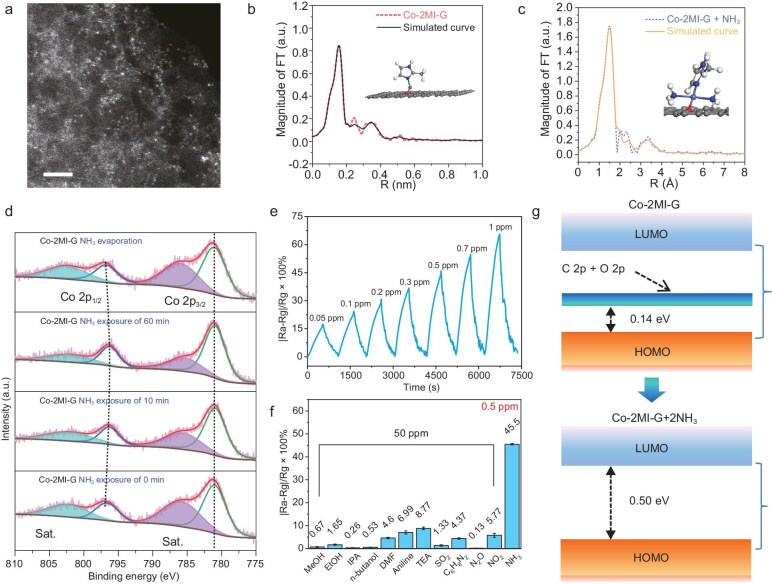 Figure 1
Peer Reviews
No public reviews on file for this paper yet. If you reviewed it on a platform where reviews are public (OpenReview, ICLR, NeurIPS, ICML), you can paste yours below so the community can read it here.
Videos
No videos yet. Explain this paper in a talk, walkthrough, or lecture? Add one.
Taxonomy
TopicsGas Sensing Nanomaterials and Sensors · Advanced Chemical Sensor Technologies · Spectroscopy and Laser Applications
Gas sensing technology is crucial for a wide variety of applications [1]. Currently, traditional gas sensing materials are hindered by limitations in selectively detecting single-type gas due to the non-specific interactions between gas molecules and sensing materials [2,3]. Single atoms (SAs) have the potential to generate specific effects on a single-type gas due to the uniform active center configuration [4,5]. However, the means to stimulate the capacity of single atoms towards a single-type gas sensing are still lacking. Therefore, the design of highly sensitive and selective sensing single-atom materials for single-type gas detection needs more attention.
Recently, by utilizing the dynamic changes in the coordination structure of cobalt single atoms, Wu and Feng et al. realized high sensitivity and high selectivity towards ammonia gas sensing. In this work, they developed a cobalt single-atom material with a bidentate coordination structure (Co-2MI-G), which exhibited ultra-high selectivity for NH_3_ sensing [6]. A high-angle annular darkfield scanning transmission electron microscopy (HAADF-STEM) image showed that no aggregates were formed on the surface of graphene-like Co-2MI-G and the Co single atoms were uniformly dispersed (Fig. 1a). It is indicated that from the fitting of Fourier transformed-extended X-ray absorption fine structure (FT-EXAFS), the coordination number of Co single atoms changed from 2 in pristine Co-2MI-G to 4 after NH_3_ gas exposure, corresponding to a stable model of bonding with two NH_3_ molecules (Fig. 1b and c). In order to further clarify the special coordination evolution mechanism, quasi in-situ X-ray photoelectron spectroscopy (XPS) technology was used to explore the state changes of Co single atoms before and after exposure to NH_3_. As illustrated in Fig. 1d, the satellite peak intensity for Co 2p decreased significantly, while the 2p_1/2_–2p_3/2_ separation energy weakened, indicating the conversion of Co^2+^ to Co^3+^. As a result, the Co-2MI-G-based sensor showed ultra-high sensitivity (67.598% for 1 ppm NH_3_, Fig. 1e) and high selectivity for volatile organic compounds (VOCs) and other interfering gases (Fig. 1f). Theoretical simulation elucidated the chemisorption process of NH_3_ molecules on Co-2MI-G. Density of state (DOS) analysis indicated that the Co-2MI-G adsorbed with NH_3_ displayed a stronger insulation and higher oxidation state than pristine Co-2MI-G, which enlarged the band gap from 0.14 eV to 0.50 eV (Fig. 1g).
In summary, this paper verifies that single atoms with a dynamically changing coordination structure could be used as a single-type gas sensing material with superior sensitivity and selectivity. This work pioneers a novel application of single atoms to the field of single-type gas sensing and provides an innovative perspective on utilizing single atoms by dynamic coordination structure.
The reference list from the paper itself. Each links out to its DOI / PubMed record.
- 1Shi Y, Ni L, Wang Z et al. Coord Chem Rev 2024; 505: 215691.10.1016/j.ccr.2024.215691 · doi ↗
- 2Barsan N, Simion C, Heine T et al. J Electroceram 2010; 25: 11–9.10.1007/s 10832-009-9583-x · doi ↗
- 3Li S, Diao Y, Yang Z et al. Sens Actuators, B 2018; 276: 526–33.10.1016/j.snb.2018.08.120 · doi ↗
- 4Qiao B, Wang A, Yang X et al. Nat Chem 2011; 3: 634–41.10.1038/nchem.109521778984 · doi ↗ · pubmed ↗
- 5Zeng L, Cheng K, Sun F et al. Science 2024; 383: 998–1004.10.1126/science.adk 519538422151 · doi ↗ · pubmed ↗
- 6Li Y, Li Y, Shi Y et al. Natl Sci Rev 2025; 12: nwaf 031.10.1093/nsr/nwaf 03139974516 PMC 11837343 · doi ↗ · pubmed ↗