Experimental Study of the Reactions of Br Atoms with Thiirane and Nitrosyl Chloride
Yuri Bedjanian

TL;DR
This study experimentally measures how bromine atoms react with thiirane and nitrosyl chloride at different temperatures.
Contribution
New temperature-dependent rate constants for Br atom reactions with C2H4S and ClNO are reported.
Findings
The reaction Br + C2H4S has a rate constant that decreases exponentially with increasing temperature.
The reaction Br + ClNO shows non-Arrhenius behavior, with a significant increase in rate at higher temperatures.
The rate constant for Br + ClNO is modeled as a sum of two exponential functions.
Abstract
The kinetics of Br-atom reactions with C2H4S and ClNO were studied as a function of temperature at a total pressure of 2 Torr of helium using a discharge–flow system combined with mass spectrometry: Br + C2H4S → SBr + C2H4 (1) and Br + ClNO →BrCl + NO (2). The rate constant of reaction (1) was determined at T = 340–920 K by absolute measurements under pseudo-first-order conditions, either by monitoring the kinetics of Br-atom or C2H4S consumption in excess of C2H4S or of Br atoms, respectively, and by using a relative rate method: k1 = (6.6 ± 0.7) × 10−11 exp(−(2946 ± 60)/T) cm3molecule−1s−1 (where the uncertainties represent the precision at the 2σ level, the estimated total uncertainty on k1 being 15% at all temperatures). The rate coefficient of reaction (2), determined either from the kinetics of the formation of the reaction product, BrCl, or from the decays of Br-atoms in an…
Genes, proteins, chemicals, diseases, species, mutations and cell lines named across the full text — each resolved to its canonical identifier and authoritative record.
Click any figure to enlarge with its caption.
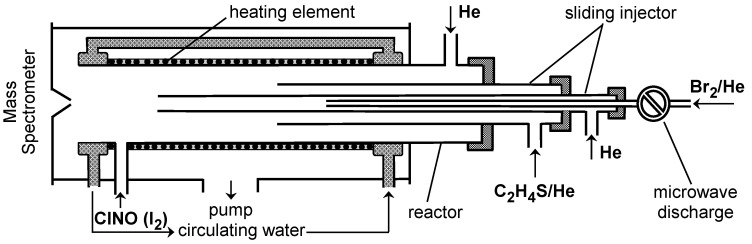 Figure 1
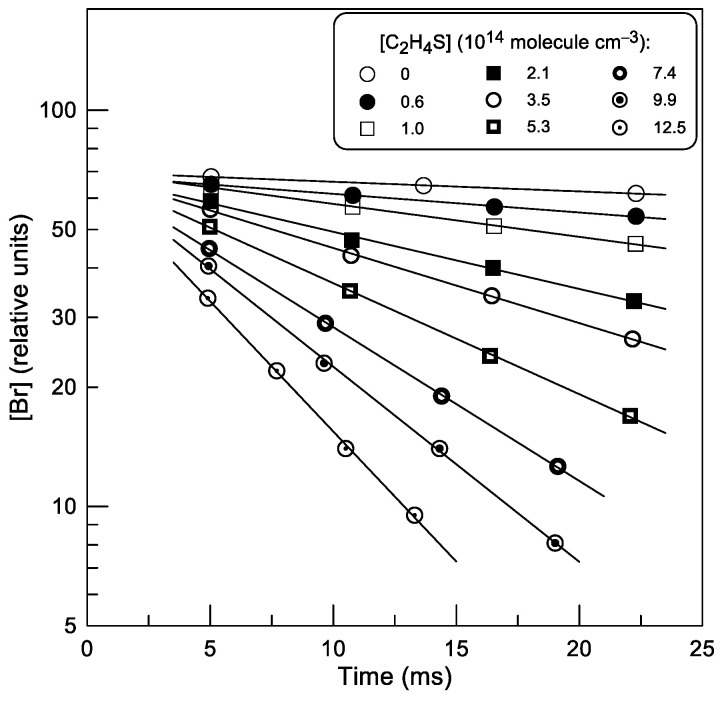 Figure 2
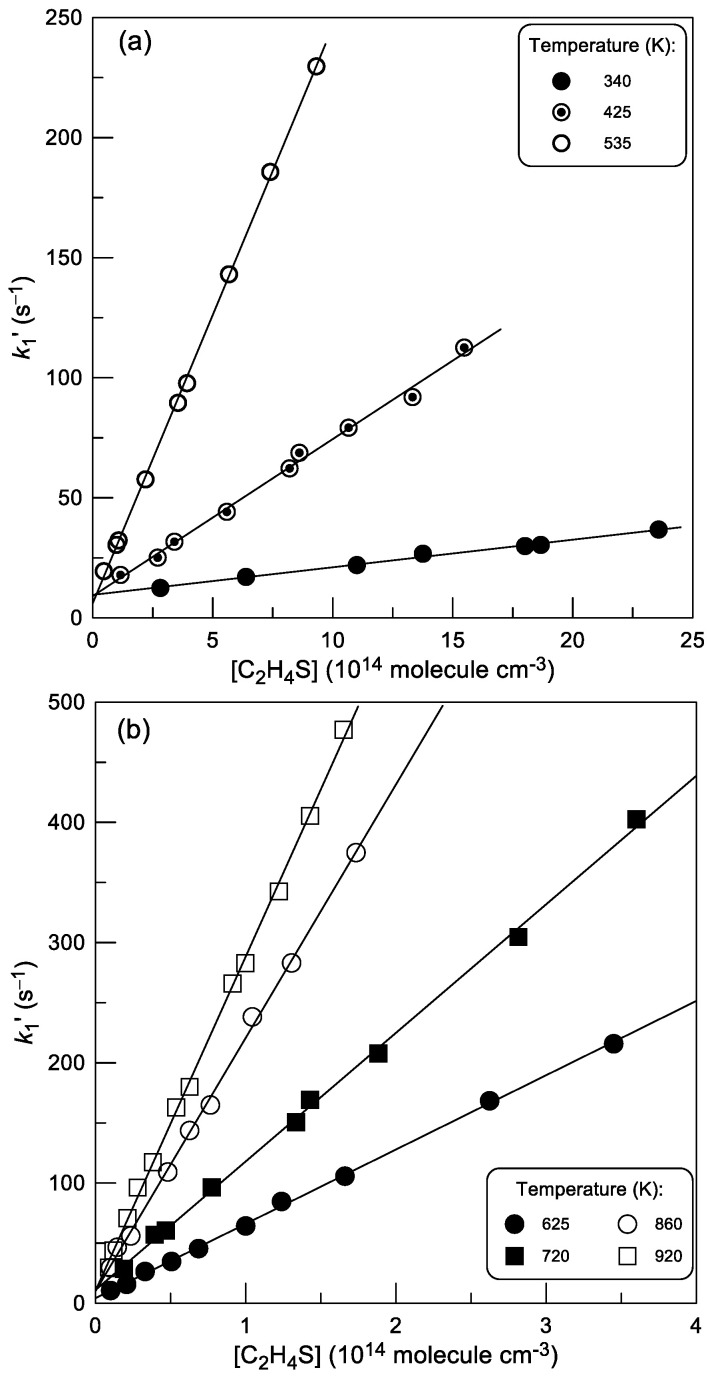 Figure 3
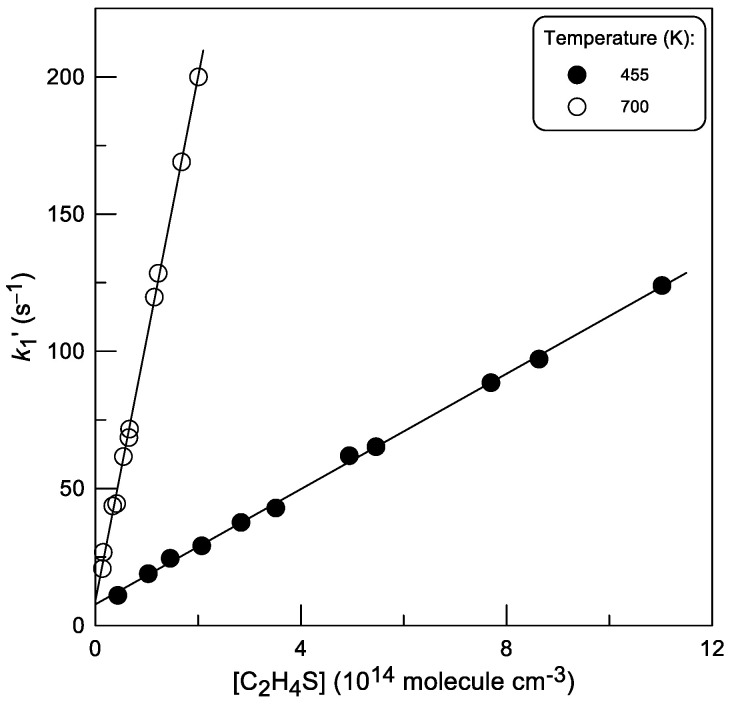 Figure 4
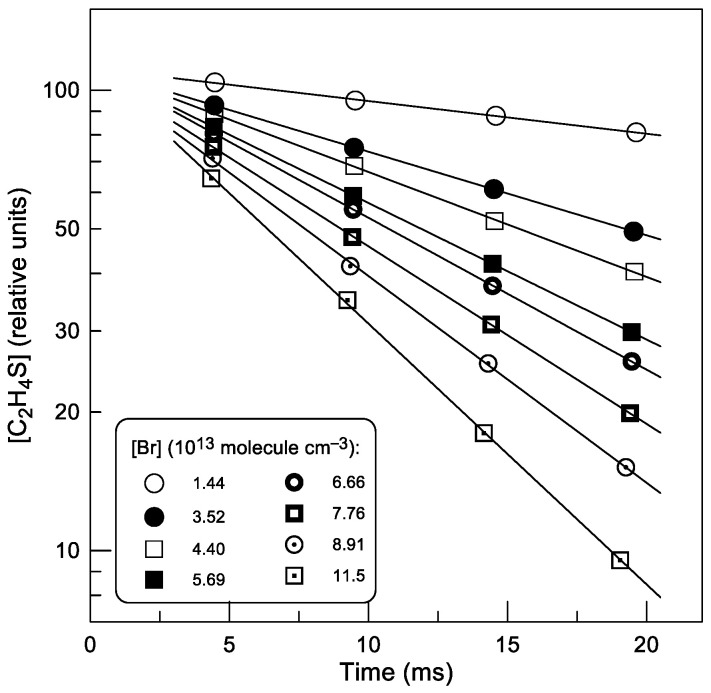 Figure 5
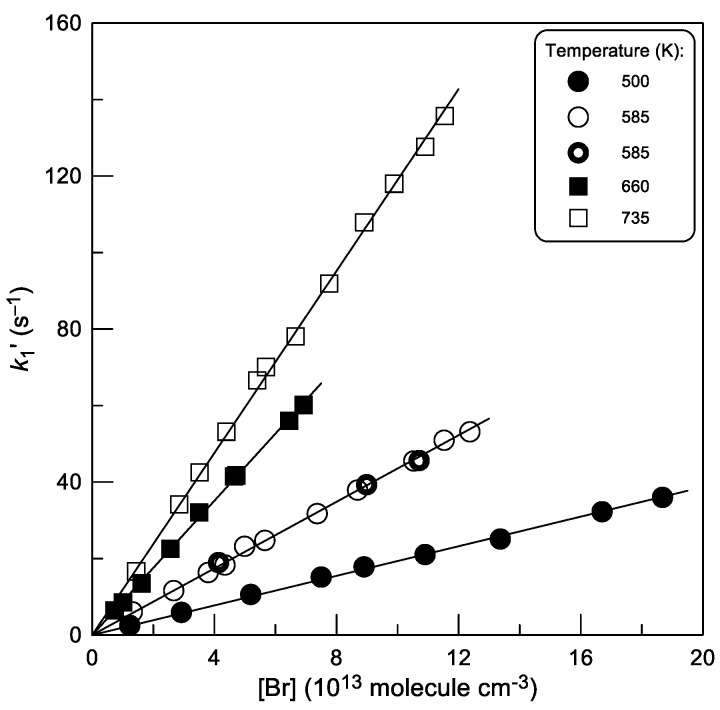 Figure 6
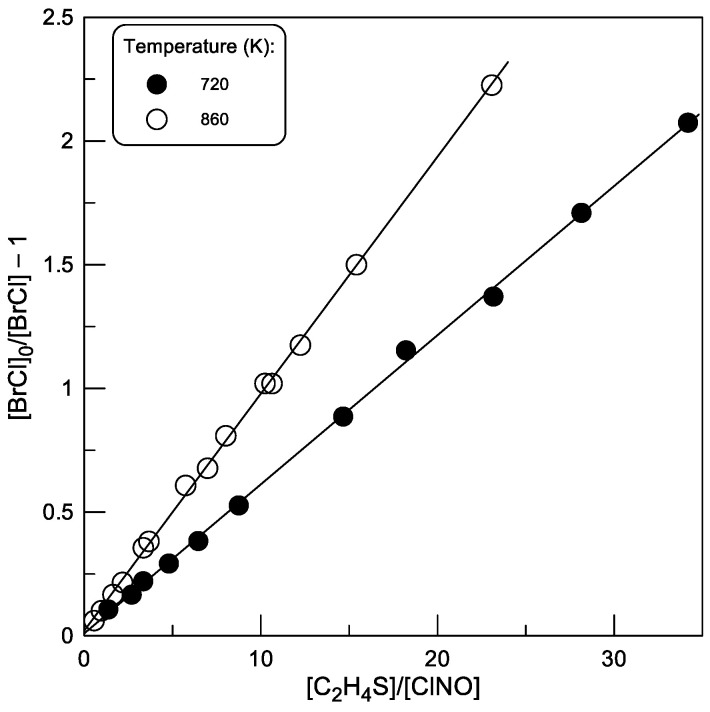 Figure 7
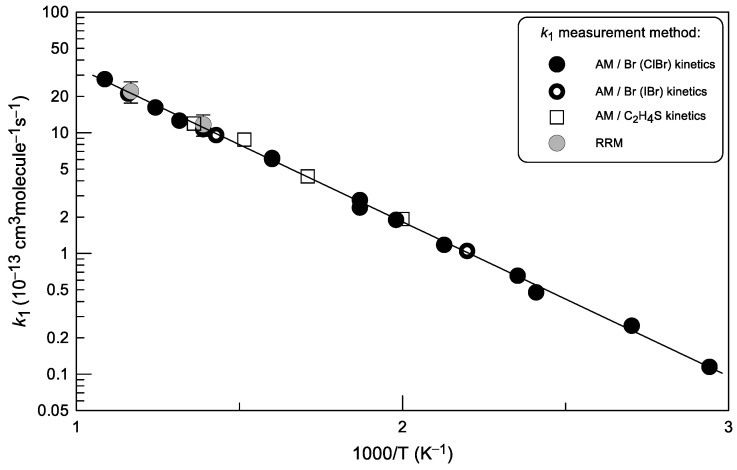 Figure 8
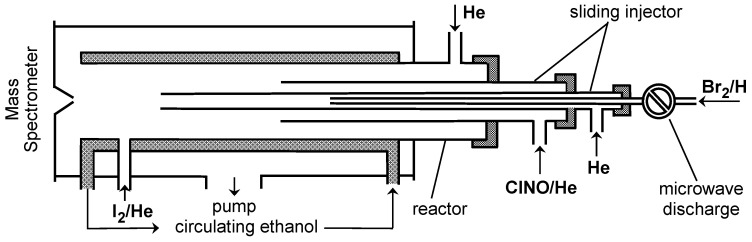 Figure 9
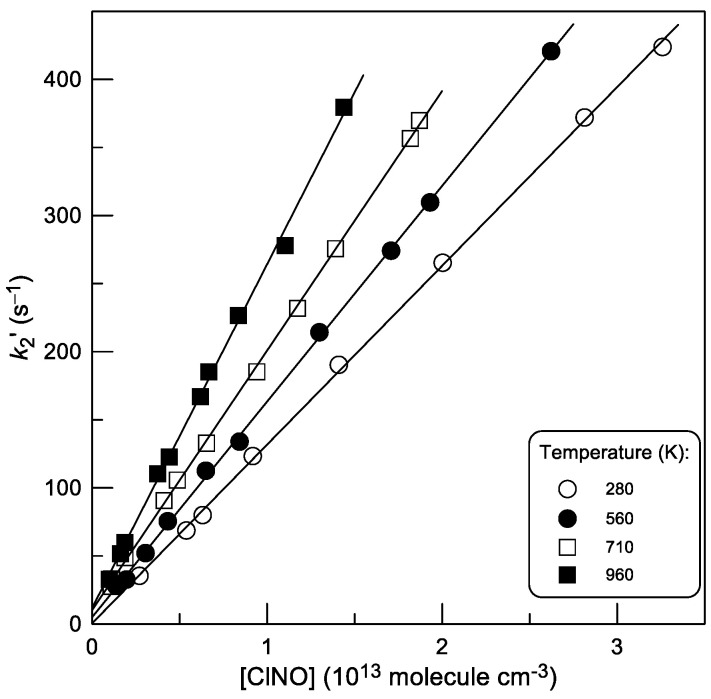 Figure 10
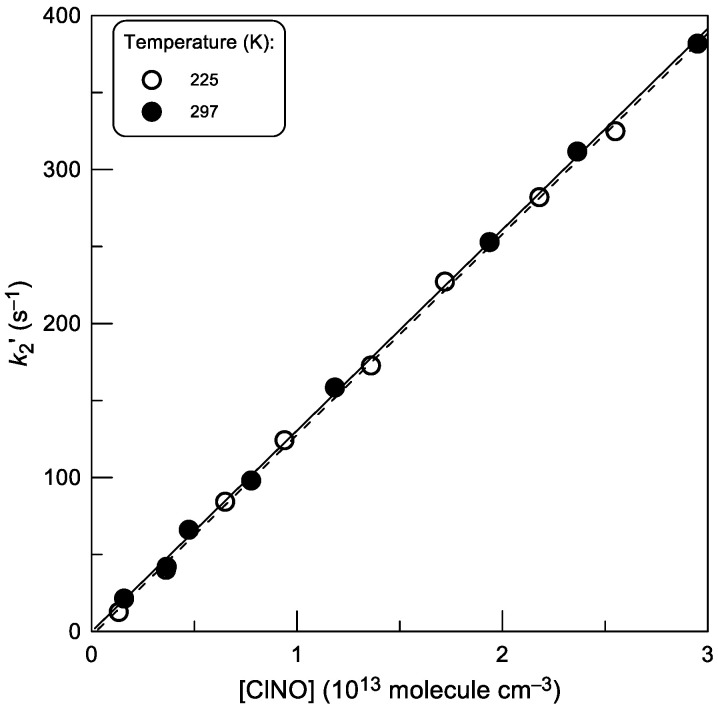 Figure 11
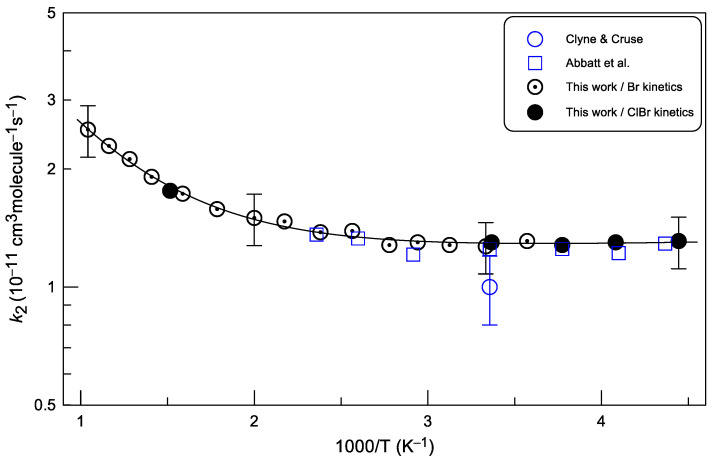 Figure 12
 Figure 13
 Figure 14
- —ANR
Peer Reviews
No public reviews on file for this paper yet. If you reviewed it on a platform where reviews are public (OpenReview, ICLR, NeurIPS, ICML), you can paste yours below so the community can read it here.
Videos
No videos yet. Explain this paper in a talk, walkthrough, or lecture? Add one.
Taxonomy
TopicsAtmospheric chemistry and aerosols · Atmospheric Ozone and Climate · Advanced Chemical Physics Studies
1. Introduction
The peculiarity of the thiirane reactions with different atoms is that they proceed by desulfurization of C_2_H_4_S, resulting in almost stoichiometric formation of ethylene and corresponding sulfur-containing radicals. In this regard, these reactions, in addition to their theoretical interest, are of practical importance associated with laboratory studies of gas-phase kinetics, where they can potentially be used to generate various sulfur-containing radicals. Previous work has reported kinetic studies of the reactions of C_2_H_4_S with hydrogen [1,2,3], oxygen [4,5], sulfur [6,7,8] and chlorine atoms [9,10]. In this paper, we report the results of the first experimental study of the reaction of thiirane with bromine atoms:
The enthalpies of formation used for the calculations of Δ_r_H° were the following: Δ_f_H(298K) = (111.87 ± 0.12), (82.3 ± 1.0), (52.45 ± 0.13) and 150.9 kJ mol^−1^ for Br [11], C_2_H_4_S [12], C_2_H_4_ [11] and SBr [13], respectively. In contrast to the previously studied reactions of thiirane with different atoms, reaction (1) is endothermic and is expected to proceed with a significant activation energy. The aim of this work was to measure the rate constant of reaction (1) as a function of temperature and to obtain information about the reaction mechanism by detecting the expected reaction product, the SBr radical.
In addition, as a part of this study, the rate constant of the reaction of bromine atoms with ClNO was measured. In fact, this reaction was used in the study of reaction (1) for the detection of Br atoms by mass spectrometry through their chemical conversion to the stable species BrCl and as a reference reaction in the relative measurements of k1:
So far, the reaction rate constant has only been measured in two studies, by Clyne and Cruse [14] at room temperature and by Abbatt et al. [15] in the temperature range (229–424) K. In the present work, we report the measurements of the rate constant in an extended temperature range, T = 225–960 K.
2. Results and Discussion
2.1. Rate Constant of Reaction (1)
2.1.1. Absolute Measurements of k1: Kinetics of Br Atom Consumption
Br atoms were generated from the microwave discharge in trace amounts of molecular bromine in He (Figure 1). The dissociation of Br_2_ was verified by mass spectrometry to be between 50 and 95% (increasing with decreasing Br_2_ concentration).
Two chemical conversion methods were used to detect Br atoms. In the first, Br atoms were converted to BrCl by reaction (2) with excess ClNO ([ClNO] = (1–2) × 10^14^ molecule cm^−3^) prior to introduction into the mass spectrometer (Figure 1) and detected at m/z = 114/116 (BrCl^+^):
k2 = 1.2 × 10^−11^ exp(−19/T) + 8.0 × 10^−11^ exp(−1734/T) cm^3^ molecule^−1^ s^−1^ (T = 225–960 K, this work). The second method used the reaction of Br atoms with excess I_2_ ([I_2_] = (2–3) × 10^13^ molecule cm^−3^), converting the Br atoms to IBr, followed by mass spectrometric detection of the IBr^+^ ion at m/z = 206/208:
k3 = (1.20 ± 0.15) × 10^−10^ cm^3^ molecule^−1^ s^−1^ (T = 298 K) [16]. To our knowledge, only the room temperature value of k3 is available in the literature. However, the rate constant of reaction 3 is not expected to be strongly temperature dependent, given the very high value of k3 at T = 298 K.
The rate constant of reaction (1) was determined under pseudo-first-order conditions from the kinetics of Br-atom ([Br]0 = (1.0–2.5) × 10^11^ molecule cm^−3^) consumption monitored under an excess concentration of C_2_H_4_S (Table 1).
Consumption of the excess reactant, C_2_H_4_S, was negligible due to its high excess over Br atoms. Figure 2 shows examples of exponential decays of Br atoms in the presence of different concentrations of thiirane in the reactor: [Br] = [Br]0 × exp(−k1′ × t), where k1′ = k1 × [C_2_H_4_S] + kw is a pseudo-first order rate constant and kw is the rate of heterogeneous loss of Br atoms.
Examples of second-order plots observed at different temperatures are shown in Figure 3. All data in Figure 3 were measured with Br detected as BrCl after its chemical conversion in reaction (2).
Similar quality data were obtained when Br was detected by conversion to IBr in reaction (3) (Figure 4). All pseudo-first order rate constants, k1′, were corrected for axial and radial diffusion of Br atoms [17]: k1′(corrected) = k1′ × (1 + Deffk1′/v^2^), where Deff = D + r^2^v^2^/48D (D is the diffusion coefficient of Br in He calculated as D0 = 480 × (T/298)^1.85^ Torr cm^−2^ s^−1^ [18], v is a linear flow velocity and r is the reactor radius). The corrections were typically a few percent.
The rate constants of the reaction (1), obtained from a linear least-squares fit of the k1′ data as a function of [C_2_H_4_S], are given in Table 1. Good agreement can be observed between the results obtained with two methods of Br-atom detection, using chemical conversion of Br to BrCl and IBr in reactions (2) and (3), respectively.
SBr was directly detected by mass spectrometry as the product of reaction (1) at m/z = 111/113 (SBr^+^). The addition of I_2_ at the end of the reactor (Figure 1) resulted in the appearance of mass spectrometric signals at m/z = 238/240 (ISBr^+^) and m/z = 159 (IS^+^) (ISBr fragment), indicating the occurrence of the reaction SBr + I_2_ → ISBr + I, leading to the formation of ISBr. Although the absolute concentrations of SBr were not measured, judging from the relative mass spectrometric signals, the SBr formation channel is the main and, probably, the only reaction channel under the experimental conditions of the study. Attempts to detect HBr as another potential reaction product showed that its yield was less than 3% at T = 920 K, the highest temperature of the study.
The thermal decomposition of thiirane under the experimental conditions of the study was rather slow, at least without any noticeable effect on the C_2_H_4_S concentration along the reaction zone. An indirect indicator of the C_2_H_4_S decomposition was the formation of S_2_ (detected at m/z = 64 (S_2_^+^), ~0.3% of the C_2_H_4_S signal intensity in experiments at T = 920 K), most likely, in the reaction sequence:
Secondary reactions leading to additional consumption or reproduction of Br atoms in the chemical system used with potential impact on k1 measurements can be discussed. First, the influence of the secondary reaction of Br atoms with C_2_H_4_ formed in reaction (1) can be neglected due to the low initial concentrations of Br atoms used in the kinetic measurements (and hence the low concentration of the reaction product C_2_H_4_). For the same reason, the potential consumption of Br in the reaction with SBr and Br reproduction in the reverse reaction of SBr with C_2_H_4_ should not have a significant effect on the k1 measurements. Other potential candidates for reproducing Br atoms include the reactions of SBr:
To the best of our knowledge, there is a paucity of data in the literature on the rate constants of these reactions. However, their significant influence on the present measurements can be ruled out based on general considerations. Thus, a significant effect of reaction (6) on Br kinetics under experimental conditions is unlikely given very low Br_2_ concentrations (≤3 × 10^10^ molecule cm^−3^) in the reactor. Reaction (7) is endothermic by 50.5 kJ mol^−1^ [11,13]. There are no thermochemical arguments (the enthalpy of SSBr formation is unknown) to exclude the occurrence of reaction (8) in our experiments. However, even if reaction (8) occurs, its impact should be limited given the low initial concentrations of Br atoms (and hence SBr) used in the kinetic measurements.
2.1.2. Absolute Measurements of k1: Kinetics of C2H4S Consumption
Although potential secondary chemistry appears to have a limited impact on the measurements of k1, to be more confident of its minor role we performed experiments in which k1 was determined from C_2_H_4_S decays ([C_2_H_4_S]0 = (2–5) × 10^11^ molecule cm^−3^) monitored in excess of Br atoms (Table 1). Examples of the concentration vs. time profiles of thiirane observed at T = 735 K with different concentrations of Br atoms are shown in Figure 5: [C_2_H_4_S] = [C_2_H_4_S]0 × exp(−k1′ × t), where k1′ = k1 × [Br] is the pseudo-first order rate constant and [Br] corresponds to the average Br-atom concentration along the reaction zone. In fact, the Br-atom consumption was insignificant and was mainly due to the heterogeneous loss of the atoms (kw < 10 s^−1^). The Br atoms consumed in the reaction with C_2_H_4_S were, at least, partially reproduced in reaction (6) between SBr, the product of reaction (1), and Br_2_ still present in the reactor as a precursor of the Br atoms (incomplete dissociation in the microwave discharge).
The second-order plots observed in this series of experiments at different temperatures are shown in Figure 6. The corresponding values of k1 derived from linear least squares fit of these data at each temperature are given in Table 1.
2.1.3. Relative Measurements of k1
In addition to the absolute measurements, at two temperatures, the rate constant of reaction (1) was measured relative to that of the reaction of Br atoms with ClNO (reaction (2)). The experiments consisted of measuring the yield of BrCl as a function of the [C_2_H_4_S]/[ClNO] ratio after complete consumption of [Br]0 (≈3 × 10^11^ molecule cm^−3^) in the reaction with a mixture of C_2_H_4_S and ClNO ([C_2_H_4_S] = (0.16–3.37) × 10^14^ and (0.15–5.41) × 10^14^ molecule cm^−3^, ([ClNO] ≈ 1 × 10^13^ and 2.3 × 10^13^ molecule cm^−3^ at T = 720 and 860 K, respectively):
Transforming this expression, we obtain:
At a constant concentration of ClNO, the second term in Equation (10) is constant, and the k1/k2 ratio can be determined as the slope of the linear dependence of ([Br]0/[BrCl] − 1) on the [C_2_H_4_S]/[ClNO] ratio. The initial concentration of Br atoms, [Br]0, could be expressed in terms of the BrCl signal by titration of Br in reaction with ClNO in the absence of C_2_H_4_S in the reactor ([Br]0 = [BrCl]0), thus avoiding the measurement of absolute Br and BrCl concentrations. The observed experimental data are shown in Figure 7. The final values of k1, calculated using the ratios of k1 to k2 determined from the slopes of the straight lines in Figure 7 and k2 measured in the present work (see below), are given in Table 1.
2.1.4. Temperature Dependence of k1
The results of all measurements of the rate constant of the reaction (1) are displayed in Figure 8.
A very good agreement can be observed between the values of k1 measured with the relative and two absolute measurement methods. The combined uncertainty on the absolute measurements of k1 was estimated to be ≤15% by adding in quadrature statistical error (≤3%) and those on the measurements of the absolute concentration of C_2_H_4_S (Br) (~10%), flows (3%), pressure (2%) and temperature (1%).
The observed temperature dependence of k1 can be described by the following Arrhenius expression:
in the temperature range from 340 to 920 K and with 2σ uncertainties representing the precision of the fit. It can be noted that the experimentally determined activation energy (≈24.5 kJ mol^−1^) significantly exceeds the endothermicity of the reaction (≈9.2 kJ mol^−1^), which obviously indicates that reaction (1) proceeds through a transition state located well above the energy of the reaction products. Consequently, the reverse addition–elimination reaction of SBr radicals with C_2_H_4_ is expected to proceed with a significant activation energy.
2.2. Rate Constant of Reaction (2)
2.2.1. Kinetics of Br Atom Consumption
In this series of experiments, the rate constant of reaction (2) was determined under pseudo-first order conditions by monitoring the kinetics of Br-atom consumption in excess of ClNO. Br atoms were converted to IBr prior to sampling in the mass spectrometer and were detected at m/z = 206/208 (Figure 9). As expected, exponential [Br] decays were observed, [Br] = [Br]0 × exp(−k2′ × t), where [Br] and [Br]0 ([Br]0 = (1.0–2.5) × 10^11^ molecule cm^−3^) are the time-dependent and initial concentrations of Br atoms, respectively, and k2′ = k2 × [ClNO] + kw. The pseudo-first-order rate constants were determined from an exponential fit to the Br atom consumption kinetics. Diffusion corrections applied to k2′ were <10%. The consumption of excess reactant, ClNO, in reaction (2), although insignificant (<10%), was taken into account. At the highest temperature of the study, T = 960 K, a slow thermal decomposition of ClNO (within a few %) was observed, as evidenced by the formation of Cl_2_ as a result of two consecutive reactions:
This process did not affect the Br-atom kinetics; appropriate corrections were made to the ClNO concentration.
Examples of the dependence of the pseudo-first order rate constant, k2′, on the concentration of ClNO at different temperatures are shown in Figure 10. The values of k2 at different temperatures, obtained by linear least squares fitting of kinetic data similar to those shown in Figure 10, are given in Table 2.
2.2.2. Kinetics of BrCl Production
At low temperatures, the detection of Br atoms by their conversion to IBr was difficult due to I_2_ condensation. For this reason, the reaction rate constant was determined from the kinetics of the formation of the reaction product, BrCl, monitored in an I_2_-free system under experimental conditions similar to those used above in the study of Br kinetics. The kinetics of the reaction product can be approximated by the following expression: [BrCl] = [Br]0 − [Br]0 × exp(−k2′t) where k2′ ≈ k2 × [ClNO], provided that kw << k2 × [ClNO]. The latter condition is satisfied at least at high ClNO concentrations, given that kw < 10 s^−1^. A rearrangement of this expression gives [BrCl]∞ − [BrCl] = [BrCl]∞ × exp(−k2′t), where [BrCl]∞ = [Br]0 was determined by titration of bromine atoms with high concentrations of ClNO. In experiments, the kinetics of [BrCl] growth was monitored and [BrCl]∞ − [BrCl] was plotted as a function of time, yielding the values of k2′. Examples of the dependence of the pseudo-first order rate constant, k2′ ≈ k2 × [ClNO], on ClNO concentration are shown in Figure 11. The slopes of the straight lines in Figure 11 provide the values of k2 at corresponding temperatures. All k2 data determined within this experimental approach are shown in Table 2.
2.2.3. Temperature Dependence of k2
The results of the previous and current measurements of k2 are shown in Figure 12.
Abbatt et al. [15] measured the rate constant of reaction (2) as a function of temperature (T = 225–425 K) in a discharge flow reactor using resonance fluorescence technique to detect Br atoms. The results obtained by these authors for k2 are in excellent agreement with the present measurements (Figure 12). The room temperature value of k2 = (1.0 ± 0.2) × 10^−11^ cm^3^ molecule^−1^s^−1^ reported by Clyne and Cruse [14] is somewhat lower, but agrees with the present data within the reported uncertainties.
The present measurements, carried out over an extended temperature range, revealed a curved temperature dependence of the rate constant: k2, which is practically independent of temperature below 400 K, increases significantly at temperatures above 500 K. The solid line in Figure 12 represents a fit of the present experimental k2-values to the sum of two exponential functions:
This expression reproduces all experimental data to within 3% and is recommended from the present work for the rate constant of reaction (2) in the temperature range T = (225–960) K with conservative independent of temperature uncertainty of 15%. The experimental data can also be described with temperature independent k2 = (1.3 ± 0.2) × 10^−11^ cm^3^ molecule^−1^ s^−1^ at T = (225–340) K and modified Arrhenius expression of k2 = 6.33 × 10^−16^ × (T)^1.47^exp(455/T) cm^3^ molecule^−1^ s^−1^ (uncertainty of 15%) at T = 340–960 K.
In the previous work [19], a non-Arrhenius curved temperature dependence was observed for the rate constant of the ClNO reaction with OH radicals. The reaction was shown to proceed via two competing pathways with comparable branching ratios: Cl-atom abstraction,
and the exchange reaction (14), which probably proceeds by an addition–elimination mechanism,
Interestingly, a non-Arrhenius behavior (increasing upward curvature of the reaction rate constant with temperature) was observed for both reaction channels.
For the reaction of Br atoms with ClNO, the second possible channel is too endothermic [11] to compete with the BrCl forming pathway under the experimental conditions of the study:
At this stage, it is difficult to clearly explain the observed curvature of the temperature dependence of k2. One possible reason is the complex nature of reaction (2), including direct Cl-atom abstraction by the Br-atom and the Br addition–BrCl elimination mechanism.
3. Materials and Methods
All measurements were performed at a total helium pressure of approximately 2 Torr using a discharge flow reactor and a modulated molecular beam mass spectrometer with electron impact ionization operating at 30 eV energy.^1,4^ The reaction time was determined by the position of the tip of the movable injector relative to the sampling cone of the mass spectrometer (Figure 1 and Figure 9) and by the linear flow velocity in the reactor ((750–2520) and (1780–2650) cm s^−1^ for the study of reactions (1) and (2), respectively). The chemical composition of the reactive system in the reactor was monitored by sampling the gas-phase molecules from the flow reactor and detecting them with the mass spectrometer. Two flow reactors were used to provide an extended temperature range for kinetic measurements. The high-temperature reactor consisted of an electrically heated quartz tube (45 cm long and 2.5 cm i.d.) with water-cooled attachments (Figure 1) [20]. Water cooling was necessary to prevent overheating of the mass spectrometer sampling cone (Pyrex) and the main reactor vacuum connections. The temperature in the reactor was measured with a K-type thermocouple positioned in the middle of the reactor in contact with its outer surface [20]. The second flow reactor used at low temperatures consisted of a Pyrex tube (45 cm long and 2.4 cm i.d., coated with halocarbon wax) with a jacket for the circulation of a thermostated liquid (ethanol) (Figure 9).
Gas mixtures were prepared in 10 L glass cylinders by adding helium to a known amount (pressure) of compounds up to a total pressure of 1 atmosphere. Absolute concentrations of Br atoms, generated in a microwave discharge of Br_2_/He mixtures, were determined by measuring the dissociated fraction of Br_2_ (Δ[Br_2_]) and/or the concentration of ClNO consumed (Δ[ClNO]) upon titration of Br atoms in the reaction (2): [Br] = [BrCl] = 2Δ[Br_2_] = Δ[ClNO]. The results of the two calibration methods (by Br_2_ and ClNO) were in agreement within 5%. The absolute concentrations of C_2_H_4_S, ClNO and Br_2_ in the reactor were calculated from their flow rates obtained from pressure drop measurements in their mixtures in He (≈5%, 20% and 10%, respectively) stored in calibrated volumes.
The purities of the gases used were as follows: He > 99.999% (Alphagaz, Air Liquide France Industrie, Paris, France); Br_2_ > 99.99% (Aldrich, St. Louis, MO, USA); F_2_, 5% in helium (Alphagaz); C_2_H_4_S (Merck, Merck SA, Lyon, France), 98%. ClNO was synthesized in the laboratory using a mixture of Cl_2_ and NO [21]. The content of Cl_2_ and NO impurities in ClNO was estimated to be less than 1 and 2%, respectively.
The reference list from the paper itself. Each links out to its DOI / PubMed record.
- 1Bedjanian Y. Temperature-Dependent Kinetic Study of the Reactions of Hydrogen Atoms with H 2S and C 2H 4S Molecules 202328788310.3390/molecules 2823788338067612 PMC 10707867 · doi ↗ · pubmed ↗
- 2Lee J.H. Stief L.J. Timmons R.B. Absolute rate parameters for the reaction of atomic hydrogen with carbonyl sulfide and ethylene episulfide J. Chem. Phys.1977671705170910.1063/1.435005 · doi ↗
- 3Yokota T. Ahmed M.G. Safarik I. Strausz O.P. Gunning H.E. Reaction of hydrogen atoms with thiirane J. Phys. Chem.1975791758176210.1021/j 100584 a 003 · doi ↗
- 4Bedjanian Y. Rate constant and products of the reaction of O(3P) atoms with thiirane over the temperature range 220–950 K Int. J. Chem. Kinet.20225455255810.1002/kin.21594 · doi ↗
- 5Lee J.H. Timmons R.B. Stief L.J. Absolute rate parameters for the reaction of ground state atomic oxygen with dimethyl sulfide and episulfide J. Chem. Phys.19766430030510.1063/1.431921 · doi ↗
- 6Van Roodselaar A. Safarik I. Strausz O.P. The reactions of S(3PJ) atoms with thiiranes Int. J. Chem. Kinet.19841689990710.1002/kin.550160710 · doi ↗
- 7Klemm R.B. Davis D.D. A flash photolysis resonance fluorescence kinetics study of ground-state sulfur atoms. III. Rate parameters for reaction of S(3P) with ethylene episulfide Int. J. Chem. Kinet.1973514915310.1002/kin.550050113 · doi ↗
- 8Donovan R.J. Husain D. Fair R.W. Strausz O.P. Gunning H.E. Determination of the absolute rate for the addition of S(33P) to ethylene Trans. Faraday Soc.1970661635164110.1039/tf 9706601635 · doi ↗