A Palynological Atlas of the Amazon canga Vegetation
Luiza de Araújo Romeiro, Edilson Freitas da Silva, Luiza Santos Reis, Léa Maria Medeiros Carreira, Tarcísio Magevski Rodrigues, Delmo Fonseca da Silva, Tereza Cristina Giannini, Markus Gastauer, Pedro Walfir Martins e Souza-Filho, Lourival Tyski, José Tasso Felix Guimarães

TL;DR
This paper presents a detailed palynological atlas of the Amazon canga vegetation, highlighting its unique plant species and ecological importance.
Contribution
The study provides a new, taxonomically validated palynological database for the Amazon canga vegetation.
Findings
The atlas includes 204 plant species, mainly herbs, lianas, and trees.
Most flowering plants are pollinated by bees, with some by other insects and wind.
Seventeen species are potential domesticates used by Indigenous peoples.
Abstract
cangas are iron-rich outcrops where rupestrian fields develop in the Carajás Mountain Range (CMR). canga formations are ancient ecosystems characterized by high levels of endemic and threatened plant species that thrive on iron-rich substrates in the southeastern Amazon uplands. The recent taxonomic validation of these species enables more accurate distribution modeling across past, present, and future time scales. This work presents a comprehensive palynological database for the Amazon canga vegetation, resulting from extensive field and herbarium surveys, as well as the compilation and taxonomic validation of species in the Carajás Mountain Range (CMR). This atlas includes 204 plant species: 10 ferns and lycophytes, 62 monocots, and 132 eudicots and magnoliids (mainly herbs, lianas, and trees). Most flowering plants are pollinated by bees, with secondary pollination by other insects…
Genes, proteins, chemicals, diseases, species, mutations and cell lines named across the full text — each resolved to its canonical identifier and authoritative record.
Click any figure to enlarge with its caption.
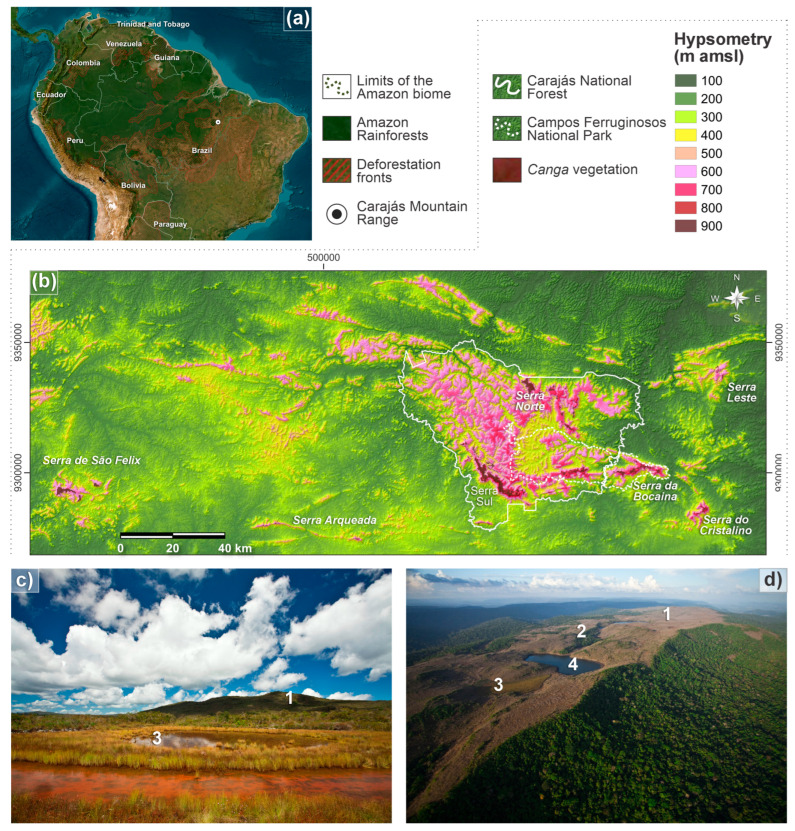 Figure 1
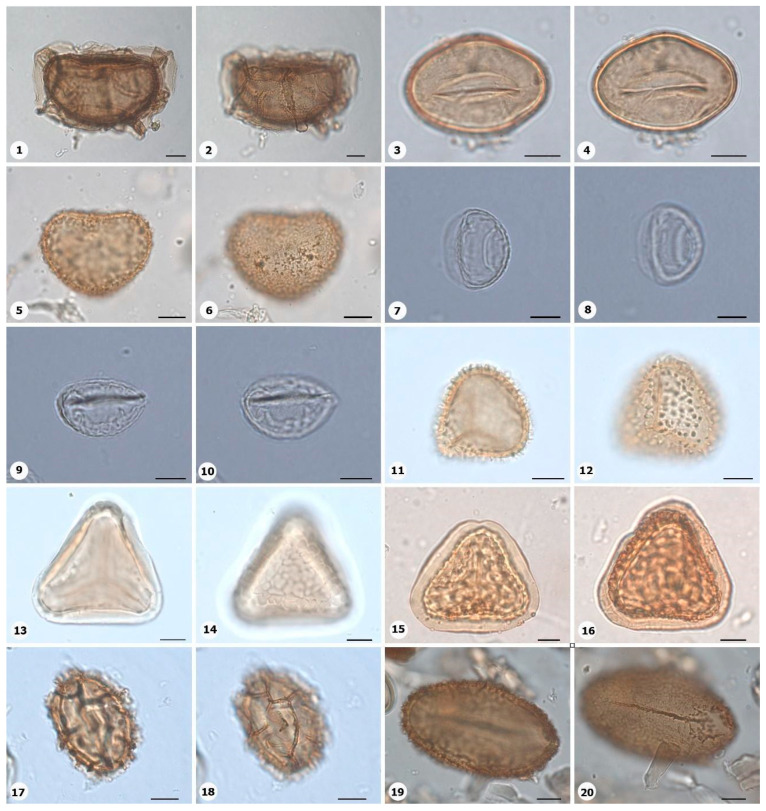 Figure 2
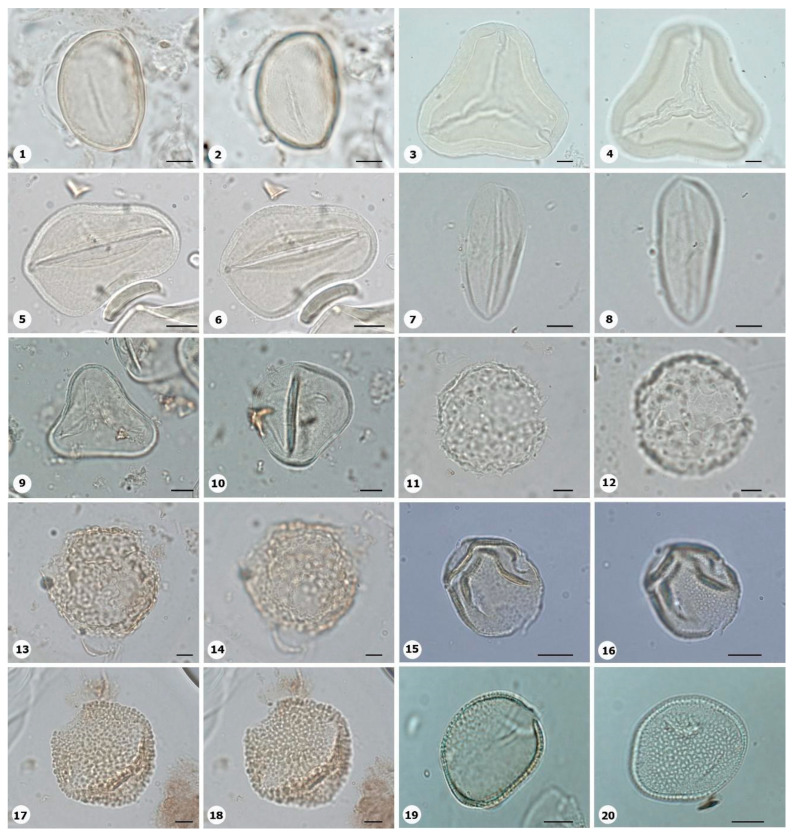 Figure 3
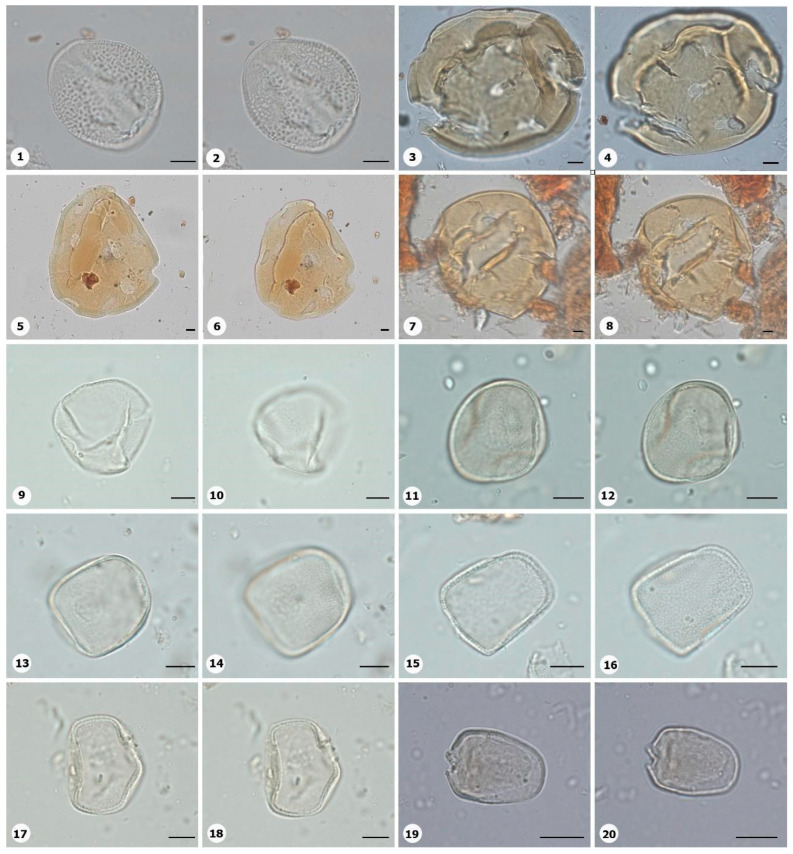 Figure 4
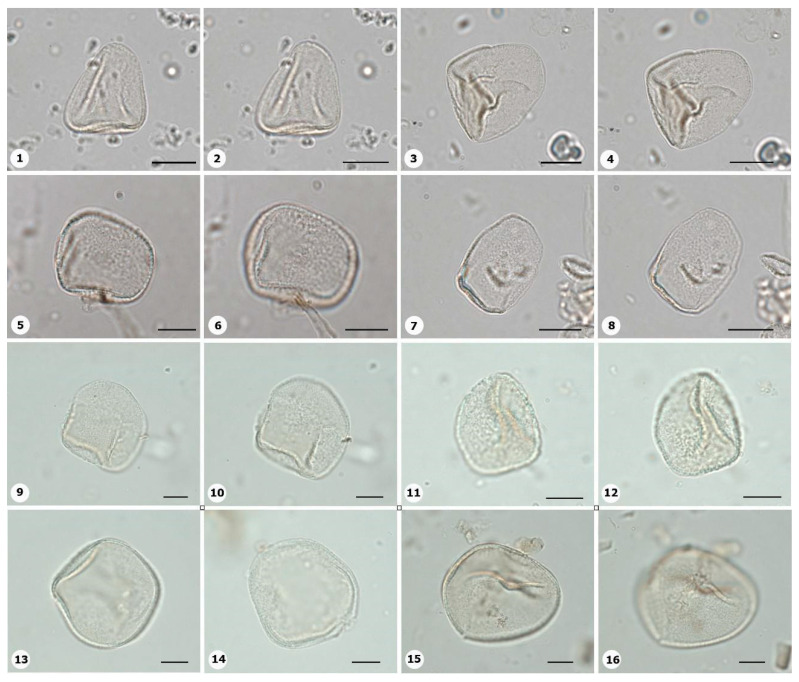 Figure 5
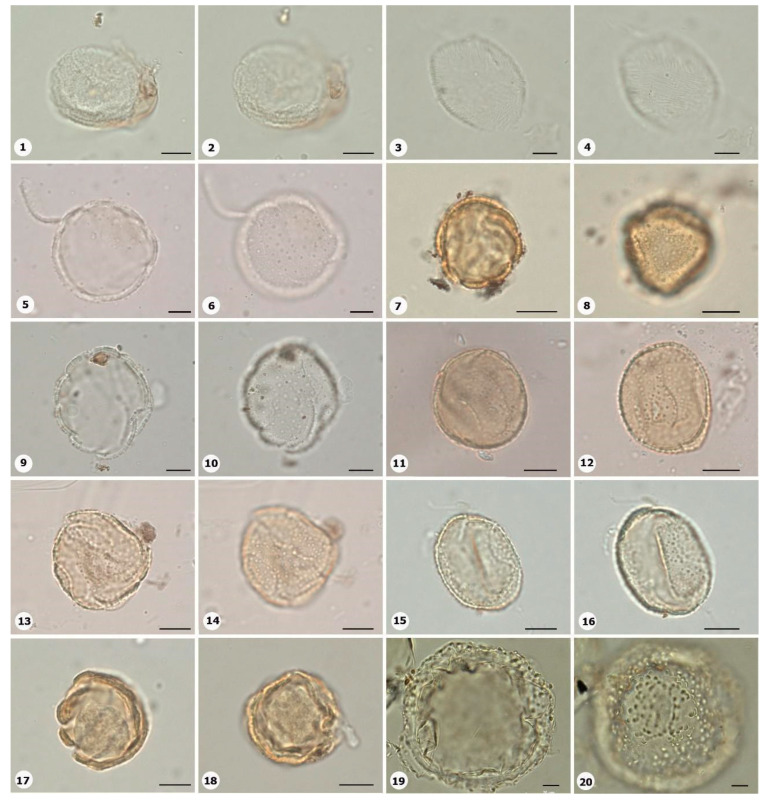 Figure 6
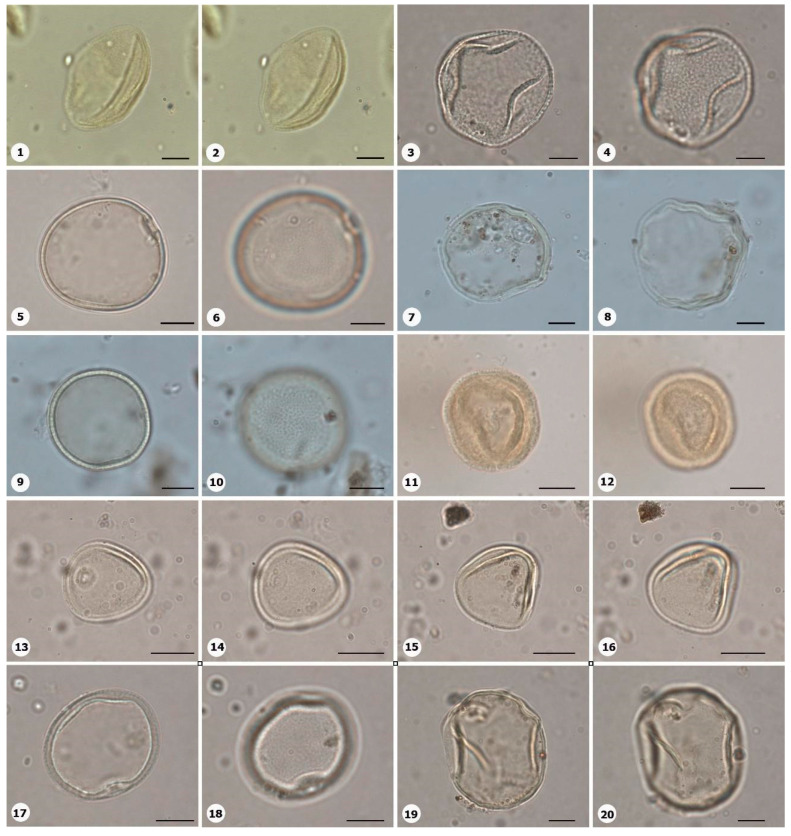 Figure 7
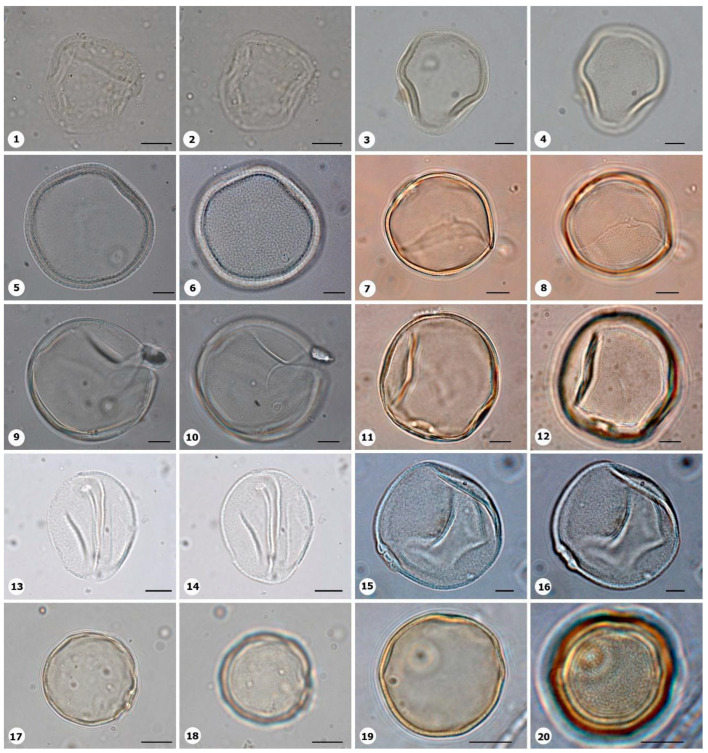 Figure 8
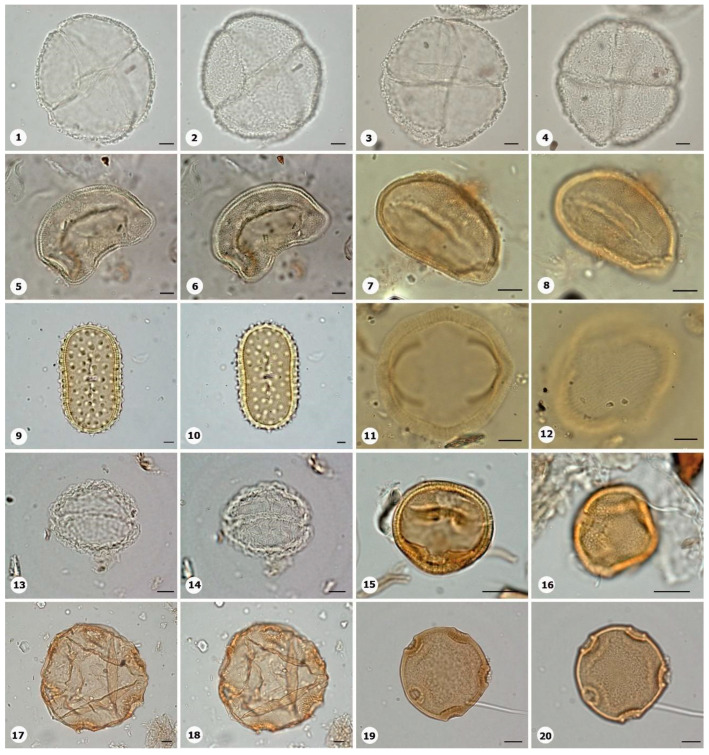 Figure 9
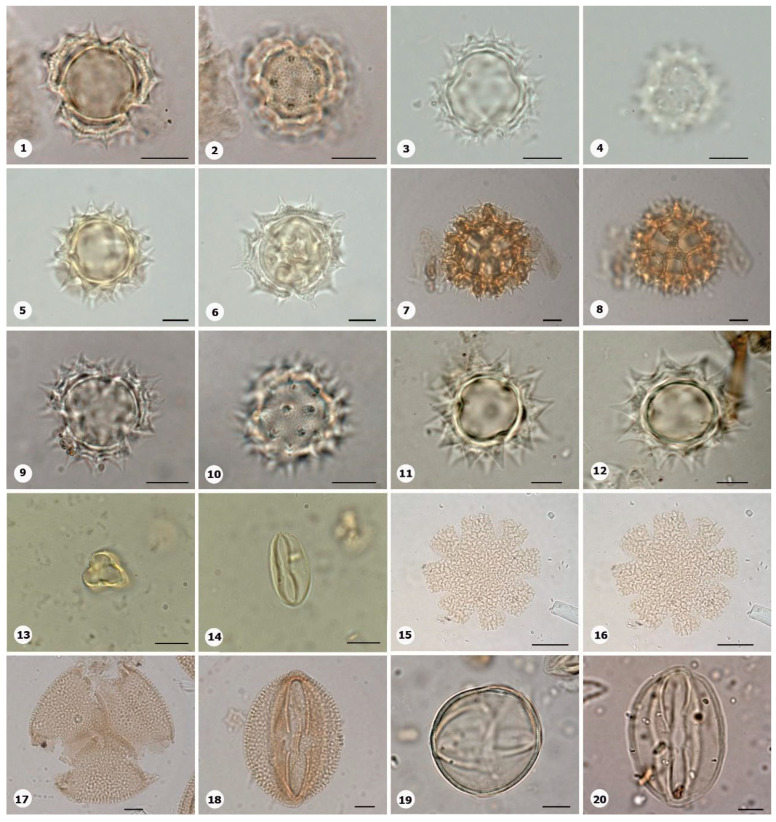 Figure 10
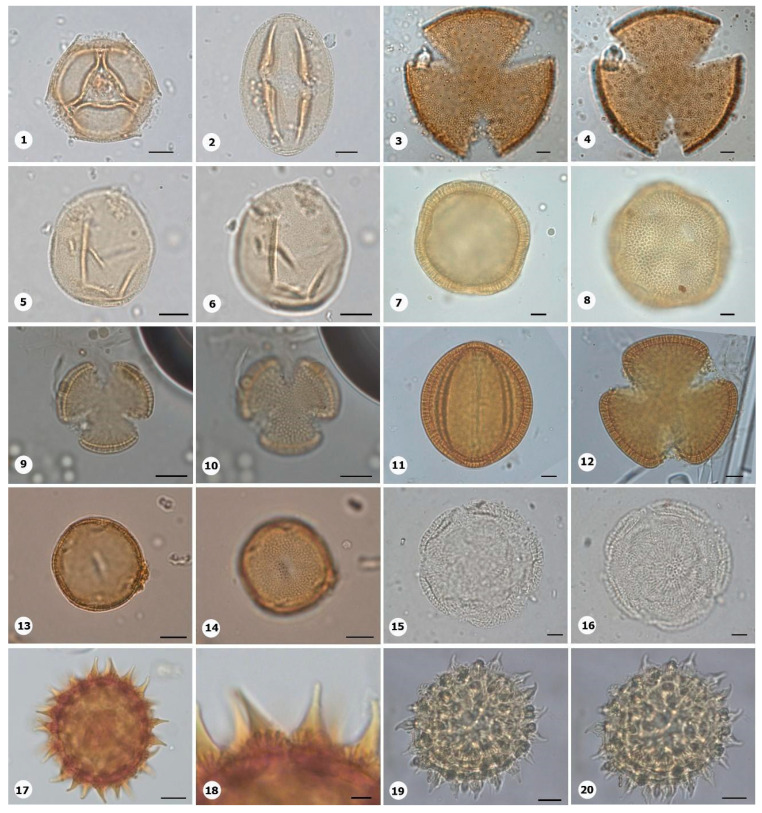 Figure 11
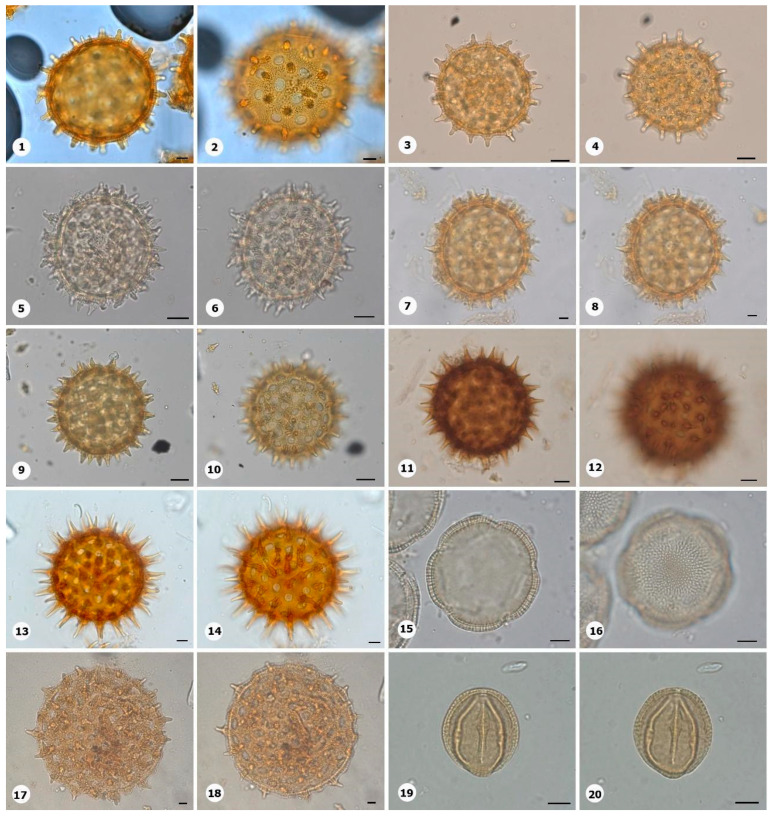 Figure 12
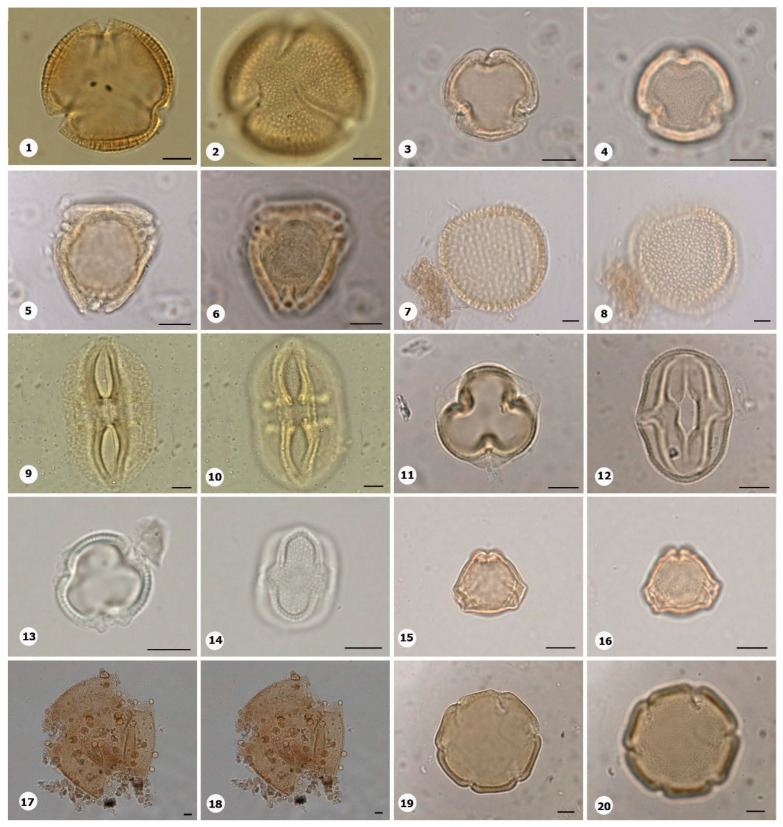 Figure 13
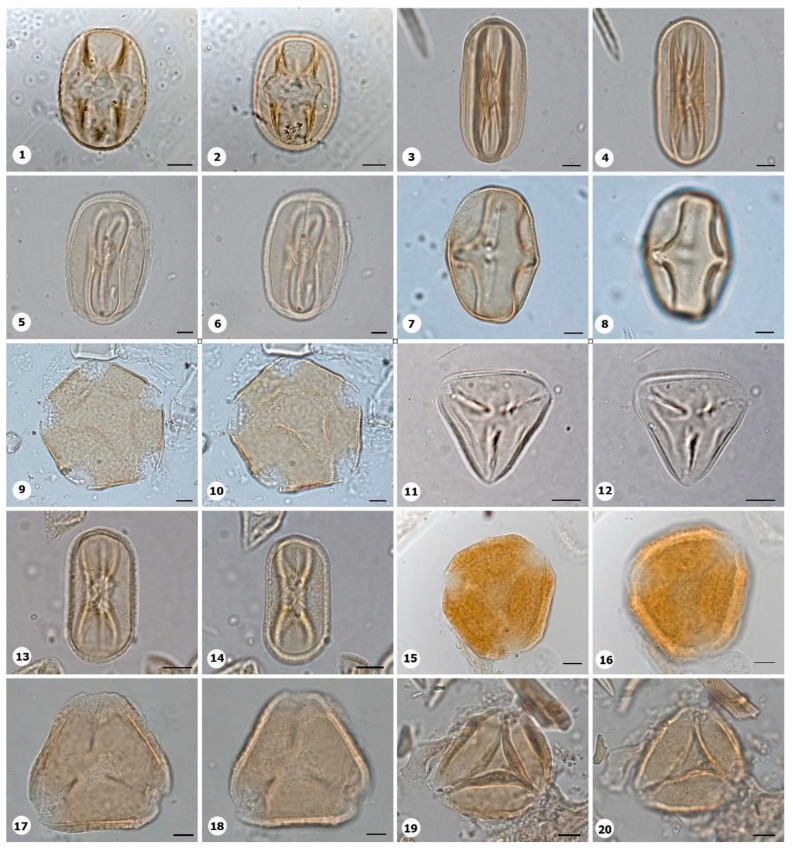 Figure 14
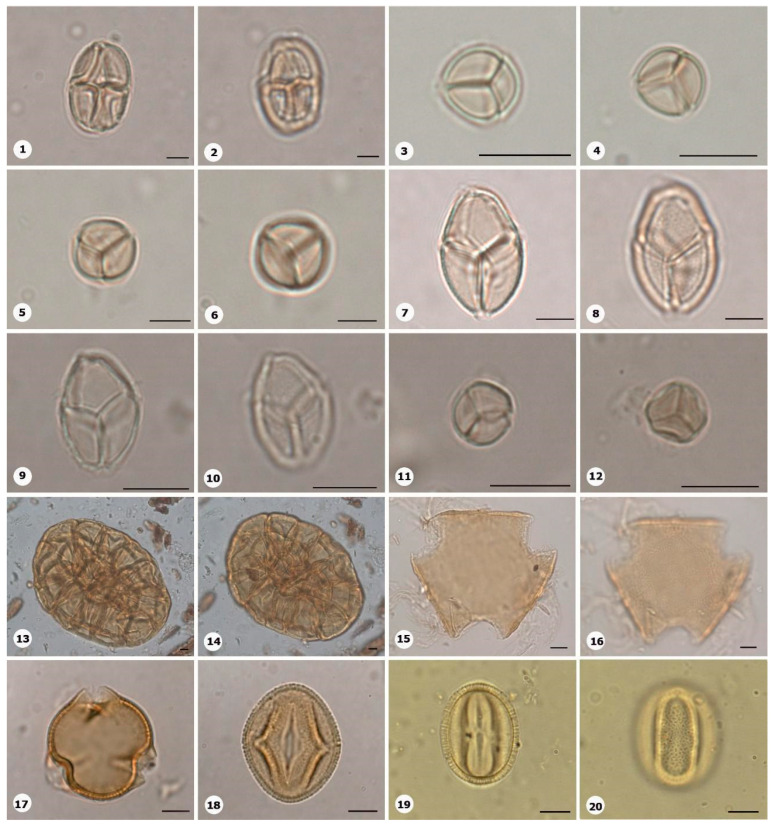 Figure 15
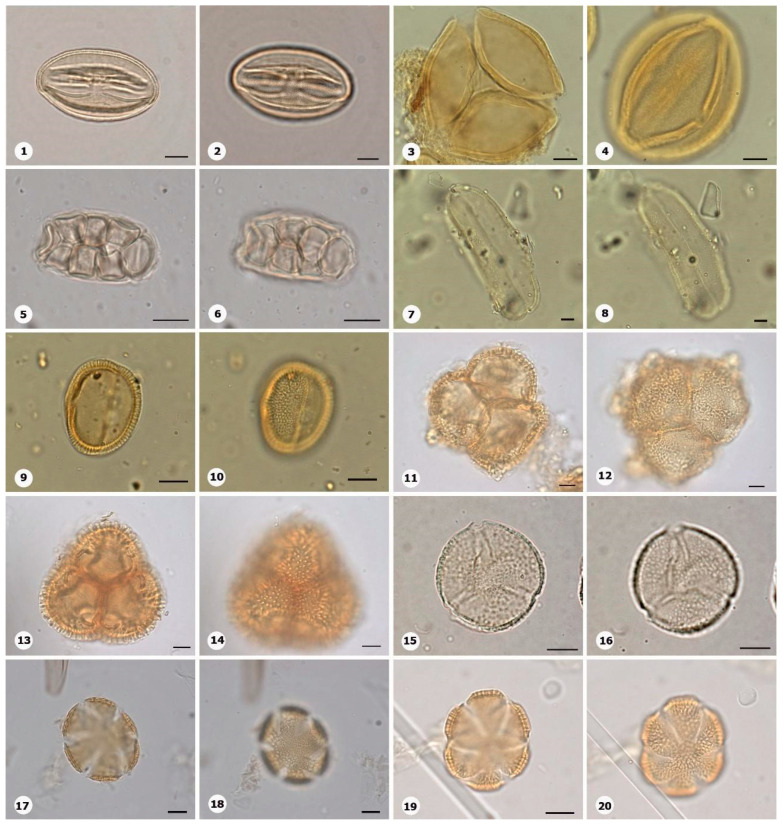 Figure 16
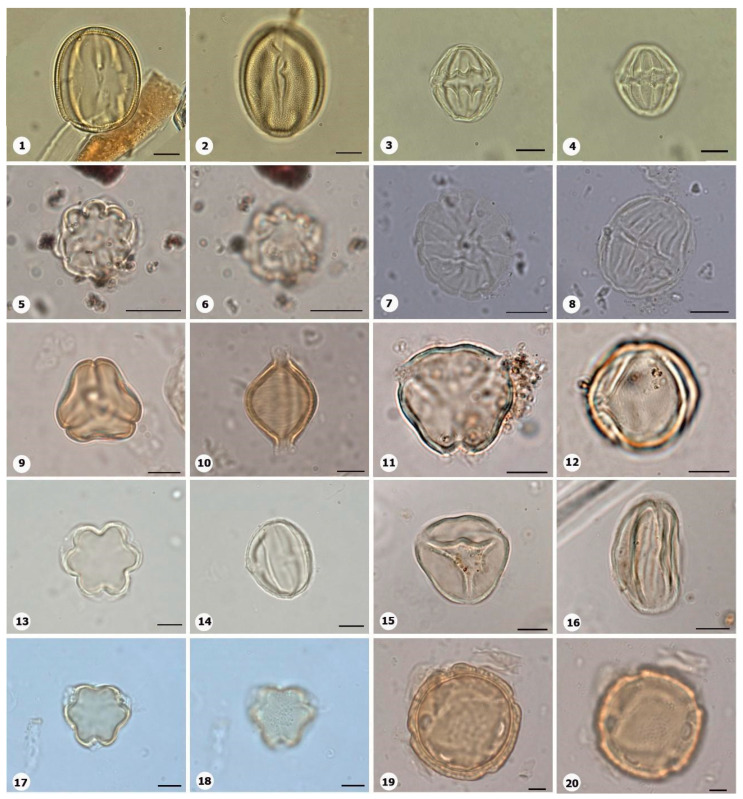 Figure 17
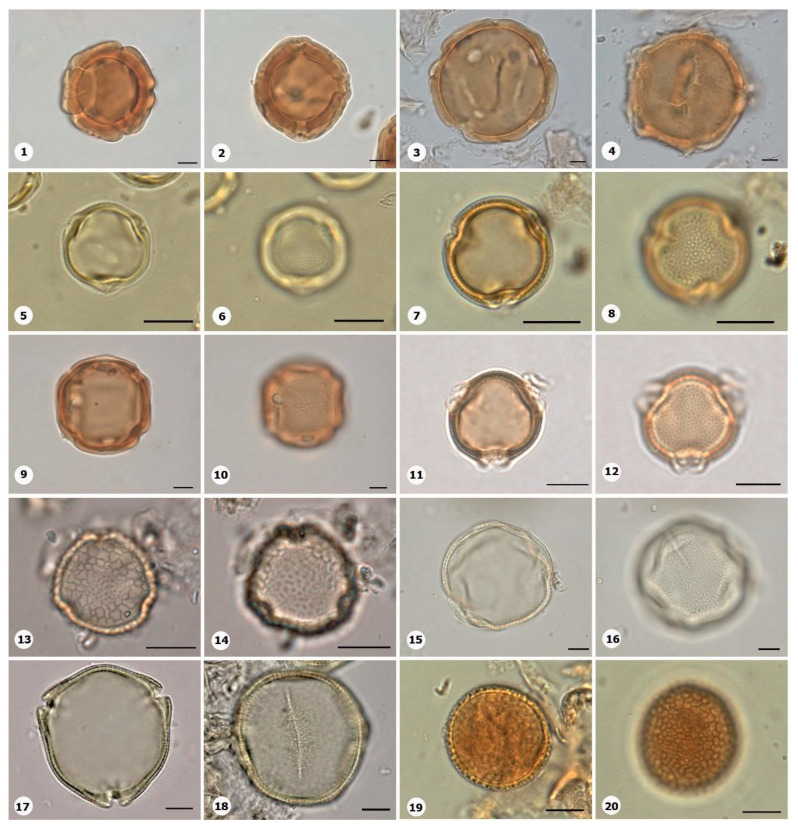 Figure 18
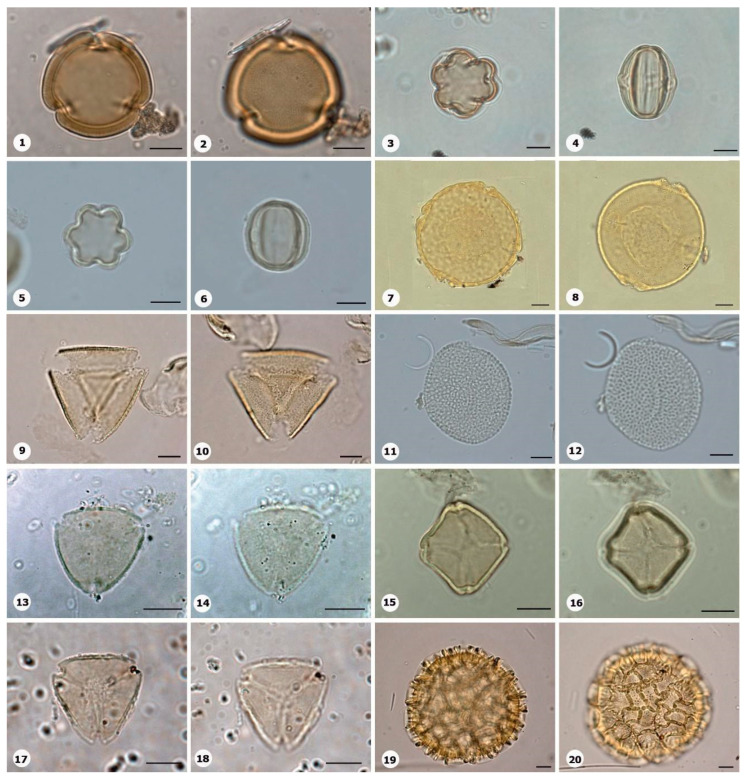 Figure 19
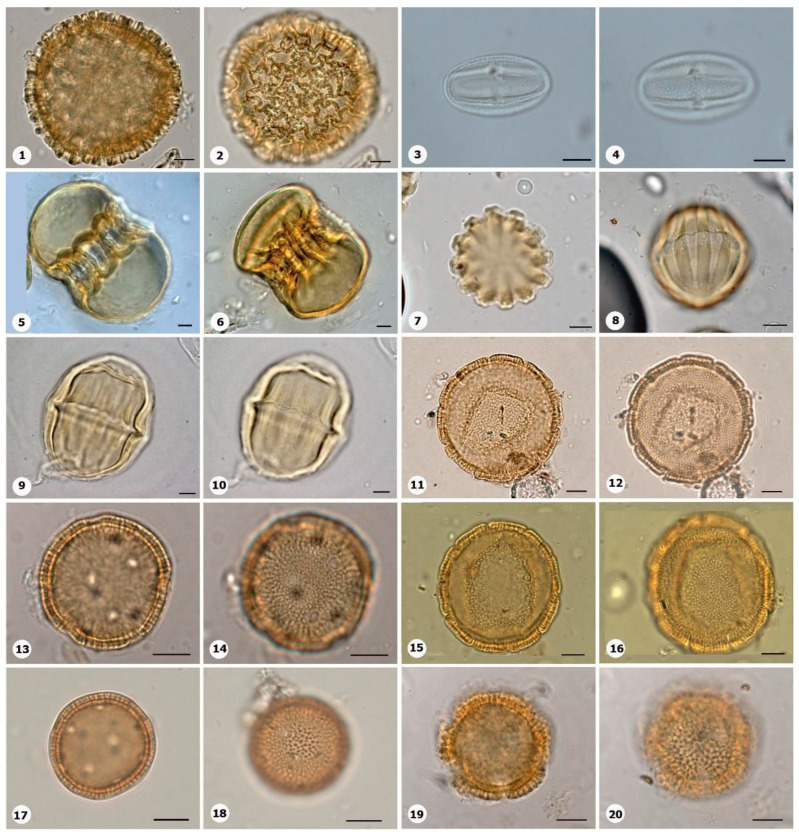 Figure 20
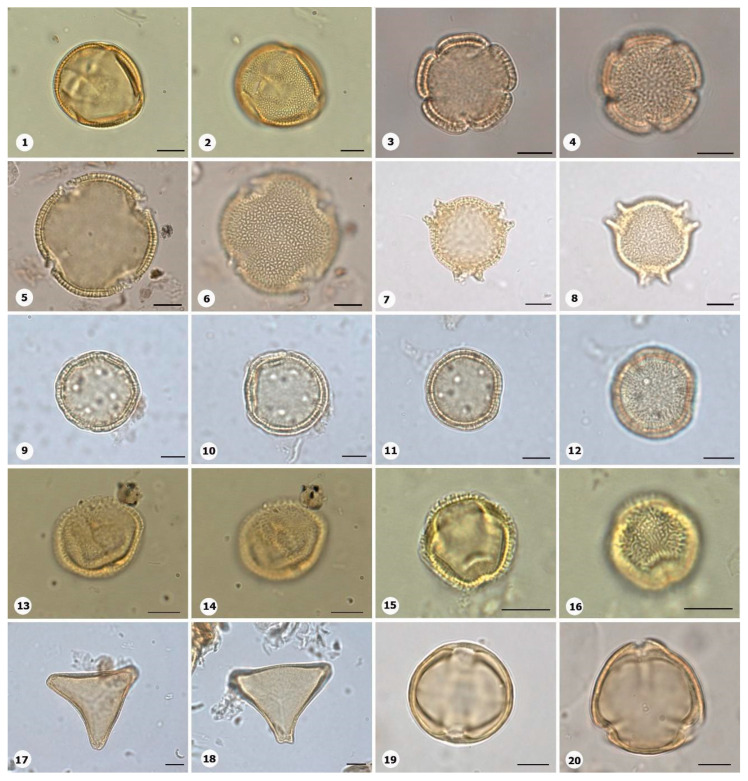 Figure 21
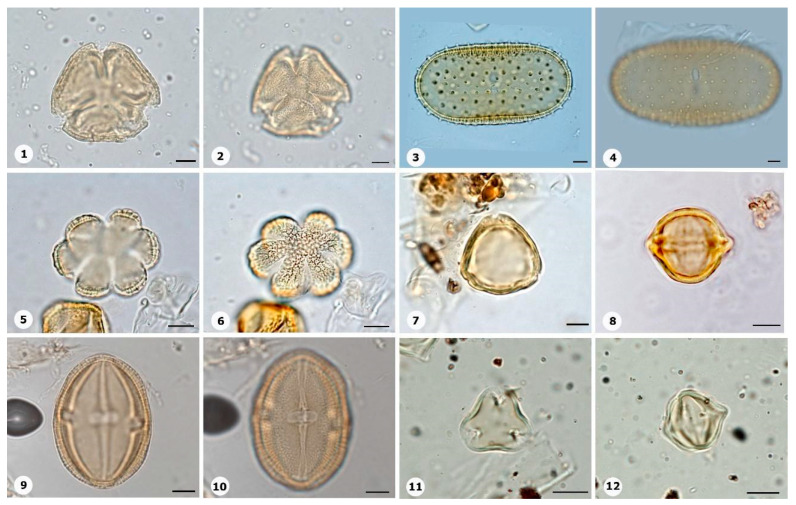 Figure 22
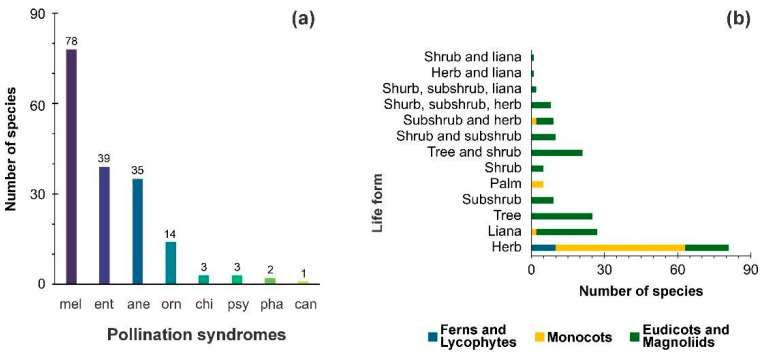 Figure 23
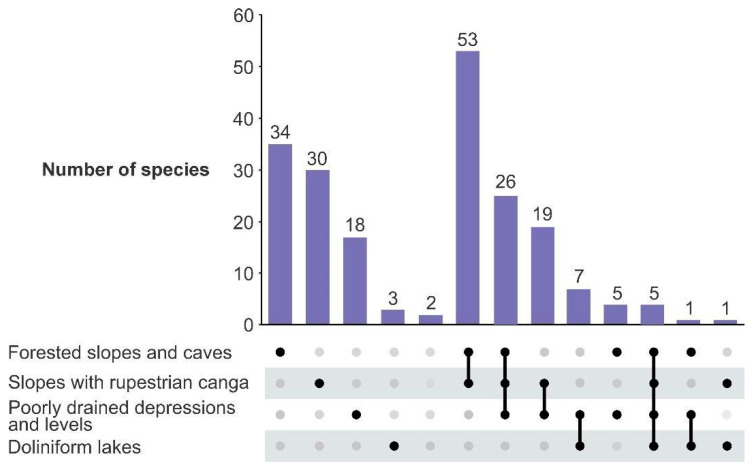 Figure 24
- —Instituto Tecnológico Vale
- —Conselho Nacional de Desenvolvimento Científico e Tecnológico (CNPq)
Peer Reviews
No public reviews on file for this paper yet. If you reviewed it on a platform where reviews are public (OpenReview, ICLR, NeurIPS, ICML), you can paste yours below so the community can read it here.
Videos
No videos yet. Explain this paper in a talk, walkthrough, or lecture? Add one.
Taxonomy
TopicsPlant Diversity and Evolution · Plant and animal studies · Fern and Epiphyte Biology
1. Introduction
Amazonia is often cited as having the most diverse flora on the planet [1,2,3], which includes mountain areas with a small surface area but with a fascinating endemism [4]. However, these regions are seriously threatened by extensive land use and land cover changes that have occurred over the past few decades [5,6]. In fact, the flora of these areas presents a great variety of endangered, endemic, and rare taxa in conjunction with a species diversity that represents a highly relevant reserve of biodiversity for the global prioritization of conservation efforts [7], defined as Key Biodiversity Areas—KBAs [8].
From the 149 KBAs identified within the Amazon Rainforest biome, the Carajás Mountain Range—CMR, in southeastern Amazonia, presents 10 rare species [9]. The CMR hosts one of the largest mineral provinces in the world [10], with mountain tops covered by herbaceous and shrubby montane savanna (canga vegetation) and associated with lateritic outcrops at 600–800 m altitudes, which are surrounded by rainforests on mountain slopes [11,12]. The canga vegetation occupied an area of 144.2 km^2^ in the CMR in 1973, before the implementation of the Carajás N4-N5 open-pit mines, and up to 2016, 22 km^2^ of canga vegetation was suppressed in response to iron ore exploitation [13]. The canga formations in Brazil are considered ancient ecosystems, characterized by a rich flora associated with the weathering of the iron-rich substrate [14,15,16,17]. In both countries, such areas provide unique island-like environments with high levels of species turnover between different sites, high levels of endemism, and rare geographically restricted species [16,17,18,19,20].
Based on efforts to collect, compile, and taxonomically validate the plant species from 2015 to 2018, during the Flora of Carajás project, certified lists of 856 species of seed plants and 186 species of Ferns and Lycophytes were made available online [16,17]. From these lists, three monotypic genera and thirty-eight species were reported as endemic [4]. This presents a significant opportunity to create a comprehensive palynological database for the Amazon canga vegetation. A pollen database with a precise morphological description favored the development of (1) palynotaxonomy (Convolvulaceae [21], Poaceae [22]), (2) melissopalynology (honey pollen samples of Melipona seminigra pernigra Moure & Kerr, 1950 [23]), (3) pollen loads from bee specimens deposited in biological collections [24], and (4) paleoecology (lake sediments [25,26,27,28,29,30]). Pollen from bat guano found in the Carajás caves improves our understanding of the area’s ecology and the complex interactions between plants and bats that developed while bats searched for and collected resources [31,32]. However, significant effort is needed for identification at the lowest taxonomic levels. This is highly necessary to (1) develop accurate pollen interaction networks based on floral visitors, (2) precisely describe the paleobiogeographic patterns of canga vegetation, and (3) model the Quaternary paleohydrology and paleoclimate based on palynological data. Consequently, this work aims to create an illustrated and descriptive pollen atlas, serving as a valuable tool for researchers worldwide who wish to further explore the palynology of the Amazon canga vegetation.
Study Area
The CMR is situated in the Carajás Mineral Province (Figure 1a,b), i.e., a major Neoarchean tectonic province of the Amazonian Craton, where banded iron formations and metavolcano–sedimentary sequences represent the middle-upper geological succession of this province [33]. The iron-rich deposits were formed during the successive weathering events of these rocks in the Cretaceous–Paleogene transition, which occurred under humid paleoclimate conditions, allowing the formation of extensive mature lateritic profiles [34,35].
These crusts contain a variety of geoenvironments with unique geological, geomorphological, and pedological characteristics, which influence the nutrient availability and energy flows within an essentially open system [12], as follows (Figure 1b,d): (1) slopes with rupestrian canga vegetation over plinthosols; (2) forested slopes and caves over plinthosols and ferralsols; (3) poorly drained depressions and levels covered by grasslands over plinthosols and histosols; as well as (4) doliniform lakes with organic mud sediment at the bottom.
The climate is characterized by two distinct seasons: a rainy season and a dry season [38]. During the rainy season, which lasts from November to May, the total rainfall ranges from 1545 mm to 1863 mm. In contrast, the dry season, occurring from June to October, receives between 159 mm and 321 mm of rainfall. The average recorded temperature is 27.2 °C, with a minimum of 26.6 °C in January and a maximum of 28.1 °C in September [39].
2. Materials and Methods
The examined specimens are stored in the herbaria of the Museu Paraense Emílio Goeldi (MPEG), Bioparque Vale Amazônia (HCJS), and Instituto Nacional de Pesquisas da Amazônia (INPA). Mature flower buds were extracted from the exsiccate collections and treated using standard pollen preparation methods. This included extracting flower buds from duplicate specimens before anthesis, followed by fixation in acetic acid and acetolysis [40]. For light microscopy, the pollen was mounted in glycerol jelly and sealed with paraffin [40,41]. All prepared slides were deposited in the Palinoteca of the Instituto Tecnológico Vale (PALIITV). Subsequently, the grains were examined, measured, and photographed using a Zeiss AXIO Imager M2 microscope with a Pan-APOCHROMAT 20×, 40×, and 100× objective (Carl Zeiss Microscopy GmbH, Oberkochen, Germany). The descriptive palynology terminology used in this study is as follows [42]. Main morphological parameters are abbreviated as follows: polar diameter (P); equatorial diameter (E); or simply diameter (D). These variables were examined in 20 grains per sample [21].
The types are grouped into ferns and lycophytes, monocots, eudicots, and magnoliids. Within each group, plant families are alphabetically organized according to [43,44], as well as their corresponding species. Species names, life forms, and habitats were verified by consulting the Brazilian Species Database of the Flora of the Carajás project [16] and REFLORA [45]. The geoenvironments terminology of [12] was applied according to the habitats and geographic coordinates of each species available in the cited database. Pollination syndromes according to [46], the degree of domestication [47], and main uses [48] were also included (Table S1). It is important to note that the ecological discussion of geoenvironments and pollination syndromes in this study only pertains to a selection of plant species. Specifically, it focuses on the 204 plant species included in the palynological atlas of Amazon canga vegetation and does not encompass the entire floristic diversity of the study area.
3. Results
The ferns and lycophytes present 10 species, 8 genera, and 5 families of the Polypodiales Link, Hort. BTerol., and 2 species of Isoëtales Prantl, Lehrb. Monocots are represented by 6 orders, encompassing 12 families, 36 genera, and 63 species. The magnoliids order is only represented by 2 species, and the genera of the Annonaceae Juss. Eudicots are the most representative of this pollen atlas, with 130 species, 91 genera, and 38 families. Some descriptive parameters are summarized in Table 1. Table S1 provides a summary of the plant species from the canga vegetation whose pollen and spore grains are described in this atlas. A dichotomous key can be found in the Supplementary Materials (Data S1).
Description of Spores and Pollen
- FERNS AND LYCOPHYTES
Order: Polypodiales Link
Family: Aspleniaceae Newman
Species: * Asplenium serratum L. (Figure 2: 1–2)* Herbarium number: HCJS 1548Description: Spores single, shape with rounded ends; laesura straight, margo narrow; sclerine ~3 µm thick, exospore distinct, ornamentation with thin and irregular undulating membrane, resembling a hamulate pattern.
-
Life form: Herb.
-
Geoenvironment: Forested slopes and caves over plinthosols and ferralsols.
-
Order: Polypodiales Link
Family: Blechnaceae Newman
Species: * Blechnum polypodioides Raddi (Figure 2: 3–4)* Herbarium number: HCJS 4365Description: Spores single, shape with rounded ends; laesura straight, margo 2–3 µm thick, protruding.Life form: Herb.Geoenvironment: Forested slopes and caves over plinthosols and ferralsols.
- Family: Dennstaedtiaceae Lotsy
Species: * Pteridium esculentum (G. Forst.) Cockayne (Figure 2: 5–6)* Herbarium number: BHCB 601Description: Spores single, shape with rounded ends; laesura indistinct; exospore 1.5–2.4 thick.Life form: Herb.Geoenvironment: Upland anthropic areas.
- Order: Isoëtales C.Agardh
Family: Isoëtaceae Rchb.f.
Species: * Isoëtes cangae J.B.S.Pereira, Salino and Stützel (Figure 2: 7–8)* Herbarium number: HCJS 6277Description: Spores single, shape with pointed ends; laesura straight, without prominent invagination; perispore microechinate in proximal view and microechinate to tuberculate in distal view.Life form: Herb.Geoenvironment: Doliniform lakes; Amendoim Lake, S11D, active lake Species: * Isoëtes serracarajensis J.B.S.Pereira, Salino and Stützel (Figure 2: 9–10)* Herbarium number: HCJS 5433Description: Spores single, shape with pointed ends; laesura straight, without prominent invagination; perispore laevigate in proximal view and microechinate to tuberculate in distal view.Life form: HerbGeoenvironment: Poorly drained depressions and levels over plinthosols and histosols.
- Order: Polypodiales Link
Family: Pteridaceae E.D.M.Kirchn.
Species: * Hemionitis palmata L. (Figure 2: 11–12)* Herbarium number: HCJS 1465Description: Spores single, shape with rounded corners; curvature absent, margo indistinct, commissure straight; endospore 1 µm thick; exospore 1 µm thick, echinae 1–2 µm height.Life form: Herb.Geoenvironment: Forested slopes and caves over plinthosols and ferralsols. Species: * Pteris denticulata Sw. (Figure 2: 13–14)* Herbarium number: HCJS 1007Description: Spores single, shape with rounded corners; curvature absent, commissure curved, margo ~3 µm thick, very distinct; endospore 1 µm thick, exospore 1 µm thick, cingulated, cingulum about 4–5 µm thick and likely varying in thickness until radial area.Life form: Herb.Geoenvironment: Forested slopes and caves over plinthosols and ferralsols. Species: * Pteris pungens Willd. (Figure 2: 15–16)* Herbarium number: HCJS 1559Description: Spores single, shape with rounded corners; margo indistinct, commissure straight; endospore indistinct, exospore 1 µm thick, cingulated, cingulum about 5 µm thick and not varying in thickness.Life form: Herb.Geoenvironment: Forested slopes and caves over plinthosols and ferralsols.
- Family: Thelypteridaceae Pic.Serm.
Species: * Christella hispidula (Decne.) Holttum (Figure 2: 17–18)* Herbarium number: HCJS 4775Description: Spores single, shape with rounded ends; laesura straight to curved, margo indistinct; sclerine ~2–3 µm thick, exospore distinct.Life form: Herb.Geoenvironment: Forested slopes and caves over plinthosols and ferralsols. Species: * Cyclosorus interruptus (Willd.) H. Ito (Figure 2: 19–20)* Herbarium number: HCJS 3009Description: Spores single, shape with rounded ends; laesura straight to curved, margo indistinct; exospore 2 µm thick.Life form: Herb.Geoenvironment: Poorly drained depressions and levels over plinthosols and histosols.
- MONOCOTS
Order: Alismatales R. Br. ex Bercht. and J. Presl
Family: Araceae Juss.
Species: * Philodendron wullschlaegelii Schott (Figure 3: 1–2)* Herbarium number: MG 214008Description: Monads, large, sulci marginate; amb elliptical; exine 1.2 µm thick, tectate.Life form: Herb.Geoenvironment: Forested slopes and caves over plinthosols and ferralsols.
- Order: Arecales Bromhead
Family: Arecaceae Bercht. and J.Presl.
Species: * Acrocomia aculeata (Jacq.) Lodd. ex Mart. (Figure 3: 3–4)* Herbarium number: HCJS 0646Description: Monad, large; sulci marginate; amb triangular–obtuse–concave; exine 7.3 µm thick, tectate.Life form: Palm.
-
Geoenvironment: Forested slopes and caves over plinthosols and ferralsols. Species: * Attalea maripa (Aubl.) Mart. (Figure 3: 5–6)* Herbarium number: HCJS 0383Description: Monad, large; sulci marginate; amb elliptical; exine 2.6 µm thick, tectate.Life form: Palm.Geoenvironment: Forested slopes and caves over plinthosols and ferralsols. Species: * Euterpe oleraceae Mart. (Figure 3: 7–8)* Herbarium number: HCJS 0272Description: Monad, large; sulci with a slight margo; amb elliptical with acute ends; exine 1 µm thick, tecta indistinct.Life form: Palm.Geoenvironment: Poorly drained depressions and levels over plinthosols and histosols, doliniform lakes with organic mud sediment at the bottom. Species: * Oenocarpus distichus Mart. (Figure 3: 9–10)* Herbarium number: HCJS 0370Description: Monad, medium; sulci with a slight margo; amb triangular–obtuse–concave; exine 2–2.3 µm thick, tectate.Life form: Palm.Geoenvironment: Forested slopes and caves over plinthosols and ferralsols. Species: * Socratea exorrhiza (Mart.) H.Wendl. (Figure 3: 11–12)* Herbarium number: HCJS 1433Description: Monad, apolar; circular; exine 3.5–5 µm thick, tectate.Life form: Palm.Geoenvironment: Forested slopes and caves over plinthosols and ferralsols.
-
Order: Poales Small
Family: Bromeliaceae Juss.
Species: Aechmea bromeliifolia (Rudge) Baker (Figure 3: 13–14) Herbarium number: HCJS 1335Description: Monad, large; large pores 7–8 µm diameter; circular; exine 2.5 µm thick.Life form: Herb.Geoenvironment: Forested slopes and caves over plinthosols and ferralsols, slopes with canga vegetation over plinthosols. Species: * Aechmea castelnavii Baker (Figure 3: 15–16)* Herbarium number: MG 214066Description: Monad, medium; spheroidal; tectate, columellate, exine 1.2 µm thick, heterobrochate reticulate.Life form: Herb.Geoenvironment: Forested slopes and caves over plinthosols and ferralsols, slopes with canga vegetation over plinthosols. Species: * Aechmea mertensii (G.Mey.) Schult. and Schult.f. (Figure 3: 17–18)* Herbarium number: HCJS 1410Description: Monad, large; exine 4.2 µm thick, tectate, heterobrochate reticulate.Life form: Herb.Geoenvironment: Forested slopes and caves over plinthosols and ferralsols. Species: * Dyckia duckei L.B.Sm. (Figure 3: 19–20)* Herbarium number: MG 222350; HCJS 1040Description: Monad, medium; margo indistinct; amb elliptical; exine 1.6 µm thick, tectate, heterobrochate reticulate.Life form: Herb.Geoenvironment: Slopes with canga vegetation over plinthosols.
-
Species: * Pitcairnia lanuginosa Ruiz & Pav. (* Figure 4 : 1–2) Herbarium number: MG 222323Description: Monad, medium; margo indistinct; amb elliptical; exine 1 µm thick, tectate, heterobrochate reticulate.Life form: Herb.Geoenvironment: Slopes with canga vegetation over plinthosols.
-
Order: Zingiberales Grisebach
Family: Costaceae Nakai
Species: * Chamaecostus acaulis (S.Moore) T.André & C.D.Specht (Figure 4: 3–4)* Herbarium number: INPA 257238, 109585Description: Monad, very large; exine 4–5 µm thick, tectate.Life form: Herb.Geoenvironment: Forested slopes and caves over plinthosols and ferralsols, slopes with canga vegetation over plinthosols. Species: * Chamaecostus lanceolatus (Petersen) C.D.Specht and D.W.Stey (Figure 4: 5–6)* Herbarium number: INPA 98074, 53463Description: Monad, very large; pores slightly annulate; spheroidal; exine 5–6 µm thick, tectate.Life form: Herb.Geoenvironment: Forested slopes and caves over plinthosols and ferralsols, slopes with canga vegetation over plinthosols. Species: * Costus scaber Ruiz & Pav. (Figure 4: 7–8)* Herbarium number: INPA 163081, 262903Description: Monad, gigantic; exine 5 µm thick, tectate.Life form: Herb.Geoenvironment: Forested slopes and caves over plinthosols and ferralsols, slopes with canga vegetation over plinthosols.
- Order: Poales Small
Family: Cyperaceae Juss.
Species: * Bulbostylis paraensis C.B.Clarke (Figure 4: 9–10)* Herbarium number: BHCB 115277Description: Monad, medium; exine 1 µm thick, tectate.Life form: Herb.Geoenvironment: Forested slopes and caves over plinthosols and ferralsols, poorly drained depressions and levels over plinthosols and histosols. Species: * Cyperus aggregatus (Willd.) Endl. (Figure 4: 11–12)* Herbarium number: BHCB 137680Description: Monad, medium; presence of pseudoapertures; exine 1.5 µm thick, tectate.Life form: Herb.Geoenvironment: Slopes with canga vegetation over plinthosols, forested slopes and caves over plinthosols and ferralsols, poorly drained depressions and levels over plinthosols and histosols. Species: * Cyperus amabilis Vahl (Figure 4: 13–14)* Herbarium number: BHCB 115278Description: Monad, medium; presence of pseudoapertures; exine 1.5 µm thick, tectate.Life form: Herb. Geoenvironment: Slopes with canga vegetation over plinthosols, forested slopes and caves over plinthosols and ferralsols, poorly drained depressions and levels over plinthosols and histosols. Species: * Cyperus haspan L. (Figure 4: 15–16)* Herbarium number: BHCB 139491, MG 214017Description: Monad, medium; presence of pseudoapertures; proximal pole slightly smaller than distal pole; exine 1.3 µm thick, tectate.Life form: Herb.Geoenvironment: Poorly drained depressions and levels over plinthosols and histosols, forested slopes and caves over plinthosols and ferralsols, slopes with canga vegetation over plinthosols, doliniform lakes with organic mud sediments at the bottom. Species: * Cyperus laxus Lam. (Figure 4: 17–18)* Herbarium number: BHCB 137669Description: Monad, medium; proximal pole slightly smaller than distal pole; exine 1.3 µm thick, tectate.Life form: Herb.Geoenvironment: Forested slopes and caves over plinthosols and ferralsols, slopes with canga vegetation over plinthosols. Species: * Cyperus sphacelatus Rottb. (Figure 4: 19–20)* Herbarium number: MG 214013Description: Monad, small; proximal pole slightly smaller than distal pole; exine 0.5–0.6 µm thick, tectate.Life form: Herb.Geoenvironment: Slopes with canga vegetation over plinthosols.
-
Species: * Cyperus surinamensis Rottb. (Figure 5: 1–2)* Herbarium number: BHCB 142679Description: Monad, small; proximal pole smaller than distal pole; exine 0.8–0.9 µm thick, tectate.Life form: Herb.Geoenvironment: Slopes with canga vegetation over plinthosols. Species: * Eleocharis flavescens (Poir.) Urb. (Figure 5: 3–4)* Herbarium number: MG 214003Description: Monad, medium, heteropolar; inaperturate; elliptical, proximal pole smaller than distal pole; exine 0.8 µm thick, tectate, ornamentation microreticulate.Life form: Herb.Geoenvironment: Slopes with canga vegetation over plinthosols. Species: * Rhynchospora barbata (Vahl) Kunth (Figure 5: 5–6)* Herbarium number: BHCB 130685, MG 213983, 222341Description: Monad, medium; proximal pole slightly smaller than distal pole; exine 1.5 µm thick, tectate, ornamentation with coarse muri.Life form: Herb.Geoenvironment: Slopes with canga vegetation over plinthosols, forested slopes and caves over plinthosols and ferralsols, poorly drained depressions and levels over plinthosols and histosols. Species: * Rhynchospora corymbosa (L.) Britton (Figure 5: 7–8)* Herbarium number: BHCB 115300Description: Monad, medium; proximal pole slightly smaller than distal pole; exine 1 µm thick, tectate.Life form: Herb.Geoenvironment: Forested slopes and caves over plinthosols and ferralsols, poorly drained depressions and levels over plinthosols and histosols. Species: * Rhynchospora seccoi C.S. Nunes, P.J.S. Silva Filho & A. Gil (Figure 5: 9–10)* Herbarium number: HCJS 0732, HCJS 0791Description: Monad, medium; exine 1–1.2 µm thick, tectate.Life form: Herb.Geoenvironment: Slopes with canga vegetation over plinthosols, poorly drained depressions and levels over plinthosols and histosols.
-
Species: * Paepalanthus aff. fasciculatus (Figure 5: 11–12)* Herbarium number: BHCB 137678, BHCB 155861Description: Monad, medium; exine 1 µm thick, tectate.Life form: Herb.Geoenvironment: Forested slopes and caves over plinthosols and ferralsols, poorly drained depressions and levels over plinthosols and histosols. Species: * Scleria cyperina Willd. ex Kunth (Figure 5: 13–14)* Herbarium number: MG 214081Description: Monad, medium; exine 1–1.2 µm thick, tectate.Life form: Herb.Geoenvironment: Slopes with canga vegetation over plinthosols, poorly drained depressions and levels over plinthosols and histosols. Species: * Scleria verticillata Muhl. ex Willd. (Figure 5: 15–16)* Herbarium number: BHCB 158212Description: Monad, medium; exine 1 µm thick, tectate.Life form: Herb.Geoenvironment: Slopes with canga vegetation over plinthosols, poorly drained depressions and levels over plinthosols and histosols.
-
Order: Dioscoreales R.Br.
Family: Dioscoreaceae (R. Br.)
Species: * Dioscorea glandulosa (Klotzsch ex Griseb.) Kunth (Figure 6: 1–2)* Herbarium number: HCJS 0806Description: Monad, medium; exine 0.6 µm thick, tectate.Life form: Liana.Geoenvironment: Forested slopes and caves over plinthosols and ferralsols, slopes with canga vegetation over plinthosols. Species: * Dioscorea pohlii Griseb. (Figure 6: 3–4)* Herbarium number: HCJS 0482Description: Monad, large; exine 1.8–2 µm thick, tectate.Life form: Liana.Geoenvironment: Slopes with canga vegetation over plinthosols.
- Order: Poales Small
Family: Eriocaulaceae Martinov
Species: * Eriocaulon aff. setaceum L. (Figure 6: 5–6)* Herbarium number: HCJS 1578Description: Monad, medium; spiral apertures in a crosshatch pattern, with 2–3 apertures; exine 1.8–2 µm thick, tectate.Life form: Herb.Geoenvironment: Poorly drained depressions and levels over plinthosols and histosols. Species: * Eriocaulon setaceum L. (Figure 6: 7–8)* Herbarium number: MG 214910Description: Monad, small; spiral apertures in a crosshatch pattern, with 2–3 apertures; exine 1.2–1.3 µm thick, tectate.Life form: Herb.Geoenvironment: Poorly drained depressions and levels over plinthosols and histosols. Species: * Paepalanthus aff. fasciculatus (Rottb.) Kunth (Figure 6: 9–10)* Herbarium number: MG 85842Description: Monad, small; spiral apertures in a crosshatch pattern, with 2–3 apertures; exine 1.7–1.8 µm thick, tectate.Life form: Herb.Geoenvironment: Poorly drained depressions and levels over plinthosols and histosols. Species: * Syngonanthus caulescens (Poir.) Ruhland (Figure 6: 11–12)* Herbarium number: HCJS 0541, MG 223908Description: Monad, small; spiral apertures with apertures tracing various designs (many arrangements); spheroidal; exine 1 µm thick, tectate.Life form: Herb.Geoenvironment: Forested slopes and caves over plinthosols and ferralsols, poorly drained depressions and levels over plinthosols and histosols. Species: * Syngonanthus discretifolius (Moldenke) M.T.C.Watan. (Figure 6: 13–14)* Herbarium number: MG 214016Description: Monad, small; spiral apertures with apertures tracing various designs (many arrangements); exine 1 µm thick, tectate.Life form: Herb.Geoenvironment: Poorly drained depressions and levels over plinthosols and histosols. Species: * Syngonanthus heteropeplus (Koern.) Ruhland (Figure 6: 15–16)* Herbarium number: MG 117013Description: Monad, small; spiral apertures with apertures tracing various designs (many arrangements); exine 1 µm thick, tectate.Life form: HerbGeoenvironment: Poorly drained depressions and levels over plinthosols and histosols. Species: * Syngonanthus sp. 1 (Figure 6: 17–18)* Collection number: ITV 1774Description: Monad, small; spiral apertures with apertures tracing various designs (many arrangements); exine 1.2–1.3 µm thick, tectate.Life form: Herb.Geoenvironment: Forested slopes and caves over plinthosols and ferralsols, poorly drained depressions and levels over plinthosols and histosols.
- Order: Zingiberales Grisebach
Family: Heliconiaceae Nakai
Species: * Heliconia adeliana Emygdio & E.Santos (Figure 6: 19–20)* Herbarium number: MG 251426Description: Monad, large; exine 6.5–7 µm thick, nexine significantly thicker than endexine, tectate.Life form: Herb.Geoenvironment: Forested slopes and caves over plinthosols and ferralsols.
- Order: Poales Small
Family: Mayacaceae Kunth
Species: * Mayaca fluviatilis Aubl. (Figure 7: 1–2)* Herbarium number: MG 222303Description: Monad, medium; exine 1.5–1.6 µm thick, tectate.Life form: Herb.Geoenvironment: Poorly drained depressions and levels over plinthosols and histosols, doliniform lakes with organic mud sediment at the bottom. Family: Poaceae Barnhart
Species: * Axonopus capillaris (Lam.) Chase (Figure 7: 3–4)* Herbarium number: MG 116782Description: Monad, medium; pores annulate; exine 1.1–2 µm thick, tectate.Life form: Herb.Geoenvironment: Forested slopes and caves over plinthosols and ferralsols, slopes with canga vegetation over plinthosols. Species: * Axonopus carajasensis Bastos (Figure 7: 5–6)* Herbarium number: BHCB 155944Description: Monad, medium; pores annulate; exine 0.7–0.8 µm thick, tectate.Life form: Herb.Geoenvironment: Slopes with canga vegetation over plinthosols. Species: * Axonopus longispicus (Döll) Kuhlm (Figure 7: 7–8)* Herbarium number: MG 99379Description: Monad, medium; pores annulate; exine 0.9–1.5 µm thick, tectate.Life form: Herb.Geoenvironment: Slopes with canga vegetation over plinthosols. Species: * Eragrostis maypurensis (Kunth) Steud (Figure 7: 9–10)* Herbarium number: MG 147039Description: Monad, medium; pores annulate; exine 0.8–1.3 µm thick, tectate.Life form: Herb.Geoenvironment: Slopes with canga vegetation over plinthosols.
-
Species: * Eragrostis rufescens Schrad. ex Schult. (Figure 7: 11–12)* Herbarium number: MG 213985Description: Monad, medium; pores annulate; exine 1.5 µm thick, tectate.Life form: Herb.Geoenvironment: Slopes with canga vegetation over plinthosols. Species: * Hildaea breviscrobs (Döll) C.Silva & R.P. Oliveira (Figure 7: 13–14)* Herbarium number: HCJS 1740Description: Monad, medium; pores annulate; exine 1.3–1.5 µm thick, tectate.Life form: Herb.Geoenvironment: Forested slopes and caves over plinthosols and ferralsols. Species: * Ichnanthus calvescens (Nees ex Trin.) Döll (Figure 7: 15–16)* Herbarium number: MG 214084Description: Monad, medium; pores annulate; exine 1.3–1.5 µm thick, tectate.Life form: Herb.Geoenvironment: Forested slopes and caves over plinthosols and ferralsols, slopes with canga vegetation over plinthosols. Species: * Isachne polygonoides (Lam.) Döll (Figure 7: 17–18)* Herbarium number: MG 222316Description: Monad, medium; pores annulate; exine 1 µm thick, tectate.Life form: Herb.Geoenvironment: Slopes with canga vegetation over plinthosols, poorly drained depressions and levels over plinthosols and histosols. Species: * Mesosetum cayennense Steud. (Figure 7: 19–20)* Herbarium number: MG 105630Description: Monad, medium; pores annulate; exine 0.9–1.4 µm thick, tectate.Life form: Herb.Geoenvironment: Slopes with canga vegetation over plinthosols, forested slopes and caves over plinthosols and ferralsols, poorly drained depressions and levels over plinthosols and histosols.
-
Species: * Mnesithea aurita (Steud.) de Koning & Sosef (Figure 8: 1–2)* Herbarium number: MG 67183Description: Monad, medium; pores annulate; exine 0.8–1 µm thick, tectate.Life form: Herb.Geoenvironment: Slopes with canga vegetation over plinthosols. Species: * Otachyrium versicolor (Döll) Henrard (Figure 8: 3–4)* Herbarium number: BHCB 139242Description: Monad, medium; pores annulate; exine 1–1.4 µm thick, tectate.Life form: Herb.Geoenvironment: Poorly drained depressions and levels over plinthosols and histosols. Species: * Paspalum carajasense S.Denham (Figure 8: 5–6)* Herbarium number: MG 208828Description: Monad, large; pores annulate but some grains are indistinct; exine 2–2.8 µm thick, tectate.Life form: Herb.Geoenvironment: Slopes with canga vegetation over plinthosols. Species: * Paspalum carinatum Humb. & Bonpl. ex Flüggé (Figure 8: 7–8)* Herbarium number: MG 214010Description: Monad, medium; pores annulate; exine 1.5–3 µm thick, tectate.Life form: Herb.Geoenvironment: Slopes with canga vegetation over plinthosols. Species: * Paspalum virgatum L. (Figure 8: 9–10)* Herbarium number: MG 67531Description: Monad, medium; pores annulate; exine 0.9–1.7–3 µm thick, tectate.Life form: Herb.Geoenvironment: Poorly drained depressions and levels over plinthosols and histosols.
-
Species: * Rhytachne gonzalezii Davidse (Figure 8: 11–12)* Herbarium number: MG 135244Description: Monad, medium; pores annulate; exine 1.3–3.4 µm thick, tectate.Life form: Herb.Geoenvironment: Poorly drained depressions and levels over plinthosols and histosols. Species: * Sporobolus multiramosus Longhi-Wagner & Boechat (Figure 8: 13–14)* Herbarium number: MG 213981Description: Monad, medium; pores annulate; exine 1.1–1.8 µm thick, tectate.Life form: Herb.Geoenvironment: Forested slopes and caves over plinthosols and ferralsols. Species: * Trichanthecium parvifolium (Lam.) Zuloaga & Morrone (Figure 8: 15–16)* Herbarium number: MG 213975Description: Monad, medium; pores with operculum, annulate; exine 1.1–1.7 µm thick, tectate.Life form: Herb.Geoenvironment: Slopes with canga vegetation over plinthosols, poorly drained depressions and levels over plinthosols and histosols. Species: * Trichanthecium polycomum (Trin.) Zuloaga & Morrone (Figure 8: 17–18)* Herbarium number: MG 215537Description: Monad, medium; pores annulate; exine 1–1.5 µm thick, tectate.Life form: Herb.Geoenvironment: Poorly drained depressions and levels over plinthosols and histosols. Species: * Trichanthecium sp. 1 (Figure 8: 19–20)* Herbarium number: MG 213989Description: Monad, medium; pores annulate; exine 1–1.5 µm thick, tectate.Life form: Herb.Geoenvironment: Slopes with canga vegetation over plinthosols, poorly drained depressions and levels over plinthosols and histosols.
-
Order: Liliales Perleb
Family: Velloziaceae J.Agardh
Species: * Vellozia sp. 1 (Figure 9: 1–2)* Collection code: ITV 2114Description: Tetragonal tetrad, large; exine 2.5–3 µm.Life form: Shrub and herb.Geoenvironment: Slopes with canga vegetation over plinthosols. Species: * Vellozia sp. 2 (Figure 9: 3–4)* Collection code: ITV 2115Description: Tetragonal tetrad, large; exine 2–2.5 µm, reticulate with lumina of 4–5 µm width.Life form: Shrub and herb.Geoenvironment: Slopes with canga vegetation over plinthosols.
- Order: Poales Small
Family: Xyridaceae C.Agardh
Species: * Xyris brachysepala Kral. (Figure 9: 5–6)* Herbarium number: MG 213994Description: Monads, large; exine 3 µm thick, tectate.Life form: Herb.Geoenvironment: Poorly drained depressions and levels over plinthosols and histosols, doliniform lakes with organic mud sediments at the bottom. Species: * Xyris macrocephala Vahl (Figure 9: 7–8)* Herbarium number: MG 214073Description: Monads, medium; exine 1–2 µm thick, tectate.Life form: Herb.Geoenvironment: Poorly drained depressions and levels over plinthosols and histosols, doliniform lakes with organic mud sediments at the bottom.
- EUDICOTS AND MAGNOLIIDS
Order: Lamiales Bromhead
Family: Acanthaceae Juss.
Species: * Justicia birae A.S.Reis, F.A.Silva, A.Gil & Kameyama (Figure 9: 9–10)* Herbarium number: HCJS 0728Description: Monads, large; brevicolpi; amb elliptical; exine 2–3 µm thick.Life form: Shrub and herb.Geoenvironment: Forested slopes and caves over plinthosols and ferralsols, slopes with canga vegetation over plinthosols.
- Order: Sapindales Juss. ex Bercht. and J. Presl
Family: Anacardiaceae R.Br.
Species: * Anacardium occidentale L. (Figure 9: 11–12)* Herbarium number: MG 112455Description: Monads, large; amb triangular–obtuse–convex; exine 5–5.6 µm thick, densely columellate, tectate.Life form: Tree.Geoenvironment: Forested slopes and caves over plinthosols and ferralsols, slopes with canga vegetation over plinthosols.
- Order: Magnoliales Bromhead
Family: Annonaceae Juss.
Species: * Onychopetalum amazonicum R.E.Fr. (Figure 9: 13–14)* Herbarium number: HCJS 1436Description: Monads, large; sulci with a prominent zonasulcus; amb elliptical; exine 1–1.5 µm thick.Life form: Tree.Geoenvironment: Forested slopes and caves over plinthosols and ferralsols, slopes with canga vegetation over plinthosols. Species: * Xylopia aromatica (Lam.) Mart. (Figure 9: 15–16)* Herbarium number: MG 59152Description: Monads, medium; pore costate, pore diameter 5 µm; amb circular; exine 2–3 µm thick.Life form: Tree and shrub.Geoenvironment: Forested slopes and caves over plinthosols and ferralsols, slopes with canga vegetation over plinthosols.
- Order: Gentianales Juss. ex Bercht. & J.Presl
Family: Apocynaceae Juss.
Species: * Mandevilla hirsuta (A.Rich.) K.Schum. (Figure 9: 17–18)* Herbarium number: MG 222310Description: Monads, very large; 4–5 pores with annuli; amb circular; exine 1.4–2 µm thick, ornamentation psilate and microreticulate near apertural region.Life form: Liana.Geoenvironment: Forested slopes and caves over plinthosols and ferralsols, slopes with canga vegetation over plinthosols. Species: * Mandevilla tenuifolia (J.C.Mikan) Woodson (Figure 9: 19–20)* Herbarium number: MG 57360Description: Monads, medium; five pores with prominent annuli; amb circular; exine 2–3 µm thick, tectate.Life form: Liana.Geoenvironment: Poorly drained depressions and levels over plinthosols and histosols.
- Order: Asterales Link
Family: Asteraceae Bercht. and J.Presl
Species: * Cavalcantia glomerata (G.M.Barroso and R.M.King) R.M.King and H.Rob. (Figure 10: 1–2)* Herbarium number: MG 37869Description: Monad, small; brevicolpi; amb circular; exine 3–4 µm thick, densely columellate.Life form: Herb.Geoenvironment: Forested slopes and caves over plinthosols and ferralsols. Species: * Emilia sp. 1 (Cass.) Cass. (Figure 10: 3–4)* Herbarium number: MG 222326Description: Monad, small; brevicolpi; amb circular; exine 3 µm thick, columellate.Life form: Herb.Geoenvironment: Slopes with canga vegetation over plinthosols. Species: * Ichthyothere terminalis (Spreng.) S.F.Blake (Figure 10: 5–6)* Herbarium number: MG 213971Description: Monad, medium; brevicolpi; amb circular; exine 3–3.5 µm thick, columellate.Life form: HerbGeoenvironment: Forested slopes and caves over plinthosols and ferralsols, poorly drained depressions and levels over plinthosols and histosols, doliniform lakes with organic mud sediment at the bottom. Species: * Lepidaploa paraensis (H.Rob.) H.Rob. (Figure 10: 7–8)* Herbarium number: MG 213957Description: Monad, medium; brevicolpi, echinolophate; amb circular; exine 4–6 µm thick, columellate.Life form: Subshrub.Geoenvironment: Slopes with canga vegetation over plinthosols, forested slopes and caves over plinthosols and ferralsols, poorly drained depressions and levels over plinthosols and histosols. Species: * Monogereion carajensis G.M.Barroso & R.M.King (Figure 10: 9–10)* Herbarium number: MG 213951Description: Monad, small; brevicolpi; amb circular; exine 3–4 µm thick, columellate.Life form: Herb.Geoenvironment: Forested slopes and caves over plinthosols and ferralsols, slopes with canga vegetation over plinthosols. Species: * Riencourtia pedunculosa (Rich.) Pruski (Figure 10: 11–12)* Herbarium number: MG 222330Description: Monad, medium; brevicolpi, elongated pores; amb circular; exine 2 µm thick, indistinct tectum.Life form: Herb.Geoenvironment: Slopes with canga vegetation over plinthosols, forested slopes and caves over plinthosols and ferralsols, poorly drained depressions and levels over plinthosols and histosols.
- Order: Cucurbitales Juss. ex Bercht. & J.Presl
Family: Begoniaceae C.Agardh
Species: * Begonia guaduensis Kunth (Figure 10: 13–14)* Herbarium number: MG 213986Description: Monad, small; amb circular; exine 0.5–1 µm thick, tectate.Life form: Subshrub.Geoenvironment: Slopes with canga vegetation over plinthosols.
- Order: Lamiales Bromhead
Family: Bignoniaceae Juss.
Species: * Anemopaegma carajasense A.H. Gentry ex Firetti-Leggieri (Figure 10: 15–16)* Collector number: Carreira et al. 3429Description: Monad, very large; eight colpi; amb circular; exine 7–7.5 µm thick, tectate.Life form: Shrub.Geoenvironment: Forested slopes and caves over plinthosols and ferralsols, slopes with canga vegetation over plinthosols. Species: * Handroanthus serratifolius (Vahl) S.Grose (Figure 10: 17–18)* Herbarium number: MG 69537Description: Monad, large; long colpi and pores, costate; amb circular; exine 1–2 µm thick, semitectate, columellate, homobrochate reticulate.Life form: Tree.Geoenvironment: Forested slopes and caves over plinthosols and ferralsols. Species: * Jacaranda copaia (Aubl.) D.Don (Figure 10: 19–20)* Herbarium number: MG 72382Description: Monad, medium to large; pores costate; amb circular; exine 1.5–2 µm thick.Life form: Tree.Geoenvironment: Forested slopes and caves over plinthosols and ferralsols.
- Order: Malvales Juss.
Family: Bixaceae Kunth
Species: * Bixa orellana L. (Figure 11: 1–2)* Herbarium number: MG 116597Description: Monad, large; amb triangular–obtuse–convex; exine 1.5–2 µm thick, tectate, perforate forming equatorial lobes.Life form: Tree.Geoenvironment: Forested slopes and caves over plinthosols and ferralsols.
- Order: Caryophyllales Juss. ex Bercht. and J. Presl
Family: Cactaceae Juss.
Species: * Cereus hexagonus (L.) Mill. (Figure 11: 3–4)* Herbarium number: HCJS 4810Description: Monad, very large; long colpi; amb circular; exine 2–2.2 µm thick, tectate.Life form: Tree and shrub.Geoenvironment: Slopes with canga vegetation over plinthosols.
- Order: Malpighiales Juss. ex Bercht. and J. Presl
Family: Clusiaceae Lindl.
Species: * Clusia nemorosa G.Mey. (Figure 11: 5–6)* Herbarium number: MG 213956Description: Monad, medium; amb circular; exine 1–1.5 µm thick, tectate.Life form: Tree and shrub.Geoenvironment: Forested slopes and caves over plinthosols and ferralsols, slopes with canga vegetation over plinthosols.
- Order: Solanales Juss. ex Bercht. and J. Presl
Family: Convolvulaceae Juss.
Species: * Aniseia cernua Moric. (Figure 11: 7–8)* Herbarium number: MG 222367Description: Monad, large; brevicolpi; exine 7–8 µm thick, tectate.Life form: Liana.Geoenvironment: Forested slopes and caves over plinthosols and ferralsols, slopes with canga vegetation over plinthosols.
-
Species: * Cuscuta insquamata Yunck. (Figure 11: 9–10)* Herbarium number: MG 215432Description: Monad, medium; amb circular; exine 2–3 µm thick, tectate.Life form: Shrub, subshrub, herb.Geoenvironment: Forested slopes and caves over plinthosols and ferralsols, slopes with canga vegetation over plinthosols. Species: * Distimake macrocalyx (Ruiz and Pav.) A.R. Simões & Staples (Figure 11: 11–12)* Herbarium number: MG 215937Description: Monad, large; long colpi; amb circular; exine 4–5 µm thick, tectate.Life form: Liana.Geoenvironment: Forested slopes and caves over plinthosols and ferralsols, slopes with canga vegetation over plinthosols. Species: * Evolvulus filipes Mart. (Figure 11: 13–14)* Herbarium number: MG 215006Description: Monad, medium; brevicolpi; exine 1–2 µm thick, tectate.Life form: Herb.Geoenvironment: Forested slopes and caves over plinthosols and ferralsols, slopes with canga vegetation over plinthosols. Species: * Evolvulus sp. 1 (Figure 11: 15–16)* Herbarium number: MG 214054Description: Monad, large; five brevicolpi; amb circular; exine 4–5 µm thick, tectate.Life form: Shrub, subshrub, herb.Geoenvironment: Forested slopes and caves over plinthosols and ferralsols, slopes with canga vegetation over plinthosols. Species: * Ipomoea asplundii O’Donell (Figure 11: 17–18)* Herbarium number: MG 226331Description: Monad, large; large pores; exine 6 µm thick, granules are secondary in the ornamentation, conical echinae.Life form: Liana.Geoenvironment: Forested slopes and caves over plinthosols and ferralsols, slopes with canga vegetation over plinthosols. Species: * Ipomoea carajasensis D.F. Austin (Figure 11: 19–20)* Herbarium number: MG 214004Description: Monad, large; large pores; exine 6.5–8 µm thick, granules are secondary in the ornamentation, conical echinae.Life form: Liana.Geoenvironment: Forested slopes and caves over plinthosols and ferralsols, slopes with canga vegetation over plinthosols.
-
Species: * Ipomoea cavalcantei D.F. Austin (Figure 12: 1–2)* Herbarium number: MG 215128Description: Monad, large to very large; large pores; exine 4–7 µm thick, granules are secondary in the ornamentation, bulbous echinae (type 3).Life form: Liana.Geoenvironment: Slopes with canga vegetation over plinthosols, forested slopes and caves over plinthosols and ferralsols, poorly drained depressions and levels over plinthosols and histosols. Species: * Ipomoea cavalcantei x marabaensis (Figure 12: 3–4)* Herbarium number: MG 223638Description: Monad, large; large pores; exine 6 µm thick, granules are secondary in the ornamentation, bulbous echinae (type 2).Life form: Liana.Geoenvironment: Forested slopes and caves over plinthosols and ferralsols, slopes with canga vegetation over plinthosols.
-
Species: * Ipomoea decora Meisn. (Figure 12: 5–6)* Herbarium number: MG 213191Description: Monad, large to very large; large pores; exine 8–9 µm thick, granules are secondary in the ornamentation, bulbous echinae (type 2).Life form: Liana.Geoenvironment: Forested slopes and caves over plinthosols and ferralsols, slopes with canga vegetation over plinthosols. Species: * Ipomoea goyazensis Gardner (Figure 12: 7–8)* Herbarium number: MG 227195Description: Monad, very large; large pores; exine 7–8 µm thick, granules are secondary in the ornamentation, bulbous echinae (type 1).Life form: Liana.Geoenvironment: Forested slopes and caves over plinthosols and ferralsols, slopes with canga vegetation over plinthosols. Species: * Ipomoea marabaensis D.F.Austin & Secco (Figure 12: 9–10)* Herbarium number: MG 227199Description: Monad, very large; large pores; exine 7–9 µm thick, granules are secondary in the ornamentation, bulbous echinae (type 2).Life form: Liana.Geoenvironment: Forested slopes and caves over plinthosols and ferralsols, slopes with canga vegetation over plinthosols. Species: * Ipomoea procumbens Mart. ex Choisy (Figure 12: 11–12)* Herbarium number: MG 222344Description: Monad, large to very large; large pores; exine 8–9 µm thick, conical echinae.Life form: Liana.Geoenvironment: Forested slopes and caves over plinthosols and ferralsols, slopes with canga vegetation over plinthosols. Species: * Ipomoea setifera Poir. (Figure 12: 13–14)* Herbarium number: MG 165270Description: Monad, large to very large; large pores; exine 7–8 µm thick, columellate near echinae region, conical echinae.Life form: Herb and liana.Geoenvironment: Forested slopes and caves over plinthosols and ferralsols, slopes with canga vegetation over plinthosols. Species: * Jacquemontia tamnifolia (L.) Griseb. (Figure 12: 15–16)* Herbarium number: MG 223119Description: Monad, large; 4–5 colporus, brevicolpi; spheroidal; exine 4–5 µm thick, columellate, tectate.Life form: Liana.Geoenvironment: Forested slopes and caves over plinthosols and ferralsols, slopes with canga vegetation over plinthosols. Species: * Turbina cordata (Choisy) D.F.Austin & Staples (Figure 12: 17–18)* Herbarium number: MG 165294Description: Monad, large to very large; large pores; exine 7–8 µm thick, columellate near echinae region, bulbous echinae (Type 2).Life form: Liana.Geoenvironment: Forested slopes and caves over plinthosols and ferralsols, slopes with canga vegetation over plinthosols.
-
Order: Malpighiales Juss. ex Bercht. & J. Presl
Family: Erythroxylaceae Kunth
Species: * Erythroxylum carajasense Plowman (Figure 12: 19–20)* Herbarium number: MG 22354Description: Monad, medium; pores costate; amb circular; exine 2–3 µm thick, columellate, semitectate, heterobrochate reticulate, larger lumina in the apocolpium region.Life form: Shrub.Geoenvironment: Slopes with canga vegetation over plinthosols, poorly drained depressions and levels over plinthosols and histosols.
-
Species: * Erythroxylum nelson-rosae Plowman (Figure 13: 1–2)* Herbarium number: MG 112462Description: Monad, large; amb circular; exine 3–4 µm thick, columellate, tectate, columellate, heterobrochate reticulate.Life form: Tree and shrub.Geoenvironment: Slopes with canga vegetation over plinthosols, poorly drained depressions and levels over plinthosols and histosols.
-
Family: Euphorbiaceae Juss.
Species: * Alchornea discolor Poepp. (Figure 13: 3–4)* Herbarium number: MG 86323Description: Monad, medium; amb circular; exine 1.5–2 µm thick, tectate.Life form: Tree.Geoenvironment: Slopes with canga vegetation over plinthosols, poorly drained depressions and levels over plinthosols and histosols. Species: * Aparisthmium cordatum (A.Juss.) Baill. (Figure 13: 5–6)* Herbarium number: MG 131797Description: Monad, medium; operculate pores; amb triangular–obtuse–convex to straight; exine 2–2.6 µm thick, tectate.Life form: Tree and shrub.Geoenvironment: Forested slopes and caves over plinthosols and ferralsols. Species: * Astraea lobata (L.) Klotzsch (Figure 13: 7–8)* Herbarium number: MG 213977Description: Monad, large; exine 4 µm thick, columellate, capitate columellae, croton pattern.Life form: Shrub and herb.Geoenvironment: Forested slopes and caves over plinthosols and ferralsols, slopes with canga vegetation over plinthosols. Species: * Sapium glandulosum (L.) Morong (Figure 13: 9–10)* Herbarium number: MG 59033Description: Monad, large; lalongate endoaperture; amb triangular–obtuse–convex; exine 3–4 µm thick, columellate, tectate.Life form: Tree and shrub.Geoenvironment: Forested slopes and caves over plinthosols and ferralsols, slopes with canga vegetation over plinthosols.
- Order: Fabales Bromhead
Family: Fabaceae Juss.
Species: * Abrus fruticulosus Wight & Arn. (Figure 13: 11–12)* Herbarium number: MG 222313Description: Monad, medium; lalongate endoaperture; amb circular; exine 1.5–2 µm thick, columellate.Life form: Liana.Geoenvironment: Forested slopes and caves over plinthosols and ferralsols, slopes with canga vegetation over plinthosols. Species: * Aeschynomene rudis Benth. (Figure 13: 13–14)* Herbarium number: MG 222328Description: Monad, small; colpi with margo; amb circular, subprolate; exine 1 µm thick, columellate, tectate, heterobrochate reticulate.Life form: Subshrub.Geoenvironment: Slopes with canga vegetation over plinthosols, poorly drained depressions and levels over plinthosols and histosols. Species: * Andira inermis (W.Wright) DC. (Figure 13: 15–16)* Herbarium number: IAN 195824Description: Monad, small; pores annulate; amb triangular–obtuse–convex; exine 1 µm thick, tectate.Life form: Tree.Geoenvironment: Forested slopes and caves over plinthosols and ferralsols. Species: * Bauhinia pulchella Benth. (Figure 13: 17–18)* Herbarium number: INPA 139259Description: Monad, very large; long colpi, large pores; amb triangular–obtuse–convex; exine 7–8 µm thick, columellate.Life form: Tree and shrub.Geoenvironment: Poorly drained depressions and levels over plinthosols and histosols, forested slopes and caves over plinthosols and ferralsols, slopes with canga vegetation over plinthosols, doliniform lakes with organic mud sediments at the bottom. Species: * Centrosema carajasense Cavalcante (Figure 13: 19–20)* Herbarium number: MG 214006Description: Monad, large; six colpi, brevicolpate; amb hexangular; exine 2–3 µm thick, tectate.Life form: Liana.Geoenvironment: Slopes with canga vegetation over plinthosols, forested slopes and caves over plinthosols and ferralsols, poorly drained depressions and levels over plinthosols and histosols.
-
Species: * Cerradicola elliptica (Desv) L.P.Queiroz (Figure 14: 1–2)* Herbarium number: MG 36728Description: Monad, large; amb triangular–obtuse–convex; exine 1.5–2 µm thick, tectate, heterobrochate reticulate.Life form: Shrub and subshrub.Geoenvironment: Slopes with canga vegetation over plinthosols, forested slopes and caves over plinthosols and ferralsols, poorly drained depressions and levels over plinthosols and histosols. Species: * Chamaecrista desvauxii (Collad.) Killip (Figure 14: 3–4)* Herbarium number: MG 214058Description: Monad, large; pores costate; amb triangular–obtuse–convex; exine 2–2.5 µm thick, tectate.Life form: Shrub and subshrub.Geoenvironment: Slopes with canga vegetation over plinthosols. Species: * Chamaecrista flexuosa (L.) Greene (Figure 14: 5–6)* Herbarium number: MG 213980Description: Monad, large; pores costate; amb triangular–obtuse–convex; exine 3 µm thick, tectate.Life form: Shrub and subshrub.Geoenvironment: Slopes with canga vegetation over plinthosols, forested slopes and caves over plinthosols and ferralsols, poorly drained depressions and levels over plinthosols and histosols. Species: * Chamaecrista sp. 1 (Figure 14: 7–8)* Herbarium number: MG 214055Description: Monad, large; lalongate endoaperture; amb triangular–obtuse–convex; exine 2–2.5 µm thick, tectate.Life form: Shrub and subshrub.Geoenvironment: Slopes with canga vegetation over plinthosols, forested slopes and caves over plinthosols and ferralsols, poorly drained depressions and levels over plinthosols and histosols.
-
Species: * Clitoria fairchildiana R.A.Howard (Figure 14: 9–10)* Herbarium number: IAN 195827Description: Monad, large; five colpi; amb circular; exine 1.5–2 µm thick, tectate.Life form: Tree.Geoenvironment: Slopes with canga vegetation over plinthosols. Species: * Copaifera martii Hayne (Figure 14: 11–12)* Herbarium number: MG 116170Description: Monad, medium; amb triangular–obtuse–straight; exine 1–1.5 µm thick, tectate.Life form: Tree and shrub.Geoenvironment: Forested slopes and caves over plinthosols and ferralsols, slopes with canga vegetation over plinthosols. Species: * Crotalaria maypurensis Kunth (Figure 14: 13–14)* Herbarium number: MG 222334Description: Monad, large; pores costate; amb triangular–obtuse–convex; exine 1.5–2 µm thick, columellate.Life form: Subshrub.Geoenvironment: Slopes with canga vegetation over plinthosols. Species: * Dioclea apurensis Kunth (Figure 14: 15–16)* Herbarium number: MG 214377Description: Monad, large; amb triangular–obtuse–straight; exine 5 µm thick, tectate, predominantly reticulate in the apocolpial field.Life form: Liana.Geoenvironment: Slopes with canga vegetation over plinthosols, forested slopes and caves over plinthosols and ferralsols, poorly drained depressions and levels over plinthosols and histosols. Species: * Dioclea virgata (Rich.) Amshoff (Figure 14: 17–18)* Herbarium number: MG 213961Description: Monad, large; amb triangular–obtuse–straight; exine 4 µm thick, tectate.Life form: Liana.Geoenvironment: Slopes with canga vegetation over plinthosols. Species: * Dipteryx odorata (Aubl.) Forsyth F. (Figure 14: 19–20)* Herbarium number: MG 33470Description: Monad, large, isopolar; colpi marginate; amb triangular–obtuse–convex; exine 2.5 µm thick, columellate.Life form: Tree.Geoenvironment: Forested slopes and caves over plinthosols and ferralsols.
-
Species: * Mimosa acutistipula var. ferrea Barneby (Figure 15: 1–2)* Herbarium number: MG 213962Description: Tetragonal tetrad, small; tetrad calymmate; exine 0.6–0.7 µm thick.Life form: Tree and shrub.Geoenvironment: Slopes with canga vegetation over plinthosols, forested slopes and caves over plinthosols and ferralsols, poorly drained depressions and levels over plinthosols and histosols. Species: * Mimosa aff. skinneri Benth. (Figure 15: 3–4)* Herbarium number: MG 222306Description: Tetrahedral tetrad, very small; tetrad calymmate; exine 0.5–0.8 µm thick.Life form: Shrub and herb.Geoenvironment: Poorly drained depressions and levels over plinthosols and histosols, forested slopes and caves over plinthosols and ferralsols, slopes with canga vegetation over plinthosols, doliniform lakes with organic mud sediments at the bottom. Species: * Mimosa carajarum (Barneby) T.P.Mendes & M.J.Silva (Figure 15: 5–6)* Herbarium number: MG 213978Description: Tetragonal tetrad, very small; tetrad calymmate; exine 0.5 µm thick.Life form: Shrub and herb.Geoenvironment: Slopes with canga vegetation over plinthosols, forested slopes and caves over plinthosols and ferralsols, poorly drained depressions and levels over plinthosols and histosols.
-
Species: * Mimosa somnians var. viscida (Willd.) Barneby (Figure 15: 7–8)* Herbarium number: MG 213987Description: Tetragonal tetrad, small, apolar; tetrad calymmate; exine 1 µm thick.Life form: Shrub and subshrub.Geoenvironment: Slopes with canga vegetation over plinthosols, forested slopes and caves over plinthosols and ferralsols, poorly drained depressions and levels over plinthosols and histosols. Species: * Mimosa xanthocentra Mart. (Figure 15: 9–10)* Herbarium number: MG 22307Description: Tetragonal tetrad, small; tetrad calymmate; exine 0.5–1 µm thick.Life form: Shrub and subshrub.Geoenvironment: Slopes with canga vegetation over plinthosols, forested slopes and caves over plinthosols and ferralsols, poorly drained depressions and levels over plinthosols and histosols. Species: * Mimosa xanthocentra var. mansii (Mart.) Barneby (Figure 15: 11–12)* Herbarium number: MG 198053Description: Tetragonal tetrad, very small; tetrad calymmate; exine 0.5 µm thick.Life form: Subshrub.Geoenvironment: Slopes with canga vegetation over plinthosols, forested slopes and caves over plinthosols and ferralsols, poorly drained depressions and levels over plinthosols and histosols. Species: * Parkia platycephala Benth. (Figure 15: 13–14)* Herbarium number: MG 112372Description: Polyads, very large; polyads calymmate with > 20 united grains; exine 3.5–5 µm thick.Life form: Tree.Geoenvironment: Poorly drained depressions and levels over plinthosols and histosols, forested slopes and caves over plinthosols and ferralsols, slopes with canga vegetation over plinthosols, doliniform lakes with organic mud sediments at the bottom. Species: * Periandra coccinea (Schrad.) Benth. (Figure 15: 15–16)* Herbarium number: MG 99510Description: Monad, large; long colpi, marginate, pores large; amb triangular–obtuse–straight; exine 3 µm thick.Life form: Liana.Geoenvironment: Slopes with canga vegetation over plinthosols, forested slopes and caves over plinthosols and ferralsols, poorly drained depressions and levels over plinthosols and histosols. Species: * Periandra mediterranea (Vell.) Taub. (Figure 15: 17–18)* Herbarium number: MG 213963Description: Monad, medium; colpi marginate; amb triangular–obtuse–convex; exine 1.5–2 µm thick.Life form: Shrub and subshrub.Geoenvironment: Slopes with canga vegetation over plinthosols, forested slopes and caves over plinthosols and ferralsols, poorly drained depressions and levels over plinthosols and histosols. Species: * Schizolobium parahyba var. amazonicum (Huber ex Ducke) Barneby (Figure 15: 19–20)* Herbarium number: MG 30663Description: Monad, medium; colpi marginate; amb circular; exine 2–2.5 µm thick, heterobrochate reticulate.Life form: Tree and shrub.Geoenvironment: Forested slopes and caves over plinthosols and ferralsols.
-
Species: * Senna multijuga (Rich.) H.S.Irwin & Barneby (Figure 16: 1–2)* Herbarium number: MG 3175Description: Monad, medium; pores costate; amb triangular–obtuse–convex; exine 2–2.5 µm thick.Life form: Tree and shrub.Geoenvironment: Forested slopes and caves over plinthosols and ferralsols, slopes with canga vegetation over plinthosols. Species: * Senna siamea (Lam.) H.S.Irwin & Barneby (Figure 16: 3–4)* Herbarium number: IAN 195829Description: Monad, medium; brevicolpi; circular; exine 2–2.5 µm thick.Life form: Tree.Geoenvironment: Exotic species, forested slopes and caves over plinthosols and ferralsols, slopes with canga vegetation over plinthosols. Species: * Stryphnodendron pulcherrimum (Willd.) Hochr. (Figure 16: 5–6)* Herbarium number: MG 147939Description: Polyads, medium; polyads calymmate with 16 united grains; exine 1–1.5 µm thick.Life form: Tree.Geoenvironment: Forested slopes and caves over plinthosols and ferralsols. Species: * Stylosanthes humilis Kunth (Figure 16: 7–8)* Herbarium number: MG 120653Description: Monad, large; amb elliptical; exine 2–2.5 µm thick, columellate.Life form: Subshrub.Geoenvironment: Slopes with canga vegetation over plinthosols. Species: * Tachigali vulgaris L.G.Silva & H.C.Lima (Figure 16: 9–10)* Herbarium number: MG 59069Description: Monad, medium; colpi slightly marginate; amb circular; exine 2–2.5 µm thick, columellate.Life form: Tree.Geoenvironment: Forested slopes and caves over plinthosols and ferralsols, slopes with canga vegetation over plinthosols.
-
Order: Gentianales Juss. ex Bercht. & J.Presl
Family: Gentianaceae Juss.
Species: * Chelonanthus purpurascens (Aubl.) Struwe et al. (Figure 16: 11–12)* Herbarium number: MG 214028Description: Tetrahedral tetrad, large; colpi marginate, calymmate; triangular in lateral view; 4–5 µm thick, tectate, columellate.Life form: Tree.Geoenvironment: Slopes with canga vegetation over plinthosols. Species: * Schultesia benthamiana Klotzsch ex Griseb (Figure 16: 13–14)* Herbarium number: MG 214028Description: Tetrahedral tetrad, large; colpi marginate, calymmate; triangular in lateral view; 5–6 µm thick, tectate, columellate, curvimurate.Life form: Herb.Geoenvironment: Slopes with canga vegetation over plinthosols, poorly drained depressions and levels over plinthosols and histosols.
- Order: Malpighiales Juss. ex Bercht. & J.Presl
Family: Hypericaceae Juss.
Species: * Vismia cayennensis (Jacq.) Pers. (Figure 16: 15–16)* Herbarium number: MG 87024Description: Monad, medium to large; colpi marginate; amb circular; exine 1–1.5 µm thick, tectate, columellate, heterobrochate reticulate, microreticulate near margines.Life form: Tree.Geoenvironment: Forested slopes and caves over plinthosols and ferralsols. Order: Lamiales Bromhead
Family: Lamiaceae Lindl.
Species: * Hyptis atrorubens Poit. (Figure 16: 17–18)* Herbarium number: MG 87024Description: Monad, medium; six long colpi; amb circular; exine 2.5–3 µm thick, tectate, columellate heterobrochate reticulate.Life form: Herb.Geoenvironment: Poorly drained depressions and levels over plinthosols and histosols. Species: * Hyptis parkeri Benth. (Figure 16: 19–20)* Herbarium number: MG 120793Description: Monad, medium; six long colpi; amb circular; exine 2.5–3 µm thick, tectate, columellate, heterobrochate reticulate.Life form: Herb.Geoenvironment: Forested slopes and caves over plinthosols and ferralsols.
- Order: Ericales Mart.
Family: Lecythidaceae A.Juss.
Species: * Bertholletia excelsa Bonpl. (Figure 17: 1–2)* Herbarium number: MG 60382Description: Monad, medium; amb triangular–obtuse–convex; exine 2 µm thick, tectate, columellate.Life form: Tree.Geoenvironment: Forested slopes and caves over plinthosols and ferralsols.
- Order: Lamiales Bromhead
Family: Lentibulariaceae Rich
Species: * Utricularia pusilla Vahl (Figure 17: 3–4)* Herbarium number: MG 222342Description: Monad, small, isopolar; 8–9 colporus; amb circular; exine 1 µm thick, tectate.Life form: Herb.Geoenvironment: Poorly drained depressions and levels over plinthosols and histosols, doliniform lakes with organic mud sediment at the bottom. Species: * Utricularia sp. 1 (Figure 17: 5–6)* Herbarium number: MG 213996Description: Monad, small; 9–10 colpi; amb circular; exine 0.5–0.7 µm thick, tectate.Life form: Herb.Geoenvironment: Poorly drained depressions and levels over plinthosols and histosols, doliniform lakes with organic mud sediment at the bottom. Species: * Utricularia sp. 2 (Figure 17: 7–8)* Herbarium number: MG 214072Description: Monad, medium; 13–15 colporus; amb circular; exine 1.5–2 µm thick, tectate.Life form: Herb.Geoenvironment: Poorly drained depressions and levels over plinthosols and histosols, doliniform lakes with organic mud sediment at the bottom.
- Order: Myrtales Juss. ex Bercht. & J.Presl
Family: Lythraceae J.St.-Hil.
Species: * Cuphea annulata Koehne (Figure 17: 9–10)* Herbarium number: MG 213965Description: Monad, medium; short colpi, protruding pores; amb triangular–obtuse–straight; exine 1–3 µm thick, thickening in the region between the endoapertures, tectate.Life form: Shrub and subshrub.Geoenvironment: Slopes with canga vegetation over plinthosols, poorly drained depressions and levels over plinthosols and histosols.
-
Species: * Cuphea carajasensis Lourteig (Figure 17: 11–12)* Herbarium number: MG 222339Description: Monad, medium; short colpi, protruding and large pores with 4–5 µm diameter; amb triangular–obtuse–straight; exine 1–3 µm thick, thickening in the region between the endoapertures, tectate.Life form: Shrub and subshrub.Geoenvironment: Slopes with canga vegetation over plinthosols, forested slopes and caves over plinthosols and ferralsols, poorly drained depressions and levels over plinthosols and histosols. Species: * Cuphea sp. 1 (Figure 17: 13–14)* Herbarium number: MG 214023Description: Monad, medium; short colpi, protruding pores; amb triangular–obtuse–straight; exine 1–3 µm thick, thickening in the region between the endoapertures, tectate.Life form: Shrub, subshrub, herb.Geoenvironment: Slopes with canga vegetation over plinthosols, forested slopes and caves over plinthosols and ferralsols, poorly drained depressions and levels over plinthosols and histosols. Species: * Cuphea sp. 2 (Figure 17: 15–16)* Herbarium number: MG 214065Description: Monad, small; colpi marginate; amb triangular–obtuse–convex; exine 1–3 µm thick.Life form: Shrub, subshrub, herb.Geoenvironment: Slopes with canga vegetation over plinthosols, forested slopes and caves over plinthosols and ferralsols, poorly drained depressions and levels over plinthosols and histosols. Species: * Cuphea sp. 3 (Figure 17: 17–18)* Herbarium number: MG 213967Description: Monad, medium; brevicolpi, protruding pores; amb triangular–obtuse–concave; exine 1–2 µm thick, tectate.Life form: Shrub, subshrub, herb.Geoenvironment: Slopes with canga vegetation over plinthosols, forested slopes and caves over plinthosols and ferralsols, poorly drained depressions and levels over plinthosols and histosols.
-
Order: Malpighiales Juss. ex Bercht. & J.Presl
Family: Malpighiaceae Juss.
Species: * Banisteriopsis appressa (B.Gates) R.F.Almeida & M.Pell. (Figure 17: 19–20)* Herbarium number: MG 213959Description: Monad, large; large pores, pseudocolpate; exine 3–4 µm thick, tectate.Life form: Shrub, subshrub, liana.Geoenvironment: Slopes with canga vegetation over plinthosols.
-
Species: * Banisteriopsis malifolia (Nees & Mart.) B.Gates (Figure 18: 1–2)* Herbarium number: MG 222352Description: Monad, large; large pores, pseudocolpate; exine 8–9 µm thick, tectate.Life form: Shrub and subshrub.Geoenvironment: Forested slopes and caves over plinthosols and ferralsols, slopes with canga vegetation over plinthosols. Species: * Banisteriopsis sp. 1 C.B.Rob. ex Small (Figure 18: 3–4)* Herbarium number: MG 214076
-
Description: Monad, large; large pores, pseudocolpate; exine 5–6 µm thick, tectate.Life form: Shrub, subshrub, liana.Geoenvironment: Forested slopes and caves over plinthosols and ferralsols, slopes with canga vegetation over plinthosols. Species: * Byrsonima chrysophylla Kunth (Figure 18: 5–6)* Herbarium number: MG 125695Description: Monad, small; protruding pores, brevicolpi; amb circular; exine 1 µm thick, tectate, columellate.Life form: Tree and shrub.Geoenvironment: Poorly drained depressions and levels over plinthosols and histosols. Species: * Byrsonima spicata (Cav.) DC. (Figure 18: 7–8)* Herbarium number: IAN 195825Description: Monad, small; protruding pores, brevicolpi; amb circular; exine 1 µm thick, tectate, columellate.Life form: Tree.Geoenvironment: Slopes with canga vegetation over plinthosols. Species: * Diplopterys pubipetala (A.Juss.) W.R.Anderson & C.C.Davis (Figure 18: 9–10)* Herbarium number: MG 85808Description: Monad, large; pantoporate, large pores, pseudocolpate; exine 5–6 µm thick, tectate.Life form: Liana.Geoenvironment: Forested slopes and caves over plinthosols and ferralsols, slopes with canga vegetation over plinthosols. Species: * Spachea lactescens (Ducke) R.F.Almeida & M.Pell. (Figure 18: 11–12)* Herbarium number: MG 30032Description: Monad, small; protruding pores, brevicolpi; amb circular; exine 1.5–1.7 µm thick, tectate, columellate.Life form: Tree.Geoenvironment: Forested slopes and caves over plinthosols and ferralsols.
-
Order: Malvales Juss.
Family: Malvaceae Juss.
Species: * Guazuma ulmifolia Lam. (Figure 18: 13–14)* Herbarium number: MG 30109Description: Monad, small; amb circular; exine 1.5 µm thick, tectate, heterobrochate reticulate.Life form: Tree.Geoenvironment: Slopes with canga vegetation over plinthosols. Species: * Melochia arenosa Benth. (Figure 18: 15–16)* Herbarium number: MG 222336Description: Monad, large; brevicolpi, lalongate endoaperture; amb circular; exine 2–3 µm thick, tectate, columellate.Life form: Tree and shrub.Geoenvironment: Poorly drained depressions and levels over plinthosols and histosols. Species: * Melochia spicata (L.) Fryxell (Figure 18: 17–18)* Herbarium number: HCJS 023Description: Monad, medium to large; brevicolpi, protruding pores; amb triangular–obtuse–convex; exine 2–3 µm thick, tectate, columellate, reticulate near the apertural region.Life form: Tree and shrub.Geoenvironment: Poorly drained depressions and levels over plinthosols and histosols. Species: * Theobroma grandiflorum (Willd. ex Spreng.) K.Schum. (Figure 18: 19–20)* Herbarium number: IAN 195841Description: Monad, small to medium; brevicolpi, lalongate endoaperture; amb circular; exine 1–1.5 µm thick, tectate, columellate, heterobrochate reticulate.Life form: Tree.Geoenvironment: Forested slopes and caves over plinthosols and ferralsols.
- Order: Ericales Bercht. & J.Presl
Family: Marcgraviaceae Bercht. & J.Presl
Species: * Norantea guianensis Aubl. (Figure 19: 1–2)* Herbarium number: MG 123123Description: Monad, medium; brevicolpi; amb circular; exine 3.5–4 µm thick, tectate, columellate.Life form: Liana.Geoenvironment: Slopes with canga vegetation over plinthosols.
- Order: Myrtales Juss. ex Bercht. & J.Presl
Family: Melastomataceae Juss.
Species: * Miconia chamissois Naudin (Figure 19: 3–4)* Herbarium number: MG 214002Description: Monad, medium; pseudocolpi, lalongate endoaperture; amb circular; exine 2 µm thick, tectate.Life form: Tree and shrub.Geoenvironment: Forested slopes and caves over plinthosols and ferralsols, slopes with canga vegetation over plinthosols. Species: * Pleroma stenocarpum (Schrank et Mart. ex DC.) Triana (Figure 19: 5–6)* Herbarium number: MG 214035Description: Monad, small; pores slightly costate, three pseudocolpi; amb circular; exine 1–1.5 µm thick, tectate.Life form: Tree.Geoenvironment: Forested slopes and caves over plinthosols and ferralsols, slopes with canga vegetation over plinthosols.
- Order: Sapindales Juss. ex Bercht. & J.Presl
Family: Meliaceae Juss.
Species: * Carapa guianensis Aubl. (Figure 19: 7–8)* Herbarium number: MG 77934Description: Monad, large; four brevicolpi, marginate; amb circular; exine 2–4 µm thick, tectate, columellate.Life form: Tree.Geoenvironment: Managed species, forested slopes and caves over plinthosols and ferralsols.
- Order: Asterales Link
Family: Menyanthaceae Dumort.
Species: Nymphoides humboldtiana (Kunth) Kuntze (Figure 19: 9–10) Herbarium number: MG 214022Description: Monad, small; large colpi, marginate; amb triangular–obtuse–straight; exine 2 µm thick, tectate, columellate.Life form: Herb.Geoenvironment: Doliniform lakes with organic mud sediments at the bottom.
- Order: Magnoliales Bromhead
Family: Myristicaceae R.Br.
Species: * Virola michelii Heckel (Figure 19: 11–12)* Herbarium number: IAN 146780Description: Monad, medium; large colpi, marginate; amb triangular–obtuse–straight; exine 1.5–2 µm thick, tectate, columellate, heterobrochate reticulate.Life form: Tree.Geoenvironment: Forested slopes and caves over plinthosols and ferralsols.
- Order: Myrtales Juss. ex Bercht. & J. Presl
Family: Myrtaceae Juss.
Species: * Eugenia flavescens DC. (Figure 19: 13–14)* Herbarium number: MG 112463Description: Monad, small; three colpi; amb triangular–obtuse–convex; exine 1 µm thick, tectate.Life form: Tree and shrub.Geoenvironment: Forested slopes and caves over plinthosols and ferralsols, slopes with canga vegetation over plinthosols. Species: * Eugenia punicifolia (Kunth) DC. (Figure 19: 15–16)* Herbarium number: MG 174698Description: Monad, small to medium; 3–4 colpi; amb triangular–obtuse–concave to quadrangular; exine 1 µm thick, tectate.Life form: Tree and shrub.Geoenvironment: Forested slopes and caves over plinthosols and ferralsols, slopes with canga vegetation over plinthosols. Species: * Myrcia multiflora (Lam.) DC. (Figure 19: 17–18)* Herbarium number: MG 112459Description: Monad, small; three colpi; amb triangular–obtuse–straight; exine 1.5–2 µm thick, tectate.Life form: Tree and shrub.Geoenvironment: Slopes with canga vegetation over plinthosols, forested slopes and caves over plinthosols and ferralsols, poorly drained depressions and levels over plinthosols and histosols.
- Family: Passifloraceae Juss. ex Roussel
Species: * Passiflora glandulosa Cav. (Figure 19: 19–20)* Herbarium number: MG 216102Description: Monad, large; 3-mesocolpi fused in pairs; amb circular; exine 9–10 µm thick, tectate, columellate, curvimurate, sometimes bacula are observed.Life form: Liana.Geoenvironment: Forested slopes and caves over plinthosols and ferralsols, slopes with canga vegetation over plinthosols.
-
Species: * Passiflora tholozanii Sacco (Figure 20: 1–2)* Herbarium number: MG 216123Description: Monad, large; 3-mesocolpi fused in pairs; amb circular; exine 8–9 µm thick, tectate, columellate, curvimurate, sometimes bacula are observed.Life form: Liana.Geoenvironment: Forested slopes and caves over plinthosols and ferralsols, slopes with canga vegetation over plinthosols.
-
Family: Phyllanthaceae Martinov
Species: * Phyllanthus hyssopifolioides Kunth (Figure 20: 3–4)* Herbarium number: MG 216123Description: Monad, medium; pores costate, marginate; amb elliptical; exine 1 µm thick, tectate, columellate, heterobrochate reticulate.Life form: Shrub and herb.Geoenvironment: Poorly drained depressions and levels over plinthosols and histosols.
- Order: Fabales Bromhead
Family: Polygalaceae Hoffmanns. & Link
Species: * Caamembeca spectabilis (DC.) J.F.B.Pastore (Figure 20: 5–6)* Herbarium number: MG 222363Description: Monad, large to very large; 12 colporus, zonorate; amb elliptical; exine 4–5 µm thick, tectate.Life form: Subshrub.Geoenvironment: Slopes with canga vegetation over plinthosols, poorly drained depressions and levels over plinthosols and histosols.
-
Species: * Securidaca diversifolia (L.) S.F.Blake (Figure 20: 7–8)* Herbarium number: MG 222364Description: Monad, medium; 12 colporus, zonorate; amb elliptical; exine 2–3 µm thick, tectate.Life form: Liana.Geoenvironment: Slopes with canga vegetation over plinthosols, poorly drained depressions and levels over plinthosols and histosols. Species: * Senega adenophora (DC.) J.F.B.Pastore (Figure 20: 9–10)* Herbarium number: MG 222337Description: Monad, large; 12 colporus, zonorate; amb elliptical; exine 3–4 µm thick, tectate.Life form: Herb.Geoenvironment: Slopes with canga vegetation over plinthosols, poorly drained depressions and levels over plinthosols and histosols.
-
Order: Gentianales Juss. ex Bercht. & J. Presl
Family: Rubiaceae Juss.
Species: * Borreria alata (Aubl.) DC. (Figure 20: 11–12)* Herbarium number: MG 115799Description: Monad, medium; exine 3–3.5 µm thick, tectate, columellate.Life form: Subshrub.Geoenvironment: Slopes with canga vegetation over plinthosols, poorly drained depressions and levels over plinthosols and histosols. Species: * Borreria elaiosulcata E.L.Cabral & L.M.Miguel (Figure 20: 13–14)* Herbarium number: MG 222332Description: Monad, medium; exine 2–3 µm thick, tectate, columellate.Life form: Subshrub.Geoenvironment: Poorly drained depressions and levels over plinthosols and histosols, forested slopes and caves over plinthosols and ferralsols, slopes with canga vegetation over plinthosols, doliniform lakes with organic mud sediments at the bottom. Species: * Borreria latifolia (Aubl.) K.Schum (Figure 20: 15–16)* Herbarium number: MG 115799Description: Monad, large; exine 4 µm thick, tectate, columellate.Life form: Shrub and herb.Geoenvironment: Poorly drained depressions and levels over plinthosols and histosols. Species: * Borreria paraensis E.L.Cabral & Bacigalupo (Figure 20: 17–18)* Herbarium number: MG 214083Description: Monad, small; exine 2–2.5 µm thick, tectate, columellate.Life form: Shrub and herb.Geoenvironment: Slopes with canga vegetation over plinthosols, forested slopes and caves over plinthosols and ferralsols, poorly drained depressions and levels over plinthosols and histosols. Species: * Carajasia cangae R.M.Salas, E.L.Cabral & Dessein (Figure 20: 19–20)* Herbarium number: MG 213972Description: Monad, medium; 5–7 brevicolpi; exine 2 µm thick, tectate, columellate.Life form: Herb.Geoenvironment: Slopes with canga vegetation over plinthosols, poorly drained depressions and levels over plinthosols and histosols.
-
Species: * Ixora coccinea L. (Figure 21: 1–2)* Herbarium number: IAN 195851Description: Monad, medium; lalongate endoaperture, colpi slightly marginate; amb circular; exine 2 µm thick, tectate, columellate, heterobrochate reticulate.Life form: Shrub.Geoenvironment: Anthropic areas. Species: * Mitracarpus carajasensis E.L.Cabral, Sobrado & E.B.Souza (Figure 21: 3–4)* Herbarium number: MG 208513Description: Monad, small; five brevicolpi; amb circular; exine 2–3 µm thick, tectate, columellate.Life form: Herb.Geoenvironment: Slopes with canga vegetation over plinthosols, doliniform lakes with organic mud sediments at the bottom.
-
Species: * Perama carajensis J.H.Kirkbr. (Figure 21: 5–6)* Herbarium number: MG 222331Description: Monad, medium; 4–5 brevicolpi; amb circular; exine 3 µm thick, tectate, columellate.Life form: Herb.Geoenvironment: Slopes with canga vegetation over plinthosols, poorly drained depressions and levels over plinthosols and histosols. Species: * Perama sp. 1 (Figure 21: 7–8)* Collection number: ITV 2116Description: Monad, medium; brevicolpi, protruding large pores; amb circular; exine 3 µm thick, tectate, columellate.Life form: Herb.Geoenvironment: Slopes with canga vegetation over plinthosols, poorly drained depressions and levels over plinthosols and histosols. Species: * Spermacoce sp. 1 (Figure 21: 9–10)* Herbarium number: MG 214024Description: Monad, medium; exine 2.5–3 µm thick, tectate, columellate.Life form: Shrub, subshrub, herb.Geoenvironment: Doliniform lakes with organic mud sediments at the bottom. Species: * Spermacoce sp. 2 (Figure 21: 11–12)* Herbarium number: MG 222338Description: Monad, medium; exine 2.5 µm thick, tectate, columellate.Life form: Shrub, subshrub, herb.Geoenvironment: Slopes with canga vegetation over plinthosols.
-
Order: Sapindales Juss. ex Bercht. & J. Presl
Family: Rutaceae Juss.
Species: * Pilocarpus microphyllus Stapf ex Wardlew. (Figure 21: 13–14)* Herbarium number: MG 37903Description: Monad, medium; amb elliptical; exine 2 µm thick, columellate, heterobrochate reticulate, sometimes curvimurate.Life form: Tree.Geoenvironment: Forested slopes and caves over plinthosols and ferralsols. Species: * Zanthoxylum gardneri Engl. (Figure 21: 15–16)* Herbarium number: MG 222372Description: Monad, medium; pores costate; amb elliptical; exine 2 µm thick, columellate, heterobrochate reticulate.Life form: Tree.Geoenvironment: Forested slopes and caves over plinthosols and ferralsols.
- Family: Sapindaceae Juss.
Species: * Serjania caracasana (Jacq.) Willd. (Figure 21: 17–18)* Herbarium number: MG 214067Description: Monad, medium; longicolpi, likely lolongate; amb triangular–acute–straight to concave; exine 1.5 µm thick, thickening towards the apertural region, tectate, columellate.Life form: Liana.Geoenvironment: Forested slopes and caves over plinthosols and ferralsols.
- Order: Solanales Juss. ex Bercht. & J. Presl
Family: Solanaceae Adans.
Species: * Solanum crinitum Lam. (Figure 21: 19–20)* Herbarium number: MG 115832Description: Monad, medium; colpi marginate, slightly protruding pores costate; amb circular; exine 2 µm thick, tectate.Life form: Tree and shrub.Geoenvironment: Forested slopes and caves over plinthosols and ferralsols, slopes with canga vegetation over plinthosols.
- Order: Ericales Bercht. & J. Presl
Family: Styracaceae DC. & Spreng.
Species: * Styrax ferrugineus Nees & Mart (Figure 22: 1–2)* Herbarium number: MG 213964Description: Monad, large; large pores; amb triangular–obtuse–straight to convex; exine 3.5–4 µm thick, tectate, columellate.Life form: Tree and shrub.Geoenvironment: Forested slopes and caves over plinthosols and ferralsols, slopes with canga vegetation over plinthosols.
- Order: Malpighiales
Family: Turneraceae Kunth ex DC.
Species: * Turnera glaziovii Urb. (Figure 22: 3–4)* Herbarium number: MG 222359Description: Monad, very large; brevicolpi, large elliptical pores; amb elliptical; exine 4.5–5 µm thick, thickening towards the distal face, tectate, columellate, microreticulate in distal face, regularly microechinate.Life form: Shrub.Geoenvironment: Forested slopes and caves over plinthosols and ferralsols, slopes with canga vegetation over plinthosols.
- Order: Lamiales Bromhead
Family: Verbenaceae J.St.-Hil.
Species: * Lantana sp. 1 (Figure 22: 5–6)* Herbarium number: MG 222359Description: Monad, medium; six colpi; amb circular; exine 3.5 µm thick, tectate, columellate, heterobrochate reticulate, sometimes curvimurate.Life form: Shrub, subshrub, herb.Geoenvironment: Forested slopes and caves over plinthosols and ferralsols, slopes with canga vegetation over plinthosols. Species: * Lippia grata Schauer (Figure 22: 7–8)* Herbarium number: MG 213955Description: Monad, medium; brevicolpi, marginate, lalongate; amb triangular–obtuse–straight to convex; exine 2–2.5 µm thick, tectate.Life form: Shrub.Geoenvironment: Slopes with canga vegetation over plinthosols.
- Order: Vitales Juss. ex Bercht. & J. Presl
Family: Vitaceae Juss.
Species: * Cissus erosa Rich. (Figure 22: 9–10)* Herbarium number: MG 214070Description: Monad, large; lalongate endoaperture, large pores costate; amb elliptical; exine 2.3–3.5 µm thick, tectate, columellate.Life form: Shrub and liana.Geoenvironment: Slopes with canga vegetation over plinthosols, forested slopes and caves over plinthosols and ferralsols, poorly drained depressions and levels over plinthosols and histosols.
- Order: Myrtales Juss. ex Bercht. & J. Presl
Family: Vochysiaceae A.St.-Hil.
Species: * Callisthene microphylla Warm. (Figure 22: 11–12)* Collection number: ITV 2253Description: Monad, small; colpi slightly marginate; amb circular; exine 1 µm thick.Life form: Tree and shrub.Geoenvironment: Forested slopes and caves over plinthosols and ferralsols, slopes with canga vegetation over plinthosols.
4. Discussion
The palynology of the canga vegetation of Carajás offers valuable insights into the region’s floral diversity and ecological processes. The pollen atlas reveals the dominance of eudicots (130 species) compared to monocots (62 species). This distribution aligns with the high diversity of flowering plants in the Amazonian ecosystem, emphasizing the ecological importance of eudicots, which often dominate terrestrial vegetation in terms of species richness and functional roles [49].
Among the pollination syndromes, melittophily (bee pollination) was the most prevalent (78 species), followed by entomophily (general insect pollination, 39 species), and anemophily (wind pollination, 35 species) (Figure 23a). These data highlight the significant role of insects, particularly bees, as primary pollinators in this environment. Less common syndromes, such as ornithophily (bird pollination, 14 species), chiropterophily (bat pollination, 3 species), and specialized insect pollination syndromes (e.g., psychophily, phanelophily, and cantharophily, ≤3 species), indicate niche adaptations that sustain the biodiversity in the ironstone habitats.
The flora of the canga vegetation is categorized into six types of life forms: trees, shrubs, subshrubs, palms, lianas, and herbs. Herbaceous plants are the most abundant, with a total of 81 species. Lianas and trees follow, each with about 25 species. Subshrubs, shrubs, and palms are less common. Among the monocots there are 53 species of herbs and 5 species of palms. In contrast, most lianas and trees (25 species) and tree/shrubs (21 species) belong to the eudicots (Figure 23b).
Most of the studied species can be found in forested slopes and caves over plinthosols and ferralsols and slopes with canga vegetation over plinthosols (Figure 24). Exclusive occurrences in forested slopes correspond to 34 species, while 30 species are exclusively found in slopes with canga. In addition, 18 and 3 species are restricted to poorly drained depressions and levels and doliniform lakes, respectively.
This structural distribution reflects adaptations to the challenging edaphic conditions of the ferruginous environment, where shallow, nutrient-poor soils demand distinct survival strategies across plant groups [12,15]. The presence of diverse life forms also underscores the habitat’s ecological complexity and resilience and the integrity of plant–pollinator interactions [50]. Unfortunately, these essential relationships are increasingly at risk due to widespread human activities [13,37].
A recent study of pre-Columbian influences on Amazonian forests found more cultivated plant species in forests near archaeological sites [47]. This shows that people practiced plant domestication in these areas for a long time. The research resulted in a list of 51 plant species that are in the early stages of domestication, providing strong evidence of their cultivation and management over time. Additionally, useful plants found near the archeological sites of Serra de Carajás were compared to our palynological database to offer an integrated perspective on potential domesticated plants used by both ancient and contemporary Indigenous people. As a result, 17 species (3 palms and 14 eudicots) have been identified with multiple uses, including food supply, building materials, various medicinal applications, firewood, and hunting strategies (Table S1).
5. Conclusions
This pollen atlas has important implications for future research. It serves as a reference framework for palynological studies, assisting in the reconstruction of the vegetation, the analysis of the climate history and pre-Columbian influences on vegetation patterns, and the monitoring of ecological changes. Additionally, these findings improve our understanding of plant–pollinator interactions, which are essential for conserving biodiversity in ironstone outcrops that are increasingly threatened by changes in land use and land cover. Future studies could investigate temporal changes in pollen diversity to evaluate the impacts of environmental disturbances, helping to ensure the preservation of this ecologically unique region.
The reference list from the paper itself. Each links out to its DOI / PubMed record.
- 1Gentry A.H. Tree Species richness of upper Amazonian forests Proc. Natl. Acad. Sci. USA 19888515615910.1073/pnas.85.1.15616578826 PMC 279502 · doi ↗ · pubmed ↗
- 2Cardoso D. Sarkinen T. Alexander S. Amorim A.M. Bittrich V. Celis M. Daly D.C. Fiaschi P. Funk V.A. Giacomin L.L. Amazon plant diversity revealed by a taxonomically verified species list Proc. Natl. Acad. Sci. USA 2017114106951070010.1073/pnas.170675611428923966 PMC 5635885 · doi ↗ · pubmed ↗
- 3ter Steege H. Pitman N.C.A. do Amaral I.L. Coelho L.d.S. Matos F.D.d.A. Filho D.d.A.L. Salomão R.P. Wittmann F. Castilho C.V. Guevara J.E. Mapping density, diversity and species-richness of the Amazon tree flora Commun. Biol.20236113010.1038/s 42003-023-05514-637938615 PMC 10632362 · doi ↗ · pubmed ↗
- 4Giulietti A.M. Giannini T.C. Mota N.F.O. Watanabe M.T.C. Viana P.L. Pastore M. Silva U.C.S. Siqueira M.F. Pirani J.R. Lima H.C. Edaphic endemism in the Amazon: Vascular plants of the canga of Carajás, Brazil Bot. Rev.20198535738310.1007/s 12229-019-09214-x · doi ↗
- 5Darbyshire I. Anderson S. Asatryan A. Byfield A. Cheek M. Clubbe C. Ghrabi Z. Harris T. Heatubun C.D. Kalema J. Important plant areas: Revised selection criteria for a global approach to plant conservation Biodivers. Conserv.2017261767180010.1007/s 10531-017-1336-6 · doi ↗
- 6Soh M.C.K. Mitchell N.J. Ridley A.R. Butler C.W. Puan C.L. Peh K. Impacts of habitat degradation on tropical montane biodiversity and ecosystem services: A systematic map for identifying future research priorities Front. For. Glob. Change 201928310.3389/ffgc.2019.00083 · doi ↗
- 7Merckx V.S.F.T. Hendriks K.P. Beentjes K.K. Mennes C.B. Becking L.E. Peijnenburg K.T.C.A. Afendy A. Arumugam N. de Boer H. Biun A. Evolution of endemism on a young tropical mountain Nature 201552434735010.1038/nature 1494926266979 · doi ↗ · pubmed ↗
- 8Eken G. Bennun L. Brooks T.M. Darwall W. Fishpool L.D.C. Foster M. Knox D. Langhammer P. Matiku P. Radford E. Key biodiversity areas as site conservation targets Bio Science 2004541110111810.1641/0006-3568(2004)054[1110:KBAASC]2.0.CO;2 · doi ↗