Identifying Key Predictors of Sarcopenic Obesity in Italian Severely Obese Older Adults: Deep Learning Approach
Leticia Martins Cândido, Jun-Hyun Bae, Dae Young Kim, Munkh-Erdene Bayartai, Laura Abbruzzese, Paolo Fanari, Roberta De Micheli, Gabriella Tringali, Ana Lúcia Danielewicz, Alessandro Sartorio

TL;DR
This study uses deep learning to identify key predictors of sarcopenic obesity in severely obese older adults in Italy.
Contribution
A deep learning model is used to identify key predictors of sarcopenic obesity in severely obese older adults.
Findings
Handgrip strength and appendicular lean mass strongly correlate with sarcopenic obesity.
The deep learning model achieved high AUC (0.9333) and 83% precision in predicting sarcopenic obesity.
Physical performance tests like 5-SST and 6-minute walking test are moderate predictors of sarcopenic obesity.
Abstract
Background/Objectives: Sarcopenic obesity (SO), the coexistence of sarcopenia and obesity, poses serious health risks, such as increased mortality. Despite its clinical significance, key predictors of SO remain unclear, especially in severe obesity. This study aimed to identify independent predictors of SO in Italian older adults with obesity using a deep learning neural network. Methods: A cross-sectional study was conducted with hospitalized older adults diagnosed with severe obesity. SO was defined according to the 2022 ESPEN/EASO Statement Criteria, based on skeletal muscle function assessed by the five-repetition sit-to-stand test (5-SST) and body composition parameters evaluated using Dual X-ray Absorptiometry. A total of 42 independent variables were analyzed. Data normalization was performed using MinMaxScaler, and an optimal neural network architecture was selected via grid…
Genes, proteins, chemicals, diseases, species, mutations and cell lines named across the full text — each resolved to its canonical identifier and authoritative record.
Click any figure to enlarge with its caption.
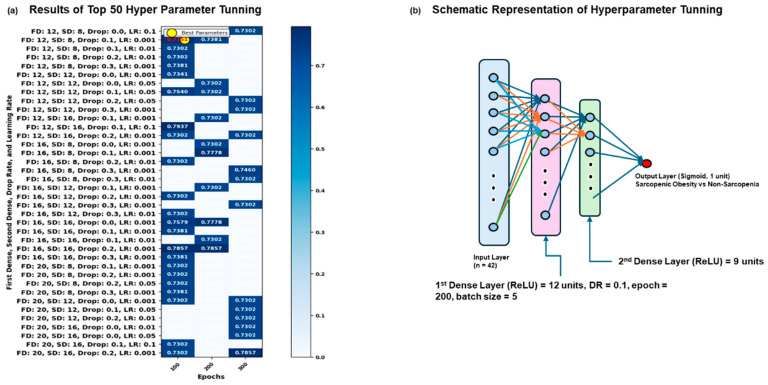 Figure 1
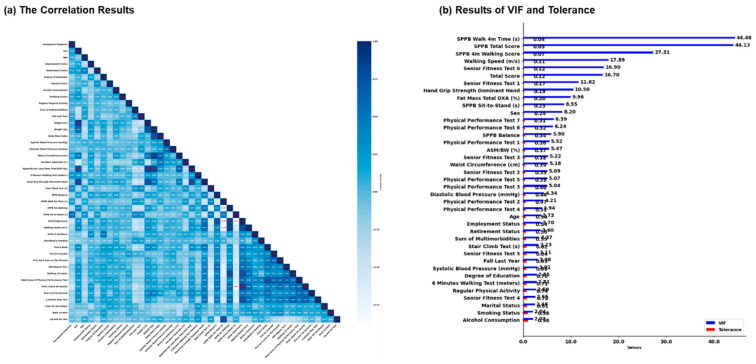 Figure 2
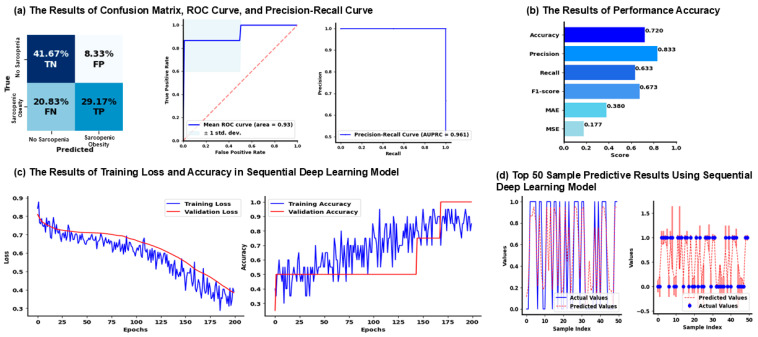 Figure 3
Peer Reviews
No public reviews on file for this paper yet. If you reviewed it on a platform where reviews are public (OpenReview, ICLR, NeurIPS, ICML), you can paste yours below so the community can read it here.
Videos
No videos yet. Explain this paper in a talk, walkthrough, or lecture? Add one.
Taxonomy
TopicsNutrition and Health in Aging · Body Composition Measurement Techniques · Nutritional Studies and Diet