The Prognostic Value of Tricuspid Annular Dimensions in TAVI Patients: A CT-Based Retrospective Analysis of Risk Stratification and Long-Term Outcomes
Nikolaos Schörghofer, Christoph Knapitsch, Gretha Hecke, Nikolaus Clodi, Lucas Brandstetter, Matthias Hammerer, Klaus Hergan, Uta C. Hoppe, Elke Boxhammer, Bernhard Scharinger

TL;DR
This study found that tricuspid annulus size, measured via CT scans before TAVI, is not a reliable predictor of long-term survival in patients undergoing the procedure.
Contribution
The study challenges prior assumptions by showing that tricuspid annulus dimensions do not independently predict mortality after TAVI.
Findings
Tricuspid annulus dilatation correlated with right ventricular dysfunction but not with long-term survival.
Optimal cut-offs for TA were identified, but survival analysis showed no significant association with TA or TA/BSA.
The area under the curve values were close to 0.50, indicating poor prognostic value of TA dimensions.
Abstract
Background: Transcatheter aortic valve implantation (TAVI) has transformed the treatment of severe aortic stenosis (AS), particularly in high-risk patients. However, comorbidities such as pulmonary hypertension (PH) and secondary tricuspid regurgitation (TR) contribute to adverse outcomes. Tricuspid annulus (TA) dilatation (TAD), a key marker of right ventricular dysfunction, has been associated with PH and TR progression. While echocardiographic assessment of TA has limitations, cardiac computed tomography (CT), routinely performed before TAVI, enables precise TA measurement. This study aimed to determine clinically relevant TA and TA indexed to body surface area (TA/BSA) cut-offs and assess their prognostic significance for long-term mortality. Methods: This retrospective, single-center study included 522 patients who underwent transfemoral TAVI between 2016 and 2022. Pre-procedural…
Genes, proteins, chemicals, diseases, species, mutations and cell lines named across the full text — each resolved to its canonical identifier and authoritative record.
Click any figure to enlarge with its caption.
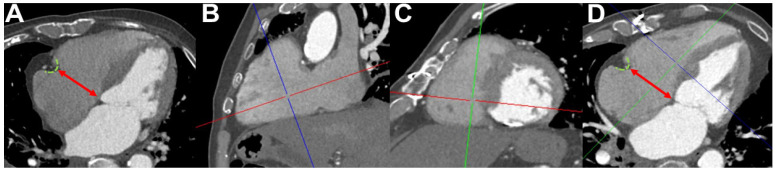 Figure 1
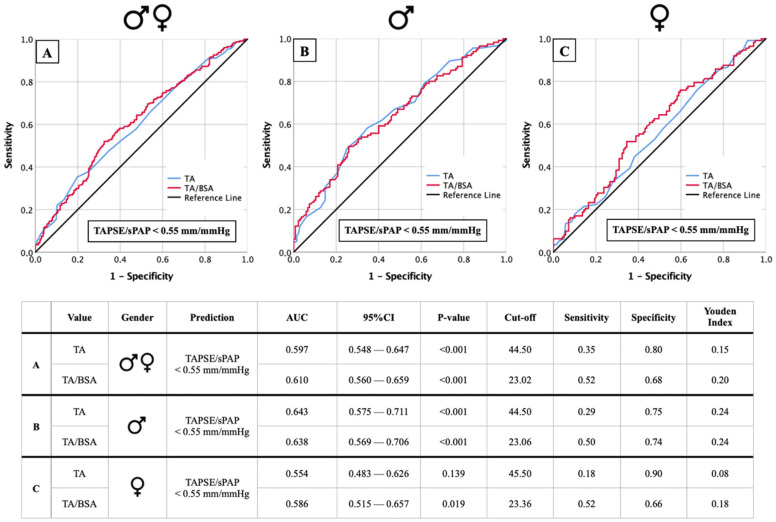 Figure 2
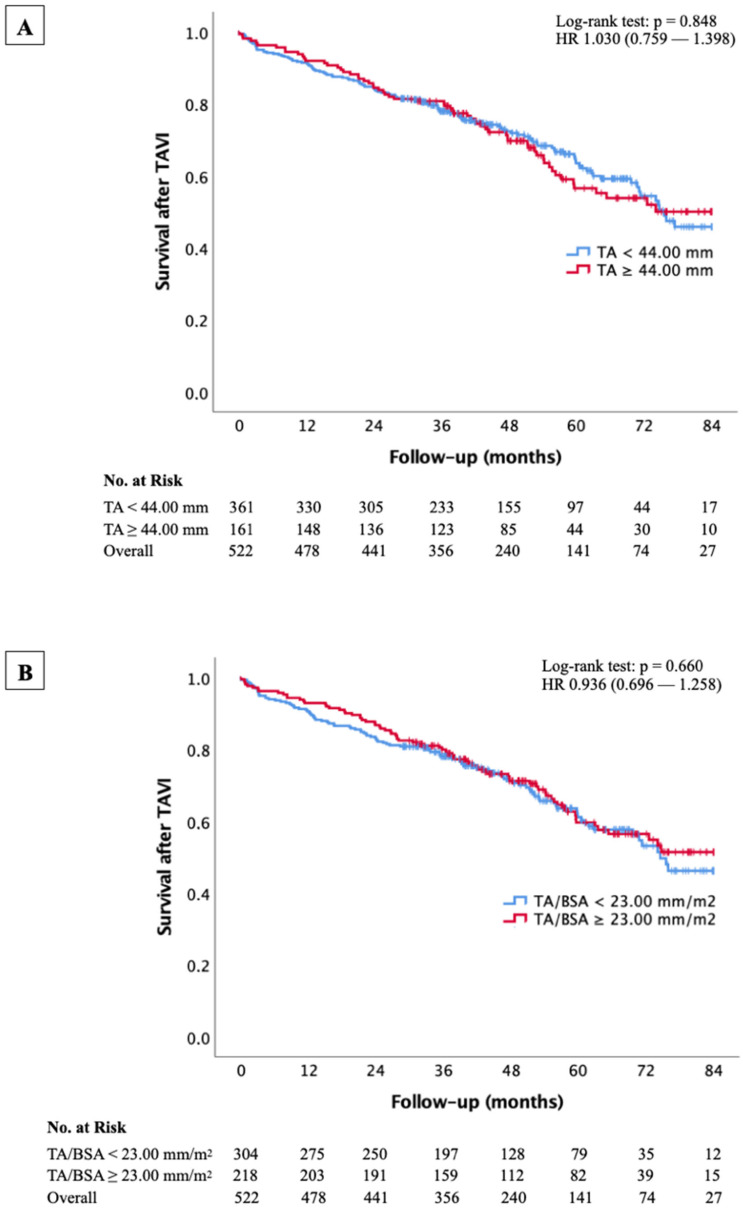 Figure 3
Peer Reviews
No public reviews on file for this paper yet. If you reviewed it on a platform where reviews are public (OpenReview, ICLR, NeurIPS, ICML), you can paste yours below so the community can read it here.
Videos
No videos yet. Explain this paper in a talk, walkthrough, or lecture? Add one.
Taxonomy
TopicsCardiac Valve Diseases and Treatments · Cardiac Imaging and Diagnostics · Pulmonary Hypertension Research and Treatments